The Hidden Engineering Nightmares Behind Space‑Based Data Centers
Orbital data centers sound promising, but practical hurdles—from launch costs to maintenance in space—make them far more challenging than they appear.
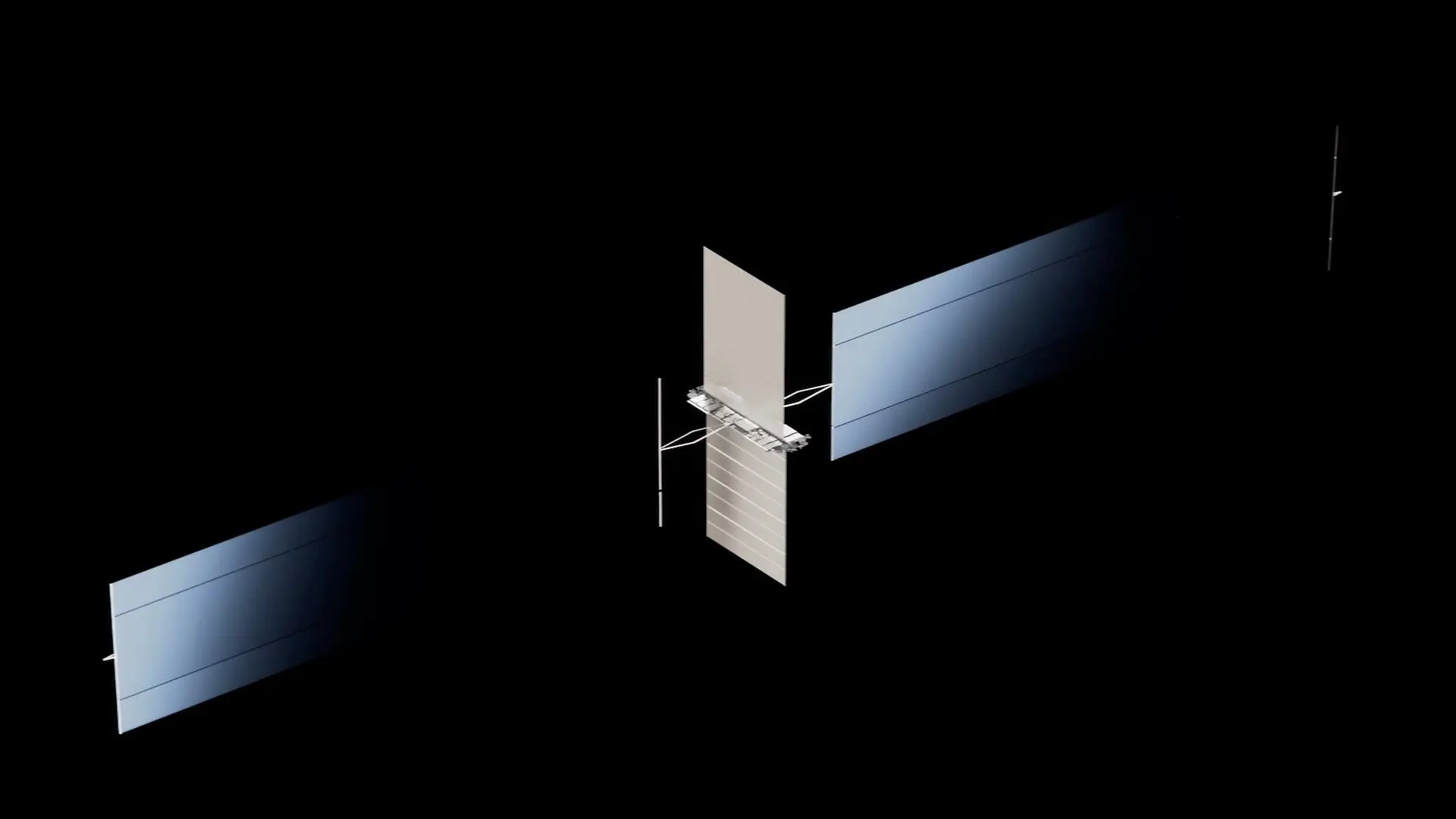
Launching satellites is one thing; running a full‑scale computing platform in orbit is another.
Imagine a single firm that could act as the railway, power grid, and cloud‑computing backbone for the growing space‑based economy. That vision helped fuel enthusiasm around the long‑awaited public offering of SpaceX, where investors are no longer just buying rockets but an entire orbital services platform.
One of the most ambitious concepts emerging from this buzz is the idea of orbital data centers – a notion that feels straight out of science‑fiction. While SpaceX is perhaps the most visible player pursuing the concept, several other companies are also exploring how to build computing hubs in space.
The attraction is clear: an orbiting facility could tap endless solar power, avoid the constraints of land, water, and terrestrial power grids, and potentially sidestep the mounting environmental and infrastructure pressures that ground‑based data centers face as artificial intelligence drives a surge in compute demand. Moreover, communities often push back against large terrestrial data centers because of land‑use concerns, water consumption, noise, and other local impacts.
Yet the gap between lofting a satellite and sustaining an industrial‑scale computer farm in orbit is enormous. Space presents a harsh environment where radiation can degrade electronics, heat generated by servers is difficult to dissipate, repairs are costly, and every kilogram launched carries a steep price tag.
Components of a Terrestrial Data Hub
Ground‑based data centers – the sprawling facilities that power cloud services, streaming platforms, online banking, scientific research, and increasingly AI workloads – rely on three core pillars. First, they need massive electrical input; servers, networking gear, and storage arrays draw huge amounts of power, a demand that is accelerating alongside AI adoption. Second, they require robust cooling systems because virtually all consumed electricity ends up as heat; without efficient heat removal, performance drops, failures rise, and outages can occur. Cooling infrastructure, which often includes air handling units, chillers, towers, pumps, and liquid‑cooling loops, can become the largest energy consumer after the compute equipment itself. Third, they depend on extensive physical infrastructure – land, buildings, structural supports, backup power, water supplies, communications links, and maintenance access – while being positioned close enough to network backbones to deliver low‑latency services.
Translating the Model to Orbit
To recreate these capabilities in space, a data center would still need abundant power, which would come from solar panels that receive uninterrupted sunlight, except when the Earth blocks the sun during parts of an orbit. Even the most efficient modern cells convert only about half of the incident solar energy into electricity. Cooling could theoretically exploit the frigid vacuum of space, where waste heat radiates into the surrounding darkness. However, radiators would need a surface area comparable to two football fields to shed ten megawatts of heat, and they would have to coexist with the large solar arrays required for power generation.
Space‑based facilities would also bypass many of the local objections that plague terrestrial projects. They would not compete for land or water, generate neighborhood noise, or require zoning approvals in the same way. On the downside, the growing congestion of low‑Earth‑orbit assets raises concerns about debris and micrometeoroid impacts that could puncture a data‑center module and create additional space junk. The frequency of launches needed to populate orbit with such infrastructure could also provoke protests from communities near launch sites, as seen with previous demonstrations at SpaceX’s Boca Chica complex.
Data would have to travel between Earth and these orbital hubs – and among the hubs themselves – via radio or laser links. Existing satellite constellations such as Starlink and Amazon’s Leo have demonstrated the feasibility of high‑bandwidth space communications, but the sheer volume of data exchanged would increase dramatically.
Engineering and Operational Obstacles
Because a space‑based data center, its solar arrays, and its radiators cannot be launched as a single unit, they would need to be assembled in orbit using specialized servicing, assembly, and manufacturing equipment. Additionally, the refresh cycle for computing hardware presents a major hurdle. On Earth, servers are typically upgraded or replaced every three to five years as chip performance improves and components age. In space, upgrading hardware would be far more complex and expensive, and a failure‑prone platform could become obsolete long before its supporting infrastructure reaches the end of its useful life.
The space environment itself adds further strain: constant radiation, repeated thermal cycling between sunlight and Earth’s shadow, and the near‑vacuum conditions all demand ruggedized designs. These factors, together with the challenges of heat dissipation and hardware replacement, must be resolved before orbital data centers can become a practical reality.
Are Space Data Centers Viable?
Despite the obstacles, companies are pressing ahead. SpaceX recently unveiled its AI1 Compute Satellite, a prototype intended to serve as an orbital data‑center platform, though its processing capacity is estimated to be 100 to 1,000 times smaller than that of today’s terrestrial facilities. Not every workload makes sense in orbit; many cloud services, financial transactions, and interactive AI applications depend on ultra‑low latency and close proximity to users, making them ill‑suited for space‑based execution.
More promising early use cases could involve tasks that are less latency‑sensitive and already tied to space operations – for example, processing Earth‑observation imagery, handling military or intelligence data, performing scientific calculations for space missions, or providing specialized compute resources for other satellites.
In effect, the first generation of orbital data centers may find their niche serving space‑focused customers before they can challenge the dominant Earth‑based cloud providers.
This article is republished from The Conversation under a Creative Commons licence. See the original piece for more details.

This article has been fact checked for accuracy, with information verified against reputable sources. Learn more about us and our editorial process.
Last reviewed on .
Article history
- Latest version
Reference(s)
- “The Conversation : des analyses de l’actualité par des universitaires et chercheurs.” The Conversation <https://theconversation.com/>.
- Bilén, Sven. “Building data centers in space is an intriguing idea on paper, but major engineering challenges must be solved.”, June 16, 2026 The Conversation, doi: 10.64628/AAI.nxatsm37f. <https://theconversation.com/building-data-centers-in-space-is-an-intriguing-idea-on-paper-but-major-engineering-challenges-must-be-solved-284053>.
Cite this page:
- Posted by Karan Das