NASA’s Curiosity Rover Uncovers Strange ‘Spiderwebs’ on Mars, Hinting at Longer Life-Sustaining Water
NASA’s Curiosity rover has discovered intricate, web-like patterns on Mars, offering strong indications that liquid water might have remained on the planet for a more extended period than previously believed.
NASA’s Curiosity Rover Unveils Hidden Secrets of Mars
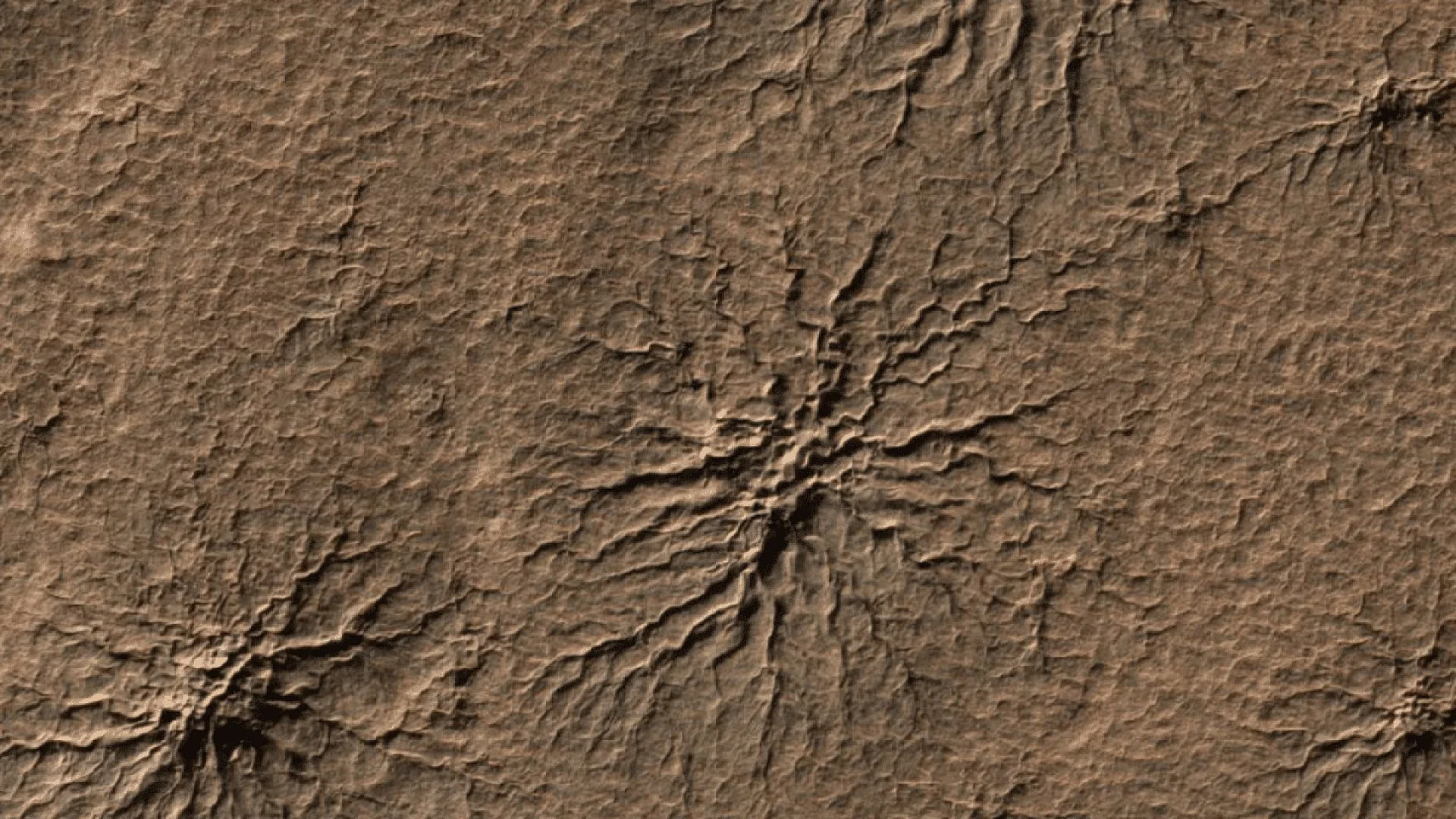
In a groundbreaking discovery, NASA’s Curiosity rover has unearthed an extraordinary find on the Martian surface, revealing vast, intricate formations that suggest the Red Planet may have harbored liquid water for a far longer period than previously believed. These enigmatic structures, known as boxwork, are a testament to the planet’s ancient past, providing fresh evidence of groundwater flowing through fractures in Mars’ bedrock.
Imaged by Curiosity’s cameras while exploring Mount Sharp in Gale Crater, these web-like patterns were initially observed from orbit but have now been studied in unprecedented detail, revealing new insights that could revolutionize our understanding of Mars’ ancient environment. The findings imply that liquid water persisted much deeper into the planet’s history than thought, fueling hopes that Mars may have supported microbial life for far longer than expected.
The Elusive Boxwork Enigma
Boxwork formations are unique structures that appear as intricate, web-like ridges and hollows on the Martian surface. Scientists propose that these formations were created when groundwater flowed through fractures in the Martian bedrock, leaving behind mineral deposits that hardened into ridges while the surrounding rock eroded. The formation of these ridges points to the ancient presence of liquid water on Mars, which could have existed in this region for billions of years.
“Seeing boxwork this far up the mountain suggests the groundwater table had to be pretty high,” said Tina Seeger, a scientist at Rice University in Houston, who is leading the investigation of these formations. “And that means the water needed for sustaining life could have lasted much longer than we thought looking from orbit.”
NASA/JPL-Caltech/MSSS
Curiosity’s Odyssey: Navigating the Martian Terrain
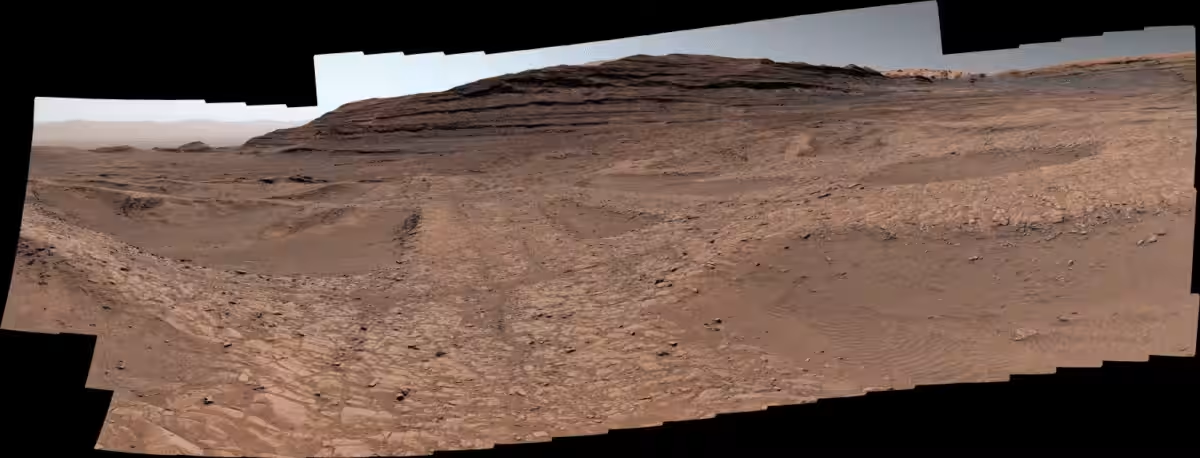
While the discovery of these fascinating formations has sparked excitement among scientists, it hasn’t come without its challenges. The rover had to navigate uneven terrain, with the boxwork formations spread across the rocky surface of Mount Sharp.
“It almost feels like a highway we can drive on,” said Ashley Stroupe, operations systems engineer at NASA’s Jet Propulsion Laboratory. “But then we have to go down into the hollows, where you need to be mindful of Curiosity’s wheels slipping or having trouble turning in the sand. There’s always a solution. It just takes trying different paths.”
Despite these technical hurdles, Curiosity continues its mission to explore the Martian surface, providing invaluable data that could reshape our understanding of Mars’ geological and environmental history. This perseverance underscores NASA’s commitment to exploring the planet and unlocking the mysteries of its ancient past.
NASA/JPL-Caltech/MSSS
The Enigma of the Nodules: Unlocking the Secrets of Mars’ Water History
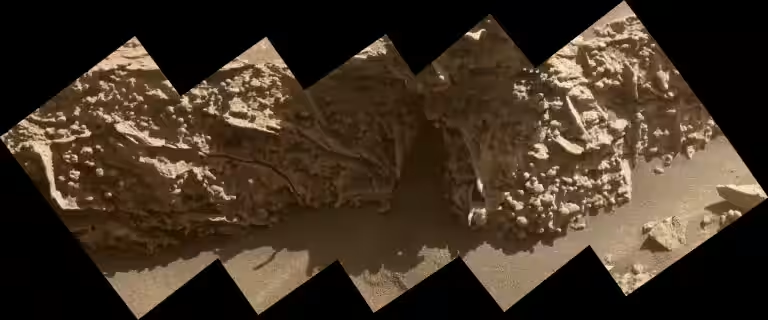
One of the most intriguing aspects of the boxwork discovery is the presence of bumpy nodules scattered throughout the terrain. These nodules, formed by minerals left behind as groundwater dried up, have puzzled scientists. “We can’t quite explain yet why the nodules appear where they do,” said Seeger. “Maybe the ridges were cemented by minerals first, and later episodes of groundwater left nodules around them.”
These nodules could hold the key to understanding the specific conditions that allowed groundwater to persist on Mars for so long. They may also provide more insight into how water flowed through the Martian surface and interacted with the planet’s mineral composition. The mystery of these formations continues to captivate scientists, who are eager to unlock the secrets of Mars’ water history.
A Glimpse into Mars’ Past: Could It Have Supported Life?
The discovery of these spiderweb-like formations raises important questions about the potential for life on Mars. If water could have persisted in this region for so long, it opens up new possibilities for life having existed on the planet, even after scientists thought it was no longer possible.
These findings suggest that liquid water may have remained accessible to microbes long after Mars’ surface environment became inhospitable. With each discovery, Curiosity’s mission brings scientists closer to answering a profound question: Was Mars ever home to life?
This newfound evidence of ancient water on Mars strengthens the hypothesis that microbial life could have once flourished on the Red Planet. As Curiosity continues to explore, it will continue to provide valuable data that could help determine if Mars could support life today, or if it ever did in the past.
This article has been fact checked for accuracy, with information verified against reputable sources. Learn more about us and our editorial process.
Last reviewed on .
Article history
- Latest version
Cite this page:
- Posted by Karan Das