After 6 Years on Mars, NASA’s Curiosity Rover Shows What Travel Did to Its Wheels in Ways No One Expected
NASA’s Curiosity rover has spent six years exploring Mars, and its wheels have endured more wear and tear than anticipated.
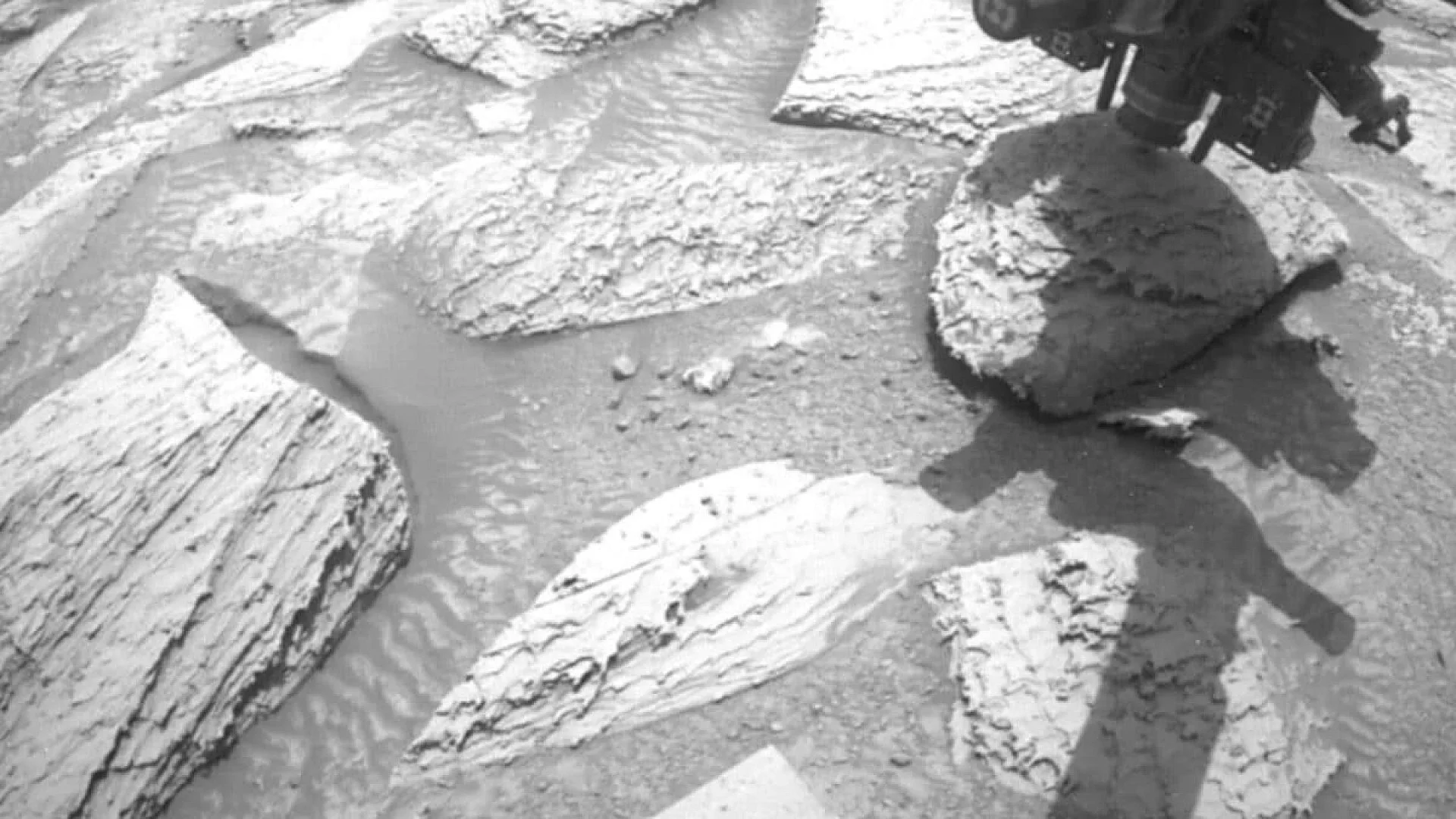
A stunning time-lapse video from NASA’s Curiosity rover offers a unique glimpse into the harsh realities of six years of driving on Mars. Captured between 2020 and 2026, the footage showcases the rover’s remarkable endurance and the damage caused by the unforgiving Martian terrain. This unexpected opportunity also provides scientists with a chance to study how dust and sand shift across the rover, influenced by wind and seasonal atmospheric changes.
Since landing in Gale Crater in 2012, Curiosity has traveled over 20 miles (32 kilometers), investigating whether ancient Mars could have supported conditions suitable for microbial life. The rover’s mission has far surpassed its original two-year timeline, and its worn wheels now serve as a poignant visual record of that extended survival.
A Visual Testimony of Resilience
The two-minute video shows Curiosity’s aluminum wheels repeatedly crossing rocky slabs, loose debris, and fine Martian dust. The rover’s navigation camera captures these scenes during regular operations, though the original intent was not to create cinematic footage, but rather to gather practical data.
According to NASA scientists, the footage offers valuable insights into how sand grains shift on the rover’s deck over time. By distinguishing material displaced by the rover’s wheels from dust moved by Martian winds, researchers can gain new information about seasonal changes in the atmosphere.
“Understanding the dynamics of Martian dust is crucial for future missions, and this footage provides a unique window into the planet’s behavior.”
The video also provides a long-term visual perspective that is rarely available in planetary exploration. While orbiters often photograph the Martian surface from above, this time-lapse shows environmental changes directly from the rover itself, frame by frame, over several years of travel.
Lessons Learned from a Resilient Rover
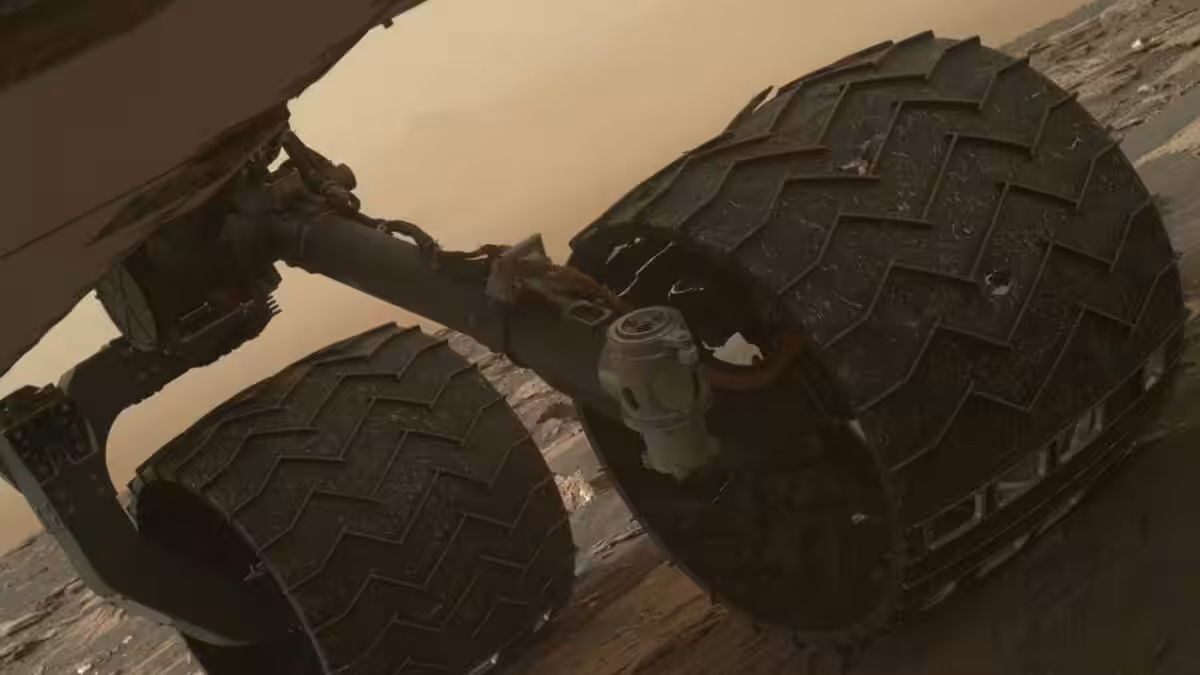
The condition of Curiosity’s wheels has been closely monitored for years. Each wheel is about 20 inches (50 centimeters) in diameter and was designed to handle uneven ground and sharp rocks. However, engineers noticed punctures and tears soon after the rover landed on Mars.
Images released by NASA/JPL over the course of the mission have revealed increasing damage, including dents, holes, and deep gashes in the thin aluminum wheel skin. Photos from 2024 showed fresh damage alongside older wear.

Despite the visible deterioration, the rover remains operational and mobile. Mission teams adapted driving strategies over time to avoid particularly hazardous terrain, prioritizing safer routes as the wheels became more damaged.
According to mission engineers cited by the U.S Space Agency, lessons learned from Curiosity directly influenced the design of the newer Perseverance rover. Its wheels were reinforced to better withstand the harsh surface conditions of Mars.
A Mission That Defies Expectations
The time-lapse also highlights just how long the rover has survived on another planet. Since landing in Gale Crater in 2012, the rover has climbed the lower slopes of Mount Sharp, studying layers of ancient rock that formed billions of years ago.
Its discoveries have radically changed scientific understanding of Mars. The rover confirmed that ancient environments inside Gale Crater could have supported long-lived lakes, which could have been suitable for microbial life. More recently, it has detected increasingly complex organic molecules preserved in rocks. Based on reports released throughout the mission by NASA, these findings remain among the strongest evidence that the Red Planet may have been habitable in the distant past.
This article has been fact checked for accuracy, with information verified against reputable sources. Learn more about us and our editorial process.
Last reviewed on .
Article history
- Latest version
Reference(s)
- Alanis, Rafael. “Six Years of Curiosity’s Wheels on the Move - NASA Science.”, April 28, 2026 NASA <https://science.nasa.gov/photojournal/six-years-of-curiositys-wheels-on-the-move/>.
- Laboratory, Jet. “Breaks Observed in Rover Wheel Treads.” NASA Jet Propulsion Laboratory (JPL) <https://www.jpl.nasa.gov/news/breaks-observed-in-rover-wheel-treads/>.
- Carney, Stephen. “Mount Sharp Inside Gale Crater, Mars - NASA Science.”, March 28, 2012 NASA <https://science.nasa.gov/resource/mount-sharp-inside-gale-crater-mars/>.
Cite this page:
- Posted by Karan Das