Scientists Discover a Retrograde World That May Hide a Giant Outer Planet
A rare exoplanet orbiting backwards hints at an unseen giant planet sculpting its whole system, offering fresh clues for astronomers.
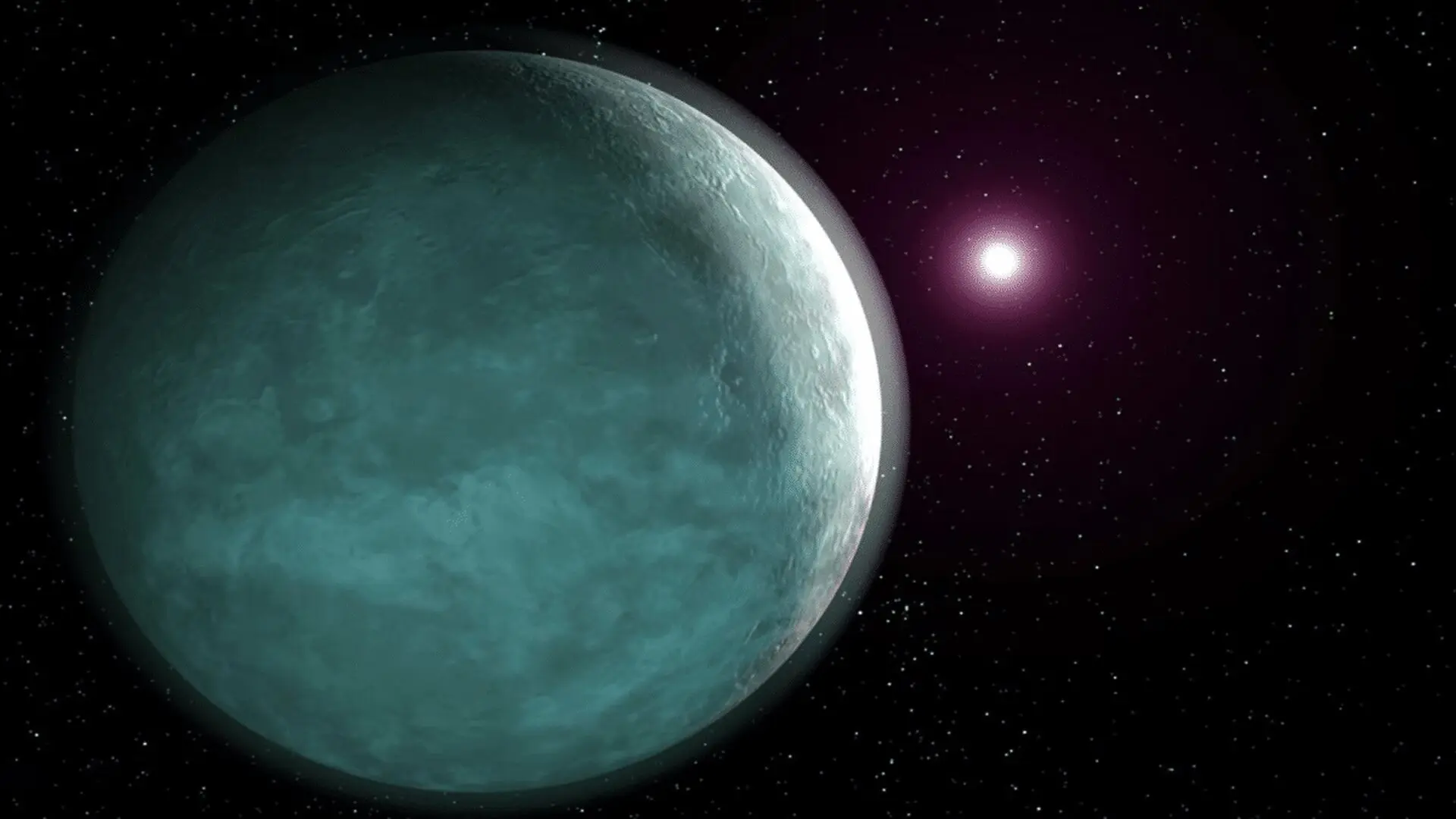
Astronomers have identified a Neptune‑sized world that circles its star in the opposite direction of the star’s rotation, a configuration that challenges standard ideas about how planetary systems settle. The discovery, detailed in The Astrophysical Journal Letters, hints that a massive, unseen companion may be responsible for the extreme orbital tilt, offering a fresh window into the long‑term dynamical evolution of exoplanetary systems.
Retrograde Motion Upsets Traditional Formation Expectations
For many years, researchers have assumed that planets inherit the spin direction of their host stars, a natural outcome of the rotating protoplanetary disks from which both form. While a few “hot Jupiters” have been found on highly inclined or even opposite orbits, encountering such a dramatic reversal in a smaller, warm Neptune‑type planet is exceptionally rare and poses a puzzling question for planetary‑formation theories.
TOI‑1710 b’s Backward Path Signals a Violent History
The planet, designated TOI‑1710 b, follows an orbit that is tilted by almost 180 degrees relative to its star’s spin, placing it in a truly retrograde trajectory. This near‑complete flip suggests that the planet experienced a strong external perturbation that reshaped its orbital plane over millions or billions of years, preserving a record of a dramatic dynamical event that altered the architecture of the whole system.
Combined Telescope Data Reveal a Subtle Radial‑Velocity Drift
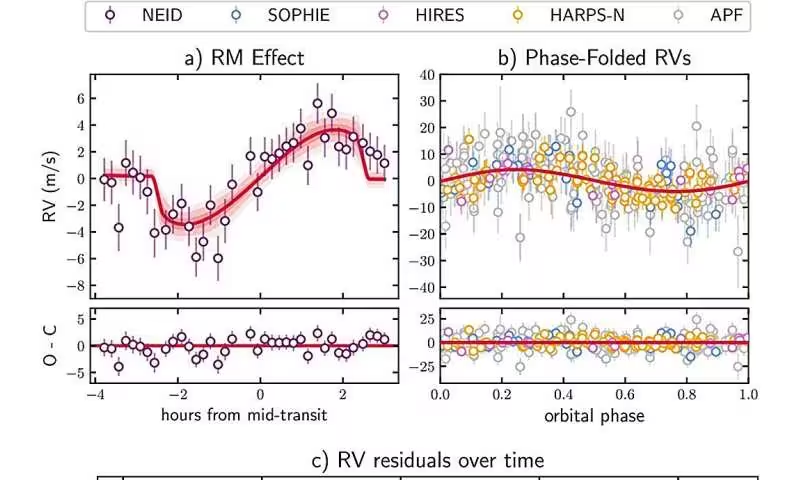
The team, publishing their results in The Astrophysical Journal Letters, merged measurements from NASA’s Transiting Exoplanet Survey Satellite (TESS), the high‑precision NEID spectrograph, and additional facilities capable of tracking minute shifts in the host star’s motion. While the transit data secured the planet’s existence, the spectroscopic observations uncovered a slow, steady change in radial velocity that cannot be explained by TOI‑1710 b alone.
Such a persistent trend points to the gravitational pull of a more massive, distant object orbiting the star, prompting the researchers to explore a range of hidden‑companion scenarios with numerical simulations.
Models Favor an Unseen Gas Giant at About 15 AU
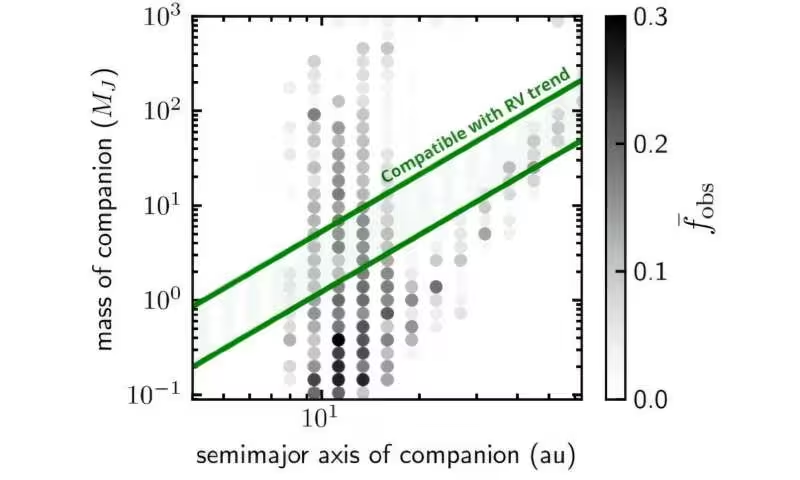
Simulations that best reproduced the observed orbital geometry involved a concealed gas giant roughly five times the mass of Jupiter, residing near 15 astronomical units from the star. In this configuration, the massive planet acts as a gravitational conduit, relaying the influence of a more distant stellar companion toward the inner Neptune‑sized world, gradually tilting its orbit while preserving its near‑circular shape.
The models indicated that only a narrow band of orbital distances for the hidden giant could generate the extreme retrograde orientation measured for TOI‑1710 b. This tight match between theory and observation makes the hidden‑planet hypothesis compelling, though additional data will be required to confirm its presence.
A Distant M‑Dwarf Likely Initiated the Inclination Cascade
The TOI‑1710 system already hosts a far‑separated M‑dwarf companion at roughly 3 600 AU, a candidate that could, in principle, disturb planetary orbits through long‑term gravitational interactions. However, calculations show that the dwarf’s influence alone is too weak to flip the inner planet’s orbit.
When the proposed hidden gas giant is introduced into the picture, it serves as a bridge that amplifies the distant star’s subtle tug, allowing the inclination to cascade inward over extended timescales. This multi‑step process could ultimately produce the near‑upside‑down orbit now observed around TOI‑1710 b.
If future observations confirm the presence of the massive companion, the system would become a textbook example of how intertwined gravitational forces can reshape planetary architectures long after their birth, highlighting the complex dynamical pathways that can lead to retrograde motion even for relatively small exoplanets.
This article has been fact checked for accuracy, with information verified against reputable sources. Learn more about us and our editorial process.
Last reviewed on .
Article history
- Latest version
Reference(s)
- Espinoza-Retamal, Juan I.., et al. “POSEIDON. II. The Antialigned Orbit of the Warm Neptune TOI-1710 A b.” The Astrophysical Journal Letters, vol. 1005, no. 1, June 23, 2026, pp. L15 American Astronomical Society, doi: 10.3847/2041-8213/ae7711. <https://iopscience.iop.org/article/10.3847/2041-8213/ae7711>.
Cite this page:
- Posted by Karan Das