Truncating a Photon Triggers a Cascade of Quantum Light: From Vacuum to Multiphonon States
Physicists reveal that blocking part of a photon’s pulse creates a complex quantum state spanning zero to many photons, not just a shortened photon.
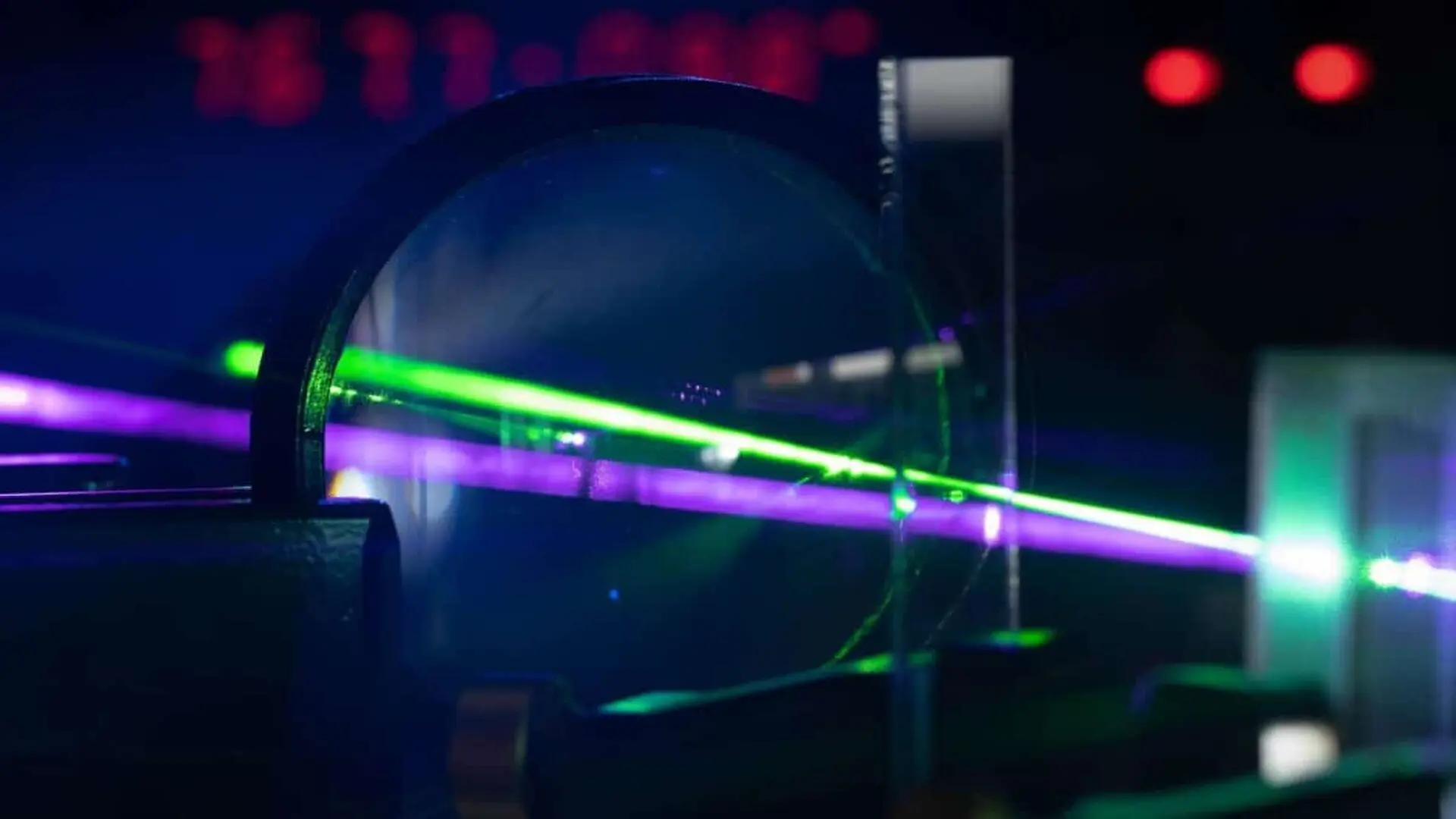
A recent investigation tackles a fundamental puzzle: what happens to a light pulse when its transmission is abruptly halted? Although a photon is indivisible, the surrounding electromagnetic wave packet can be partially blocked by a shutter or a moving mirror, prompting questions about the underlying quantum description.
Published in Physical Review Letters, the work examines how quantum field theory reconciles the notion of an undividable particle with a pulse that can be sliced in time.
Quantum Mechanics of a Photon Interrupted by a Moving Mirror
The authors modeled a one‑dimensional scenario featuring a single‑polarization photon approaching an ideal reflector that is switched off at a predetermined moment. Prior to that instant the mirror reflects the incoming wave; after the switch‑off the later segment of the pulse proceeds onward.
In the classic static‑mirror picture, the photon is represented as a superposition of reflected and transmitted components. This description fails when the boundary conditions evolve with time. The researchers point out that exact single‑photon solutions possess infinitely long temporal tails, meaning that a sharply bounded pulse cannot retain the properties of a pure one‑photon state.
Because the shutter’s activation breaks time‑translation symmetry, energy can be injected into the field during the transition. Mathematically, the process mixes creation and annihilation operators, leading to a Bogoliubov transformation.
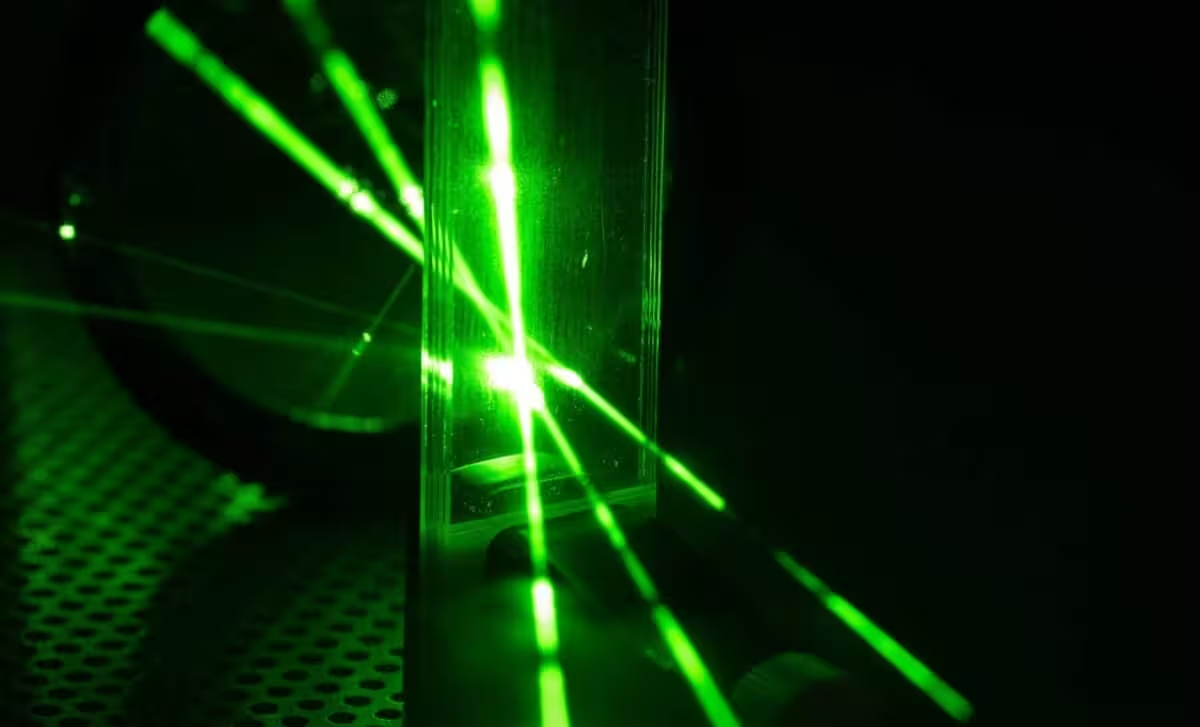
The outcome is a forward‑propagating field that is no longer a simple single‑photon excitation. Instead, it comprises a mixture of vacuum, one‑photon, two‑photon, and higher‑order contributions. The paper characterizes the state as a single excitation imposed on a multimode squeezed vacuum, a configuration where dynamic boundary changes can convert vacuum fluctuations into observable photons.
If the reflector is removed instantaneously, the theoretical model predicts an infinite average photon count because the sudden change injects arbitrarily high‑frequency components, a divergence reminiscent of the dynamical Casimir effect. By contrast, a gradual reduction of reflectivity yields a finite photon yield, with the total depending on the initial reflectivity and the timescale of the transition.
Local Observables Mask a Complex Global State
Despite the intricate mathematics governing the full truncated state, its observable behavior is straightforward in localized regions. Measurements performed well before the transition see the same statistics as a conventional single‑photon pulse, while detectors placed far beyond the transition region register only vacuum fluctuations.
This phenomenon, termed local equivalence, indicates that observers confined to one side of the transition cannot differentiate the truncated state from a pure photon or pure vacuum using only local probes.
The Oslo research team notes that the concentration of high‑photon‑number components occurs within the narrow zone where the mirror is being switched off. As this zone shrinks, the energy density inside rises, effectively converting the energy stored in the original vacuum configuration into real photons propagating forward and backward.
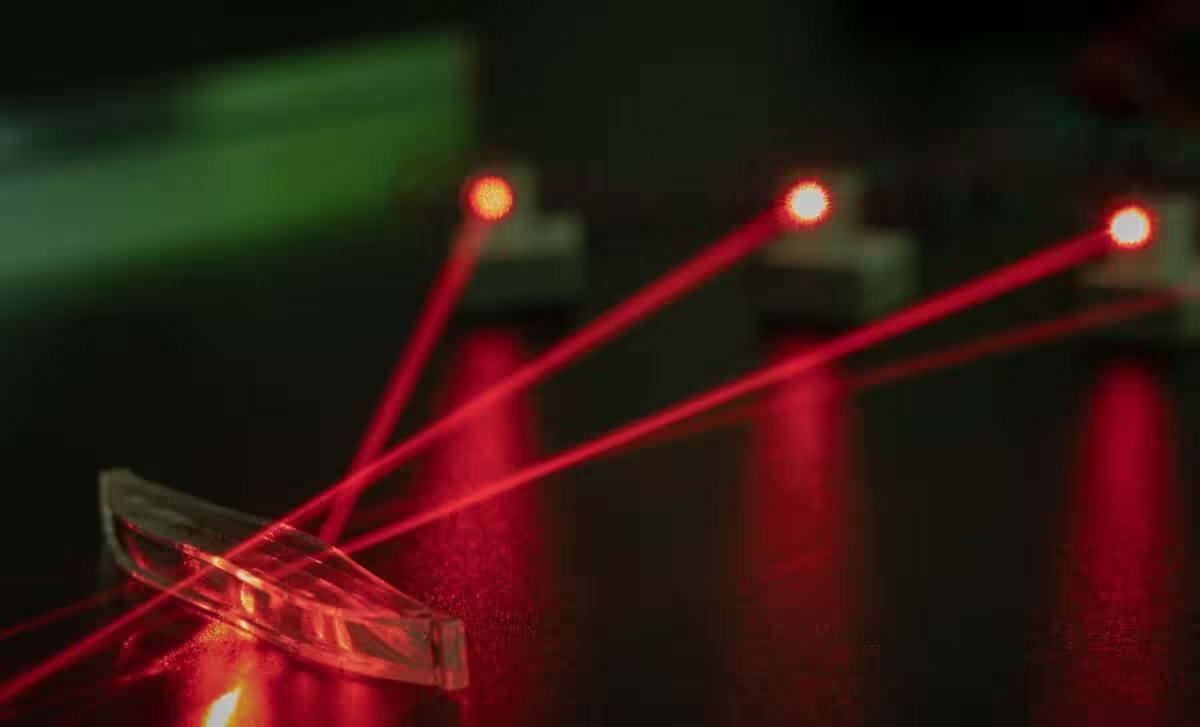
The study also underscores strict causality in quantum field theory: beyond the region that could have been influenced by the shutter, the forward‑moving field behaves identically to vacuum. Yet the overall quantum state inevitably contains contributions with arbitrarily large photon numbers, even when the mirror’s reflectivity is reduced smoothly.
In summary, the truncated‑photon construct serves as a theoretical laboratory for probing how localized interactions reshape quantum states. Its significance lies not in literally cutting a photon, but in demonstrating that a seemingly simple interruption of light can generate a globally intricate quantum configuration while appearing innocuous in local measurements.
This article has been fact checked for accuracy, with information verified against reputable sources. Learn more about us and our editorial process.
Last reviewed on .
Article history
- Latest version
Reference(s)
- Onsager Rukan, Isak Cecil., et al. “Truncated Photon.” Physical Review Letters, vol. 137, no. 3, July 15, 2026 American Physical Society (APS), doi: 10.1103/94pm-hp34. <https://journals.aps.org/prl/abstract/10.1103/94pm-hp34>.
Cite this page:
- Posted by Zara Tariq