Tonight’s NOAA Aurora Forecast Offers Rare Green Lights for US‑Canada Border States
Millions of Americans may see northern lights soon as aurora forecast brightens temporarily
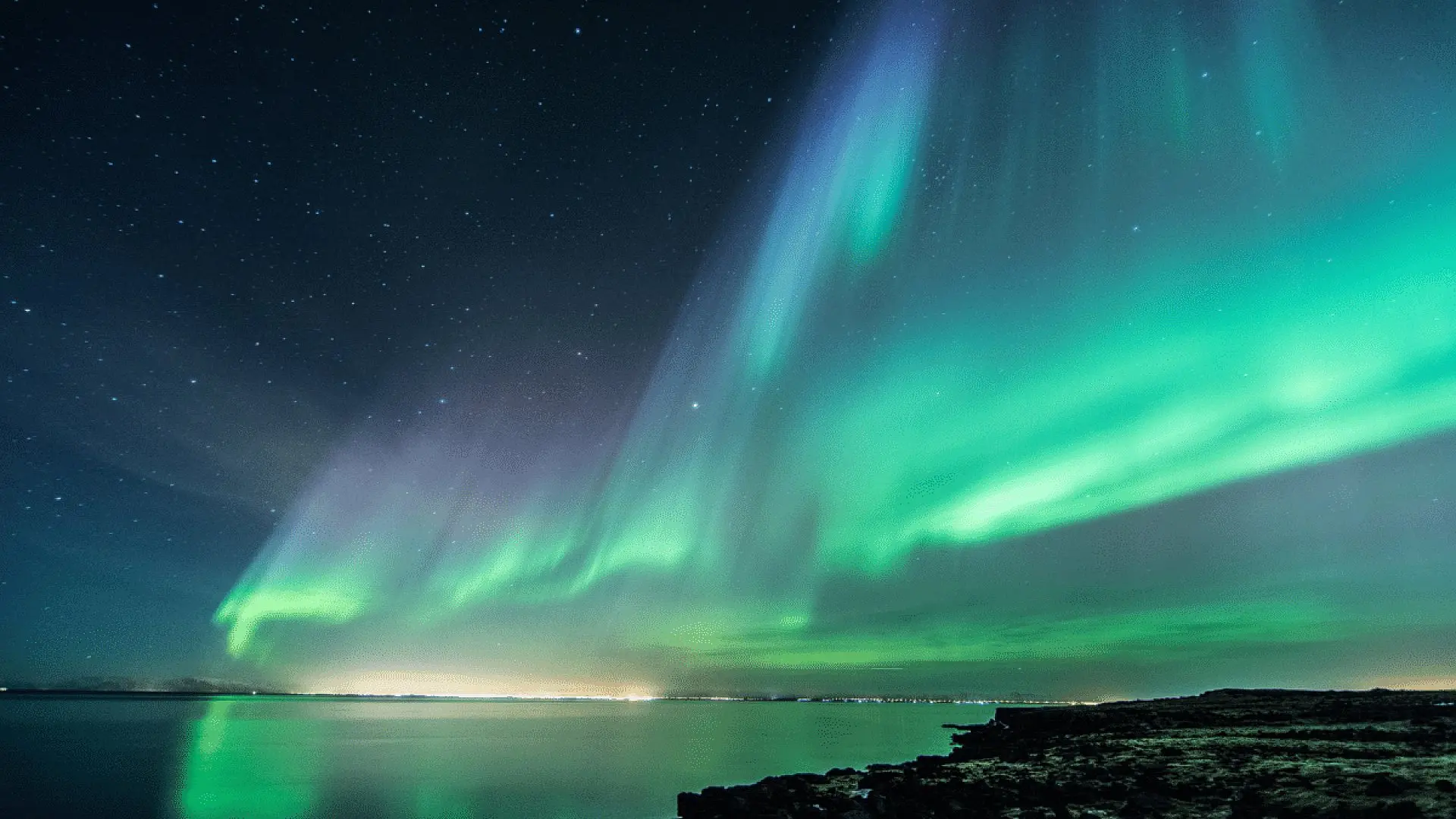
A new aurora forecast released by NOAA indicates that parts of the northern United States could experience a brief display of green and purple lights after dark tonight. Although the projected geomagnetic activity will not reach storm‑level intensities, a Kp index of 4 is sufficient for visible auroral arcs in several border states, especially given the clear skies, low moon illumination and a weekend window that makes this one of the most reachable opportunities of the week.
NOAA Predicts a Narrow Window of Activity
NOAA notes that the geomagnetic storm potential will subside after a moderate episode on Friday, with the Kp index expected to fall to 3 by Sunday night. This decline will push the most favorable viewing conditions farther north, meaning Saturday night may be the last chance this weekend for many residents of the United States to catch the lights.
Areas With the Highest Chance of Seeing the Lights
The forecast highlights a band stretching along the U.S.–Canada border. Residents of northern Washington, Idaho, Montana, North Dakota, South Dakota, Minnesota, Wisconsin and the Upper Peninsula of Michigan have the best odds, while much of Alaska remains well within the prime aurora zone. In many of the southern locations the display may linger low on the northern horizon, and cloud cover could obscure even a strong event, so clear weather will be essential.
Why This Night Stands Out for Aurora Enthusiasts
Solar activity remains elevated in the current phase of the Sun’s cycle, increasing the frequency of auroral chances compared with recent years. A moderate Kp of 4 can still generate vivid curtains of light in the northern United States, sparking interest among photographers, amateur astronomers and casual skywatchers. The inherent variability of solar wind interactions with Earth’s magnetic field means that even modest forecasts sometimes produce surprisingly bright shows, adding an element of excitement for those tracking the aurora.
Tips to Boost Your Chances of a Successful Sight‑ing
Observers are advised to head to sites with an unobstructed view to the north, away from city lights. Rural fields, elevated terrain, lakeshores and open spaces tend to offer the clearest outlook. The most active period usually falls between 10 p.m. and 2 a.m. local time, though displays can appear outside that window. Tonight’s waning crescent moon provides only about 3 percent illumination, reducing background glare and allowing fainter auroral structures to become more apparent. Modern smartphones equipped with long‑exposure settings can capture colors and details that the naked eye might miss, making photography a valuable tool for documenting the event.
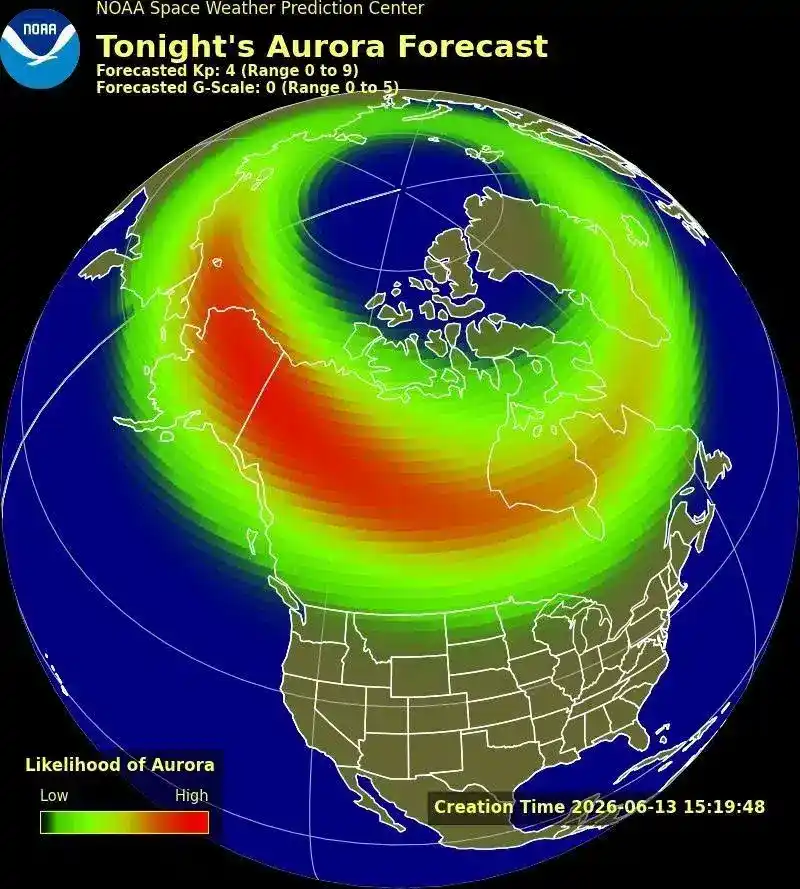
Credit: NOAA
This article has been fact checked for accuracy, with information verified against reputable sources. Learn more about us and our editorial process.
Last reviewed on .
Article history
- Latest version
Reference(s)
- “Aurora Dashboard (Experimental) | NOAA / NWS Space Weather Prediction Center.” <https://www.swpc.noaa.gov/communities/aurora-dashboard-experimental>.
Cite this page:
- Posted by Zara Tariq