Hidden in Hiroshima Debris: Scientists Uncover a Never‑Seen Metallic Alloy From the 1945 Blast
Scientists uncover Hiroshima debris preserving a fleeting, sub‑second record of the atomic blast, revealing new insights into the historic event.
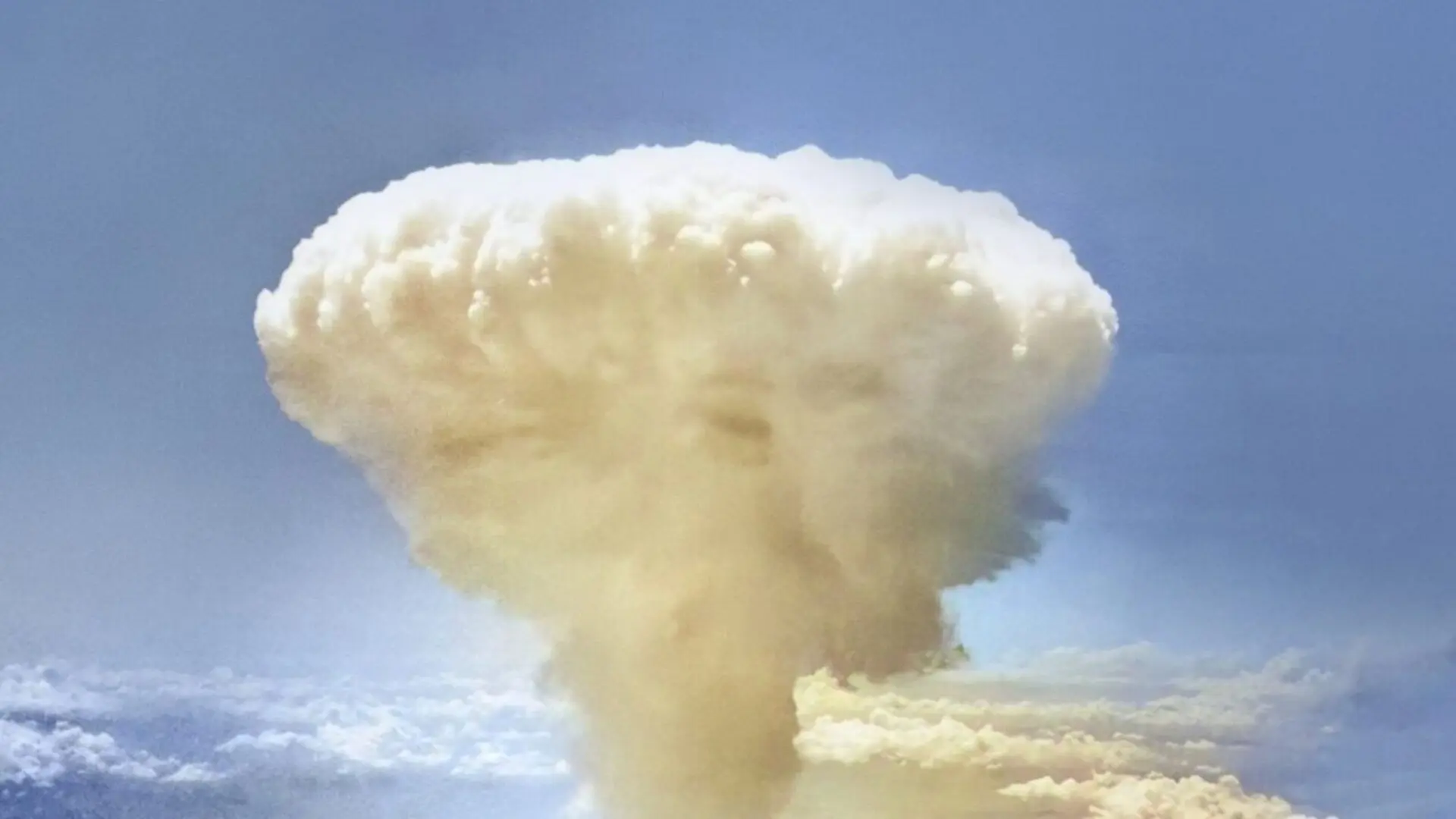
Hiroshima’s atomic blast left behind a minute metallic alloy whose crystal structure had never been recorded before. The alloy, uncovered decades after the war in sediment taken from Hiroshima Bay, shows how the sheer energy of a nuclear detonation can forge matter that ordinary processes cannot produce.
Researchers isolated tiny particles that formed in the milliseconds after the 1945 explosion. Those fragments captured a fleeting snapshot of extreme temperature and rapid cooling, providing a rare laboratory for studying material behavior under conditions that exist only for fractions of a second.
The work was led by Luca Bindi, an earth‑science professor at the University of Florence, who examined sand and sludge collected along the Hiroshima Bay shoreline. Rather than being random debris, the particles act as microscopic time capsules that preserve the chemical pathways triggered by the bomb.
Published in Science Advances, the study adds a fresh entry to the growing list of exotic substances born in high‑energy events. Earlier research on nuclear test sites and meteorite impacts has already demonstrated that violent energy releases can generate crystal arrangements unseen in normal geological settings.
How a Single Explosion Became a Laboratory of Millions
When a nuclear bomb detonates, the resulting fireball vaporizes surrounding material before it quenches in an instant. This rapid temperature swing forces atoms to recombine in ways that cannot be reproduced in a conventional lab.
In the Hiroshima blast, innumerable droplets of molten matter solidified independently, each serving as a self‑contained experiment where elemental atoms had only a brief window to rearrange before locking into a solid lattice.
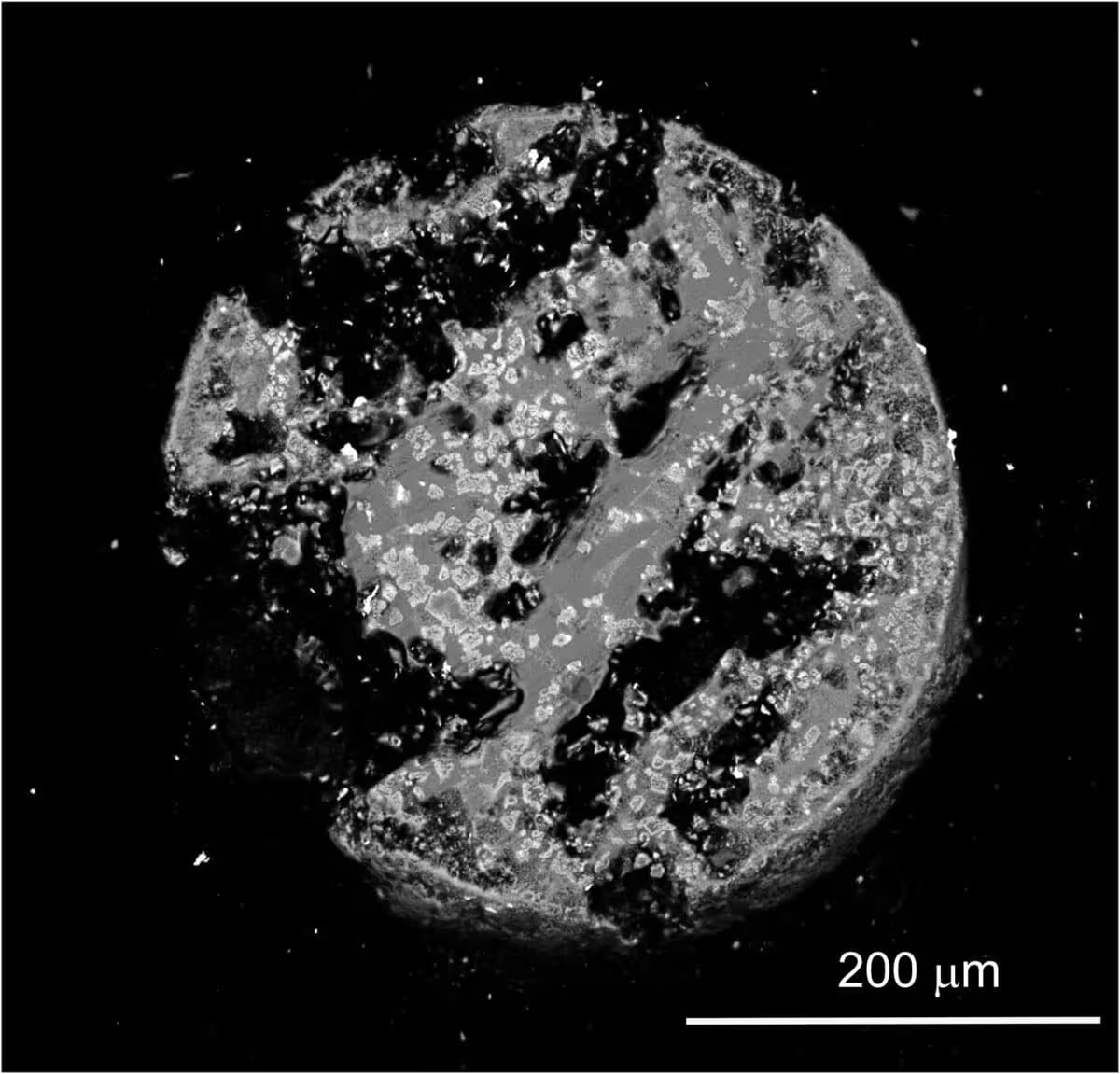
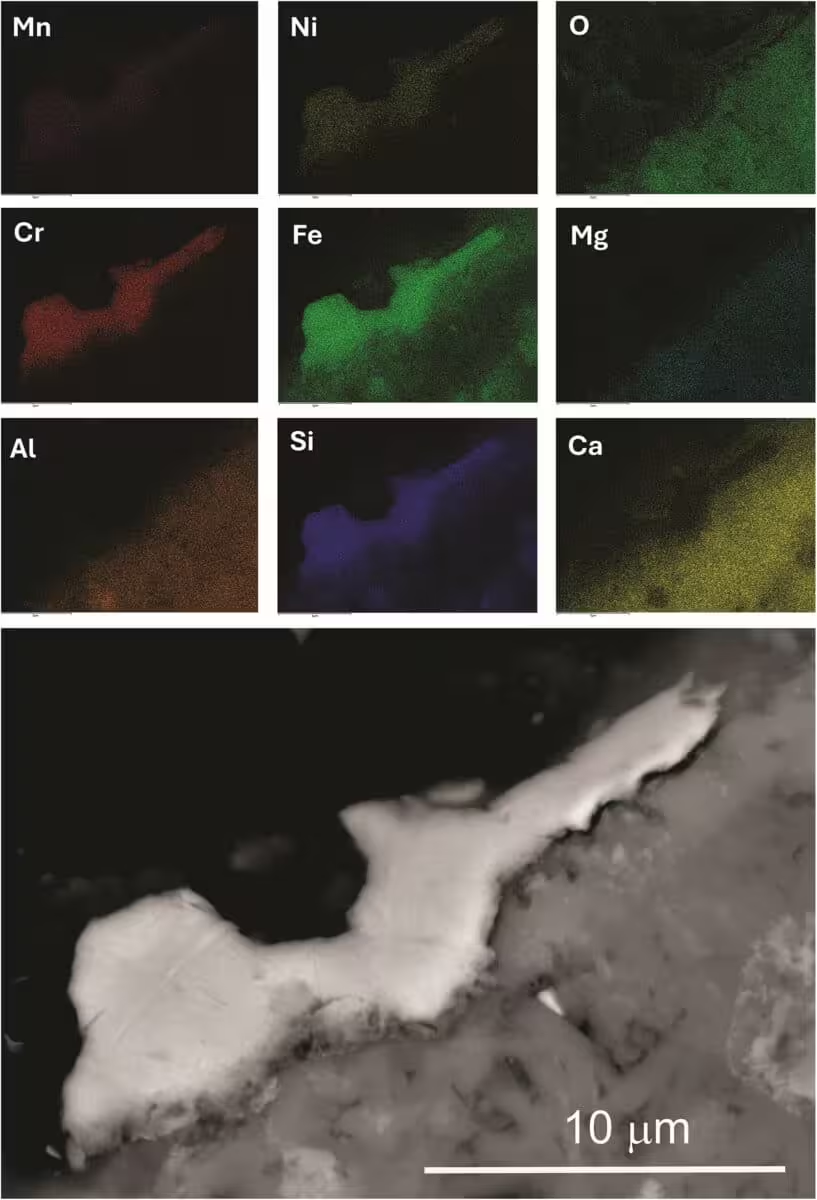
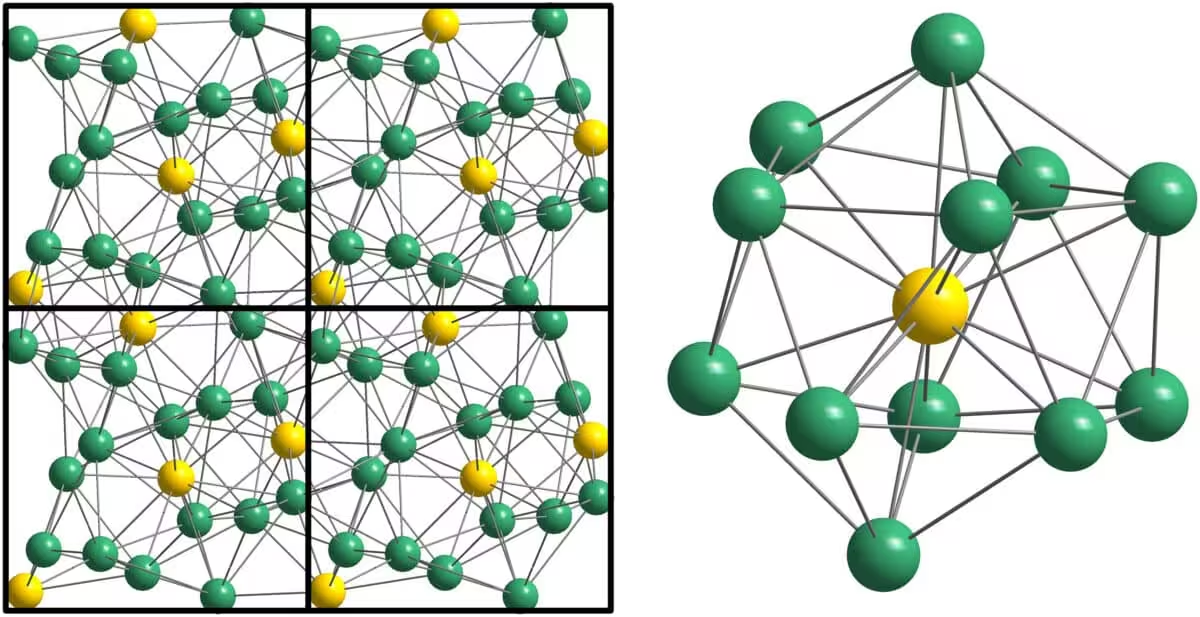
The newly identified alloy comprises iron, chromium, nickel, manganese, molybdenum, silicon and aluminum. Advanced imaging revealed that these elements organize into a uniform cubic lattice—a configuration that had never been documented in any natural or synthetic material.
Under ordinary cooling rates, the same blend would be expected to form a simpler crystalline pattern. The extreme, near‑instantaneous quench during the Hiroshima detonation, however, locked the atoms into a more complex cubic arrangement.
A Novel Alloy with Potentially Unusual Properties
Although the Hiroshima alloy does not meet the formal definition of a quasicrystal, its atomic ordering offers a valuable comparison point for other rare, high‑energy materials. Quasicrystals—once thought impossible—feature non‑repeating atomic patterns that have since been identified in both laboratory and natural settings.
Historic precedents include the Trinity test of July 1945, which produced trinitite, a glassy residue containing unusual crystal cages known as clathrates.
Similar high‑energy formations have been identified in meteorites, where natural cosmic impacts have generated quasicrystalline structures. These cases collectively illustrate how massive energy releases can push matter beyond the limits of standard geological processes.
The authors, citing the article in Science Advances, note that the discovery raises broader questions about whether such alloys represent isolated curiosities or belong to a larger family of materials forged in violent events. Luca Bindi emphasized:
“Even decades later, a grain only a few micrometers across can retain a detailed record of conditions that existed for only fractions of a second,” adding that: “These particles are not simply melted debris. They are physical archives of the explosion.”
Extreme Settings May Conceal More Hidden Materials
The find underscores how sites altered by rare, high‑energy phenomena can preserve substances that are otherwise unattainable in stable environments. Regions marked by extraordinary events may hold clues to physical processes that are difficult to replicate elsewhere.
Physicist Michael Widom of Carnegie Mellon University, who was not involved in the current work but has collaborated with Bindi before, described the result as part of an “underexplored realm of materials.” He highlighted that systematic searches in historically significant locations often yield the most surprising discoveries.
This article has been fact checked for accuracy, with information verified against reputable sources. Learn more about us and our editorial process.
Last reviewed on .
Article history
- Latest version
Reference(s)
- Pritchard, Cinnamon. “What Are Quasicrystals? Why Does We Study Them? NASA Science.”, July 24, 2025 NASA <https://science.nasa.gov/biological-physical/what-are-quasicrystals-and-why-does-nasa-study-them/>.
- Bindi, Luca., et al. “Discovery of a multicomponent alloy forged by the Hiroshima atomic blast.” Science Advances, vol. 12, no. 31, July 31, 2026 American Association for the Advancement of Science (AAAS), doi: 10.1126/sciadv.aeg8299. <https://www.science.org/doi/10.1126/sciadv.aeg8299>.
- “Home.” <https://sites.google.com/view/luca-bindi/home>.
- “Michael Widom - Department of Physics - Mellon College of Science - Carnegie Mellon University.” <https://www.cmu.edu/physics/people/faculty/widom.html>.
Cite this page:
- Posted by Farah Siddiqui