NASA’s Swift Rescue Mission Stumbles as Service Drone Loses Two Reaction Wheels
NASA’s rescue of the aging Swift telescope hits a snag as Link spacecraft suffers critical hardware failures in orbit.
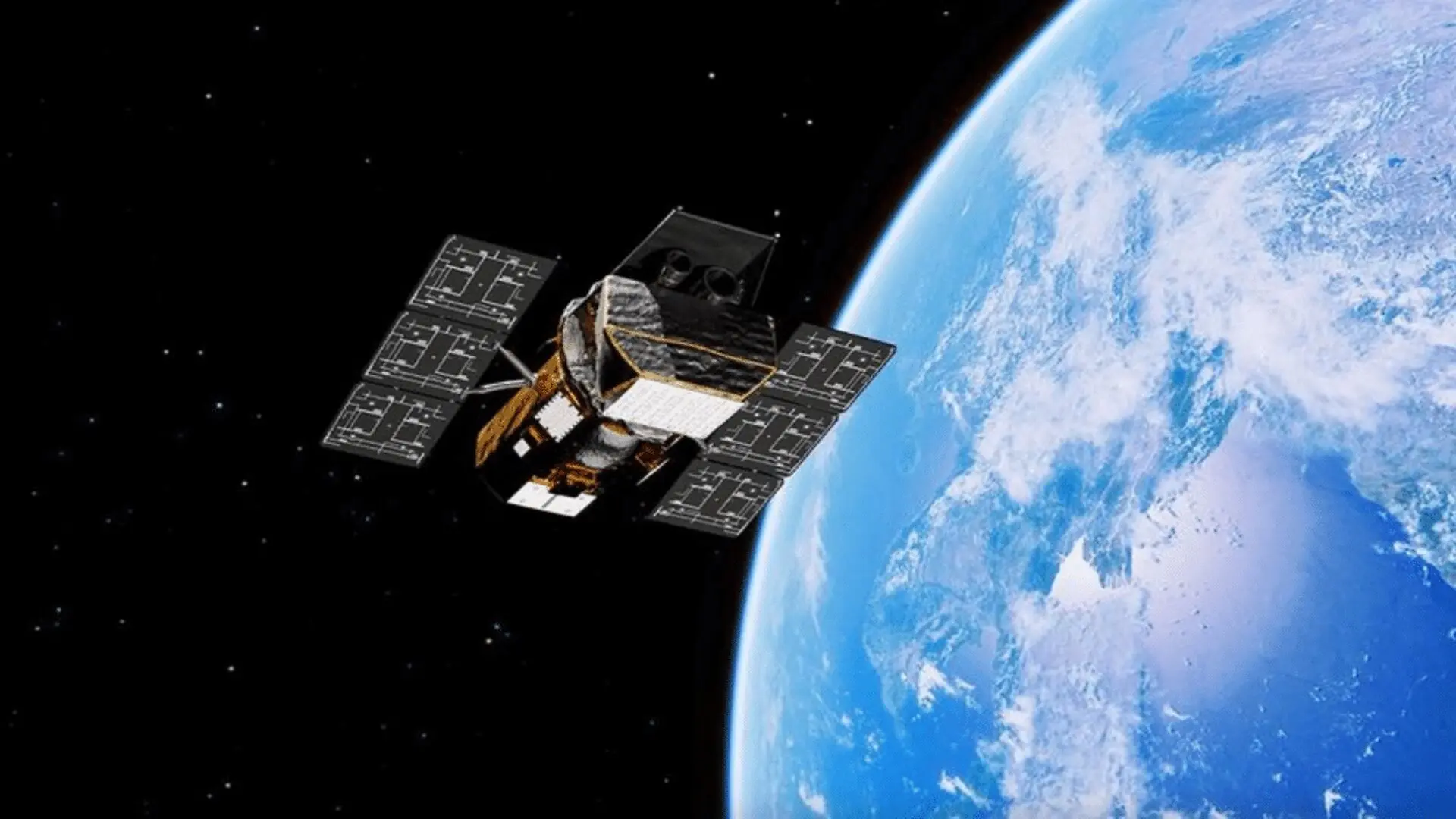
NASA’s plan to revive the Swift space telescope has hit a significant snag after the Link servicing spacecraft suffered hardware malfunctions in orbit, according to statements from NASA and coverage by Ars Technica. Engineers are now working to stabilize the robot and assess whether it can still complete the intended rendezvous and capture sequence.
Critical Failure Hits Service Robot En Route to Swift Telescope
Built by Katalyst Space Technologies for NASA’s experimental servicing mission, the Link spacecraft was intended to dock with the aging Swift observatory and restore its orbital altitude.
After a launch on July 3 that was delayed by weather and a launch‑vehicle issue, the mission entered a narrow window dictated by Swift’s gradually declining orbit. Shortly after insertion, Link’s attitude‑control system began to falter, compromising the reaction wheels that enable precise, fuel‑free orientation adjustments.
NASA confirmed that two of the three reaction wheels are inoperable and that the cold‑gas thruster system has also suffered a loss of functionality. “Preliminary investigation shows that two of Link’s three reaction wheels currently are not operable, and there is some loss of functionality in its cold gas thruster system,” the agency said.
Despite the setbacks, the spacecraft continues to generate power and maintain a communications link with ground control, giving engineers a window to evaluate the situation and adjust the mission plan.
LINK, the robotic spacecraft from Katalyst Space designed to boost our Swift mission’s orbit, experienced issues with attitude control over the weekend, causing the spacecraft to spin and resulting in sporadic communications. The team is working to stop LINK’s spin over the next… pic.twitter.com/uCu1hS7FxT
— NASA Universe (@NASAUniverse) July 28, 2026
NASA Considers New Approach After Attitude Control Loss
The rescue was originally conceived as a dual‑purpose demonstration: extend the life of Swift, a 2004‑launched telescope that probes gamma‑ray bursts, and showcase commercial servicing capabilities for future space assets.
Shawn Domagal‑Goldman, director of NASA’s astrophysics division, emphasized the program’s strategic value even before the malfunction emerged. “From a programmatics standpoint, I consider this a success already, just from the fact that we’re even going to try this,” he remarked.
NASA now faces a series of technical questions about navigation, approach trajectories, and the final capture maneuver. The agency outlined the next steps: “After reestablishing stable attitude and further investigating spacecraft status, Katalyst plans to update Link’s guidance, navigation, and control to accommodate the spacecraft’s new configuration,” NASA said. “Working closely with NASA teams, they will then evaluate revised plans to approach and capture Swift, depending on safety of the approach and Link’s health.”
Commercial Servicing Concept Put to the Test in Orbit
Swift’s rescue marks one of the earliest attempts to employ a privately built vehicle for a complex servicing operation on an operational scientific satellite.
NASA selected Katalyst’s design to explore how commercial partners might support future on‑orbit maintenance, repair, or upgrade missions—potentially reshaping how agencies manage long‑lived spacecraft.
Kieran Wilson, principal investigator for the Link project, acknowledged that technical hurdles are an expected part of such missions. “Our previous programs had issues with power systems and communications,” Wilson explained. “Those are a lot of the basic things that most of the engineering team gets very concerned about because we’re confident that as long as we have spacecraft that can function at a fundamental level, that gives us the freedom and flexibility to work through any issues we find during rendezvous and more challenging dynamical operations.”
The current anomaly is now a real‑world test of that philosophy, prompting engineers to lean on the remaining functional subsystems to regain operational capability rather than abort the effort.
Mission Perseveres as Engineers Seek Workarounds
With power and communications still intact, mission controllers have the capacity to explore corrective measures. The upcoming phase hinges on whether Katalyst can restore sufficient control authority for a safe approach to Swift, where even minor navigation errors could pose serious risks.
Regardless of the final outcome, the data gathered will inform the design of future servicing missions, highlighting how commercial spacecraft can adapt to unforeseen problems after launch.
In essence, the Swift rescue has evolved from a planned demonstration into a live assessment of spacecraft resilience, adaptive mission planning, and on‑the‑fly engineering in the harsh environment of space.
This article has been fact checked for accuracy, with information verified against reputable sources. Learn more about us and our editorial process.
Last reviewed on .
Article history
- Latest version
Reference(s)
- Kazmierczak, Jeanette. “Commissioning Update for Spacecraft to Boost NASA’s Swift - NASA Science.”, July 28, 2026 NASA <https://science.nasa.gov/blogs/swift/2026/07/28/commissioning-update-for-spacecraft-to-boost-nasas-swift/>.
- “https://twitter.com/NASAUniverse/status/2082198675149709683/photo/1.” <https://t.co/uCu1hS7FxT>.
Cite this page:
- Posted by Farah Siddiqui