Researchers Observed a Rare Nuclear Process for the First Time and It Could Explain How Gold Forms in Space
Unprecedented observations reveal how rare nuclear processes in the universe forge heavy elements like gold

Researchers at CERN have unveiled three new observations that shed light on the nuclear mechanisms responsible for forging the universe’s heaviest elements during cataclysmic astrophysical events. The findings, appearing in Physical Review Letters, target a pivotal phase of the rapid neutron capture (r‑process), the chain of reactions thought to generate gold, platinum and similar metals when neutron‑rich environments such as colliding neutron stars or exploding supernovae erupt.
The r‑process has long been recognized as the engine behind the synthesis of heavy nuclei, yet many of its intermediate steps unfold in fleeting, unstable isotopes that evade direct measurement. To probe these elusive stages, a collaboration led by physicists from the University of Tennessee turned to indium‑134, an isotope that lives for only fractions of a second before transforming into tin isotopes. Experiments carried out at CERN’s ISOLDE Decay Station have now captured the first detailed energy profile of neutrons emitted during this decay.
Unraveling a Rare Beta‑Delayed Neutron Emission
In the r‑process, nuclei rapidly absorb neutrons, become increasingly massive, and eventually undergo decay pathways that spawn new elements. One of the most challenging segments to observe involves a beta‑decay that is followed by the release of two neutrons, a sequence that occurs in nuclei with exceptionally short lifespans.
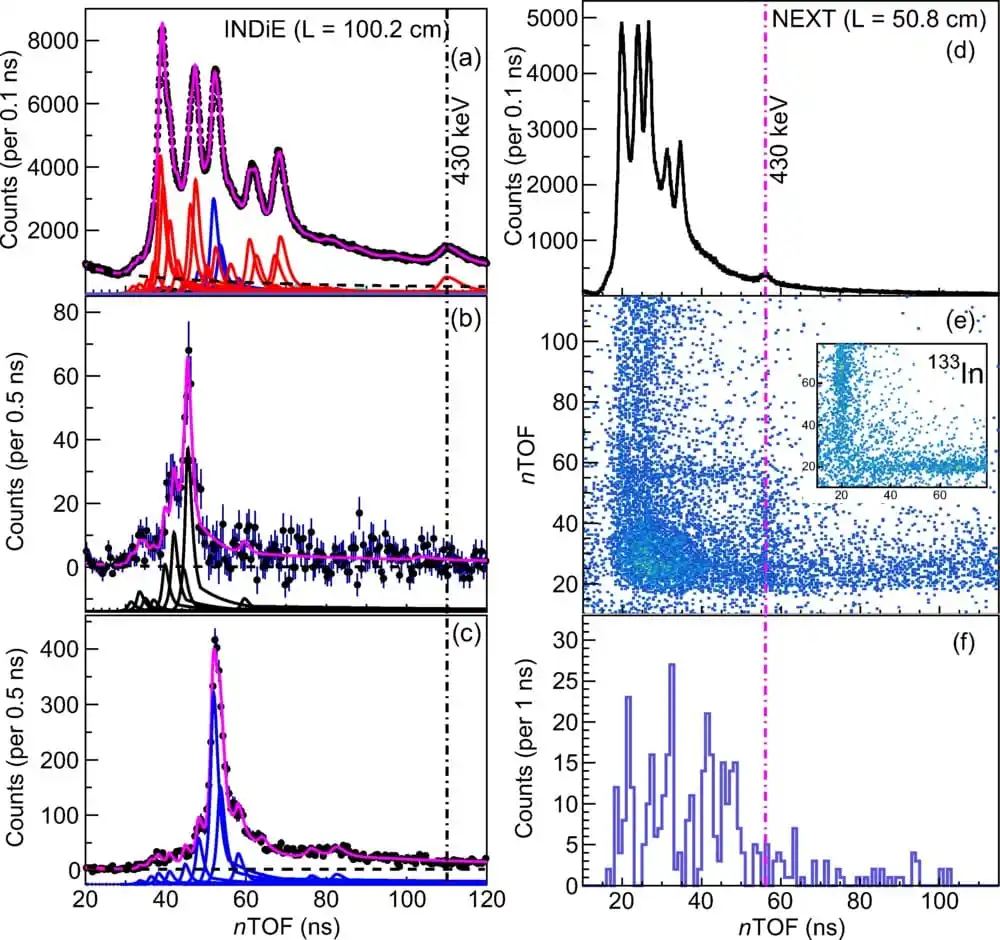
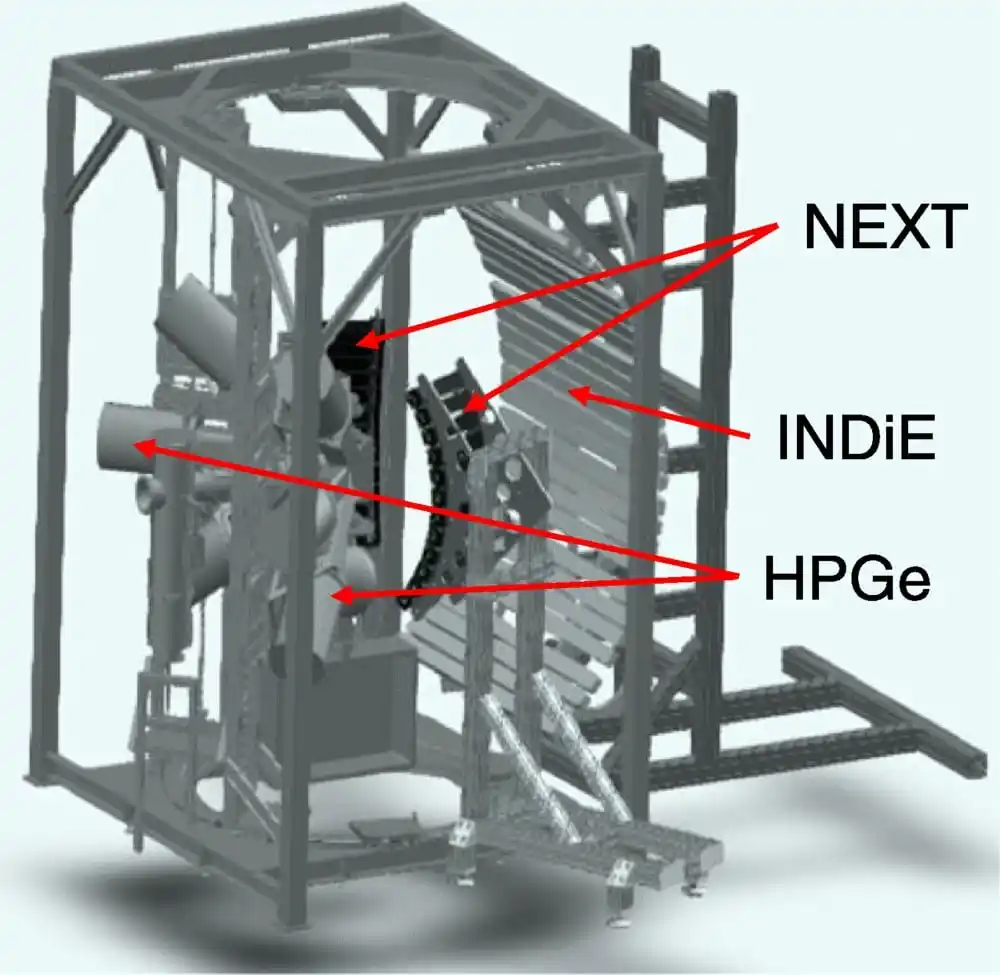
The team employed a custom‑built neutron detector, funded in part by the National Science Foundation, to record the energy distribution of neutrons released as indium‑134 decayed into excited states of tin‑132, tin‑133 and tin‑134. Robert Grzywacz, a professor on the project, emphasized the technical hurdles:
“These nuclei are hard to make and require a lot of new technology to synthesize in sufficient quantities”
Beyond mapping neutron energies, the experiment delivered two surprising outcomes that could reshape theoretical treatments of heavy‑element formation.
First Direct Observation of a Predicted Tin‑133 State
The study captured a long‑sought nuclear configuration in tin‑133 that had previously existed only as a theoretical construct. Detecting this state required the simultaneous release of two neutrons, a signature that finally confirmed the model’s prediction after two decades of searching.
“People were searching for it for 20 years and we found it. Those two neutrons allowed us to see this state”, said Grzywacz.
In a further unexpected twist, the researchers noted that the daughter nucleus retained subtle imprints of its predecessor’s structure—a phenomenon they described as a form of nuclear “memory.” This suggests that certain configurational traits can survive the decay cascade, influencing the properties of the resulting isotope.
Discrepancies with Established Nuclear Models
When the newly identified tin‑133 state was examined in detail, its population pattern deviated from the statistical expectations embedded in current theoretical frameworks. The experimental conditions were meticulously controlled, yet the observed behavior did not align with predictions, highlighting a gap in our understanding of nuclei far from stability.
These inconsistencies underscore the need for refined models that can accommodate the complex interplay of forces governing exotic isotopes. The CERN measurements, by exposing both confirmed and anomalous features, provide a valuable benchmark for future theoretical work aimed at decoding the r‑process and the cosmic origins of the heaviest elements.
This article has been fact checked for accuracy, with information verified against reputable sources. Learn more about us and our editorial process.
Last reviewed on .
Article history
- Latest version
Reference(s)
- “NSF - U.S. National Science Foundation.”, June 9, 2026 NSF - U.S. National Science Foundation <https://www.nsf.gov/>.
- “Grzywacz Robert.” <https://physics.utk.edu/people/instructional-faculty/grzywacz-robert/>.
- Dyszel, P.., et al. “First
Cite this page:
- Posted by Farah Siddiqui