Little Red Dots May Reveal How Black Holes Grew In The Early Universe
JWST’s Little Red Dots identified as rapidly growing black holes, transforming early universe insights
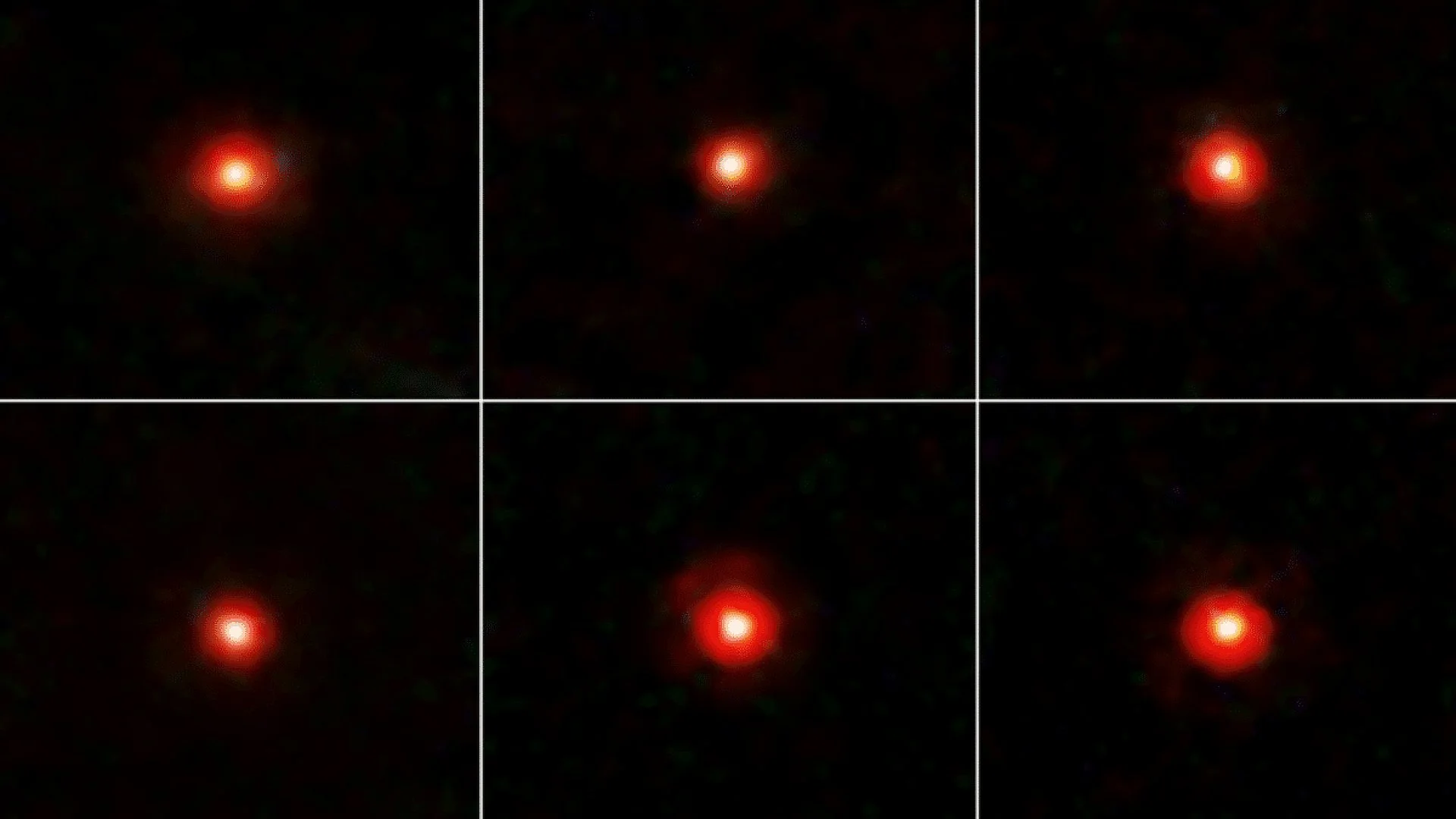
A recent theoretical paper posted on arXiv proposes that the enigmatic “Little Red Dots” spotted by the James Webb Space Telescope may actually be black holes experiencing extraordinarily fast accretion episodes. These faint, compact sources, distributed throughout the early cosmos, have defied classification with their atypical spectra and unexpected prevalence. The new analysis suggests they could be black holes feeding at rates far exceeding traditional limits, shedding light on how supermassive black holes formed within the first billion years after the Big Bang.
Compact Red Emitters From the Universe’s First Light
Since JWST began delivering data, astronomers have identified a cohort of diminutive, reddish objects at very high redshifts that do not conform to standard categories of galaxies or quasars. These objects display a characteristic V‑shaped spectral profile—bright in ultraviolet and optical wavelengths yet dimmer in the intermediate range—alongside broad emission features that hint at active accretion onto black holes. Notably, they lack the X‑ray, radio, or infrared signatures typical of conventional quasars.
Their sheer abundance has surprised researchers, appearing far more often than earlier cosmological simulations anticipated. While some earlier explanations invoked exotic physics, the new study by Yangyao Chen of Nanjing University and Houjun Mo of the University of Massachusetts offers a solution that remains fully compatible with the ΛCDM framework. By employing a galaxy‑formation model that traces these objects back to black‑hole seeds created over 13 billion years ago, the authors present a self‑consistent picture of their origin.
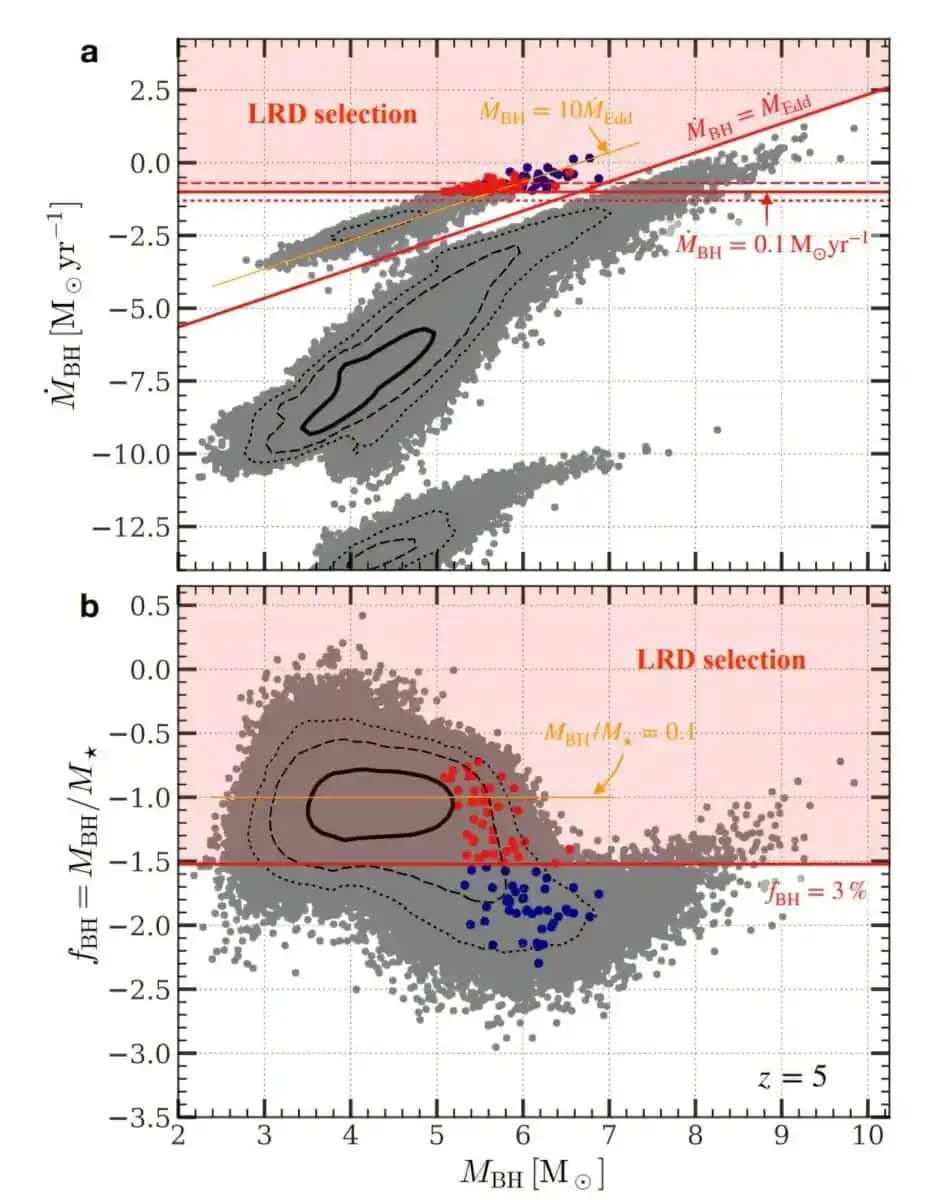
Credit: arXiv (2026). DOI: 10.48550/arxiv.2605.31077
Super‑Eddington Feeding Sparks Explosive Growth
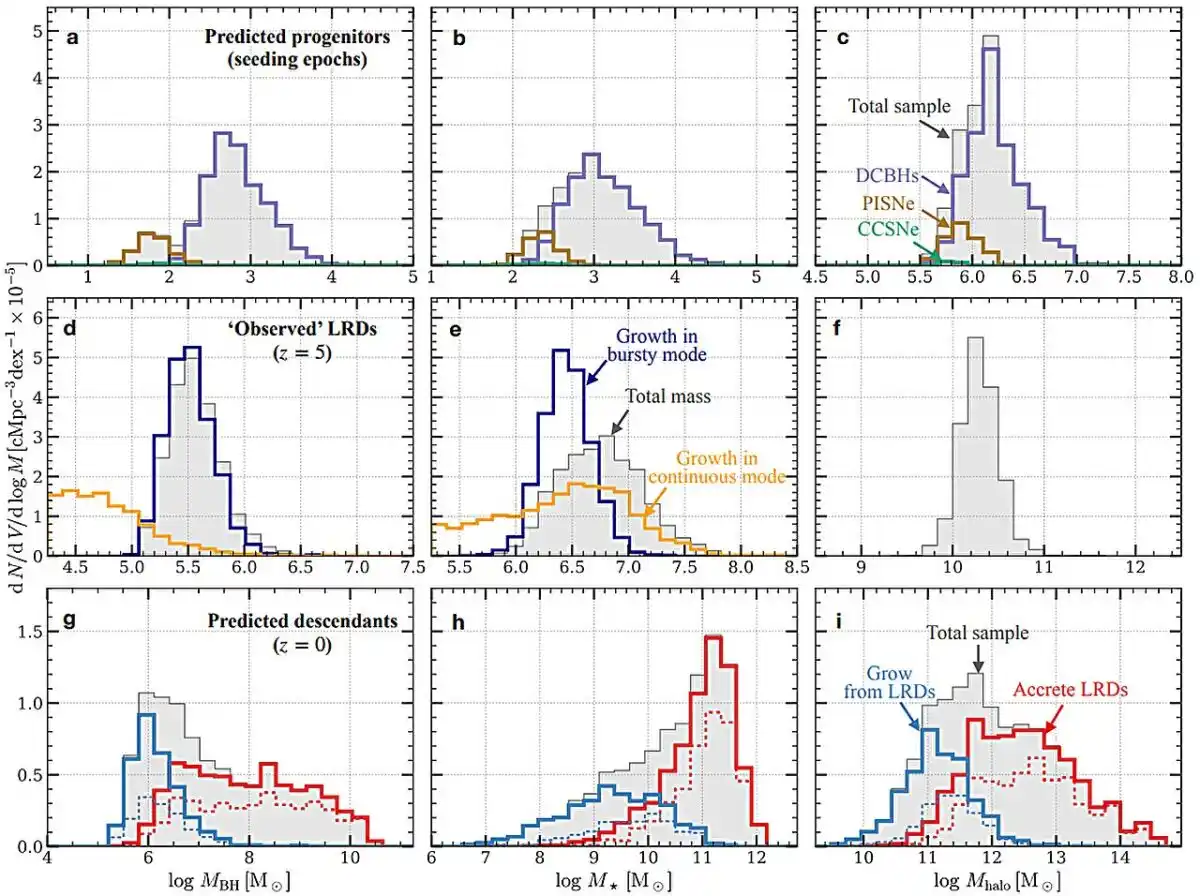
In the authors’ framework, most black‑hole seeds emerge at redshifts greater than 20, nestled within the tiny dark‑matter halos spawned by the first generation of stars. These early black holes start out as intermediate‑mass objects, insufficient on their own to generate the observed luminosities. Their transformation into the bright, compact sources detected by JWST is driven by episodes of super‑Eddington accretion, allowing mass intake up to an order of magnitude above the classical limit.
“Our model suggests that it is post‑seeding growth, mainly through episodic nuclear bursts, that raises BH seeds to supermassive status,” the researchers write in the paper.
Such bursts are brief yet powerful, triggered by dynamical events like galaxy mergers or close encounters. During these intervals, black holes experience runaway mass accumulation while star formation surges within dense nuclear clusters. The resulting blend of hot, young stars (producing the UV component) and an over‑fed black hole (dominating the red optical output) recreates the distinctive V‑shaped spectrum of the Little Red Dots.
A Prediction That Fits Within Standard Cosmology
The arXiv pre‑print stresses that no exotic mechanisms or fine‑tuned parameters are required to explain these objects. When black‑hole seeds evolve together with their host galaxies and surrounding dark‑matter halos, the ΛCDM model naturally yields the observed population. Depending on later environmental influences, some of these objects may merge into larger galaxies, while others could persist as ultra‑compact dwarfs or resemble globular clusters.
“We will present a detailed analysis of the connection between LRDs and present‑day compact dwarf galaxies in a forthcoming paper,” the researchers conclude.
These statements imply that tracking Little Red Dots could illuminate the evolutionary pathways of compact stellar systems and intermediate‑mass black holes across cosmic epochs.
A Larger, Yet‑Undetected Population Awaits
According to the model, the Little Red Dots already identified by JWST represent only the brightest tip of a far more extensive cohort of black holes undergoing similar bursty growth, many of which fall below present detection limits. Upcoming JWST campaigns and future observatories could reveal this hidden demographic, deepening our grasp of early black‑hole assembly and the co‑evolution of galaxies. The results also suggest that violent nuclear accretion episodes were a common driver of both stellar and black‑hole development in the young universe.
This article has been fact checked for accuracy, with information verified against reputable sources. Learn more about us and our editorial process.
Last reviewed on .
Article history
- Latest version
Reference(s)
- Chen, Yangyao. “Super-Eddington accretion of black holes in early nuclear bursts gives birth to Little Red Dots.” arXiv.org <https://arxiv.org/abs/2605.31077>.
Cite this page:
- Posted by Farah Siddiqui