Scientists Found 6 Red Dwarfs Carrying a Chemical Trace That Shouldn’t Exist, It May Point to Missing Planets
Unusual behavior detected in red dwarfs could reveal hidden cosmic secrets
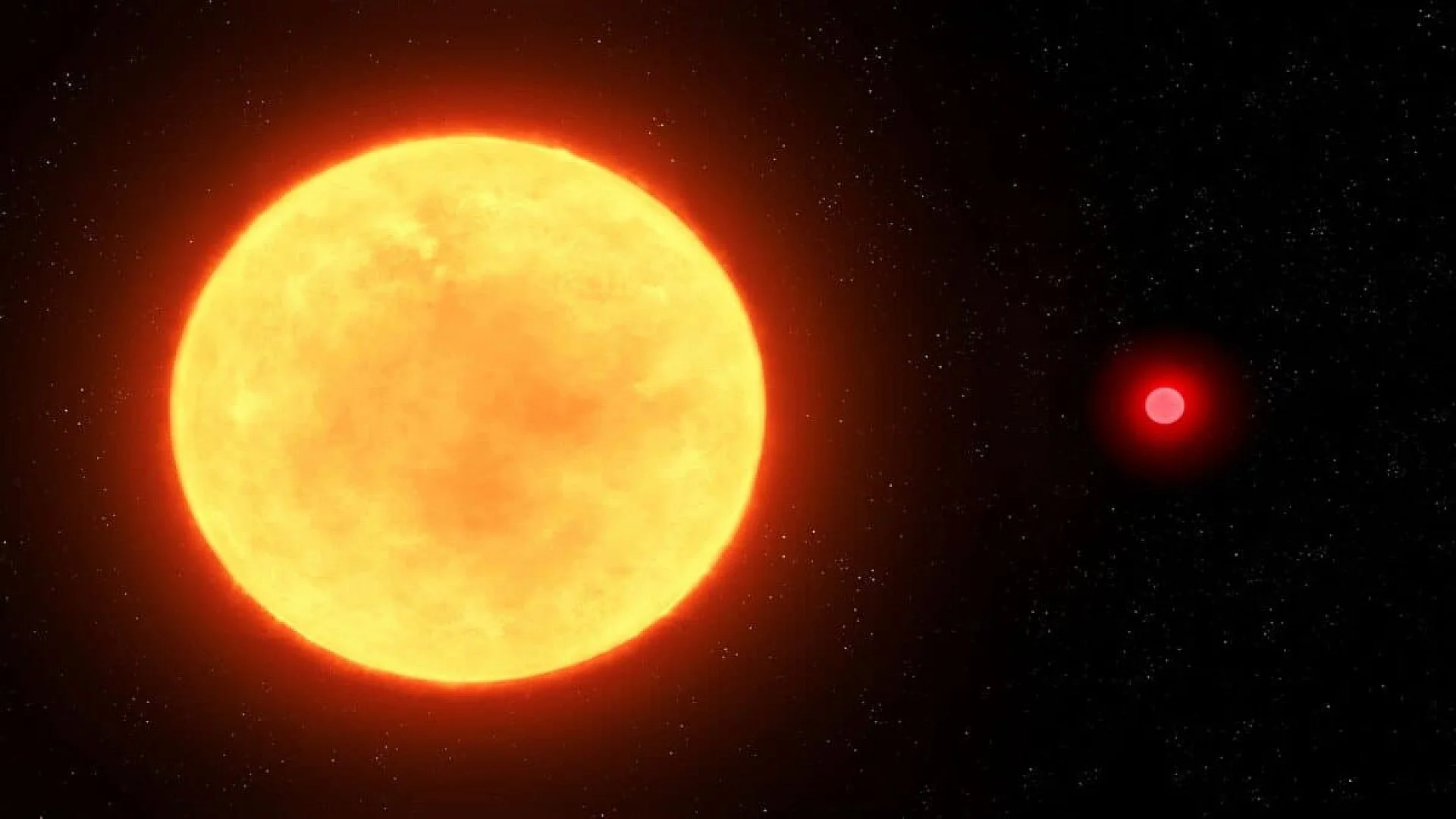
A team of astronomers has uncovered six red dwarf stars that contain far more lithium than they should, given their advanced ages. The anomaly suggests that these tiny suns may have recently devoured rocky planets, leaving a distinctive chemical fingerprint.
The researchers focused on red dwarfs that belong to stellar clusters—groups of stars born from the same cloud of gas and dust, sharing similar ages and elemental make‑up. Detecting a planetary engulfment event is notoriously difficult because the process erases most direct evidence, forcing scientists to rely on subtle clues hidden in a star’s composition, motion, or physical traits long after the encounter.
Lithium Surplus Stands Out in a Large Red Dwarf Survey
Led by Robin Jeffries of Keele University, the team examined data from the Gaia-ESO Spectroscopic Survey (GES), which provides detailed chemical inventories for thousands of Milky Way stars. Their analysis, published in Monthly Notices of the Royal Astronomical Society, targeted red dwarfs residing in clusters, where lithium is normally depleted early in a star’s life.
From an initial pool of 318 cluster red dwarfs capable of revealing a lithium signal, six stood out with lithium abundances that far exceed theoretical expectations.
“We found that a few of the red dwarf stars we studied contained lithium, a chemical element that should not be there,” Jeffries said in a statement published by the Royal Astronomical Society. “Therefore even a small amount of lithium stands out clearly in these stars – a bit like throwing paint onto a blank canvas.”
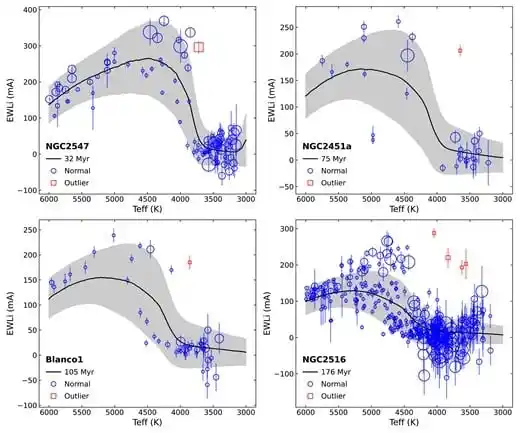
Because mature red dwarfs destroy lithium rapidly, any detected lithium must have been supplied after the star’s formation, hinting at an external source.
Red Dwarfs as Sensitive Probes of Recent Planetary Accretion
The quest to spot stars that have swallowed planets falls under the banner of necroplanetology. Historically, the search has centered on evolved stars, where debris from consumed worlds can be more readily identified. Red dwarfs, by contrast, are smaller, cooler, and burn fuel at a glacial pace—lasting tens of billions to even trillions of years, far longer than the Sun’s ~10‑billion‑year lifespan.
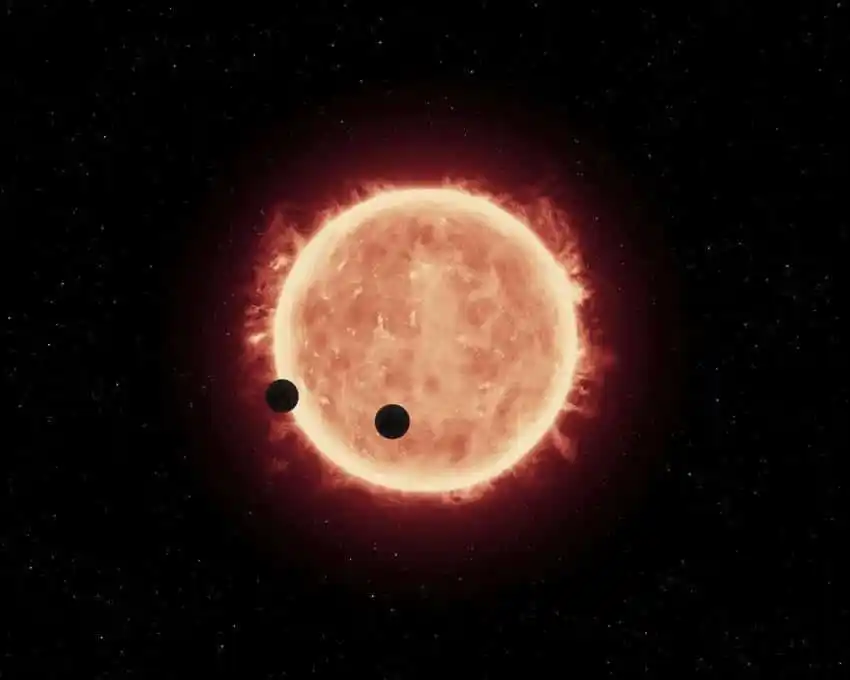
Red dwarfs’ rapid lithium depletion makes them excellent detectors of recent material influx: any lithium that appears in their atmospheres is likely a fresh addition rather than a relic from birth. This property allows astronomers to treat lithium as a marker of a recent, possibly planetary, ingestion event.
Testing Alternative Explanations
Before attributing the lithium excess to planetary consumption, the team evaluated other possibilities. One hypothesis proposed that the six lithium‑rich objects might be younger interlopers that had joined the clusters later, since younger stars retain more lithium. However, color‑magnitude diagrams and proper‑motion data confirmed that each star is a bona‑fide cluster member.
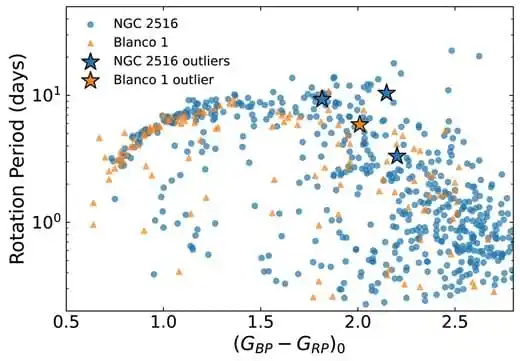
The investigators also considered whether atypical stellar dynamics could be responsible. High rotation rates and intense magnetic activity can alter internal mixing and affect lithium loss. Contrary to that expectation, the six stars with elevated lithium are among the slowest rotators in their respective clusters.
Finally, the researchers modeled the impact of adding lithium‑rich rocky material to a red dwarf’s outer layers. Their simulations show that ingesting roughly three to ten Earth masses of silicate‑rich debris would reproduce the observed lithium concentrations, supporting the planetary‑consumption scenario as the most plausible explanation.
If confirmed, these findings would provide a rare glimpse into the violent late‑stage evolution of planetary systems around the most common type of star in our galaxy, opening a new window on how planets and their host stars interact over billions of years.
This article has been fact checked for accuracy, with information verified against reputable sources. Learn more about us and our editorial process.
Last reviewed on .
Article history
- Latest version
Reference(s)
- “Rob Jeffries.”, November 11, 2022 Keele University <https://www.keele.ac.uk/scps/physicsandastrophysics/ourpeople/rdjeffries/>.
- “ESO Catalogue Facility.” <https://www.eso.org/qi/catalog/show/393>.
- <https://academic.oup.com/mnras/article/549/2/stag815/8694599?login=false>.
Cite this page:
- Posted by Farah Siddiqui