Are We Inside a Cosmic Video Game? Why the Simulation Idea Refuses to Go Away
A centuries-old question about reality has returned in digital form, driven by virtual worlds, AI, and a philosophical argument that says simulated lives may soon outnumber real ones.
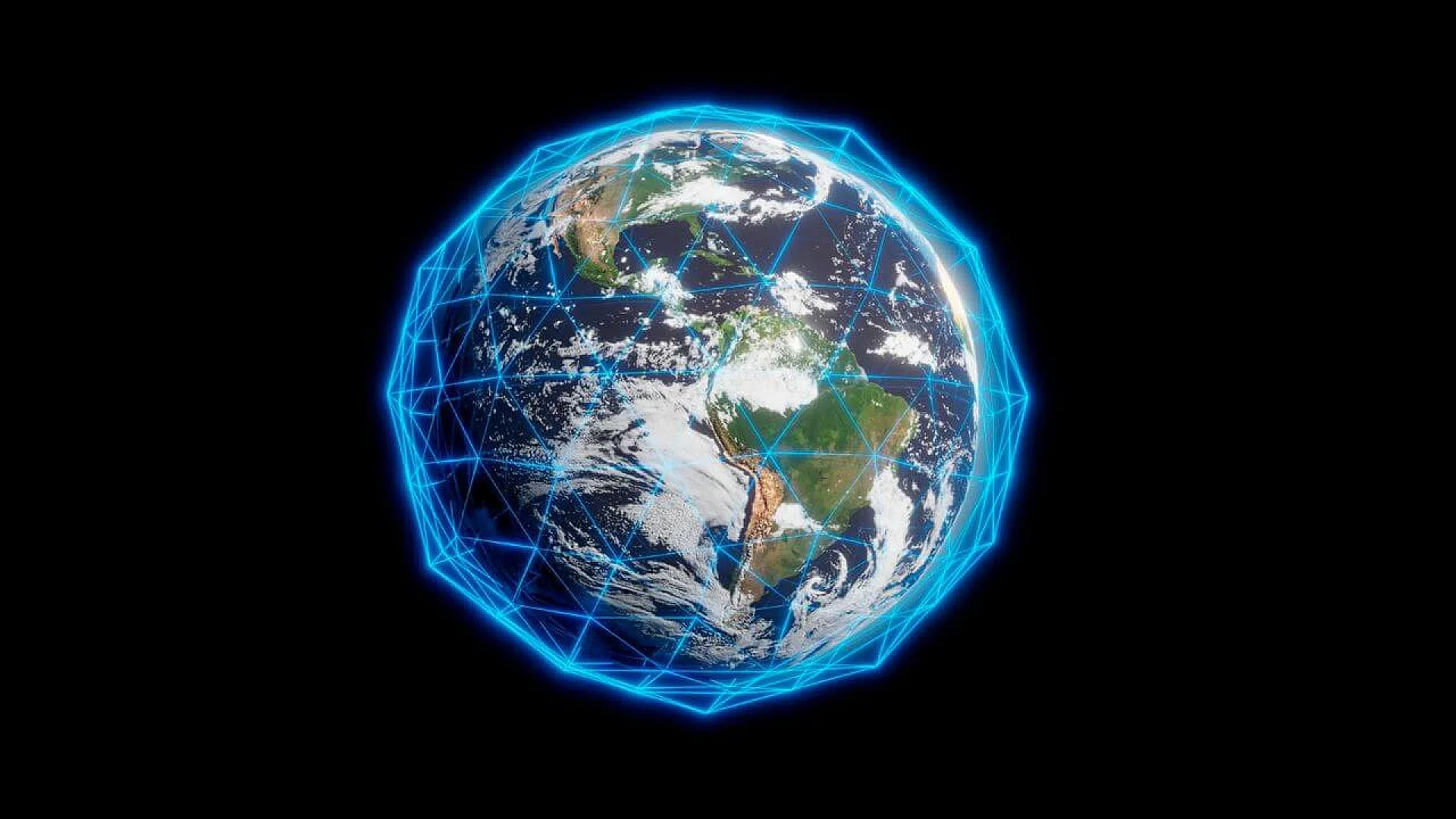
Take a second and look at your hand. It feels solid. Familiar. Real.
Now think about something you cannot see directly, like the back of your head. You trust it exists because mirrors, photos, and other people confirm it. Push a little further and the ground becomes shakier. You believe in atoms, black holes, and distant galaxies mostly because experts told you they are there, backed by instruments and equations you have never personally used.
This chain of trust is how humans have always navigated the world. Yet it also hides an uncomfortable truth. Every source of knowledge we rely on, from our senses to our teachers to our machines, can be wrong sometimes. Optical illusions fool our eyes. Faulty memory reshapes the past. Even careful measurements can fail.
That fragility opens the door to a much larger question. If none of our tools for knowing the world are perfectly reliable, how confident can we really be that the world we experience is the base layer of reality?
This question is not new. What is new is the technological lens through which many people now view it.
Ancient Doubts About Reality, Rebranded for the Digital Age
Long before computers existed, philosophers worried about whether appearances could be trusted. In ancient China, the philosopher Zhuangzi described dreaming he was a butterfly, then waking up unsure whether he was a man who dreamed of being a butterfly or a butterfly dreaming of being a man.
In ancient Greece, Plato imagined prisoners chained inside a cave, mistaking shadows on a wall for the true objects casting them. The message was unsettling. What we take for reality might only be a projection.
For centuries, these ideas remained largely philosophical thought experiments. They were intriguing but impossible to test. There was no obvious mechanism that could generate a convincing fake world.
That changed once humans began building worlds of their own.
From Video Games to Virtual Lives
In just a few decades, digital environments have gone from crude pixels to immersive spaces that can feel emotionally real. Modern video games simulate entire cities. Virtual reality can convince the brain it is standing on a cliff or floating in space. Artificial intelligence systems can carry on conversations that feel surprisingly human.
These technologies do more than entertain. They demonstrate something profound. With enough detail and processing power, artificial environments can trigger real thoughts, emotions, and decisions in the minds experiencing them.
This realization inspired one of the most famous modern arguments about reality itself.
Nick Bostrom’s Thought Experiment That Changed the Conversation
Around twenty years ago, philosopher Nick Bostrom proposed what is now known as the simulation hypothesis. It is not a claim that we have evidence of living in a simulation. Instead, it is a logical argument built on assumptions about future technology.
Bostrom asked people to imagine a future civilization with computing power far beyond anything available today. In such a future, simulating entire human histories could become technically possible. Not just one simulation, but vast numbers of them.
If a simulated person’s brain processes and experiences match those of a biological human, then from the inside, life would feel exactly the same. Thoughts would feel authentic. Emotions would feel real. The simulated person would have no direct way to tell they were simulated.
Now comes the unsettling leap.
If one original human civilization existed, but future societies created trillions of simulated versions of that civilization, then the number of simulated minds would vastly exceed the number of original biological minds. From a purely statistical standpoint, any randomly selected conscious observer would most likely be inside a simulation rather than the original world.
The argument does not depend on glitches, strange physics, or experimental proof. It hinges on whether one accepts that advanced civilizations will eventually run many high-fidelity simulations.
If that future happens, Bostrom argues, the odds quietly turn against us.
Why the Argument Feels So Convincing to Some Scientists
The simulation hypothesis gained traction partly because it aligns with visible technological trends. Computing power keeps increasing. Artificial intelligence grows more capable. Virtual environments become more detailed and immersive.
For some scientists and technologists, projecting these trends forward makes large-scale simulations feel plausible, even inevitable. Public figures from physics and technology have openly said the idea cannot be dismissed, though opinions vary widely on the actual odds.
What makes the argument especially sticky is that it bypasses traditional scientific testing. It does not predict a new particle or explain an unexplained measurement. Instead, it reframes probability itself. If simulations dominate the population of minds, then probability alone becomes the evidence.
That move is also why many experts remain deeply uneasy with it.
Does the Universe Look Like a Simulation?
Some supporters point to features of the universe that feel, at least metaphorically, like computational limits.
There is a smallest measurable scale of space, far tinier than an atom, beyond which current physical theories stop working reliably. There is also a cosmic horizon. We cannot see beyond a certain distance because light from farther away has not had time to reach us since the universe began.
To some, these limits resemble the resolution boundaries of a digital world, like pixels on a screen or the edge of a rendered map in a game.
But resemblance is not explanation. Physical limits can arise for many reasons that have nothing to do with simulation. Memory errors explain misplaced phones far better than software bugs in reality. Coincidences feel meaningful because human brains are pattern-seeking machines.
Even proponents admit that none of these observations prove anything.
The Case Against a Simulated Reality
Critics of the simulation hypothesis raise several serious objections. One of the strongest is practical rather than philosophical.
The computational power required to simulate entire human civilizations at the level of individual thoughts would be staggering. Bostrom himself has described such simulators as almost godlike. There is no guarantee that any civilization, no matter how advanced, will ever reach that level.
There is also a deeper concern. If the hypothesis cannot be tested or falsified, does it belong in science at all? Many physicists argue that ideas which make no new predictions cannot meaningfully improve our understanding of the universe.
Others worry that focusing too much on simulated reality distracts from urgent real-world problems. Whether climate change, inequality, or public health crises occur in a base reality or a simulation, the consequences feel real to those living through them.
Why the Simulation Hypothesis Still Matters
Even if the simulation hypothesis is wrong, it performs an important function. It forces people to examine assumptions they rarely question.
What does it mean for something to be real? Is physical origin more important than conscious experience? If a simulated life feels meaningful from the inside, does its artificial origin matter?
These questions are no longer abstract. As virtual environments grow more immersive and AI becomes more integrated into daily life, humans are already spending large portions of their existence in constructed realities.
In that sense, the simulation debate is less about cosmic truth and more about understanding the future we are actively building.
Why This Matters
The simulation hypothesis challenges the idea that reality must be singular and fundamental. Whether true or not, it highlights how technology reshapes philosophical questions that once seemed settled. As artificial worlds grow richer, the line between real and constructed experiences becomes harder to define.
An Idea That Refuses to Disappear
The notion that reality might not be what it seems has survived thousands of years, from ancient philosophy to modern physics labs. The simulation hypothesis is simply the latest expression of that doubt, dressed in digital language and powered by exponential technology.
It offers no comforting answers and no experimental proof. What it offers instead is a mirror, reflecting how uncertain knowledge has always been and how powerful our creations have become.
Whether we are in a simulation or not, the question itself reveals something deeply human. We are creatures who build worlds, then wonder if we might be living inside one.
This content has been reviewed by subject-matter experts to ensure scientific accuracy. Learn more about us and our editorial process.
Last reviewed on .
Article history
- Latest version
Cite this page:
- Posted by John Williams
- Are We Living in a Simulation
- Artificial Intelligence and Reality
- Consciousness and Reality
- Digital Universe Theory
- Limits of the Universe
- Modern Philosophy Science
- Nick Bostrom Simulation
- Philosophy of Reality
- Physics
- Reality and Perception
- Science and Philosophy
- Simulated Reality
- Simulation Hypothesis
- Technology and Reality Debate
- Virtual Reality Science