Scientists Engineer a ‘Universal’ Kidney That Matches Any Blood Type
Researchers have taken a major step toward making kidneys compatible with any blood type, a development that could dramatically shorten transplant waiting lists and save thousands of lives.
For people living with kidney failure, time often feels like the most precious and unreliable resource. Dialysis can keep patients alive, but it is physically exhausting, emotionally draining, and never a true substitute for a functioning kidney. A transplant offers the closest thing to a normal life, yet for many patients, especially those with type O blood, the wait can stretch for years.
Blood type compatibility remains one of the biggest bottlenecks in kidney transplantation. People with type O blood can receive kidneys only from type O donors, while kidneys from type O donors can be transplanted into patients of any blood type. This imbalance creates a cruel arithmetic. Type O patients make up a large share of transplant waiting lists, but the pool of compatible organs is relatively small. As a result, many people deteriorate while waiting, and some never receive an organ at all.
Against this backdrop, a recent breakthrough has drawn attention across the transplant community. Researchers report that they have effectively created a “universal” kidney, one that no longer carries the blood-type markers that trigger immediate immune rejection. The work is still experimental, but it marks a shift in how scientists think about compatibility itself.
Why Blood Types Matter So Much
To understand why this research is so significant, it helps to revisit the basics of blood types. The familiar ABO system is determined by sugar molecules, called antigens, that sit on the surface of red blood cells and many other tissues, including organs. These antigens act like molecular name tags. The immune system is trained from early life to recognize its own tags and to attack anything unfamiliar.
In organ transplantation, this recognition happens fast. If a kidney bearing type A antigens is transplanted into someone with type O blood, the recipient’s immune system identifies those antigens as foreign and mounts an aggressive response. Without heavy immune suppression or complex preparation, the organ is quickly rejected.
There are ways to work around this barrier. Some transplant centers perform ABO-incompatible transplants by carefully suppressing or retraining the recipient’s immune system beforehand. These procedures can work, but they are costly, time-consuming, and risky. They usually require a living donor and weeks of preparation, making them impractical for many patients and healthcare systems.
This is why the idea of changing the organ, rather than the patient, has held such appeal.
Rewriting an Organ’s Identity
The new research takes that idea seriously. Instead of trying to convince the immune system to tolerate a mismatched kidney, the scientists focused on removing the features that make the kidney appear foreign in the first place.
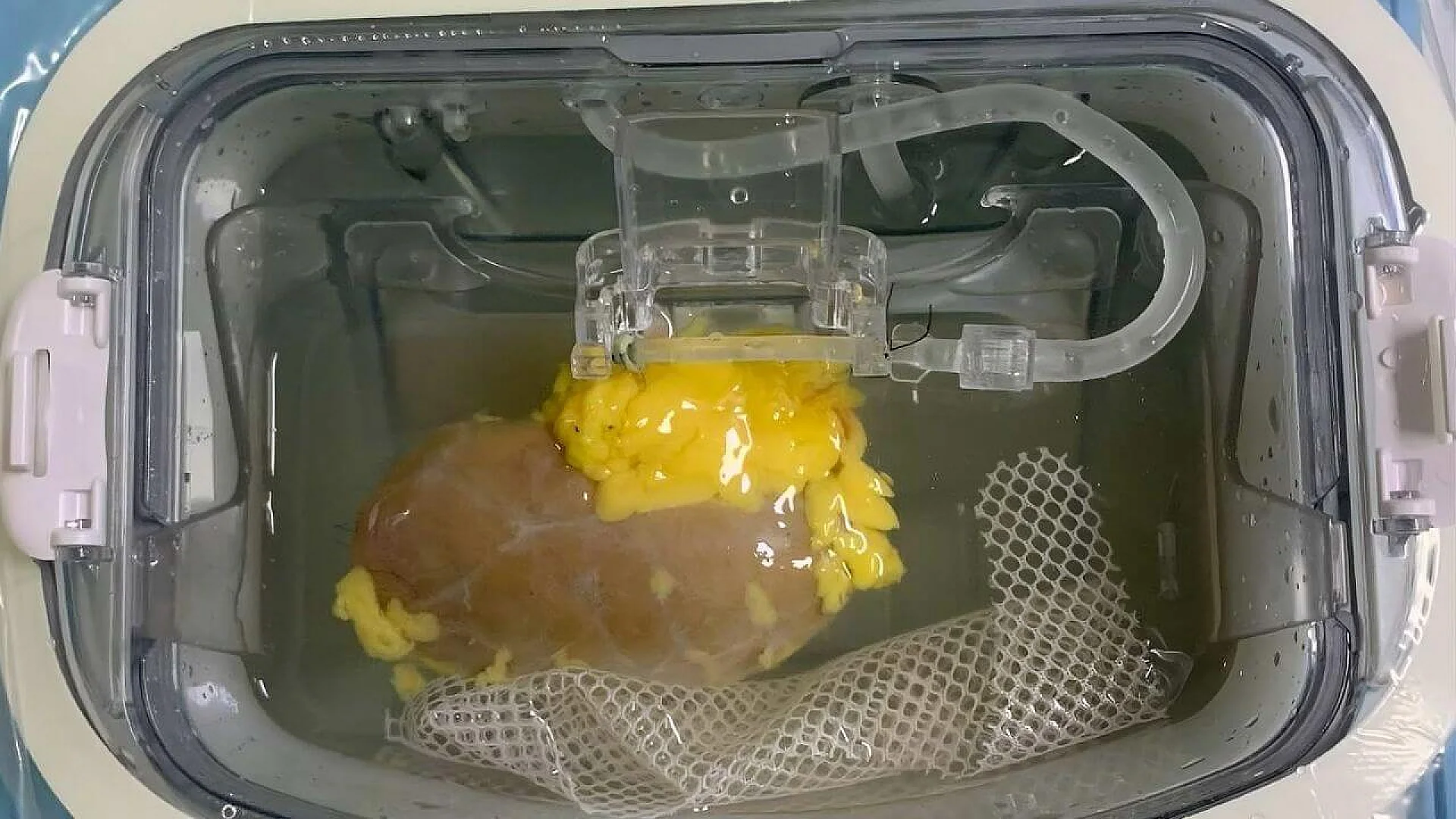
The team used specialized enzymes that target the sugar chains forming type A blood group antigens. These enzymes act with remarkable precision, cutting away the molecular structures that define type A blood while leaving the underlying tissue intact. The result is an organ that, at least on the surface, resembles a type O kidney.
Stephen Withers, a biochemist at the University of British Columbia and one of the study’s senior researchers, has described the process in simple terms. It is like stripping red paint from a car to reveal a neutral base coat underneath. Once the paint is gone, the car no longer stands out. In the same way, once the antigens are removed, the immune system has far fewer reasons to attack the organ.
This approach builds on years of basic biochemical research into enzymes that recognize and modify specific sugar molecules. What makes the current work different is that it moves beyond laboratory dishes and animal models, testing the idea in a human organ under near-clinical conditions.
A First Test in the Human Body
The most striking part of the study involved transplanting a modified kidney into a human body. The recipient was brain-dead, and the procedure was carried out with the consent of the family, strictly for research purposes. This setup allowed scientists to observe how the altered organ behaved in a realistic biological environment without putting a living patient at risk.
For several days, the kidney survived and functioned. It produced urine and showed signs of normal activity, a crucial indicator that the enzymatic treatment had not damaged its essential structures. For the researchers, this was a milestone.
“This is the first time we’ve seen this play out in a human model,” Withers said when the findings were reported, emphasizing how rare such opportunities are in transplant research.
Equally important was what happened next. By the third day, the kidney began to show signs of regaining type A characteristics. Some antigens reappeared, triggering an immune response. However, the reaction was milder than what doctors would normally expect from a fully incompatible transplant. There were even indications that the body was beginning to tolerate the organ rather than immediately rejecting it.
This partial success highlights both the promise and the complexity of the approach.
What Makes This Different From Past Attempts
The concept of altering blood group antigens is not entirely new. Scientists have experimented with modifying red blood cells and other tissues before. What sets this work apart is the scale and the target.
Kidneys are complex, densely vascularized organs with millions of filtering units. Treating them evenly, without leaving behind pockets of unmodified tissue, is a formidable challenge. The fact that the enzymes could be delivered through the organ’s blood vessels and achieve widespread antigen removal is a technical achievement in itself.
Another key difference is durability. The re-emergence of type A antigens shows that the body has ways of restoring these molecular markers over time. Understanding why this happens, and how to prevent it, is now one of the central questions facing the researchers.
Yet even a temporary reduction in antigen expression could be clinically valuable. If an organ provokes a weaker immune response, doctors may be able to manage rejection with lower doses of immunosuppressive drugs, reducing side effects and long-term complications.
Why This Matters for Patients
The human cost of kidney shortages is stark. In the United States alone, about 11 people die each day while waiting for a kidney transplant, and a large proportion of them are type O patients who face the longest waits.
A truly universal kidney would change the logic of organ allocation. Instead of matching donors and recipients by blood type, transplant systems could focus more on urgency, tissue compatibility, and geography. Organs could be distributed more efficiently, reducing wasted time and improving survival rates.
For patients, this could mean shorter waits, fewer complications, and better quality of life. For healthcare systems, it could translate into lower long-term costs by reducing dependence on dialysis and repeated hospitalizations.
How This Fits Into a Bigger Picture
This research does not exist in isolation. Around the world, scientists are exploring multiple strategies to address the organ shortage crisis.
Some teams are investigating the use of genetically modified pig kidneys as temporary or even permanent replacements. Others are developing new antibody treatments to control immune responses more precisely. There is also ongoing work on growing or regenerating organs using stem cells, though that goal remains distant.
The enzyme-based approach complements these efforts rather than competing with them. It builds on existing donor systems and could, in principle, be integrated into current transplant workflows if proven safe and effective.
As Withers has noted, this is what happens when years of basic science finally intersect with patient care. Discoveries that once seemed abstract begin to show real-world potential.
The Challenges That Remain
Despite the excitement, the researchers are careful not to overstate their findings. Several hurdles must be cleared before universal kidneys become a clinical reality.
First, scientists need to understand and control the return of blood-type antigens. Whether this re-expression can be slowed, stopped, or managed safely is an open question.
Second, the long-term effects of enzymatic treatment on organ health remain unknown. A kidney must function reliably for years, ideally decades. Short-term success is encouraging, but it is only the beginning.
Third, regulatory and ethical considerations will play a major role. Any procedure that alters donor organs will require extensive testing and oversight before it can be offered to patients.
These uncertainties do not diminish the importance of the work. Instead, they define the roadmap ahead.
Why This Matters
Kidney transplantation has always been constrained by biology. Blood types, immune systems, and genetic differences set hard limits on who can receive which organ. This research suggests that at least some of those limits may be more flexible than once thought.
By changing the organ rather than the patient, scientists are challenging a foundational assumption of transplant medicine. If successful, this shift could reshape not only kidney transplantation but also the broader field of organ replacement.
For now, the universal kidney remains a proof of concept. But it is a proof built on real human tissue, real biological responses, and years of careful work. That makes it more than a theoretical advance. It is a glimpse of a future where compatibility is engineered, not inherited.
The research was published in Nature Biomedical Engineering on October 03, 2025.
This content has been reviewed by subject-matter experts to ensure scientific accuracy. Learn more about us and our editorial process.
Last reviewed on .
Article history
- Latest version
Reference(s)
- Zeng, Jun., et al. “Enzyme-converted O kidneys allow ABO-incompatible transplantation without hyperacute rejection in a human decedent model.” Nature Biomedical Engineering, 03 October 2025, doi: 10.1038/s41551-025-01513-6. <https://www.nature.com/articles/s41551-025-01513-6>.
Cite this page:
- Posted by David Anderson