NASA Fuels Roman Space Telescope, Paving Way for Dark Energy and Exoplanet Discoveries
NASA hits key pre‑launch milestone for the Nancy Grace Roman Space Telescope, moving its ambitious astronomy mission nearer to launch.
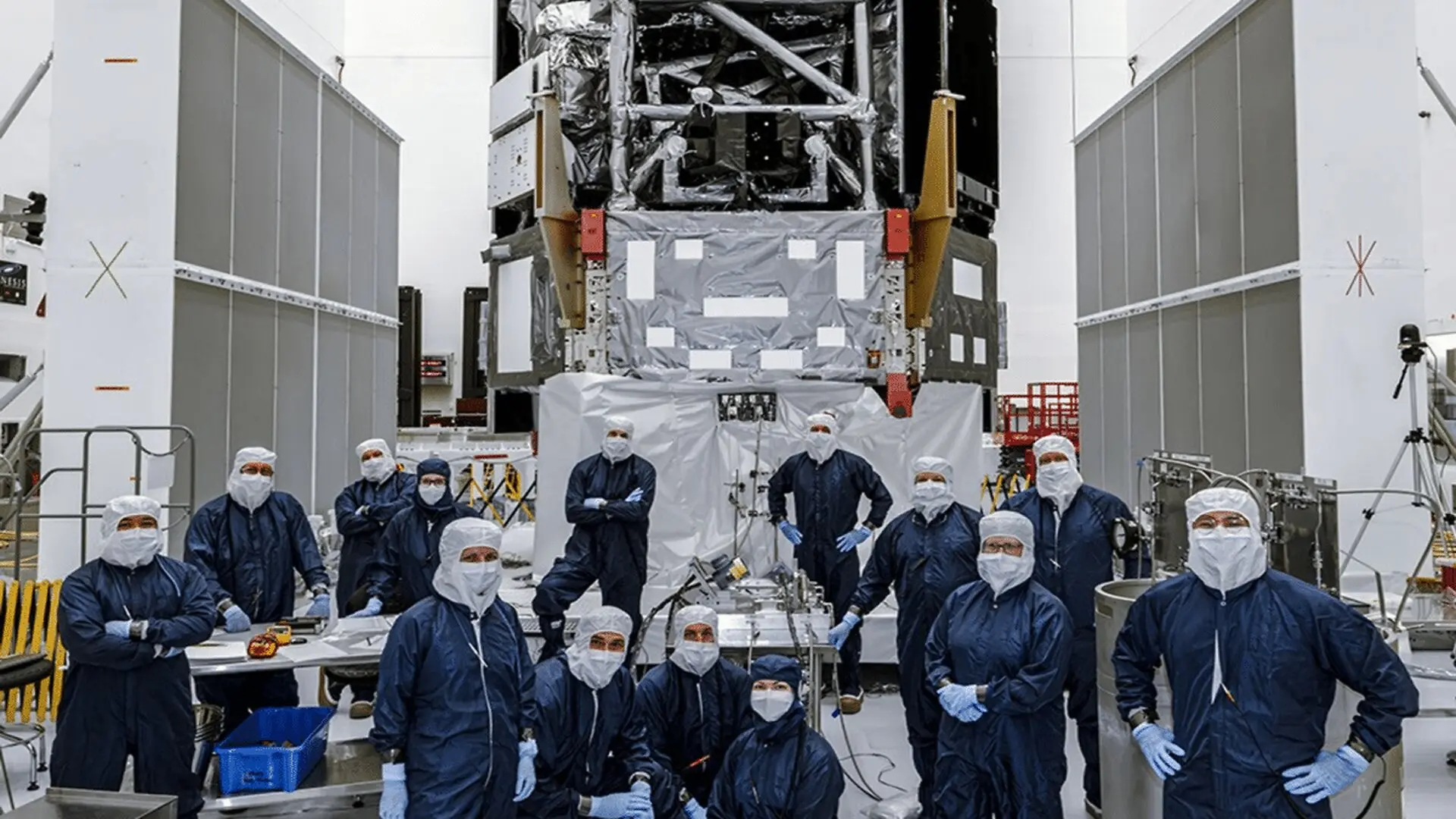
NASA’s Nancy Grace Roman Space Telescope has successfully completed its propellant loading, clearing a decisive hurdle on the path to a targeted launch in late August 2026. The fueling operation, one of the most exacting phases of pre‑flight processing, transitions the observatory from a ground‑test configuration to its final flight state, positioning it for a mission that could reshape modern astrophysics.
Critical Propellant Loading Secures Flight Readiness
The infusion of cryogenic and hypergolic fuels equips the telescope with the precise thrust needed for mid‑course maneuvers, orbital insertion, and long‑term station‑keeping once it reaches its destination. With hazardous propellants now aboard, access to the spacecraft is tightly controlled, and every valve opening, pressure metric, and transfer sequence is continuously logged to verify flawless performance.
Achieving this milestone without incident underscores the extensive groundwork performed by NASA engineers and industry partners, confirming that the telescope has moved beyond laboratory validation toward full operational status. The next steps involve meticulous inspections, integration with the launch vehicle, and final readiness reviews that build on the successful fueling.
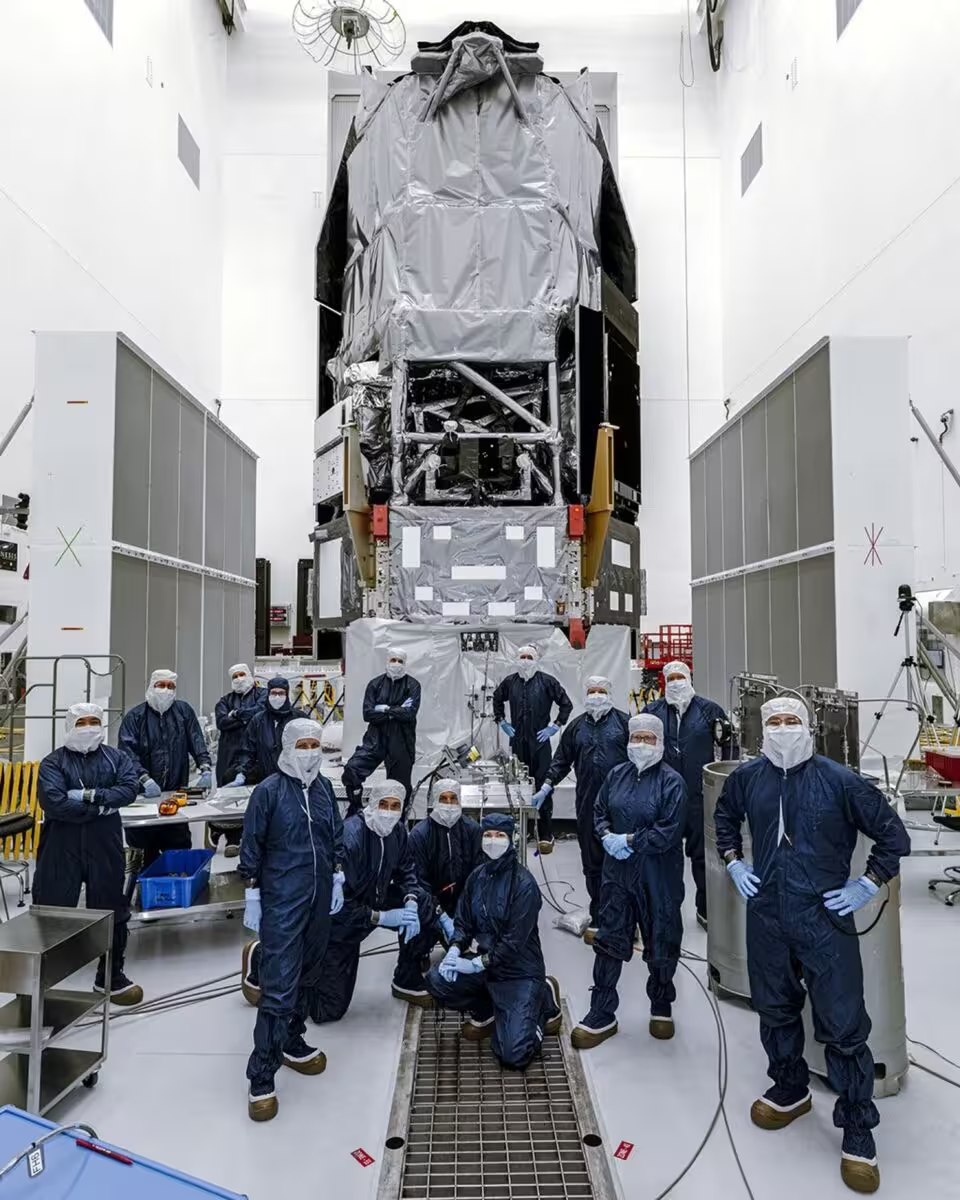
NASA Announces Telescope Nears End‑Game Preparations
In a statement released by NASA, the successful fueling is identified as one of the final technical checkpoints before the observatory is mated with its launch rocket. The agency emphasized that the mission remains on schedule for a late‑August liftoff, with teams now concentrating on the remaining processing activities that precede integration.
The Roman telescope, a cornerstone of NASA’s astrophysics portfolio, boasts a field of view roughly one hundred times greater than that of the James Webb Space Telescope for comparable infrared wavelengths. This expansive perspective enables the observatory to conduct sweeping sky surveys with unprecedented sensitivity.
Such capability will allow researchers to construct extensive cosmic maps, uncover thousands of new exoplanets via gravitational microlensing, trace the large‑scale distribution of dark matter, and probe the enigmatic dark energy that drives the universe’s accelerating expansion.
Wide‑Field Design Complements JWST’s Detail‑Oriented Mission
Where JWST excels at deep, high‑resolution studies of selected targets, Roman is engineered to capture vast portions of the sky, identifying promising objects that later can be examined in finer detail by JWST or other observatories. This synergy is expected to accelerate discoveries across multiple domains of astronomy.
Astronomers anticipate a dramatic rise in the catalog of known exoplanets, including distant worlds that elude detection by traditional methods, as well as rogue planets drifting without a host star. These findings will shed light on planetary formation pathways and the diversity of planetary systems.
Beyond planetary science, Roman will image billions of galaxies, delivering one of the most comprehensive portraits of cosmic structure over billions of years. The dataset is poised to refine existing cosmological models and may reveal new facets of the fundamental physics governing the universe.
Final Countdown Shifts to Launch‑Day Readiness
With propellant loading completed, the focus now turns to exhaustive system checks, the remaining integration tasks, and verification that each subsystem meets flight criteria. Although a series of rigorous reviews still precede the ultimate launch‑approval gate, the successful fueling places the telescope firmly on the trajectory toward liftoff.
Decades of engineering, international collaboration, and scientific planning are converging on a mission slated to influence astronomical research for the coming decade. If the remaining pre‑launch activities proceed as planned, the Nancy Grace Roman Space Telescope will soon depart Earth, delivering an unmatched blend of wide‑field imaging, infrared sensitivity, and survey power that promises to deepen our understanding of the cosmos.
This article has been fact checked for accuracy, with information verified against reputable sources. Learn more about us and our editorial process.
Last reviewed on .
Article history
- Latest version
Cite this page:
- Posted by Karan Das