New Autonomy Scale Maps the Future of Self-Healing Filtration Plants
Researchers propose a five-level framework to connect live digital plant twins with automated material design laboratories.
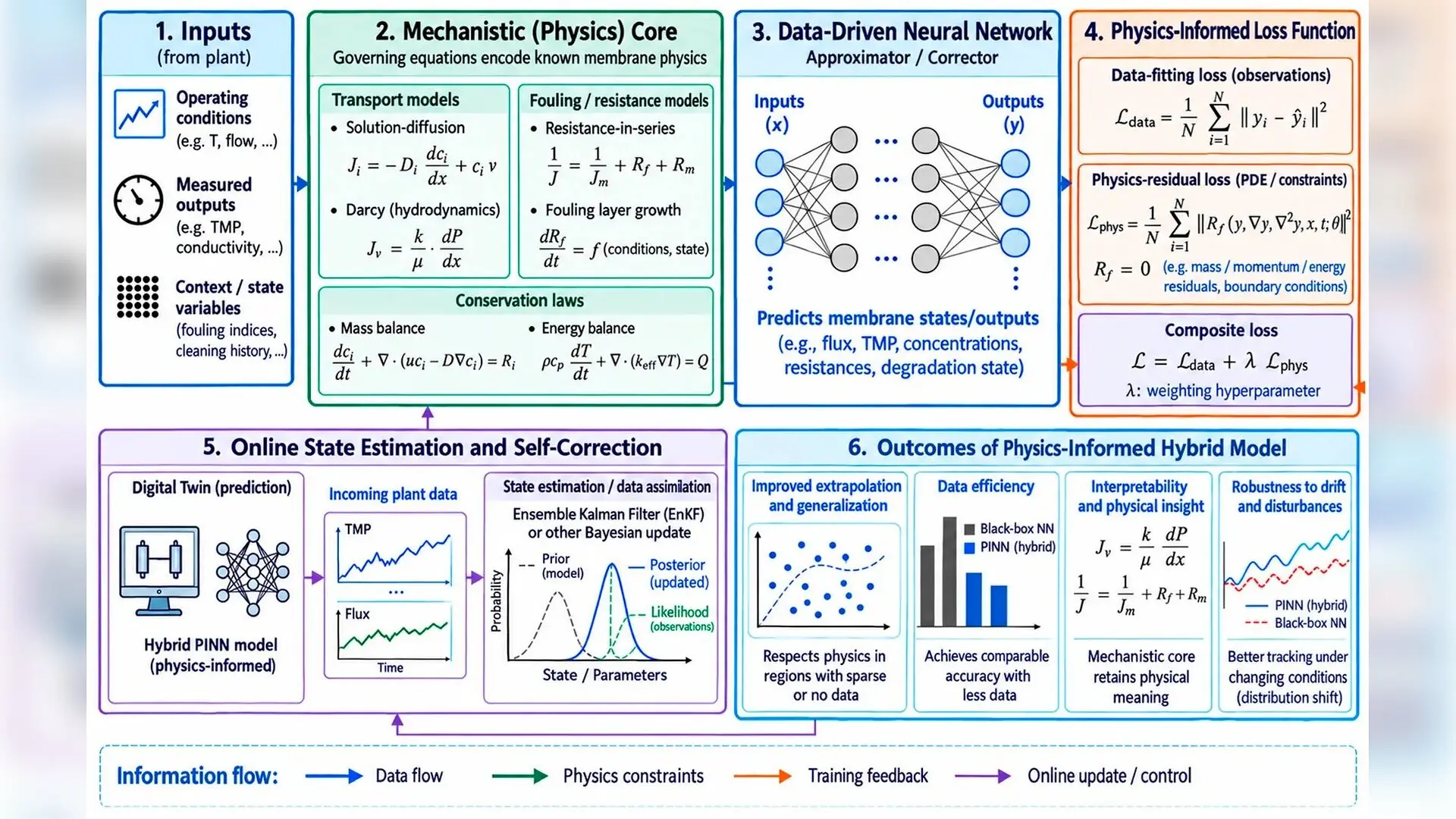
Smart filtration systems that can clean themselves and predict failures are closer to reality thanks to a newly proposed five-tier autonomy ranking framework. Researchers evaluated how artificial intelligence tools can take over the daily management of industrial water purification and gas separation plants.
Filtration membranes are vital for producing drinking water, desalinating seawater, and capturing industrial carbon emissions. However, these systems face a constant battle against physical fouling, where unwanted particles, organic matter, and mineral scales clog the porous barriers and drive up energy costs. Traditional plant management relies on reactive maintenance and fixed cleaning schedules, which often lead to unnecessary chemical use and downtime.
How Virtual Plant Replicas Track Hidden Filtration Wear
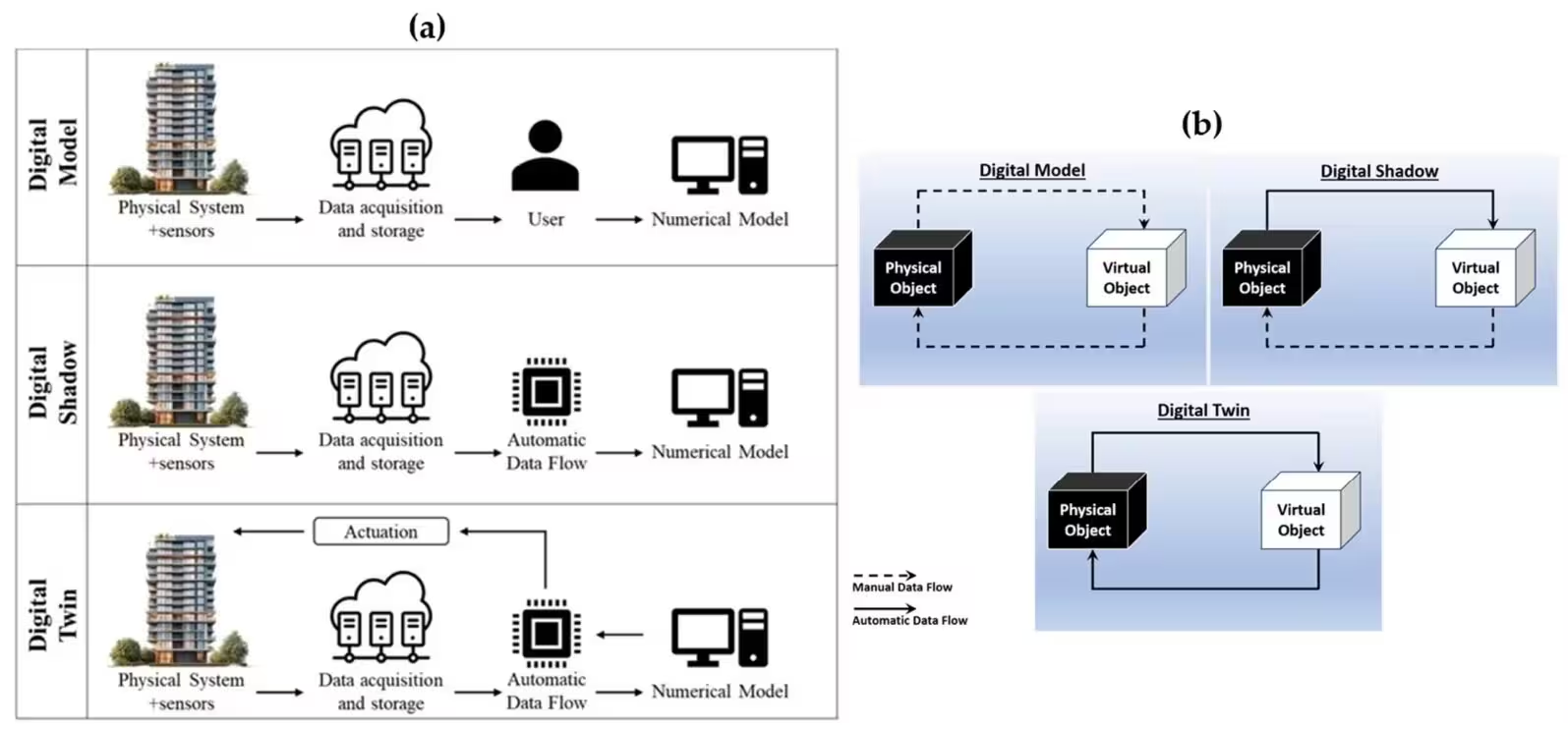
To overcome these operating challenges, modern engineers turn to digital twins, which are live virtual representations of physical assets connected through continuous data streams. A team of researchers published in Membranes analyzed how these virtual systems combine with machine learning algorithms to monitor pressure changes and forecast remaining useful life. While basic digital models rely purely on static equations, true digital twins maintain an automated, two-way data exchange that can feed control decisions back to the physical plant.
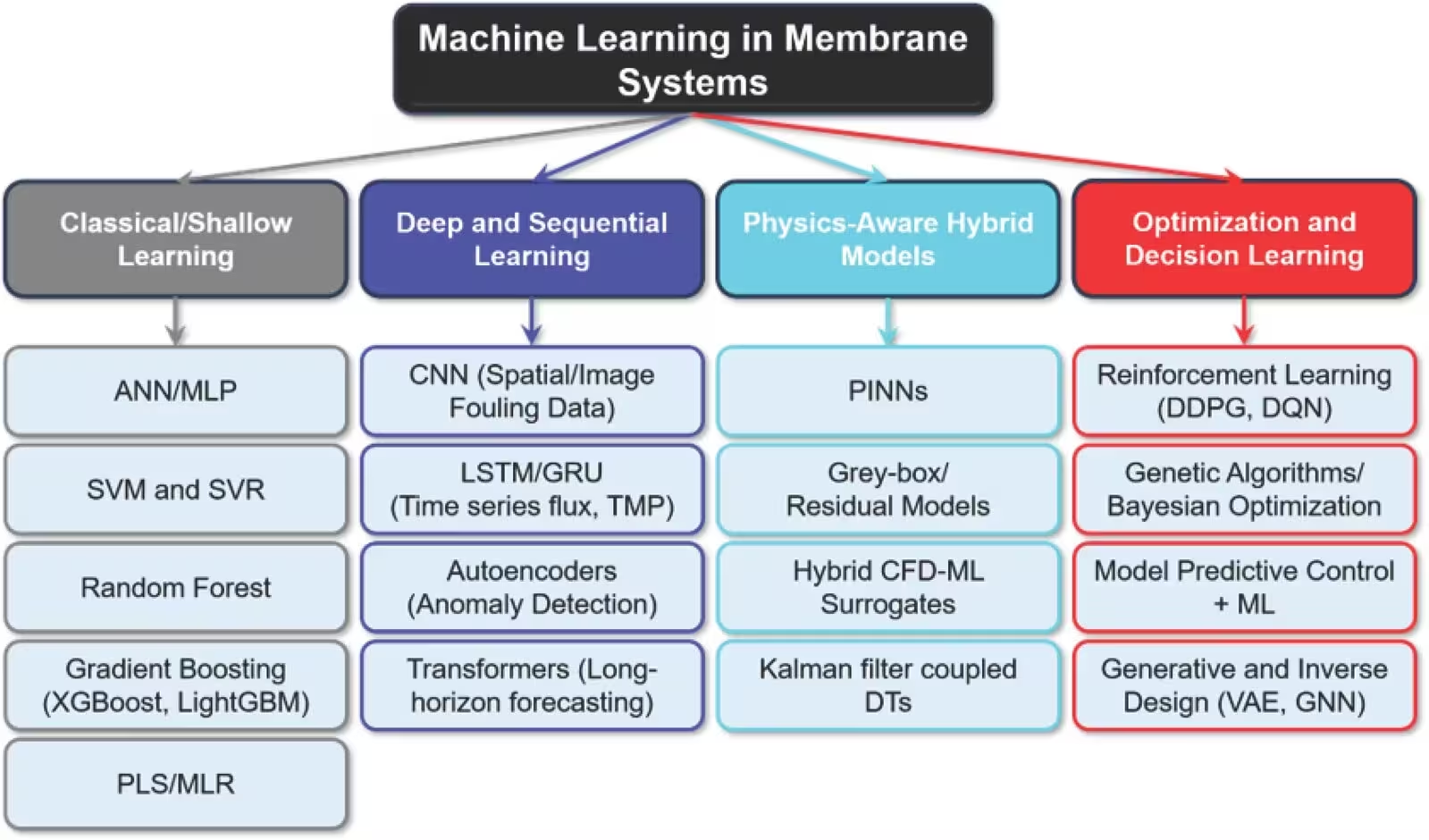
The study breaks down artificial intelligence methods into four functional categories, ranging from shallow learning algorithms to physics-informed neural networks. By embedding physical laws directly into the software, hybrid models can accurately predict flux decline and transmembrane pressure without failing when water quality shifts unexpectedly.
What the New Five-Level Autonomy Scale Reveals About Plant Operations
To clarify how much control is actually handed over to computers, the review introduces a five-level autonomy framework inspired by automotive self-driving standards. Level zero represents manual plant instrumentation, while level one involves basic automated monitoring dashboards. Level two introduces predictive digital twins that forecast fouling risks, but still require human approval for any interventions.
Higher tiers involve conditional and high autonomy, where algorithms automatically adjust chemical dosing, operating pressures, and cleaning cycles within strict safety boundaries. The final tier envisions an integrated loop where operational performance data directly feeds into automated materials discovery laboratories.
Why Connecting Material Design with Daily Plant Operations Matters
A major disconnect currently exists between the scientists designing novel membrane polymers and the engineers operating large-scale water facilities. While materials informatics routinely uses machine learning and genetic algorithms to discover high-performance polymers, these new materials are rarely tested inside operational digital twins.
The authors outline a roadmap to bridge this gap over the next decade. By feeding real-world wear, aging, and fouling data into automated synthesis platforms, self-driving laboratories could custom-build more resilient filtration materials tailored to specific industrial environments.
The research was published in Membranes on October 20, 2026.
This article has been fact checked for accuracy, with information verified against reputable sources. Learn more about us and our editorial process.
Last reviewed on .
Article history
- Latest version
Reference(s)
- Sadare, Olawumi O.., et al. “Towards Intelligent Membrane Systems: A Critical Analysis of Digital Twin–ML Integration for Real–Time Process Optimization, Fouling Management, and Autonomous Design.” Membranes, vol. 16, no. 10, October 20, 2026, pp. 348 MDPI AG, doi: 10.3390/membranes16100348. <https://doi.org/10.3390/membranes16100348>.
Cite this page:
- Posted by Robert Brown