Chronic Sleep Disruptions Trigger Hormone Chaos and Depressive Behaviors in Study
A 14-day rat study reveals how broken sleep continuity alone drives up stress hormones and slashes testosterone.
When sleep is repeatedly broken night after night, the resulting exhaustion triggers a cascade of hormonal chaos and behavioral despair in male rats, pointing to how stripped-down sleep continuity alone drives mood and endocrine disturbances. Millions of people struggle with chronic sleep disruptions due to conditions like obstructive sleep apnea, where the upper airway repeatedly collapses and forces micro-arousals throughout the night. While medical researchers have long known that sleep apnea patients suffer from high rates of depression, separating the damage caused by broken sleep from other factors like oxygen deprivation has remained a major challenge. A team of scientists set out to test whether repeated sleep interruptions alone could induce depression-like behaviors and disrupt key stress and reproductive hormones in a controlled laboratory setting.
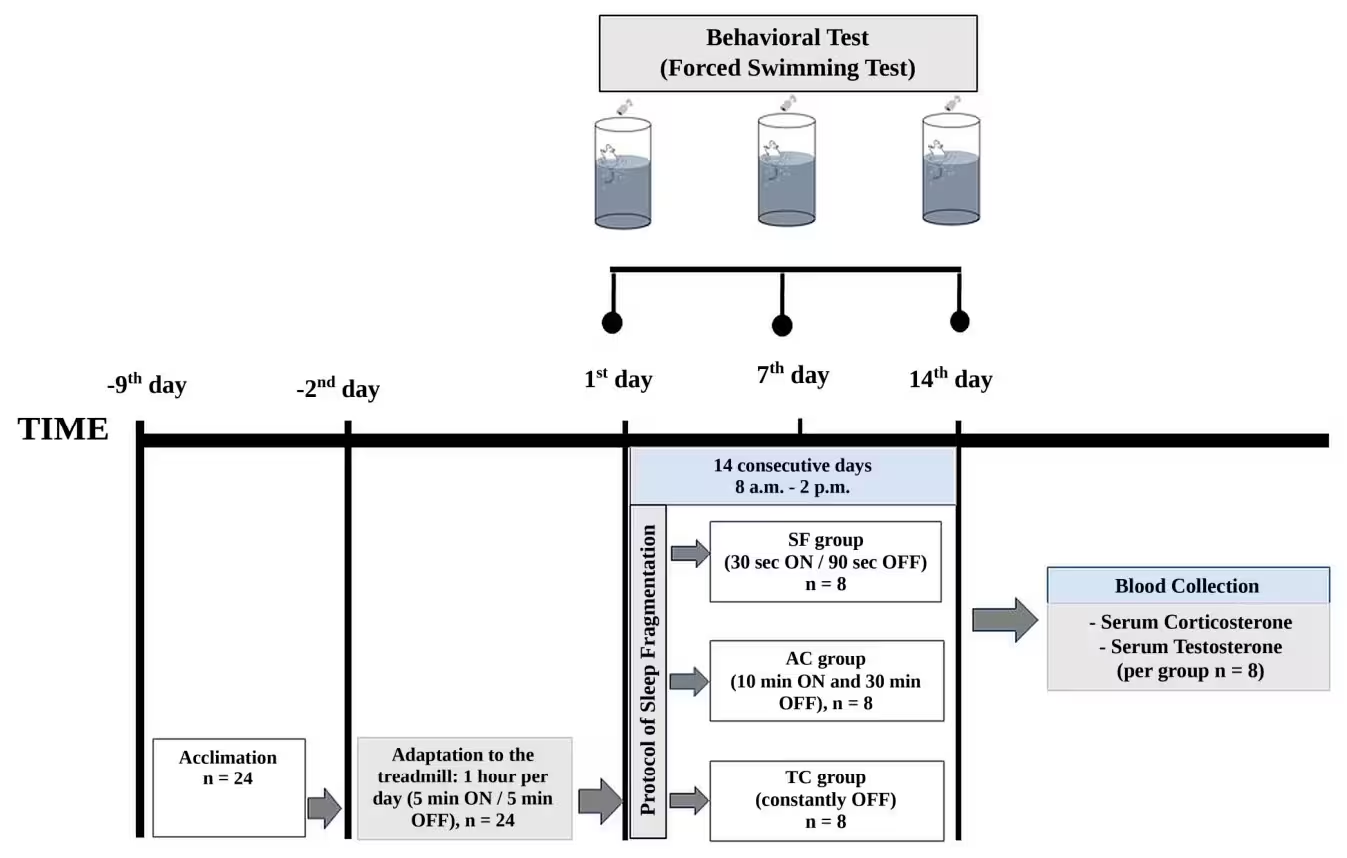
To investigate this question, the researchers published in NeuroSci a preclinical study involving twenty-four male Wistar rats divided into three equal groups. One group experienced a 14-day sleep-fragmentation protocol using a motorized treadmill programmed to run for 30 seconds followed by 90 seconds of rest during the first six hours of their light phase. Two control groups were included to isolate the effects of movement and handling: a treadmill control group that remained stationary, and an activity control group that walked on the treadmill for longer 10-minute intervals without sleep disruption. The team tracked body weights daily and evaluated behavioral despair using the forced swimming test on days 1, 7, and 14, ultimately measuring serum corticosterone and testosterone concentrations at the study endpoint.
How Broken Sleep Gradually Triggers Behavioral Despair Over 14 Days
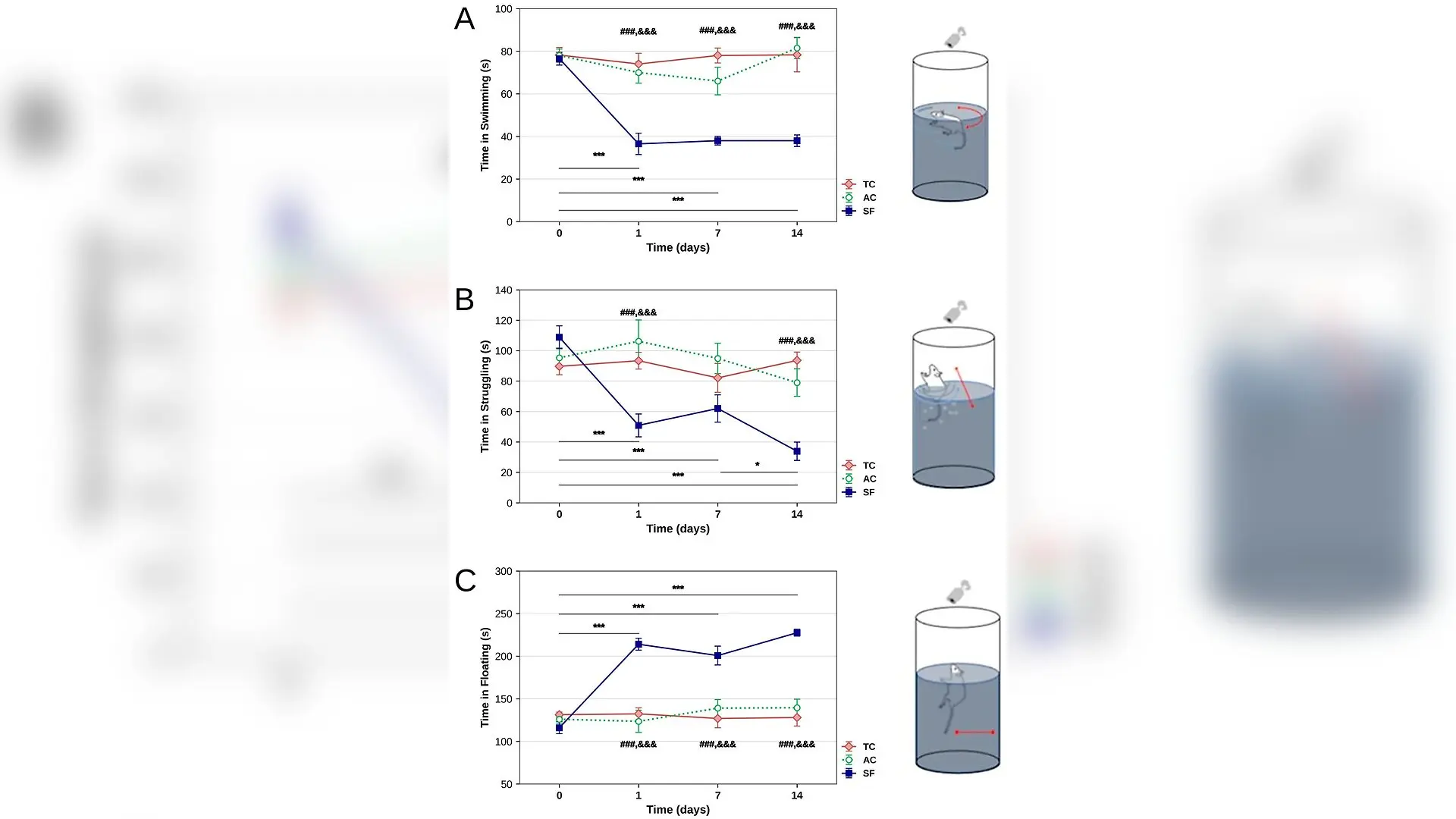
The behavioral tests revealed that rats subjected to 14 days of fragmented sleep developed a progressive depression-like phenotype characterized by significant increases in floating time and decreases in active coping behaviors. Specifically, floating times climbed sharply in the sleep-fragmentation group from a baseline of 114.50 seconds up to 212.63 seconds on day one, reaching 228.13 seconds by day 14. In contrast, both control groups maintained stable floating times averaging around 125 to 139 seconds across all observation points. Furthermore, active swimming and struggling behaviors dropped significantly among the sleep-interrupted animals from the very first day of the experiment onward.
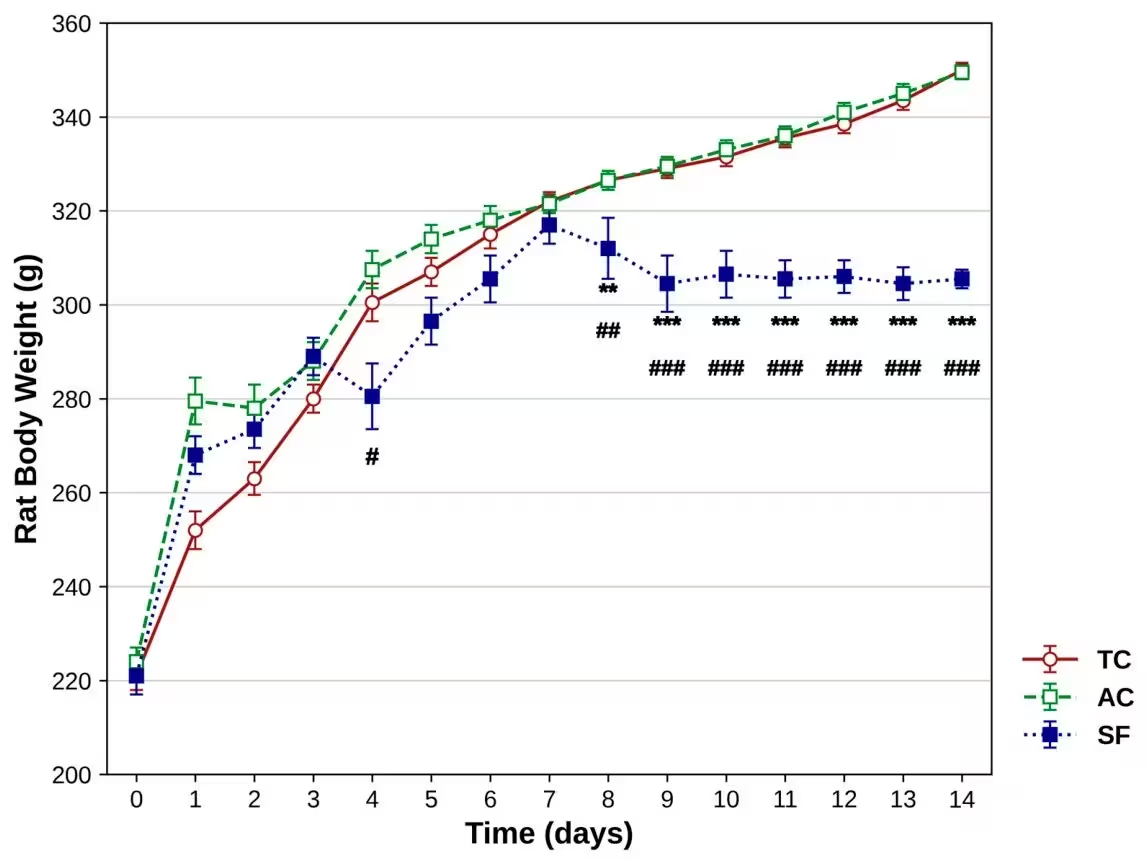
The researchers noted that behavioral differences emerged as early as day one, suggesting that acute stress responses work alongside cumulative sleep disruption to shape the observed phenotype. Alongside these behavioral shifts, the sleep-fragmented rats showed an attenuated weight gain starting from day eight compared to the control cohorts. Because physical conditioning and body weight can influence performance in the forced swimming test, the authors emphasized that altered body condition must be weighed as a potential confounding factor when interpreting the behavioral results.
Why Stress Hormones Surge While Testosterone Levels Plummet
Blood hormone analyses conducted at the end of the two-week protocol uncovered striking physiological alterations driven by the sleep interruptions. Serum corticosterone, the primary stress hormone in rodents that mirrors cortisol in humans, spiked significantly to an average of 23.43 nanograms per milliliter in the sleep-fragmented group. This elevation stood well above the levels observed in the stationary treadmill control group at 14.55 nanograms per milliliter and the active control group at 14.68 nanograms per milliliter. This hormonal spike points directly to hyperactivity within the hypothalamic-pituitary-adrenal axis, the body’s central stress-response system.
Simultaneously, the study documented a profound suppression of reproductive hormones in the male subjects. Serum testosterone concentrations dropped to an average of 3.57 nanograms per milliliter in the sleep-fragmentation cohort, compared to 4.86 nanograms per milliliter in stationary controls and 4.90 nanograms per milliliter in active controls. The authors explain that chronically elevated glucocorticoids can suppress gonadal steroidogenesis, offering a plausible biological link between stress axis activation and androgen deficiency in sleep-disrupted states.
What Are the Limitations of This Animal Model for Human Health?
While the findings offer valuable translational insights, the study authors outlined several important methodological constraints that require cautious interpretation. Most notably, the experiment did not utilize electroencephalographic or electromyographic recordings to directly monitor brain waves and verify actual sleep architecture, meaning the protocol evaluated an experimental sleep-interruption paradigm rather than objectively confirmed sleep fragmentation. Additionally, hormone sampling occurred only at a single terminal time point, and the final blood collection took place two hours after the forced swimming test, raising the possibility that acute stress from swimming contributed to the measured corticosterone levels.
The researchers also highlighted that the study relied exclusively on male rats and utilized a single behavioral assay, restricting the immediate generalizability of the results. Because clinical conditions like obstructive sleep apnea involve multiple interacting pathologies including intermittent hypoxia and upper airway obstruction, the treadmill model represents an isolated simulation of sleep continuity loss rather than a complete picture of human sleep apnea. Future investigations incorporating direct brain monitoring, longitudinal hormone profiling, female subjects, and broader behavioral tests will be necessary to fully map out the precise biological mechanisms connecting fragmented sleep to mood and endocrine disorders.
The research was published in NeuroSci on October 21, 2026.
This article has been fact checked for accuracy, with information verified against reputable sources. Learn more about us and our editorial process.
Last reviewed on .
Article history
- Latest version
Reference(s)
- Grubač, Zeljko., et al. “Subchronic Sleep Fragmentation Induces Endocrine Alterations and Depression-like Behavior in Male Rats.” NeuroSci, vol. 7, no. 5, October 21, 2026, pp. 113 MDPI AG, doi: 10.3390/neurosci7050113. <https://doi.org/10.3390/neurosci7050113>.
Cite this page:
- Posted by Robert Brown