Engineered Viral Vector Defends Swine Against Lethal Disease Duo
A modified pseudorabies virus platform successfully delivered multiple antigens, protecting pigs from a devastating respiratory pathogen without causing adverse side effects.
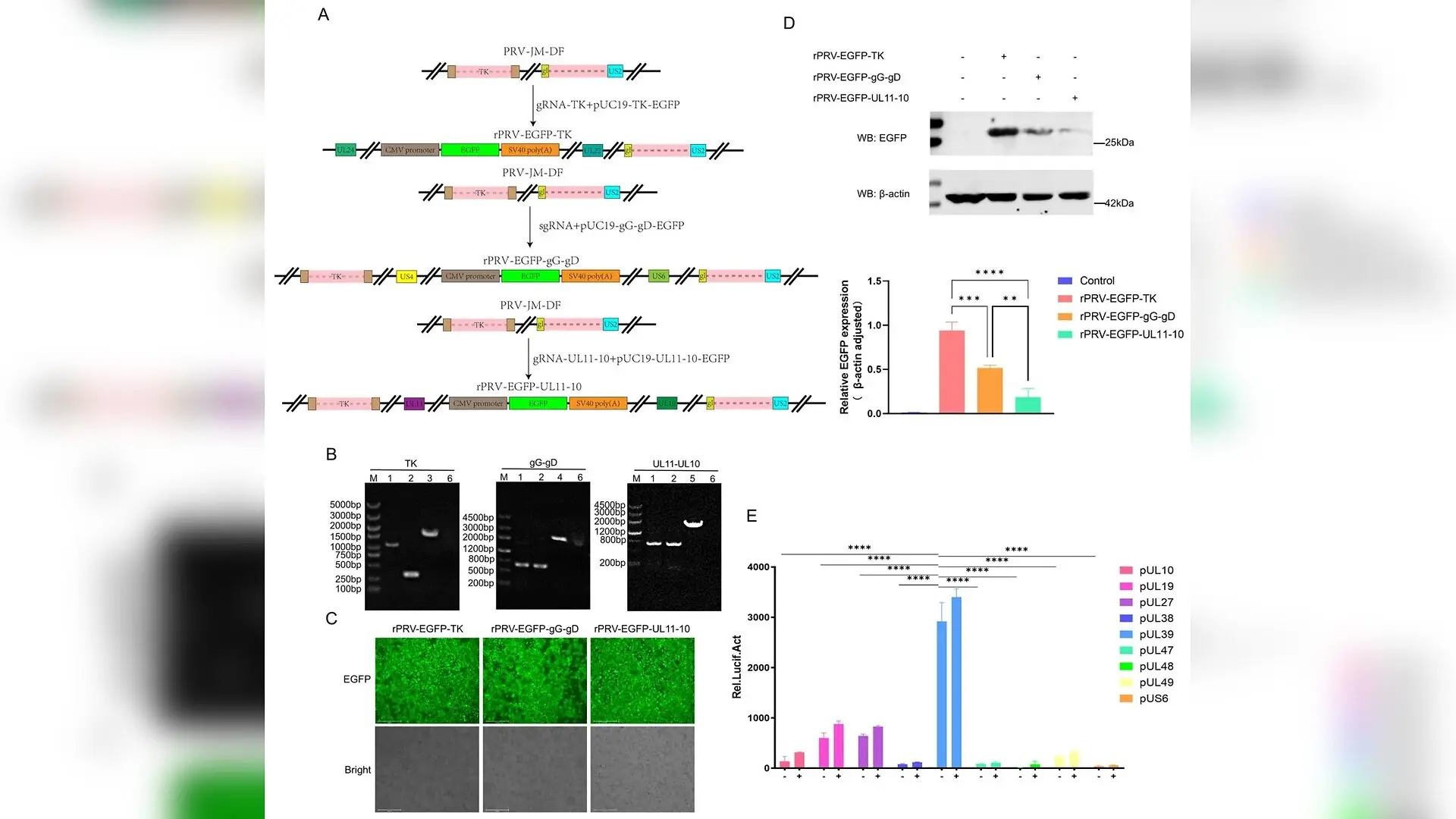
A genetically engineered viral vector successfully protected pigs against a lethal swine pathogen while simultaneously shielding them from pseudorabies, offering a new path forward for animal biotechnology. Porcine reproductive and respiratory syndrome virus causes severe respiratory distress and reproductive failure in pigs worldwide, costing the agricultural industry billions of dollars annually. To tackle this dual threat, researchers engineered a live viral vector platform by modifying a five-gene-deleted variant of the pseudorabies virus, known as PRV-JM-DF, using CRISPR/Cas9 gene-editing technology.
The study, published in Vaccines published in Vaccines, was conducted by Shanghui Wang and colleagues at the Harbin Veterinary Research Institute of the Chinese Academy of Agricultural Sciences. The team set out to solve a major hurdle in veterinary immunology, namely finding a safe, stable genomic insertion site and promoter configuration that could express foreign viral antigens without crippling the carrier virus itself. They systematically screened three distinct genomic regions, identifying the thymidine kinase locus as the most efficient insertion site for stable, high-level foreign gene expression.
Furthermore, the investigators evaluated nine endogenous late viral promoters to drive antigen expression in a replication-dependent manner, identifying pUL39 as the most active promoter among those tested. By tethering foreign antigen expression directly to viral replication, the platform aims to enhance safety by restricting antigen production primarily to actively infected cells. The team constructed multiple recombinant candidates, including monovalent variants and tandem antigen constructs combining several structural glycoproteins.
Laboratory evaluations in mice and 35-day-old Landrace pigs revealed that one specific candidate, designated rPRV-C-4T, outperformed the others. While animals receiving a mixed regimen of five separate single-gene viruses experienced incomplete protection and high mortality during challenge experiments, pigs immunized with the single tandem-construct rPRV-C-4T developed robust neutralizing antibody responses. Following a challenge with 100,000 tissue culture infectious doses of the highly pathogenic HuN4 strain of the syndrome virus, all pigs in the rPRV-C-4T group survived without severe clinical signs.
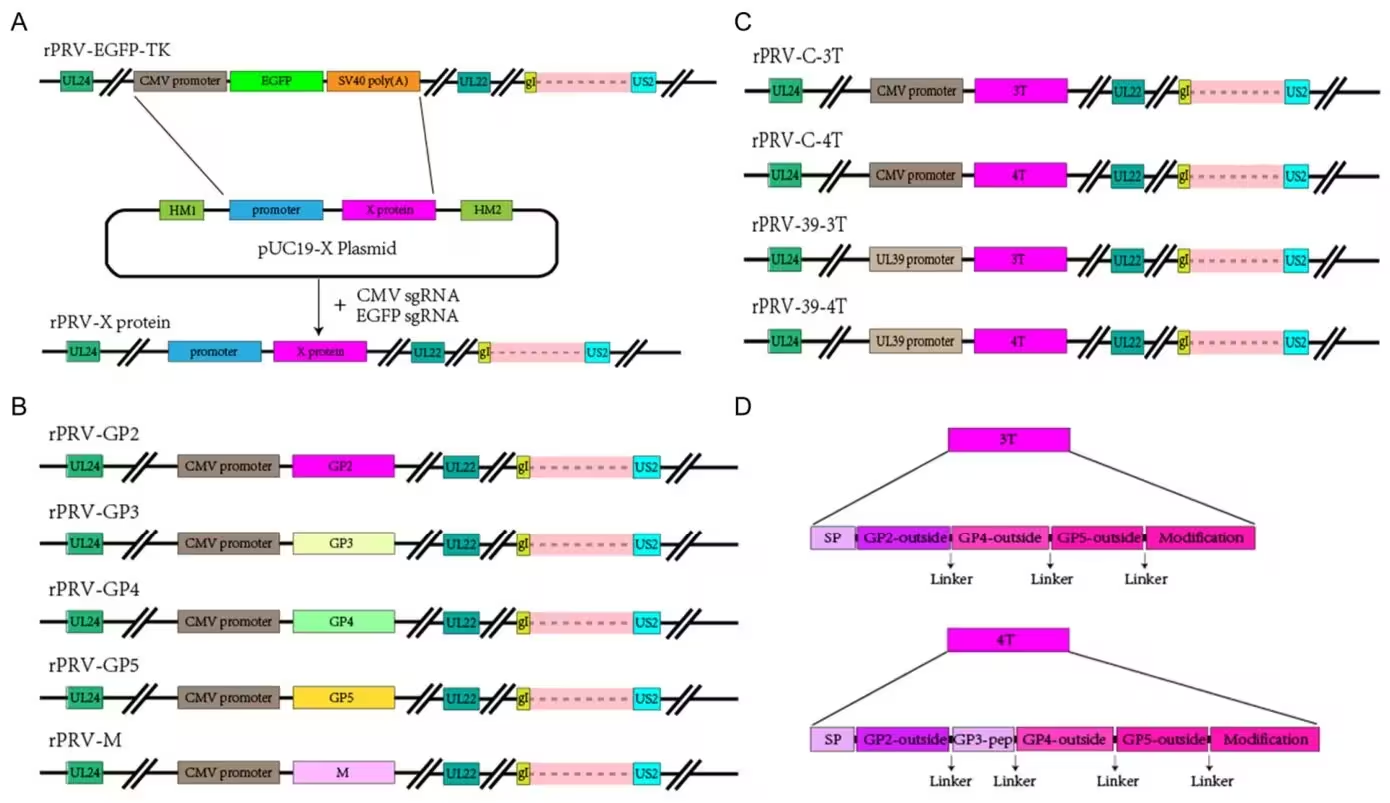
Post-mortem examinations confirmed that the lead candidate significantly reduced viral loads in the serum and lungs, keeping tissue damage to a minimum. Unlike animals receiving conventional commercial vaccines, which sometimes exhibited adverse side effects such as fever, lameness, and secondary bacterial infections, the vectored vaccine group maintained normal weight gain and stable health.
Despite these promising laboratory outcomes, the authors noted several limitations that must be addressed before the technology can reach commercial farms. The current evaluation relied on a relatively small cohort of animals and tested only a homologous challenge against the HuN4 strain, meaning efficacy against contemporary heterologous strains remains unproven. Future investigations will require larger animal trials, standardized quantitative lesion scoring, and long-term biosafety assessments to determine the true breadth and generalizability of the platform.
The research was published in Vaccines on October 21, 2026.
This article has been fact checked for accuracy, with information verified against reputable sources. Learn more about us and our editorial process.
Last reviewed on .
Article history
- Latest version
Reference(s)
- Wang, Shanghui., et al. “Construction of Recombinant PRV Expressing PRRSV Antigens and Evaluation of Their Protective Efficacy in Pigs Against Homologous Challenge.” Vaccines, vol. 14, no. 10, October 21, 2026, pp. 915 MDPI AG, doi: 10.3390/vaccines14100915. <https://doi.org/10.3390/vaccines14100915>.
Cite this page:
- Posted by Robert Brown