Deleting the Ttc22 Gene in Mice Surprisingly Leaves Health Unchanged
Knocking out a gene linked to human colon cancer and metabolism fails to disrupt normal development or tumor susceptibility in laboratory mice.
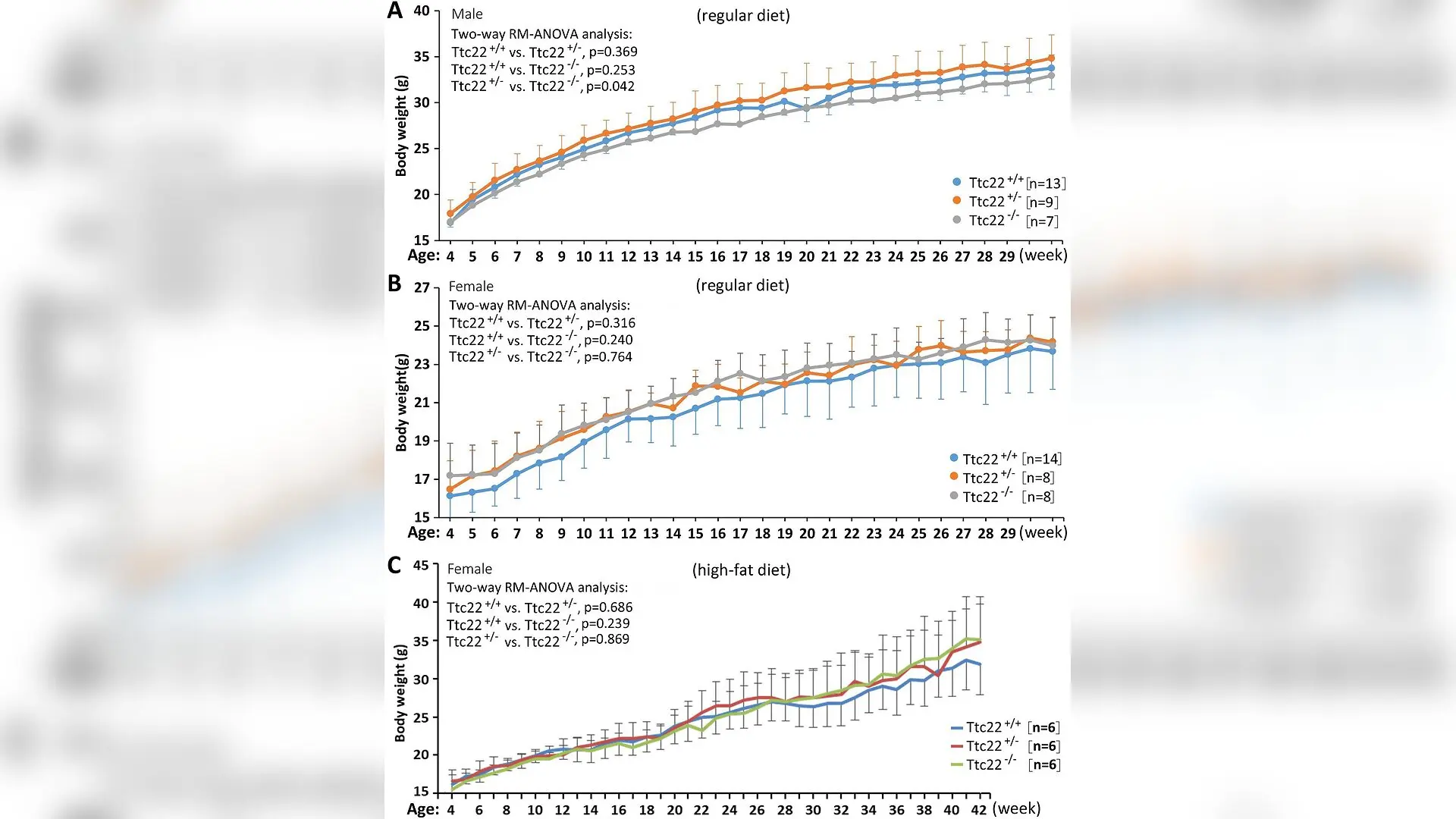
Removing the Ttc22 gene in mice surprisingly leaves their health, growth, and fertility completely untouched, defying expectations from previous cancer studies. Researchers tested the role of this protein-chaperoning gene by engineering knockout models, but found that the animals developed normally without any overt physical defects or changes in tumor susceptibility.
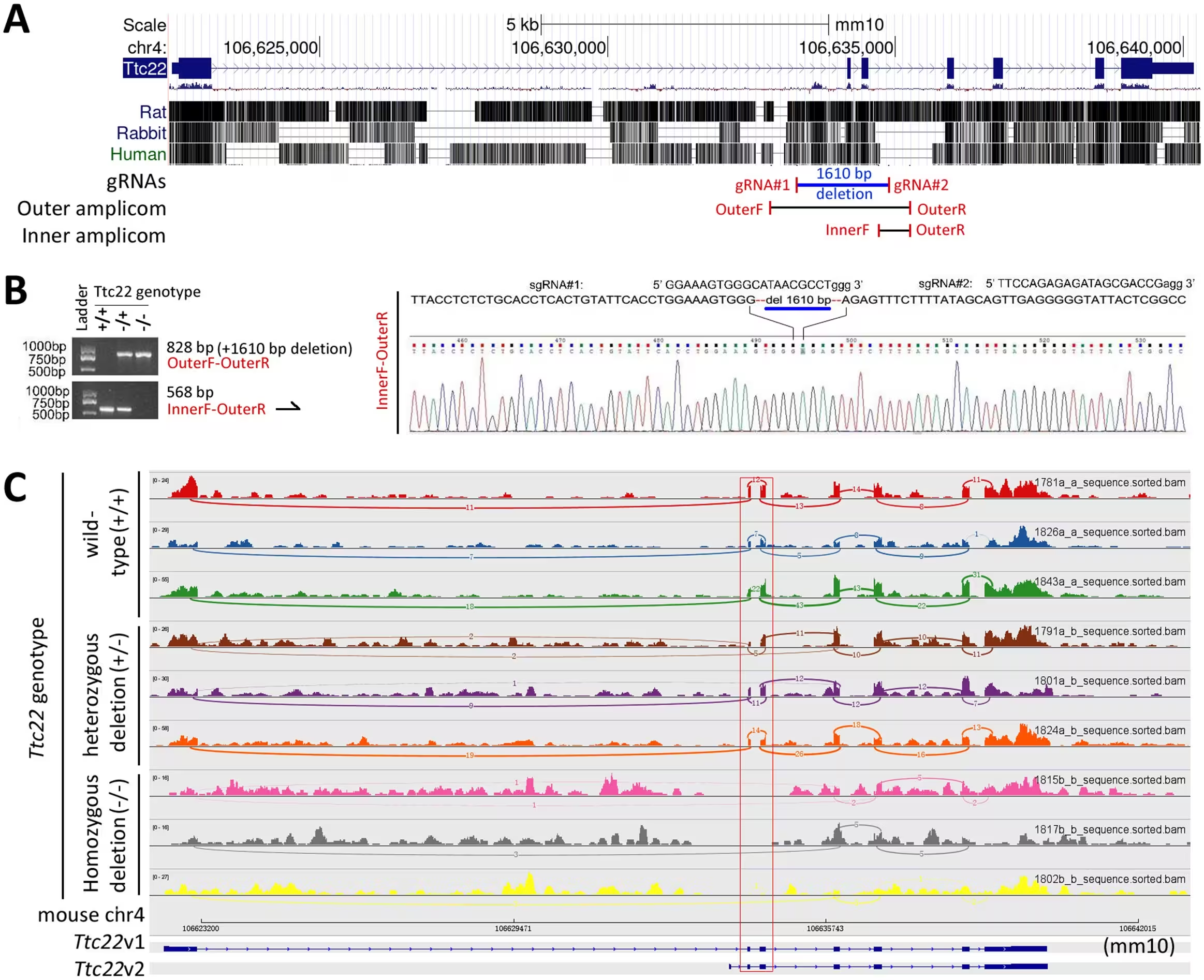
The work, published in PLOS One, was led by scientists at Peking University Cancer Hospital and Institute who sought to understand why the human version of this gene is so frequently downregulated in colon cancer. Previous laboratory experiments suggested that the TTC22 gene helps promote cancer cell movement and metastasis by interacting with other proteins and regulating chemical tags on cellular RNA. To test its function in a living organism, the research team used CRISPR-Cas9 technology to delete exons 2 and 3 of the Ttc22 gene in C57BL/6N mice, specifically targeting the region encoding the fourth tetratricopeptide repeat domain.
What Happened When the Ttc22 Gene Was Deleted
Using newly developed antibodies and genetic sequencing, the team confirmed that the targeted deletion successfully eliminated Ttc22 messenger RNA and protein expression in the colon tissues of homozygous knockout mice. Despite losing this supposedly critical gene, the mice grew, developed, and reproduced normally. Their body weights, lifespans, and physical appearances were indistinguishable from those of wild-type mice carrying normal copies of the gene. Even when female knockout mice were placed on a high-fat diet for 42 weeks, they gained weight at the same rate as control mice, showing no unusual metabolic sensitivity.
Did the Knockout Affect Colon Cancer Risk?
Because earlier studies linked abnormal TTC22 activity to human colon adenocarcinoma, the researchers tested whether deleting the gene would alter the animals’ susceptibility to chemically induced colon tumors. They administered azoxymethane followed by three cycles of dextran sodium sulfate, a standard chemical regimen used to trigger inflammation-driven colon cancer. Both knockout and control mice developed similar numbers and sizes of well-differentiated adenocarcinomas, with no statistically significant differences in tumor incidence, severity, or spontaneous tumor development up to 40 weeks of age.
Why Do Knockout Mice Survive Without Apparent Harm?
Genome-wide RNA sequencing of colon tissues from the mice offered a clue, revealing that 528 genes were significantly altered in the knockout animals. Specifically, genes related to protein folding, stress responses, and defense mechanisms against microbial infections were upregulated. The authors suggest that this broad adaptive response may compensate for the loss of Ttc22, highlighting the remarkable robustness of mammalian genomes. While these findings show that Ttc22 is dispensable under standard laboratory conditions, the researchers emphasize that species differences mean further study is needed to understand the gene’s exact role in human biology and disease.
The research was published in PLOS One on October 23, 2026.
This article has been fact checked for accuracy, with information verified against reputable sources. Learn more about us and our editorial process.
Last reviewed on .
Article history
- Latest version
Reference(s)
- Liu, Jiaoyang., et al. “No phenotypes in Ttc22 knockout mice.” PLOS One, vol. 21, no. 10, October 23, 2026, pp. e0361340 Public Library of Science (PLoS), doi: 10.1371/journal.pone.0361340. <https://doi.org/10.1371/journal.pone.0361340>.
Cite this page:
- Posted by Robert Brown