Evaluating Seven Modern Lens Power Formulas in Short Eyes
A new study compares web-based calculation models for cataract surgery in anatomically compact eyes, revealing subtle performance differences.
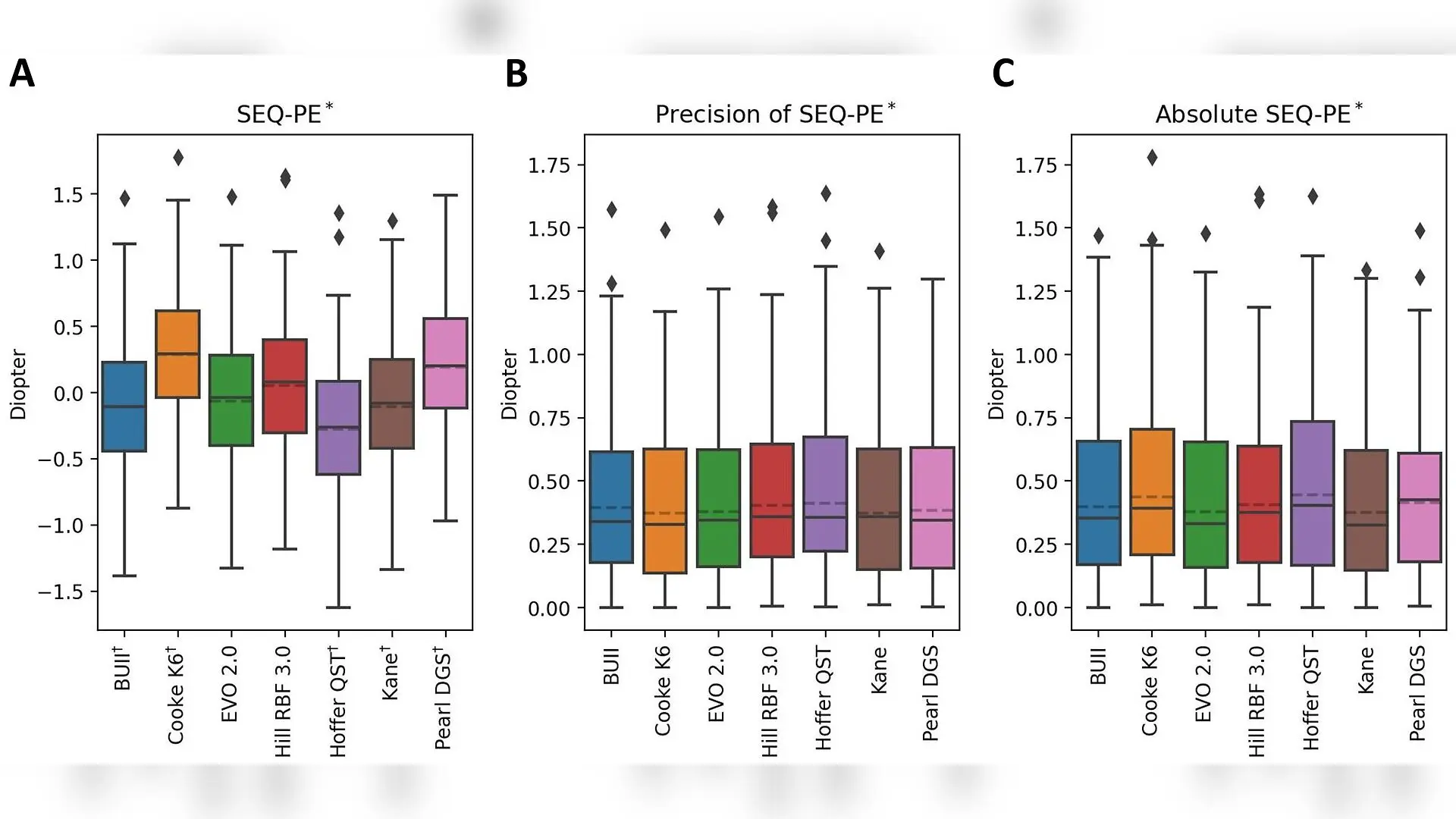
Calculating the exact power of an artificial lens for cataract surgery in eyes with unusually short lengths often leads to unexpected hyperopic or farsighted surprises. A new clinical evaluation suggests that while modern calculation formulas perform reliably well under standardized online conditions, small anatomical differences still nudge specific formulas off target.
To understand how well current tools handle anatomically compact eyes, researchers analyzed 124 eyes from 124 patients with an axial length of 22 millimeters or less who underwent uneventful cataract surgery. The study, published in PLOS One, compared seven contemporary intraocular lens power calculation formulas available through a unified online platform.
Comparing Seven Modern Lens Formulas in Short Eyes
Predicting the correct artificial lens strength is notoriously difficult when an eye is shorter than average because even microscopic measurement errors become magnified. Historically, clinicians relied on older formulas, but newer computational models incorporate advanced mathematics and artificial intelligence to better predict where the lens will finally sit inside the eye.
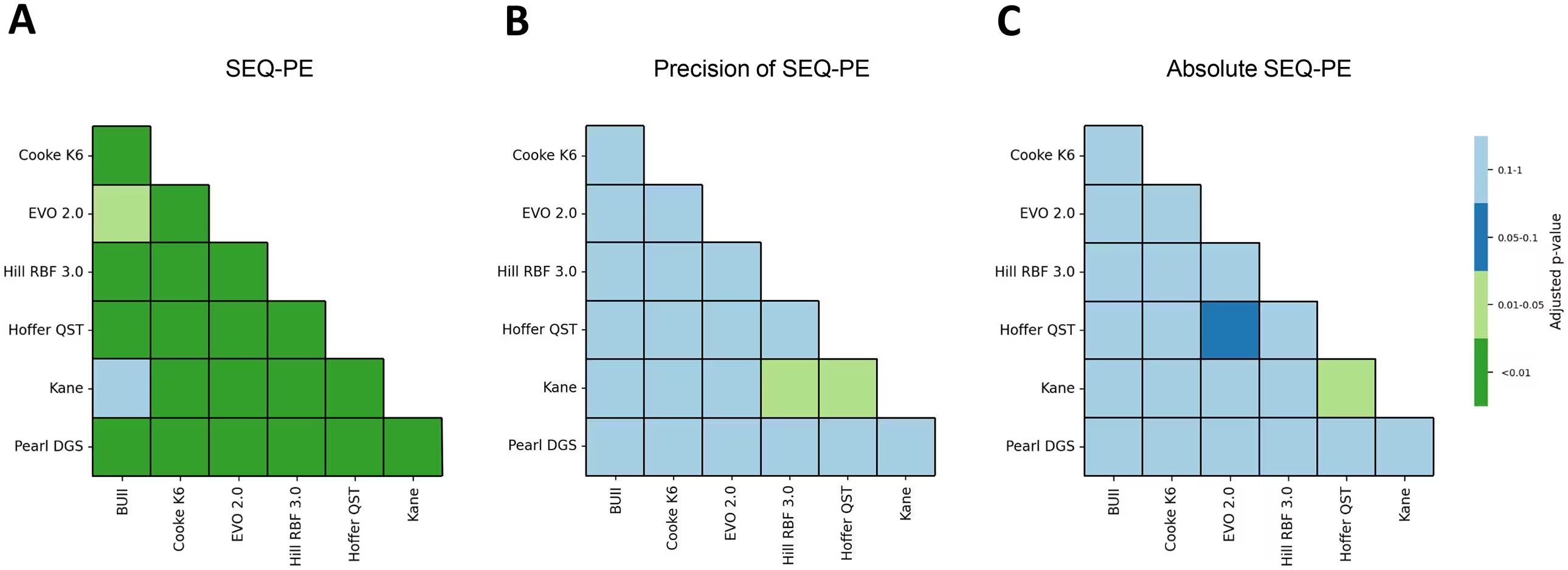
The research team evaluated seven specific formulas accessed through the European Society of Cataract and Refractive Surgeons calculator: Barrett Universal II, Cooke K6, Emmetropia Verifying Optical 2.0, Hill Radial Basis Function 3.0, Hoffer Q Savini and Taroni, Kane, and Pearl DGS. Rather than looking only at traditional mean absolute error, the investigators utilized a specialized web-based analysis tool to separate systematic prediction bias from dispersion and overall accuracy.
Minor Differences in Accuracy and the Role of Eye Anatomy
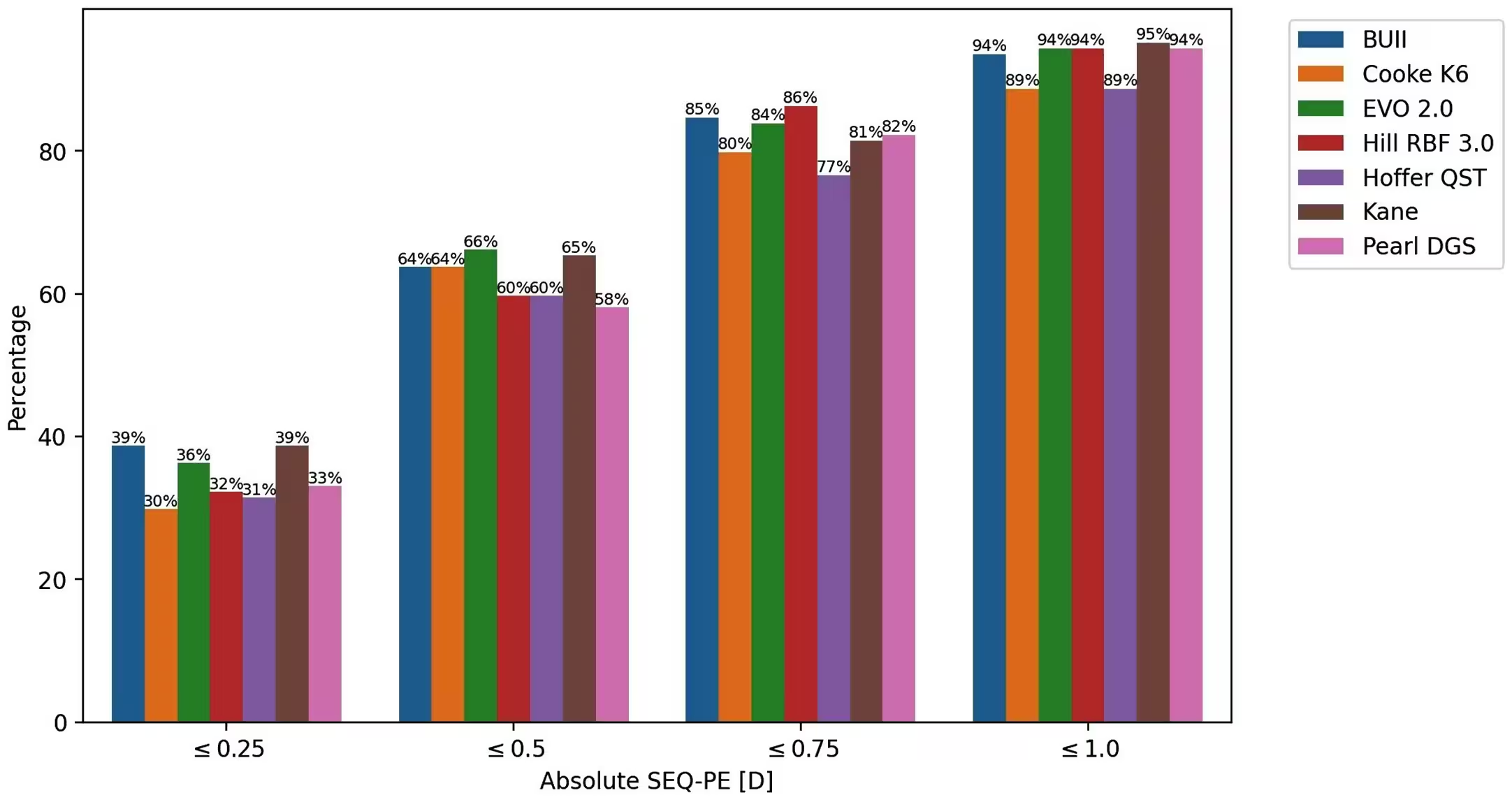
The analysis revealed that the Kane formula achieved the lowest trimmed-mean absolute prediction error among the group, whereas the Hoffer Q Savini and Taroni formula showed the highest. However, the overall performance differences across the formulas were relatively small. When looking at the proportion of eyes falling within half a diopter of the target refraction, between 58 percent and 66 percent of cases met the threshold regardless of which formula was used.
The authors also investigated whether internal eye dimensions, specifically the anterior chamber depth and the thickness of the natural crystalline lens, influenced the results. Most formulas showed little sensitivity to these variables, but Cooke K6 tended to produce slightly larger errors in eyes with shallower front chambers. Meanwhile, thicker natural lenses were weakly associated with a slight myopic or nearsighted shift in prediction error for certain models.
Important Limitations to Consider in Clinical Practice
The authors noted several important limitations of the study. The retrospective design relied on a single model of artificial intraocular lens implanted in a patient group that was predominantly female, reflecting broader demographic trends in cataract surgery prevalence for short eyes. Additionally, the analysis evaluated formulas using their default factory constants rather than optimizing them specifically for the operating surgeons or the measuring equipment used.
Because postoperative refraction was measured at the one-month mark, longer-term stability remains to be confirmed. The investigators concluded that modern calculation formulas provide broadly comparable refractive outcomes in compact eyes, meaning that clinicians have several reliable options rather than a single universally superior choice.
The research was published in PLOS One on October 27, 2026.
This article has been fact checked for accuracy, with information verified against reputable sources. Learn more about us and our editorial process.
Last reviewed on .
Article history
- Latest version
Reference(s)
- Kim, Chung Young., et al. “Comparison of IOL power calculation formulas in short eyes using ESCRS calculator and eyetemis: Influence of anterior segment biometry.” PLOS One, vol. 21, no. 10, October 27, 2026, pp. e0361501 Public Library of Science (PLoS), doi: 10.1371/journal.pone.0361501. <https://doi.org/10.1371/journal.pone.0361501>.
Cite this page:
- Posted by Robert Brown