Pharmacies Unnecessarily Recommend Morning-After Pill in Nearly Half of Test Calls
A nationwide mystery caller investigation reveals widespread over-recommendation of emergency hormones when a missed birth control pill is still within a safe window.
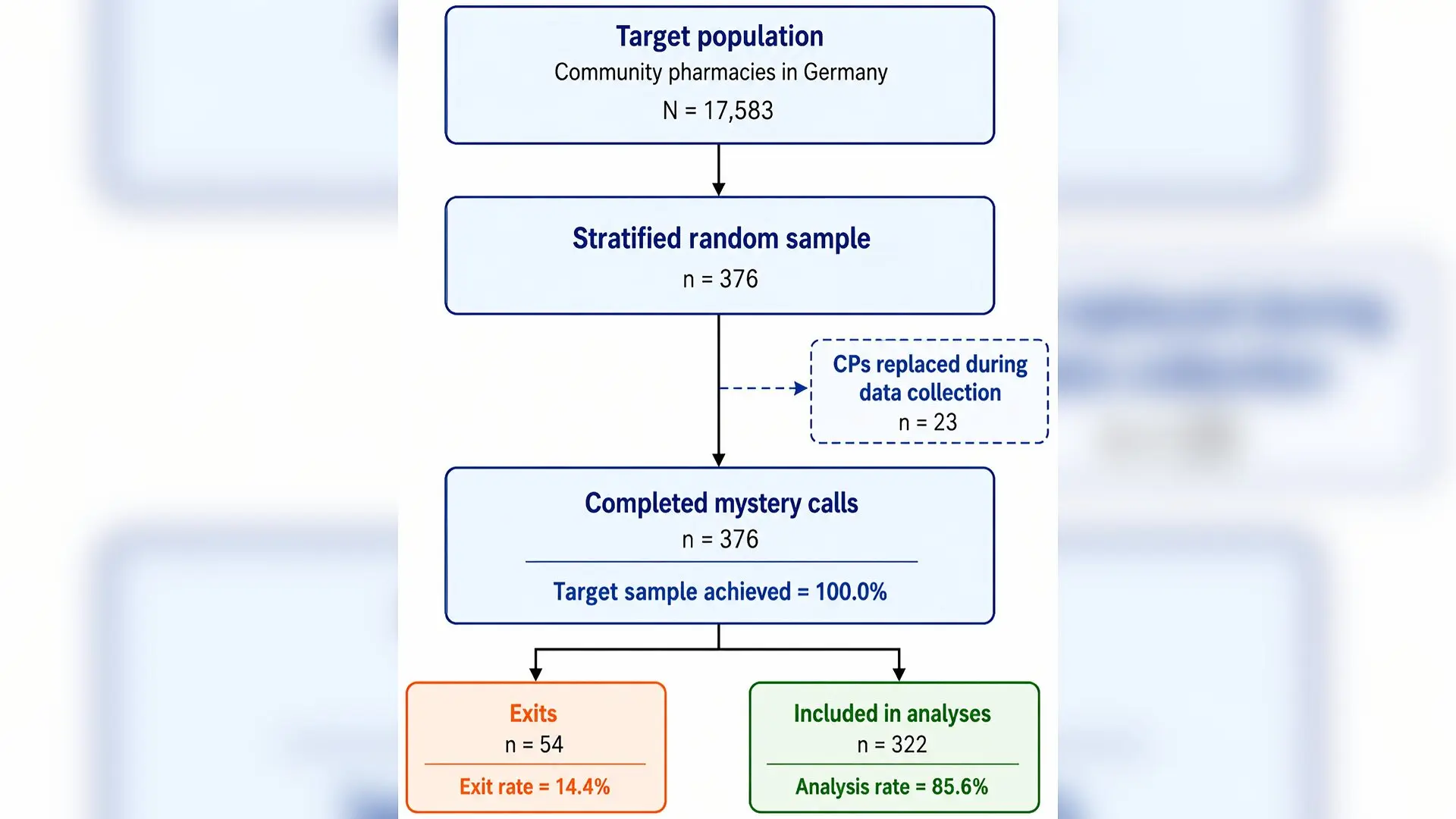
When a young woman calls a local pharmacy unsure if she needs the morning-after pill after missing a single contraceptive dose within a safe twelve-hour window, staff often recommend taking the emergency hormone anyway. A nationwide investigation in Germany reveals that community pharmacy employees unnecessarily advised purchasing oral emergency contraception in nearly half of all evaluated mystery caller interactions, highlighting widespread gaps in information gathering and guideline adherence.
The study, published in PLOS One, examined counseling practices across 376 community pharmacies. Researchers used trained female students aged 21 to 24 to simulate a standardized scenario over the telephone. In this scenario, the caller explained that she had forgotten to take her combined oral contraceptive pill, commonly known by the brand name Maxim, once after sexual intercourse. However, because fewer than twelve hours had elapsed since the scheduled morning intake and the missed pill had not yet been taken, professional guidelines dictate that emergency contraception is entirely unnecessary.
Despite clear recommendations from the German Federal Chamber of Pharmacists stating that a missed pill within this timeframe does not require emergency hormones, the appropriate outcome of not recommending the medication occurred in only 44.4 percent of the 322 analyzed calls. In contrast, staff explicitly recommended buying the emergency contraceptive in 49.1 percent of the cases. Researchers also recorded premature call terminations, known as exits, in 14.4 percent of the initial attempts, revealing logistical and communication barriers during telephone consultations.
Why Unnecessary Recommendations Create Hidden Burdens
Unnecessary dispensing of hormonal emergency contraception exposes patients to avoidable financial costs and physical side effects. Oral emergency contraceptives are relatively expensive compared to standard over-the-counter medications for minor ailments. In Germany, statutory health insurance only reimburses the expense for young women under the age of 22 and strictly requires a physician prescription, leaving adult women to cover the full retail price out of pocket.
Beyond financial strain, unnecessary hormone intake introduces potential side effects such as headaches, nausea, abdominal pain, and menstrual irregularities. Researchers point out that psychosocial factors also play a critical role. Seeking emergency contraception can be emotionally distressing for patients facing social stigma, anxiety, or fear of judgment. Because the public places high trust in pharmacy staff for reliable health advice, inappropriate sales undermine safe self-medication practices.
The Critical Role of Systematic Checklist Questions
To evaluate how thoroughly employees assessed each situation, the research team analyzed questioning scores based on essential inquiries recommended by official guidelines. These included asking for the patient’s age, the reason for the request, the brand name of the regular contraceptive pill, and the timing of the missed dose. Statistical analysis demonstrated a strong positive association between asking these vital questions and achieving an appropriate counseling outcome.
However, many pharmacy employees failed to complete basic information gathering. While inquiry about the reason for the request and the timing of unprotected intercourse occurred frequently, questions regarding specific pill details and medical history were often neglected. Furthermore, qualitative evaluations uncovered concerning communication problems, including inappropriate remarks, unfriendliness, and occasional misinformation regarding the mechanics of regular birth control pills.
What Factors Influence Pharmacy Advice Quality?
A multivariable logistic regression model examined various independent variables that might affect counseling performance. Interestingly, the analysis revealed that the specific identity of the mystery caller significantly impacted the likelihood of receiving an appropriate recommendation. Because all callers followed a strict protocol, researchers suggest that subtle vocal characteristics, such as tone, pace, or clarity, alongside the caller’s last name, may subconsciously influence how pharmacy staff conduct telephone triage.
The study authors emphasize that targeted training programs and mandatory checklist integration during telephone consultations are urgently needed. Clearer definitions within official guidelines regarding telephone counseling could help prevent premature call terminations and ensure that pharmacy staff consistently rely on evidence-based protocols rather than precautionary over-dispensing.
The research was published in PLOS One on October 23, 2026.
This article has been fact checked for accuracy, with information verified against reputable sources. Learn more about us and our editorial process.
Last reviewed on .
Article history
- Latest version
Reference(s)
- Langer, Bernhard., et al. “Do community pharmacies unnecessarily recommend oral emergency contraception? A nationwide mystery caller investigation in Germany.” PLOS One, vol. 21, no. 10, October 23, 2026, pp. e0361027 Public Library of Science (PLoS), doi: 10.1371/journal.pone.0361027. <https://doi.org/10.1371/journal.pone.0361027>.
Cite this page:
- Posted by Robert Brown