Tiny Dog Heart Surgery Tubing Tested in New Fluid Study
Bench experiments evaluate fourteen-gauge hemodialysis catheters as off-label alternatives for small-dog cardiopulmonary bypass circuits.
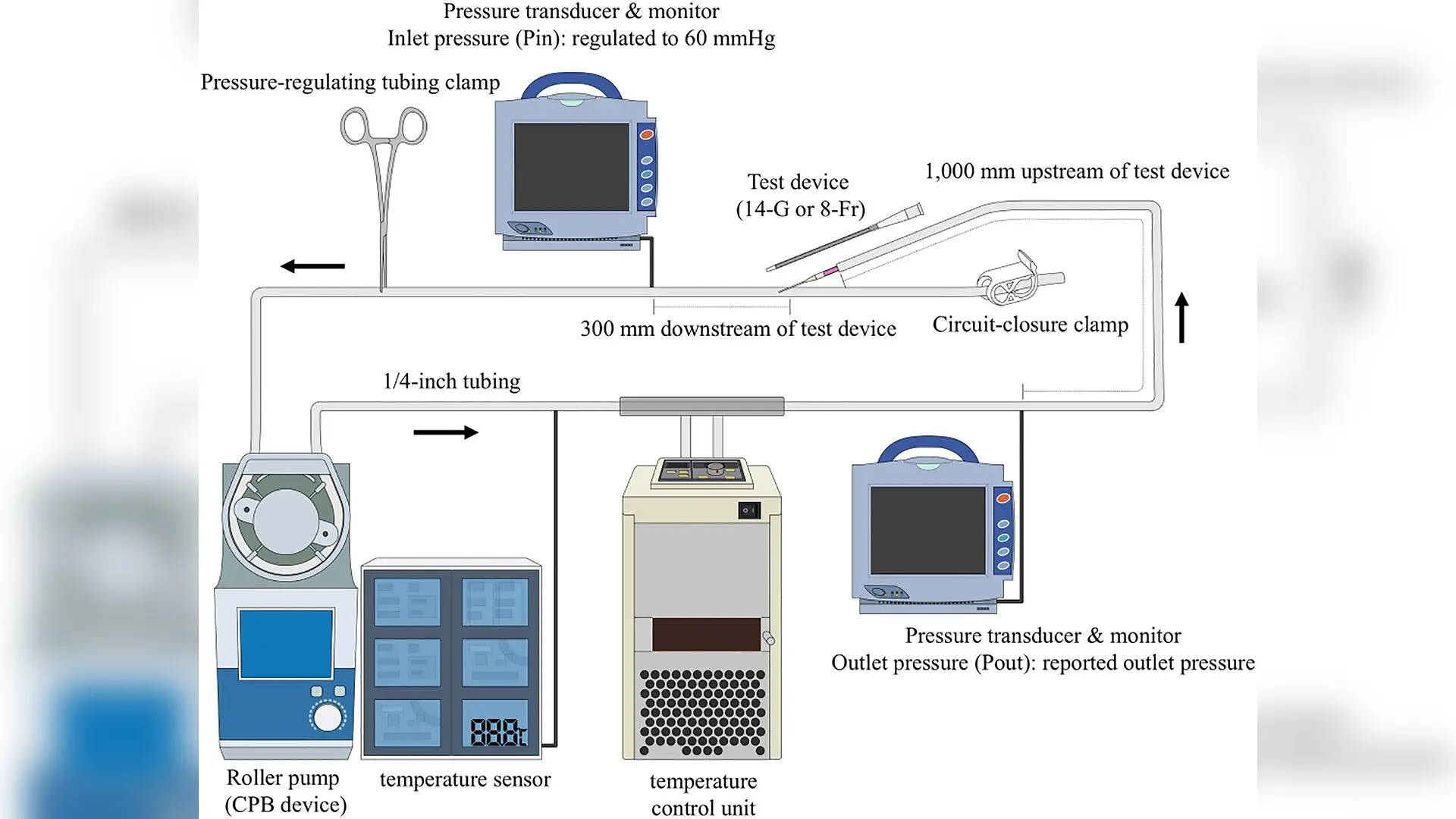
When veterinary surgeons perform cardiac operations on tiny three-kilogram dogs, finding equipment small enough to fit narrow blood vessels can present a significant hurdle. Standard pediatric arterial cannulas are sometimes unavailable, prompting clinicians to use modified fourteen-gauge hemodialysis catheters instead. To better understand how these off-label alternatives perform under pressure, researchers constructed a closed-loop mock circuit to test their fluid dynamics.
The study, published in PLOS One, evaluated one eight-French pediatric arterial cannula alongside six fourteen-gauge hemodialysis catheter specimens with varying effective lengths of 25, 32, and 38 millimeters. The team examined both side-hole and sealed configurations in a mock system designed to simulate small-dog cardiopulmonary bypass. A water and glycerol solution was pumped through the circuit at rates ranging from 50 to 350 milliliters per minute to test hydraulic resistance.
Surprising Pressure Similarities at Lower Flows
At the reference flow rate of 300 milliliters per minute, outlet pressures remained remarkably close across all tested devices. The eight-French cannula recorded an average outlet pressure of 136.3 millimeters of mercury, while the fourteen-gauge catheters with side holes yielded values between 136.7 and 137.0 millimeters of mercury. This small variance came despite theoretical differences in their internal diameters and geometry.
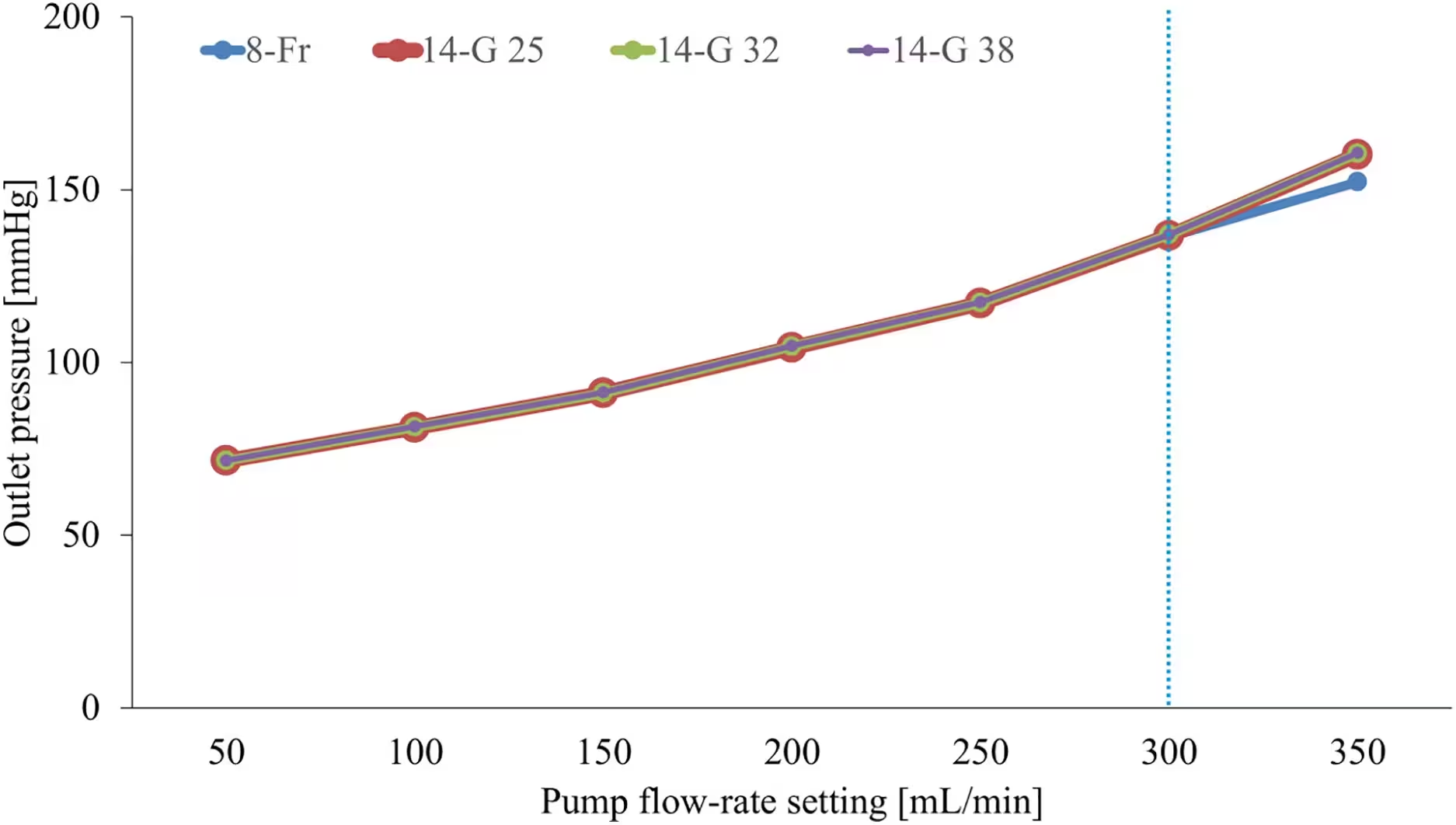
The investigators observed that side holes played a measurable role in reducing overall pressure within the system. At the 300 milliliter per minute benchmark, catheters featuring side holes showed outlet pressures about 2.7 to 2.8 millimeters of mercury lower than their sealed counterparts. This slight drop points to how fluid redistributes near the catheter tip when side openings are present.
Diverging Results at Higher Pump Settings
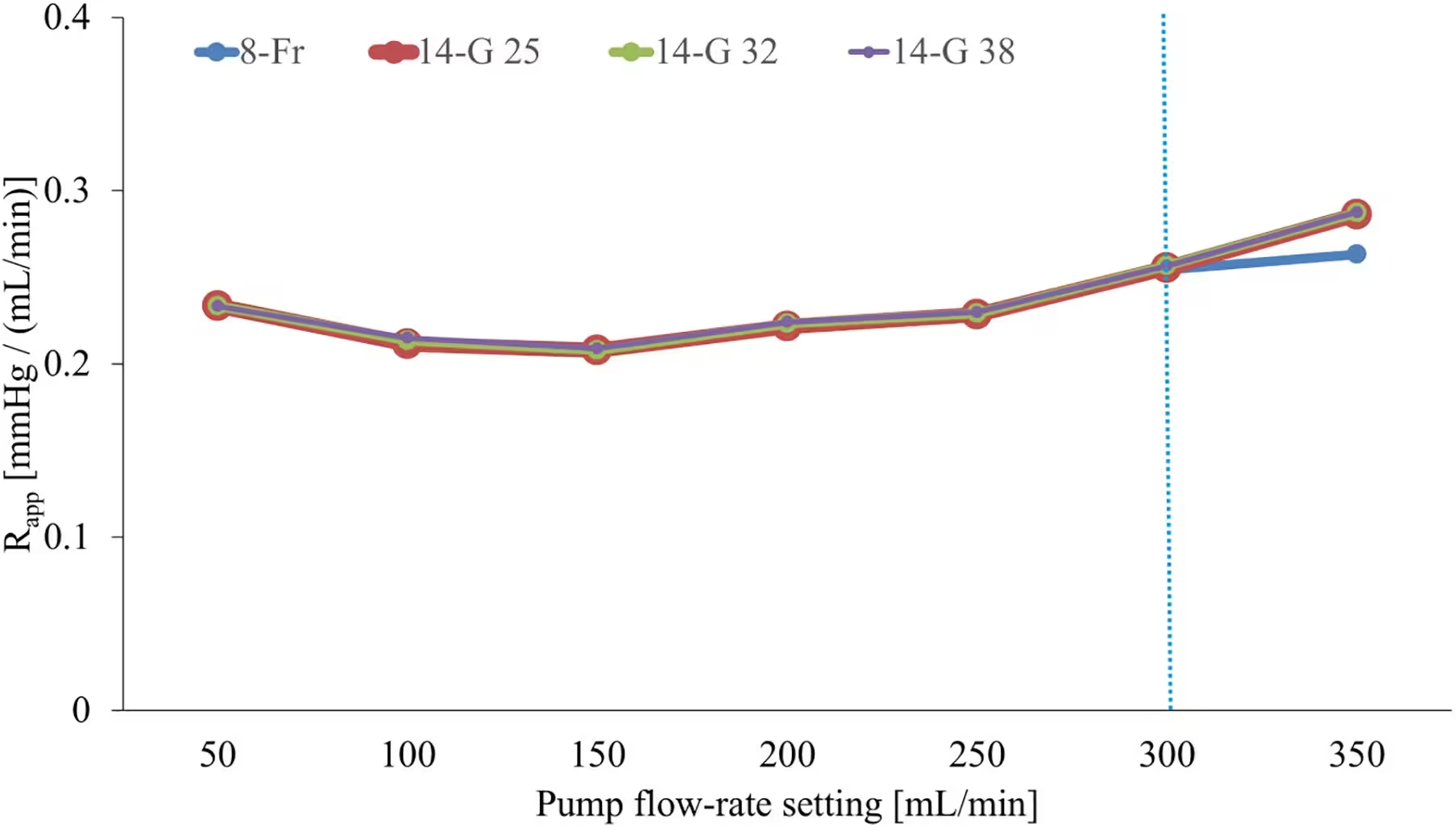
While performance matched closely across the primary operating range up to 300 milliliters per minute, pushing the pump to 350 milliliters per minute revealed wider gaps. At this higher exploratory setting, all three side-hole fourteen-gauge specimens produced noticeably higher outlet pressures than the eight-French pediatric cannula, indicating that flow limitations become more pronounced as volume increases.
The authors note several important limitations to keep in mind regarding the bench experiments. The mock circuit utilized a Newtonian fluid rather than real blood, meaning cellular components and non-Newtonian blood viscosity were not factored into the measurements. Furthermore, the setup lacked vascular compliance and pulsatile flow, and the data represent technical replicates from single physical specimens rather than a large population sample.
Ultimately, the bench data indicate that fourteen-gauge hemodialysis catheters produce comparable hydraulic performance to standard pediatric cannulas at lower flow rates suitable for tiny canine patients. However, the researchers emphasize that these technical measurements do not establish clinical interchangeability or safety, and future work must incorporate multiple physical devices and biological models before confirming clinical utility.
The research was published in PLOS One on October 26, 2026.
This article has been fact checked for accuracy, with information verified against reputable sources. Learn more about us and our editorial process.
Last reviewed on .
Article history
- Latest version
Reference(s)
- Wauchi, Keizo., et al. “Hydraulic performance of 14-G hemodialysis catheters versus an 8-Fr arterial cannula in a mock 3-kg small-dog cardiopulmonary bypass circuit.” PLOS One, vol. 21, no. 10, October 26, 2026, pp. e0361473 Public Library of Science (PLoS), doi: 10.1371/journal.pone.0361473. <https://doi.org/10.1371/journal.pone.0361473>.
Cite this page:
- Posted by Robert Brown