Natural Plant Extracts and Honey Successfully Protect Watermelon Juice From Spoilage
Researchers test botanical additives and artificial neural networks to improve the microbial and physical stability of fresh fruit juice.
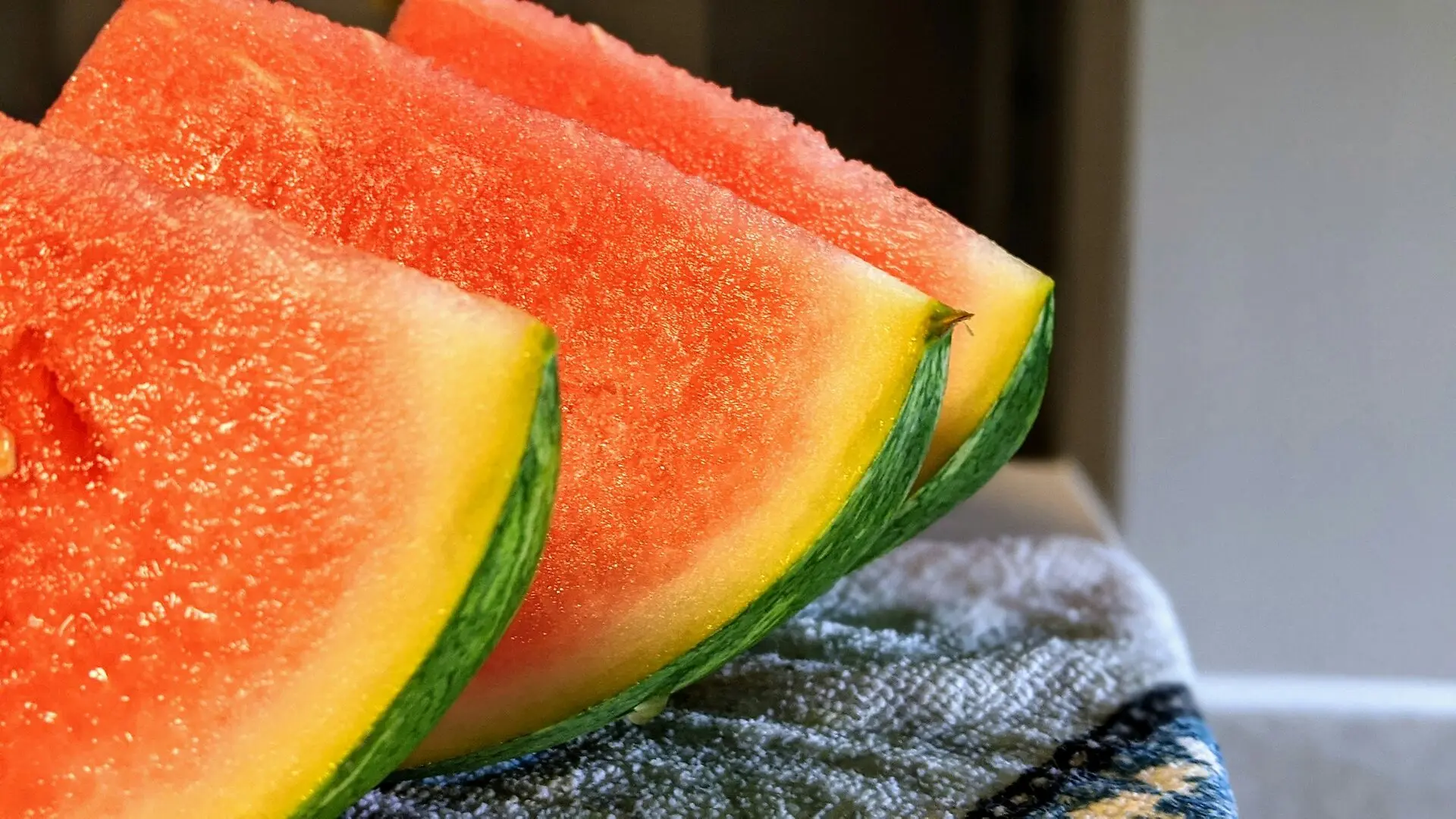
Watermelon juice spoils rapidly due to its high water content and low acidity, creating a major hurdle for food safety and storage. A team of researchers has developed a natural preservation system using plant extracts, lime juice, and honey to extend the microbial stability of watermelon juice while boosting its antioxidant properties.
Food spoilage affects roughly 30 percent of the global food supply annually, causing hundreds of billions of dollars in economic losses and triggering hundreds of thousands of fatal food poisoning cases. While synthetic chemical preservatives are commonly used to prevent this spoilage, consumer demand and public health concerns over potential long-term toxicity have driven a search for sustainable, plant-based alternatives. Researchers set out to test whether botanical extracts from clove seeds, cinnamon bark, bay leaves, and ginger rhizomes, when combined with lime juice and honey, could serve as effective multi-component natural preservatives for fresh watermelon juice.
The study, published in Frontiers in Microbiology, examined 18 distinct experimental units, including single-component and multi-component additive systems alongside positive and negative controls. Freshly extracted watermelon juice samples were blended with precise ratios of the natural additives and stored in sealed, dark containers at a controlled temperature of 20 degrees Celsius for 10 days. The researchers evaluated the samples across multiple parameters, tracking changes in total phenolic content, total flavonoid content, free radical scavenging activity, vitamin C concentration, and physical engineering traits such as viscosity, electrical conductivity, density, and thermal conductivity.
How Botanical Extracts and Honey Modify Juice Properties
The experimental results showed that individual plant extracts provided moderate antioxidant enhancements, but multi-component formulations yielded superior functional performance. In particular, a specific multi-additive mixture designated as treatment 13 demonstrated the highest antioxidant capacity and the strongest microbial inhibition throughout the 10-day observation window.
The inclusion of lime juice increased the acidity of the watermelon juice while elevating its ascorbic acid content and electrical conductivity. This acidic environment helped compromise the cell membranes of invading microorganisms. Meanwhile, the addition of natural honey introduced high concentrations of sugars that reduced water activity inside the juice matrix, creating a hypertonic state that further impaired microbial growth and metabolic activities.
Furthermore, the physical engineering tests revealed that the multi-additive treatments significantly altered the thermo-rheological behavior of the juice. The incorporation of plant extracts, honey, and lime juice increased the viscosity, density, and shear stress of the liquid while decreasing thermal conductivity and specific heat capacity. These shifts in physical properties are valuable for the future design of automated food processing equipment, pumping systems, and industrial pasteurization pipelines.
Predicting Microbial Dynamics With Artificial Intelligence
To analyze the complex dataset and forecast quality changes over time, the research team integrated artificial neural network modeling alongside classical linear regression analysis. Using the Levenberg-Marquardt training algorithm, the multilayer perceptron neural network was trained to predict electrical conductivity, viscosity, total bacterial count, and total fungal count based on the storage duration and treatment composition.
The predictive models achieved high coefficients of determination and low root mean squared error values, indicating that the artificial neural network successfully captured nonlinear relationships within the experimental data. Total bacterial count and total fungal count models displayed particularly strong correlations between actual laboratory measurements and predicted outputs, highlighting the potential for machine learning tools to assist in automated food quality monitoring.
Limitations and Future Research Directions
The authors noted several important limitations to their findings. The microbiological evaluation focused strictly on total cultivable bacteria and fungi rather than identifying specific bacterial or fungal species or targeting individual foodborne pathogens. Additionally, the study did not include formal sensory evaluations with human panels, meaning the consumer acceptability and commercial shelf life of the flavored juice remain unproven.
Moreover, the researchers emphasized that the study was conducted under strictly controlled laboratory storage conditions and did not establish definitive health benefits or clinical safety in humans. Future investigations will require broader toxicity testing, molecular diagnostics like gene sequencing, independent validation datasets, and extended storage trials in refrigerated environments before these natural preservative formulations can be adapted for commercial beverage production.
The research was published in Frontiers in microbiology on October 24, 2026.
This article has been fact checked for accuracy, with information verified against reputable sources. Learn more about us and our editorial process.
Last reviewed on .
Article history
- Latest version
Cite this page:
- Posted by Robert Brown