Computer Simulation Reveals How Targeted Posture Exercises Shift Spinal Stress in Scoliosis
A new study combining motion tracking and finite element modeling suggests that specific active movements can help balance pressure on scoliotic discs.
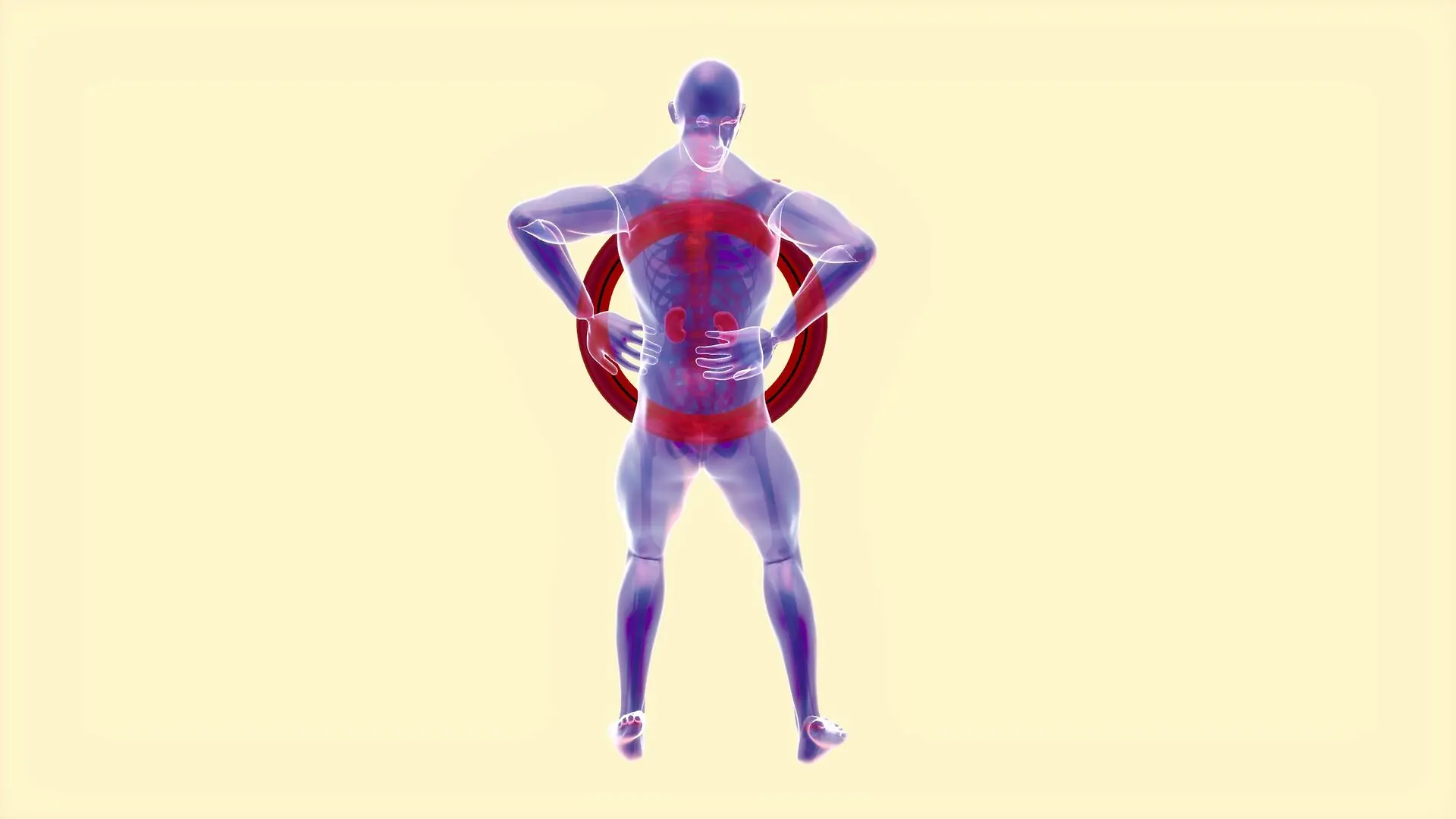
A computational and movement study reveals how traditional postural exercises alter physical stress on scoliotic spines, offering new insights for managing adolescent idiopathic scoliosis (AIS). The research sheds light on how targeted body movements can redistribute mechanical pressure within the spinal column, which could eventually help improve non-surgical rehabilitation approaches.
Understanding Spinal Deformity and Conservative Care
Adolescent idiopathic scoliosis is a complex three-dimensional spinal condition marked by sideways curvature, twisting of the vertebrae, and altered back profiles. Affecting teenagers worldwide, the condition often leads to cosmetic worries, back discomfort, reduced breathing capacity, and a lower quality of life. Standard non-surgical treatments include bracing and specialized physical therapy, such as the Schroth method, which aims to improve posture and strengthen spinal stability. However, exactly how active movement and muscle control modify internal spinal loads has remained largely unexplored.
To investigate these mechanisms, researchers combined motion-tracking technology, muscle activity recordings, and computer simulations. The work is published in Frontiers in Bioengineering and Biotechnology and provides a framework for evaluating physical therapy techniques.
Testing Traditional Movements Through Advanced Modeling
The investigators recruited 10 healthy adults and 10 patients with Lenke type 1 thoracic scoliosis to examine two specific traditional Chinese exercise routines known as \u201cLu Di\u201d and \u201cJiu Gui Ba Ma Dao\u201d. Using wearable inertial measurement units placed along the spine, the team tracked three-dimensional angular movements during the exercises. At the same time, surface electromyography sensors measured electrical activity in the muscles on both sides of the spine to see how muscles on the concave and convex sides of the curve responded.
To understand what happens inside the bones and discs, the team constructed a detailed computer model of a scoliotic spine. By applying the motion data as boundary conditions in a finite element analysis, which is a computer method used to simulate physical stress and strain, the researchers calculated how the simulated spine distributes forces during the \u201cLu Di\u201d exercise.
Key Biomechanical Findings and Stress Redistribution
The analysis showed that the two exercise routines involve distinct movement patterns. \u201cJiu Gui Ba Ma Dao\u201d primarily emphasizes coordinated upper body rotation, while \u201cLu Di\u201d combines lumbar bending and thoracic twisting in a spiral motion.
During the \u201cLu Di\u201d exercise, the computer simulation indicated a notable change in internal pressure. Specifically, the high stress concentration normally found at the posterior concave side of the discs near the apex of the curve shifted toward the convex side. This created a more balanced stress distribution across the intervertebral discs. The absolute mechanical load during this exercise was also lower than that seen under pure single-direction bending movements, suggesting that the posture achieves targeted loading without imposing excessive overall compression.
Muscle activity sensors showed some differences between the left and right sides of the back during the movements, with higher activation on the convex side for certain muscles during \u201cLu Di\u201d. However, the authors note that these electrical activity differences did not remain statistically significant after correcting for multiple statistical comparisons, meaning those muscle patterns should be viewed as exploratory.
Limitations and Future Directions
While the findings offer an objective look at how specific physical postures interact with spinal mechanics, the study has important limitations. The computer model was based on an idealized template rather than individual patient anatomies, and it omitted features such as gravity, rib cages, and active muscle tension forces. Furthermore, finite element simulations were only performed for the \u201cLu Di\u201d maneuver, leaving the internal disc stress effects of the other exercise unmeasured.
The researchers emphasize that these results represent acute biomechanical responses in a small group and do not prove long-term structural correction. Larger longitudinal studies are needed to determine whether these simulated mechanical adjustments translate into genuine clinical benefits for teenagers living with scoliosis.
The research was published in Frontiers in bioengineering and biotechnology on October 24, 2026.
This article has been fact checked for accuracy, with information verified against reputable sources. Learn more about us and our editorial process.
Last reviewed on .
Article history
- Latest version
Cite this page:
- Posted by Robert Brown