Enzyme-Bacteria Blend Transforms Cassava Waste Into High-Protein Feed
Combining fiber-eating enzymes with lactic acid bacteria turns discarded cassava leaves into nutritious livestock feed.
Millions of tons of protein-rich cassava foliage are discarded or burned every year because high fiber content and poor fermentation make direct storage difficult. Researchers evaluating a new preservation biotechnology discovered that combining fiber-breaking enzymes with specialized lactic acid bacteria transforms this waste agricultural material into stable, highly nutritious ruminant feed.
The study, published in Bioresources and Bioprocessing, investigated how dual enzyme treatments interact with bacterial inoculants during a 42-day ensiling process. Cassava plants grown on experimental plots in Taoyuan County, China, provided fresh leaves, stems, and petioles for the trials. Because raw cassava leaves naturally lack sufficient fermentable sugars and desirable microbes for proper pickling, the team tested five distinct additive strategies.
The experiment compared a control group receiving only two percent glucose against four treated groups. Treatment one used Lactobacillus plantarum with glucose. Treatment two added glucanase, treatment three added cellulase, and treatment four combined both glucanase and cellulase alongside the bacterial inoculant and glucose. Each mixture was packed tightly into vacuum-sealed plastic bags containing 300 grams of chopped foliage and stored at room temperature for zero, 21, and 42 days.
How Enzymes and Bacteria Drive Rapid Acidification
During the ensiling period, the treated silages showed a dramatic drop in acidity compared to the control group. By day 42, the pH in enzyme-treated batches fell as low as 3.78, whereas the control group remained higher at 4.41. This rapid drop is critical because it halts the growth of spoilage organisms and locks in nutritional value.
The team quantified organic acids using high-performance liquid chromatography and gas chromatography. By day 42, all additive-treated silages produced significantly more lactic acid, ranging from 5.92 to 6.03 percent of dry matter, compared to just 4.56 percent in the control group. Propionic acid levels stayed low across all groups, indicating a lack of undesirable secondary fermentation, while butyric acid was entirely undetectable.
Nutritional Shifts and Structural Fiber Breakdown
Nutritional analyses revealed that crude protein levels increased over the 42-day fermentation window. Treatment four, which combined both glucanase and cellulase with the bacterial inoculant, achieved a peak crude protein content of 27.7 percent of dry matter. The dual-enzyme approach effectively broke down plant cell walls into simple sugars, fueling bacterial growth and shielding proteins from degradation.
The breakdown of structural carbohydrates was particularly pronounced in groups receiving fibrolytic enzymes. Neutral detergent fiber and acid detergent fiber levels dropped significantly. By day 42, treatment four exhibited the lowest neutral detergent fiber at 46.8 percent of dry matter and the lowest acid detergent fiber at 24.3 percent, down from initial baseline readings. Consequently, the relative feed value score surged from 68.3 in the control group up to 139 in treatment four.
Shifting the Hidden Microbial Ecosystem
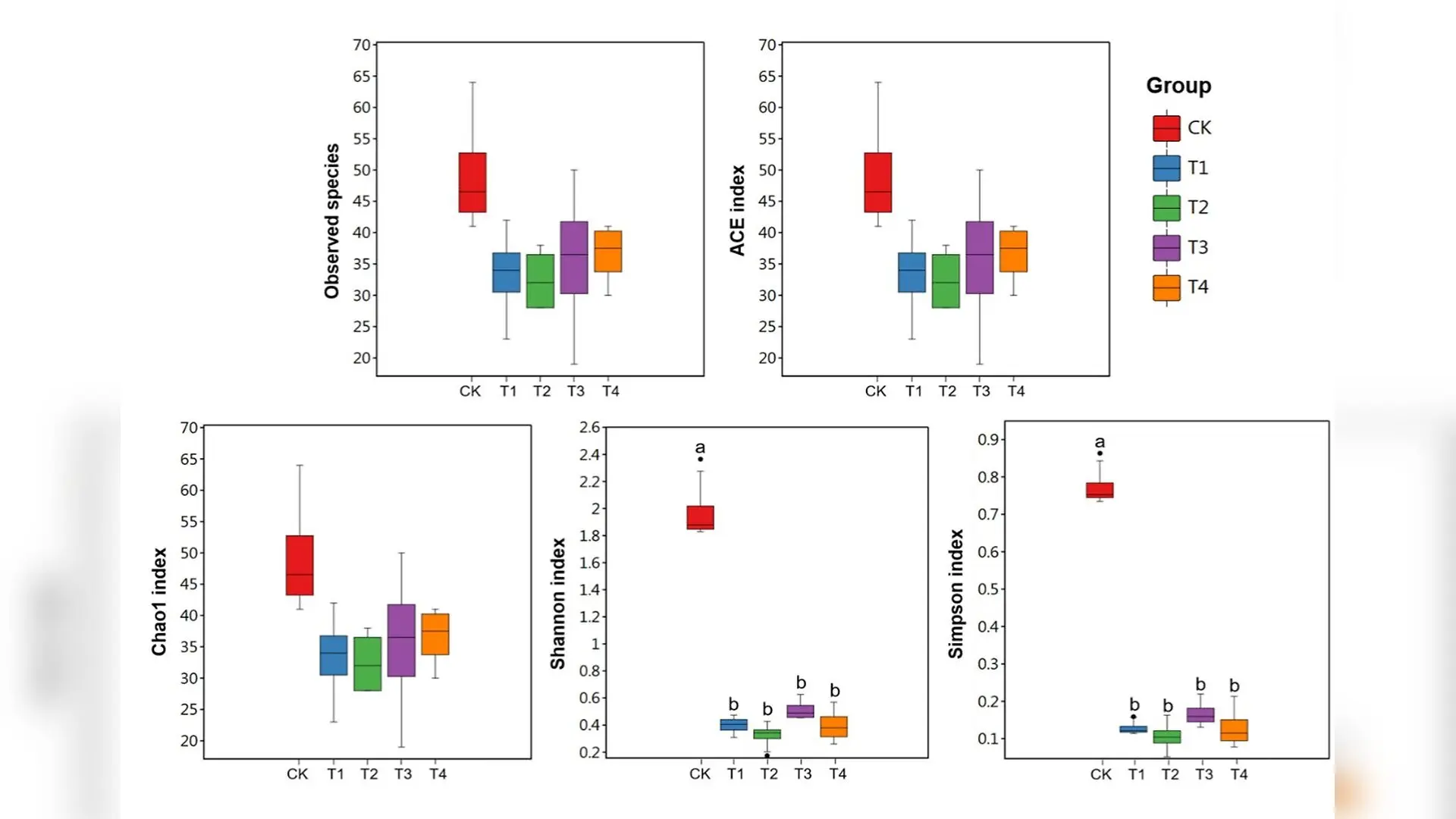
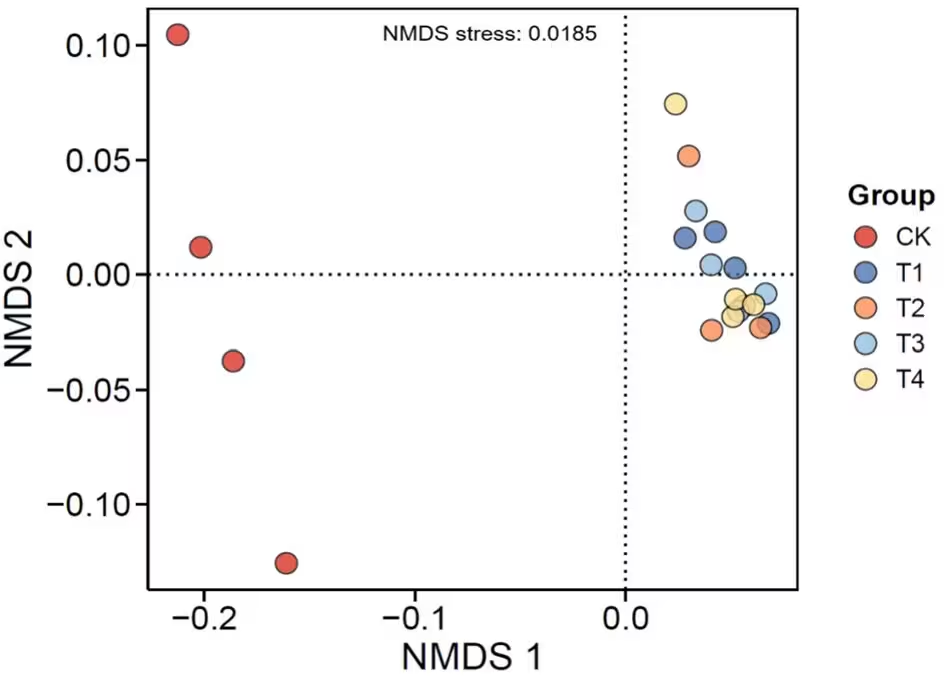
Genetic sequencing of the bacterial communities using the Illumina platform revealed major shifts in the silage microbiome. While overall bacterial richness remained similar across groups, diversity indices showed that treated silages became heavily dominated by a single beneficial strain. Lactobacillus plantarum accounted for more than 93 percent of the bacterial community in all enzyme-treated silages by day 42, compared to just 13.1 percent in the control group.
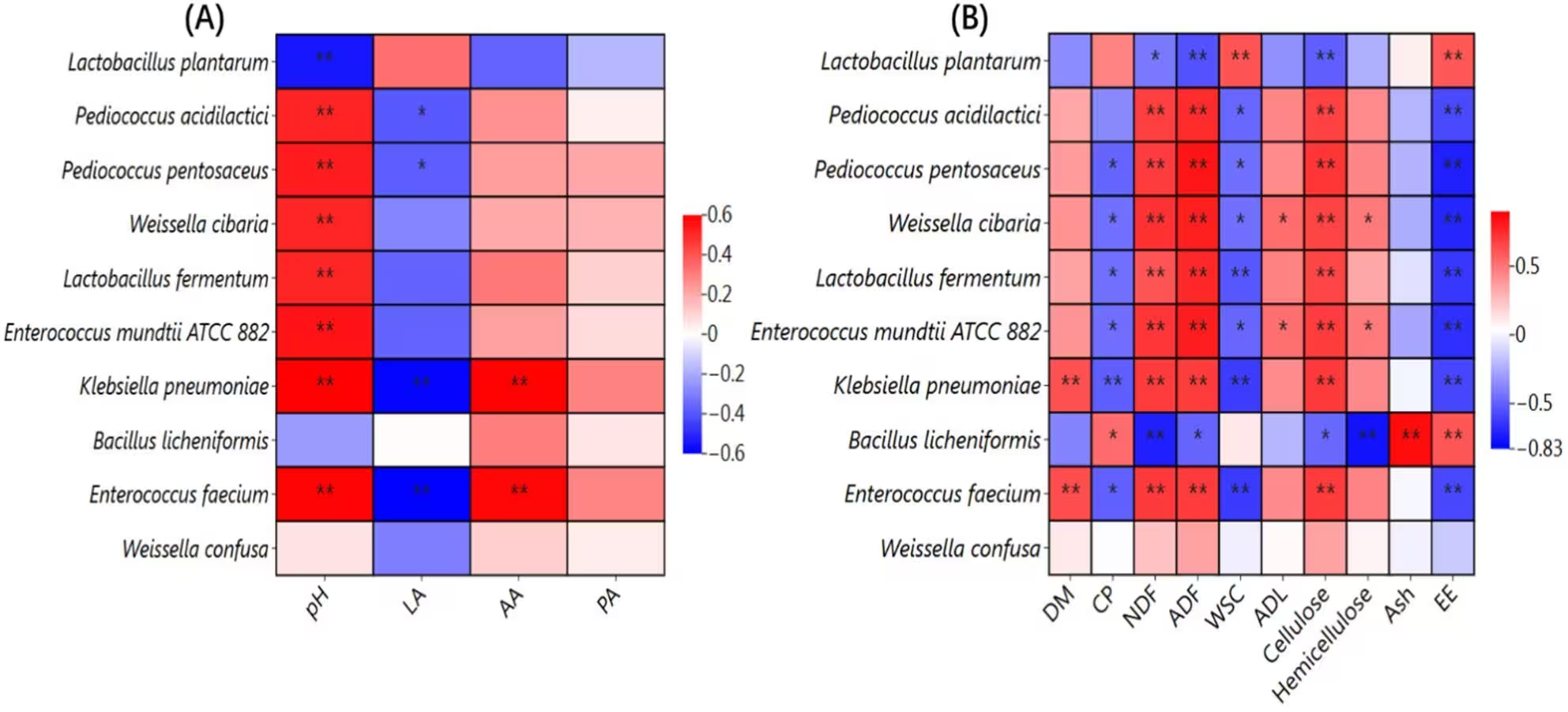
Meanwhile, potentially harmful bacteria such as Klebsiella pneumoniae and Enterococcus faecium were detected in the control group but were completely absent in the enzyme-treated silages. The authors noted that this targeted microbial shift creates a stable acidic environment that prevents spoilage while maximizing nutrient retention.
Limitations and Future Agricultural Applications
While the laboratory findings demonstrate clear nutritional and fermentation improvements, researchers noted that acid detergent lignin showed minimal degradation, ranging between 9.08 and 11.4 percent, because complex phenolic structures resist microbial attack. Furthermore, translating these controlled laboratory bag tests into large-scale bunker silos on commercial farms will require additional trials under diverse environmental conditions.
The study highlights a promising biotechnological pathway for tropical and subtropical regions. By combining specific fiber-degrading enzymes with lactic acid bacteria, agricultural producers can convert problematic cassava waste into a safe, protein-dense feed resource for livestock.
The research was published in Bioresources and bioprocessing on October 24, 2026.
This article has been fact checked for accuracy, with information verified against reputable sources. Learn more about us and our editorial process.
Last reviewed on .
Article history
- Latest version
Reference(s)
- Hossain, Md Delowar., et al. “Synergistic effects of fibrolytic enzymes and lactic acid bacteria on cassava leaf silage quality and microbial community.” Bioresources and Bioprocessing, vol. 13, no. 1, October 24, 2026 Springer Science and Business Media LLC, doi: 10.1186/s40643-026-01151-z. <https://doi.org/10.1186/s40643-026-01151-z>.
Cite this page:
- Posted by Robert Brown