Targeted Wheat Gene Knockout Creates Upright Canopies Without Yield Penalties
Disrupting specific brassinosteroid biosynthesis pathways alters plant architecture while keeping grain size intact.
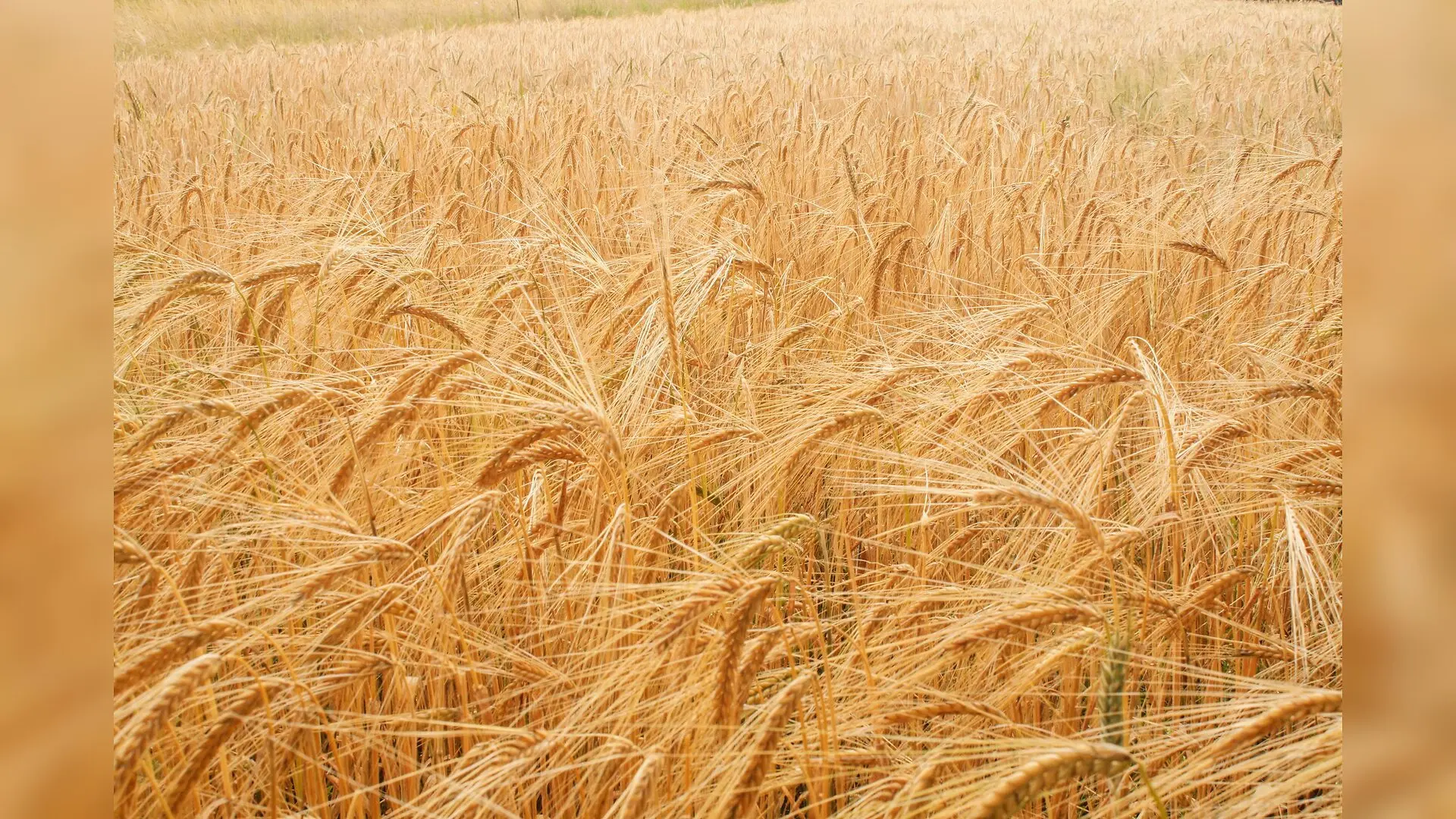
Plant scientists have discovered that disabling a single gene responsible for hormone production alters wheat canopy architecture to create upright leaves without shrinking grain size. The laboratory study explores how targeted genetic modifications in wheat can reshape plant posture to capture more sunlight.
Upright leaves help cereal crops capture sunlight more efficiently when planted closely together, but previous attempts to alter these growth hormones often resulted in severely stunted plants and poor yields. Researchers set out to test whether modifying specific hormone biosynthesis genes could deliver the benefits of an upright canopy while avoiding the usual penalty to grain development.
The research, published in TAG. Theoretical and Applied Genetics, focused on two key enzymes involved in the production of brassinosteroids, which are natural plant hormones that regulate cell elongation, leaf angles, and stem growth. The team generated knockout mutant lines in bread wheat for all homoeologues of the genes DWARF1/DIMINUTO and DWARF4, effectively eliminating functional copies of these targets.
What Happens When You Disable Hormone Biosynthesis Genes?
By screening populations of the spring bread wheat cultivar Cadenza, the authors identified point mutations that introduced premature stop codons into the targeted genes. When all three homoeologues of DWARF1 were disrupted, the resulting mutant plants displayed dramatic developmental changes, including a roughly 50 percent reduction in height, significantly fewer tillers, and smaller, lighter grains.
In contrast, plants carrying mutations in all three homoeologues of DWARF4 showed a much milder phenotype. These mutant lines developed an erect leaf canopy and a modest 14 percent height reduction in field trials, but maintained normal grain size and weight compared to control plants.
Cellular Mechanisms Behind the Upright Canopy
To understand why the leaves stood up straighter, the team used scanning electron microscopy and laser ablation tomography to examine the cellular structure around the leaf joints. Both mutant lines exhibited significantly shorter cell lengths in the auricle region, which physically restricts longitudinal cell expansion and prevents leaves from bending outward from the stem.
Furthermore, anatomical measurements revealed that the lamina joint regions became significantly thicker in both mutants due to increased distances from the midvein and a greater number of cell layers containing strengthening sclerenchyma tissue. These structural adjustments keep the foliage tightly packed around the stem, optimizing vertical light distribution.
Metabolite Profiles Explain Different Phenotypes
Chemical analyses of seedling tissues explained why the two gene knockouts had such different overall effects on the plant. In the DWARF1 disruption lines, early sterol precursors were depleted drastically, with campesterol levels dropping 126-fold compared to wild-type controls, reflecting systemic hormone deficiency.
Meanwhile, precursor levels were not reduced in the DWARF4 mutant seedlings, reflecting functional redundancy among related enzymes acting later in the pathway. Because DWARF4 expression is very low in developing grains, its removal successfully alters leaf angle without triggering the destructive pleiotropic penalties seen in other hormone-deficient variants.
Next Steps for Dense Planting Strategies
While the laboratory and field trials demonstrated that DWARF4 modification creates an ideal upright architecture without harming grain development, researchers note that further large plot evaluations under various sowing densities are required. Testing these lines in crowded agricultural layouts will verify whether the structural improvements translate into net yield gains in commercial farming environments.
The research was published in TAG. Theoretical and applied genetics. Theoretische und angewandte Genetik on October 24, 2026.
This article has been fact checked for accuracy, with information verified against reputable sources. Learn more about us and our editorial process.
Last reviewed on .
Article history
- Latest version
Reference(s)
- Gill, Manpartik S.., et al. “Knocking-out the brassinosteroid biosynthesis genes DWARF1 or DWARF4 produces upright canopy architecture in wheat.” Theoretical and Applied Genetics, vol. 139, no. 11, October 24, 2026 Springer Science and Business Media LLC, doi: 10.1007/s00122-026-05418-z. <https://doi.org/10.1007/s00122-026-05418-z>.
Cite this page:
- Posted by Robert Brown