Low-Cost Thermoforming Method Shapes Custom Plastics for Stem Cell Culture
New research shows that preheated polycarbonate sheets shaped over high-temperature 3D-printed molds can form transparent, sterilizable labware for growing human heart cells.
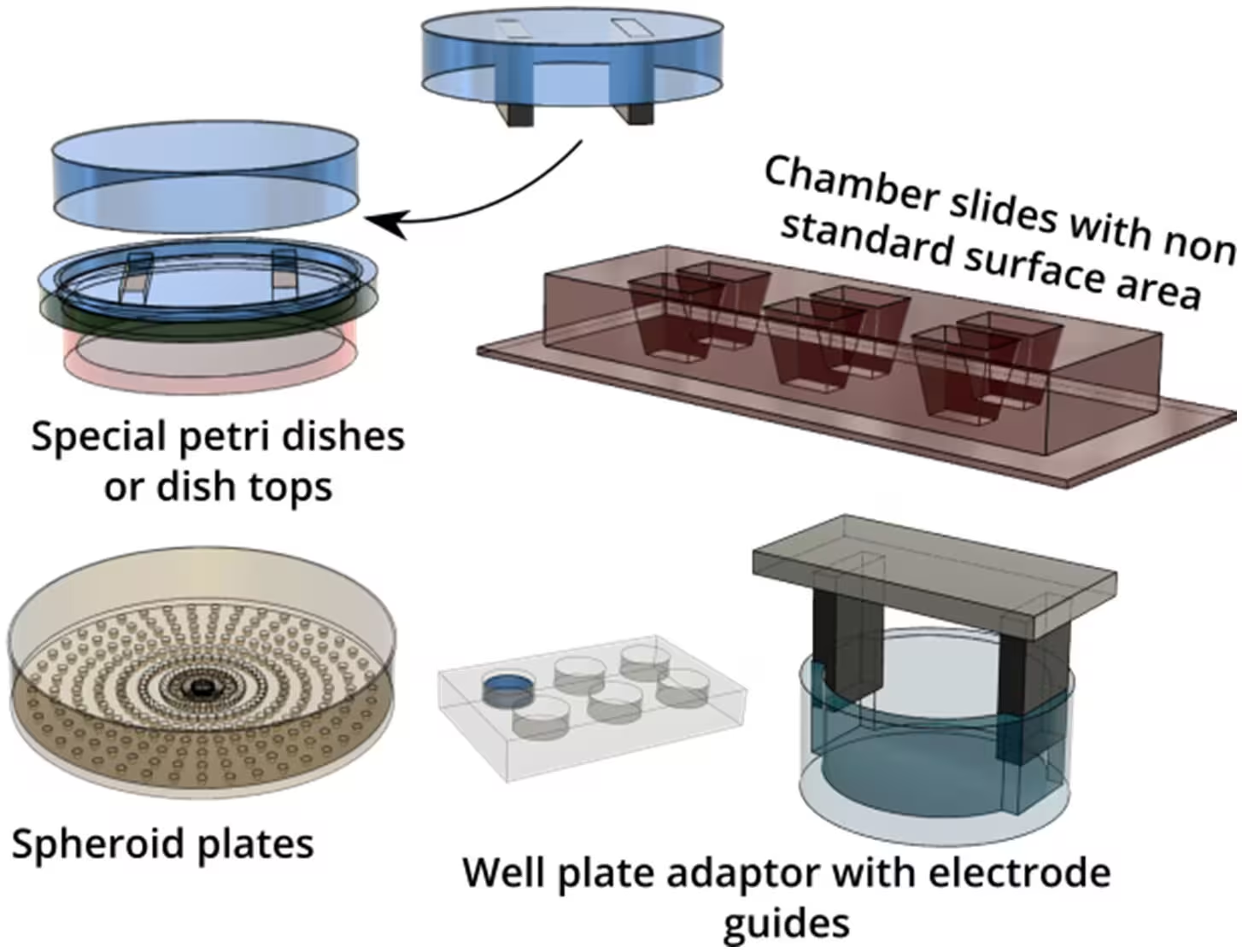
Growing human heart cells in the laboratory usually requires custom plastic dishes and chambers that mimic the mechanical environment inside the living body, but ordering bespoke labware from industrial manufacturers is often too expensive and slow for early-stage experiments. To solve this bottleneck, bioengineers have developed a low-cost fabrication workflow that combines 3D printing with vacuum thermoforming to shape transparent plastic accessories in minutes. The method bypasses the limitations of traditional materials like silicone, which tends to absorb experimental drugs and interfere with testing.
The research team, led by investigators at Washington University in St. Louis, published their findings in PLOS One. Standard cell culture plates are mass-produced in fixed shapes using injection molding, leaving researchers who need specialized lids, microfluidic adapters, or stretchable chambers with few affordable options. While laboratories frequently create custom parts using silicone elastomer cast over 3D-printed molds, that material absorbs hydrophobic small molecules and suffers from curing inhibition caused by uncured resin leachates. Rigid plastics such as polycarbonate offer a chemically inert, optically clear alternative, but machining them requires expensive industrial equipment.
How Desktop Vacuum Forming Shapes Rigid Plastic Sheets
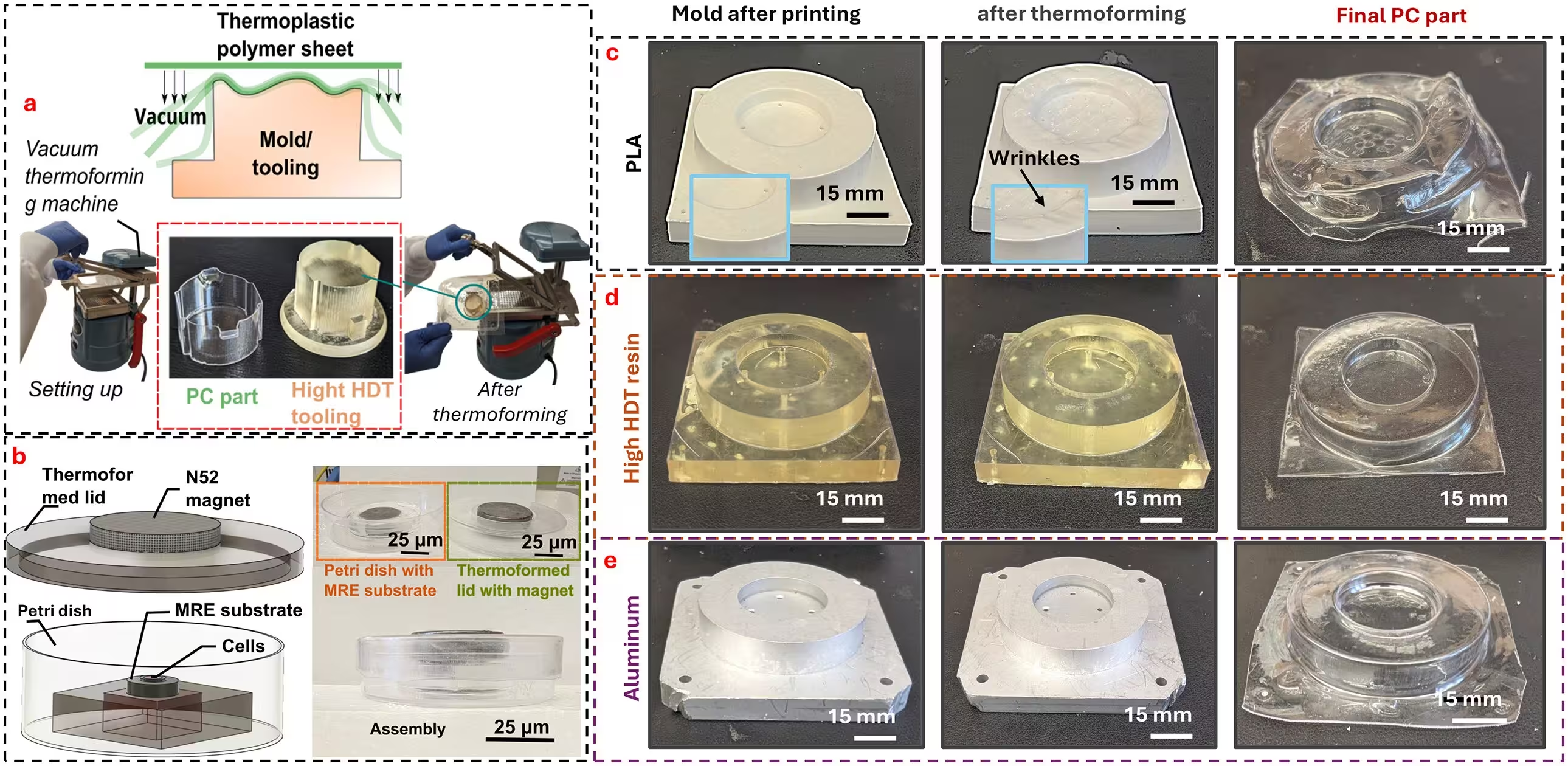
To make polycarbonate usable for rapid prototyping, the authors turned to desktop dental vacuum-forming machines that cost less than one hundred dollars. They printed precise molds using a specialized class of high heat deflection temperature resins on a digital light processing 3D printer. These high-temperature resins can withstand the thermal stress of hot plastic without warping or cracking, unlike standard polylactic acid 3D-printing filament which softens and loses dimensional accuracy at much lower thresholds.
Polycarbonate is naturally hygroscopic, meaning it absorbs moisture from ambient laboratory air. When heated during the thermoforming process, trapped water molecules expand and create disruptive bubbles that ruin the optical clarity of the finished part. The authors discovered that preheating the plastic sheets at sixty degrees Celsius for periods ranging from one and a half to six hours, depending on sheet thickness, entirely eliminated bubble formation and preserved transparency.
Supporting Pluripotent Stem Cells and Cardiac Differentiation
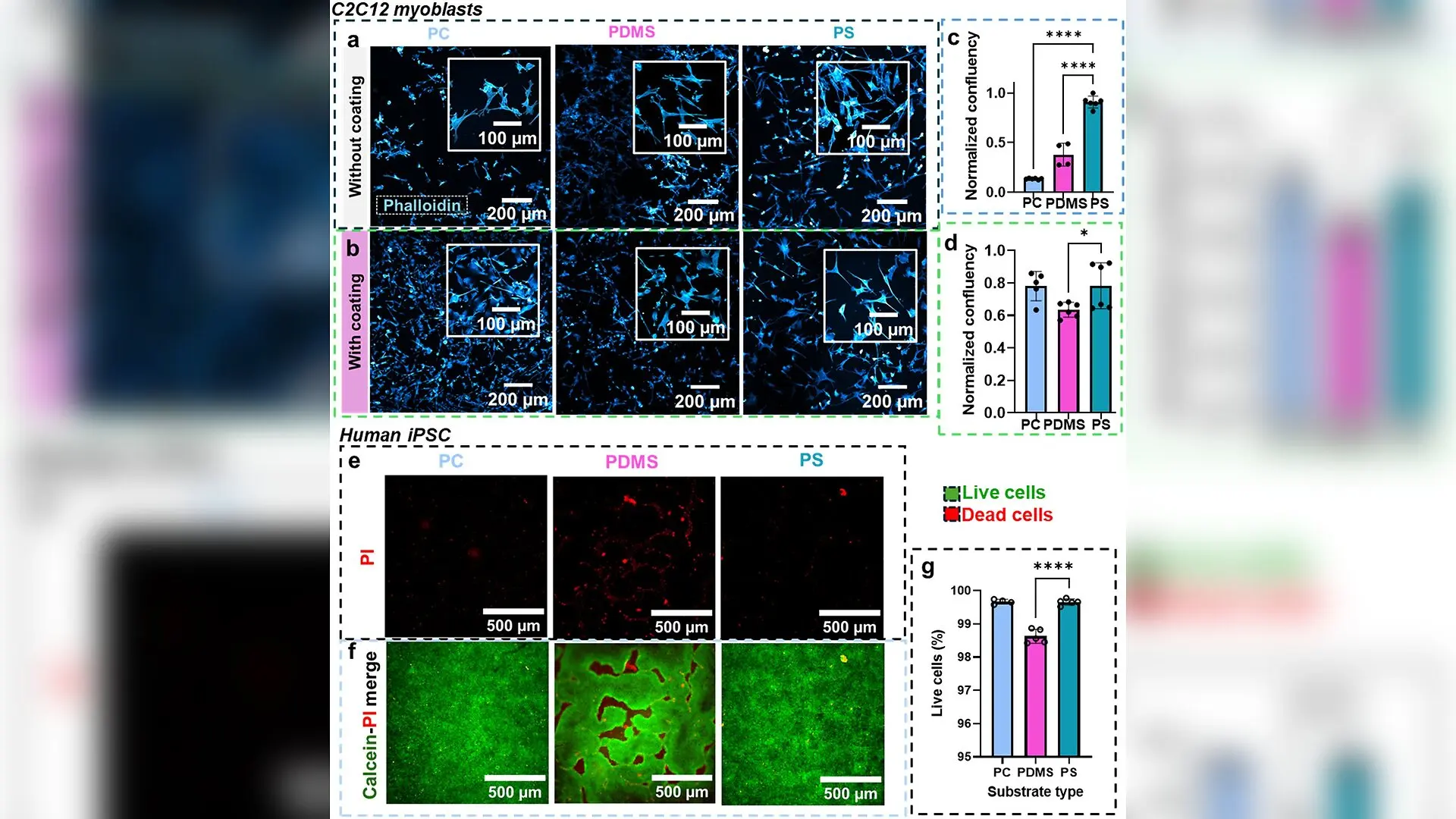
The resulting polycarbonate inserts matched the optical transparency of standard tissue culture polystyrene while completely resisting the absorption of tracer dyes such as Rhodamine 6G. Uncoated polycarbonate showed reduced cell attachment for mouse myoblasts, mirroring known challenges with untreated surfaces, but coating the thermoformed parts with a thin layer of a commercial basement membrane extract fully restored robust cell adhesion and viability for both myoblasts and human induced pluripotent stem cells.
To test whether the platform could handle demanding biological protocols, the team cultured human pluripotent stem cells on the polycarbonate inserts and guided them through differentiation into functional cardiomyocytes. The resulting beating heart cell sheets displayed organized sarcomeric alpha-actinin proteins, spontaneous calcium transients, and contractile motion profiles comparable to cells grown on standard commercial culture plates. The authors also patterned the polycarbonate into hemispherical microwells to generate three-dimensional cardiac spheroids, noting that calcium transient amplitudes increased proportionally with spheroid diameter.
Fabrication Limits and Future Laboratory Applications
While desktop thermoforming successfully produced features on the millimeter scale in under one minute per part, the authors noted that replicating sharp vertical corners or microscale features smaller than one millimeter remains challenging due to material stretching limits. Furthermore, because polycarbonate is susceptible to photodegradation under prolonged ultraviolet exposure, the team recommends steam autoclaving rather than ultraviolet light for sterilizing the custom accessories before biological use.
The technique opens new avenues for researchers to design and test custom cultureware, chambers, and tissue-engineering accessories on demand. By removing the high financial barrier of commercial tooling, the workflow enables laboratories to rapidly iterate device geometries for disease modeling and drug screening.
The research was published in PLOS One on October 26, 2026.
This article has been fact checked for accuracy, with information verified against reputable sources. Learn more about us and our editorial process.
Last reviewed on .
Article history
- Latest version
Reference(s)
- Malayath, Ganesh., et al. “Rapid thermoforming of polycarbonate cell culture accessories from 3D printed molds.” PLOS One, vol. 21, no. 10, October 26, 2026, pp. e0361065 Public Library of Science (PLoS), doi: 10.1371/journal.pone.0361065. <https://doi.org/10.1371/journal.pone.0361065>.
Cite this page:
- Posted by Robert Brown