Robotic Bodyguards Could Soon Patrol Earth’s Orbit to Protect Strategic Satellites
Astroscale is developing orbital bodyguards to protect strategic satellites, marking a major shift in how nations defend critical space infrastructure.
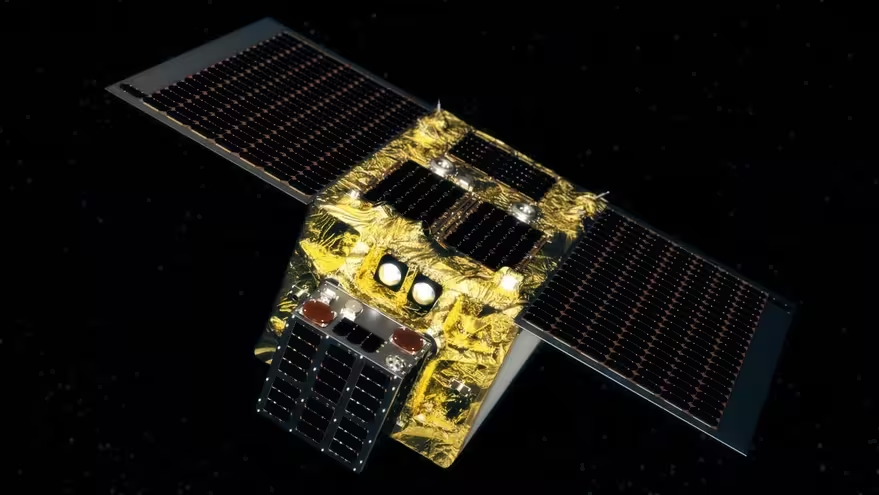
The rapidly escalating tension in Earth’s orbit, characterized by mysterious close-approach maneuvers, has prompted a bold security proposal from Japanese aerospace firm Astroscale. The company is pitching the development of a fleet of “bodyguard” spacecraft—specialized robotic sentinels designed to shadow and defend high-value orbital assets from potential interference or hostile acts.
Evolving Debris-Removal Tech for Orbital Defense
Astroscale has spent years pioneering the complex robotics required to identify, intercept, and secure objects in space. While the company initially focused on cleaning up hazardous space junk, the technical requirements for those missions—precise navigation, proximity operations, and rendezvous capabilities—map directly onto the needs of a defensive escort system.
According to reporting by Space.com, the company believes these protective systems could be flight-ready within three years. Alex Godfrey, Astroscale’s head of defense, notes that the operational requirements for guarding a satellite are arguably less demanding than those for active docking and servicing, as a bodyguard can effectively deter threats from a slightly greater distance.
The firm has already validated its core maneuverability through the successful ELSA-D mission (2021–2024) and the ADRAS-J mission, which involved a high-stakes inspection of an abandoned rocket body.
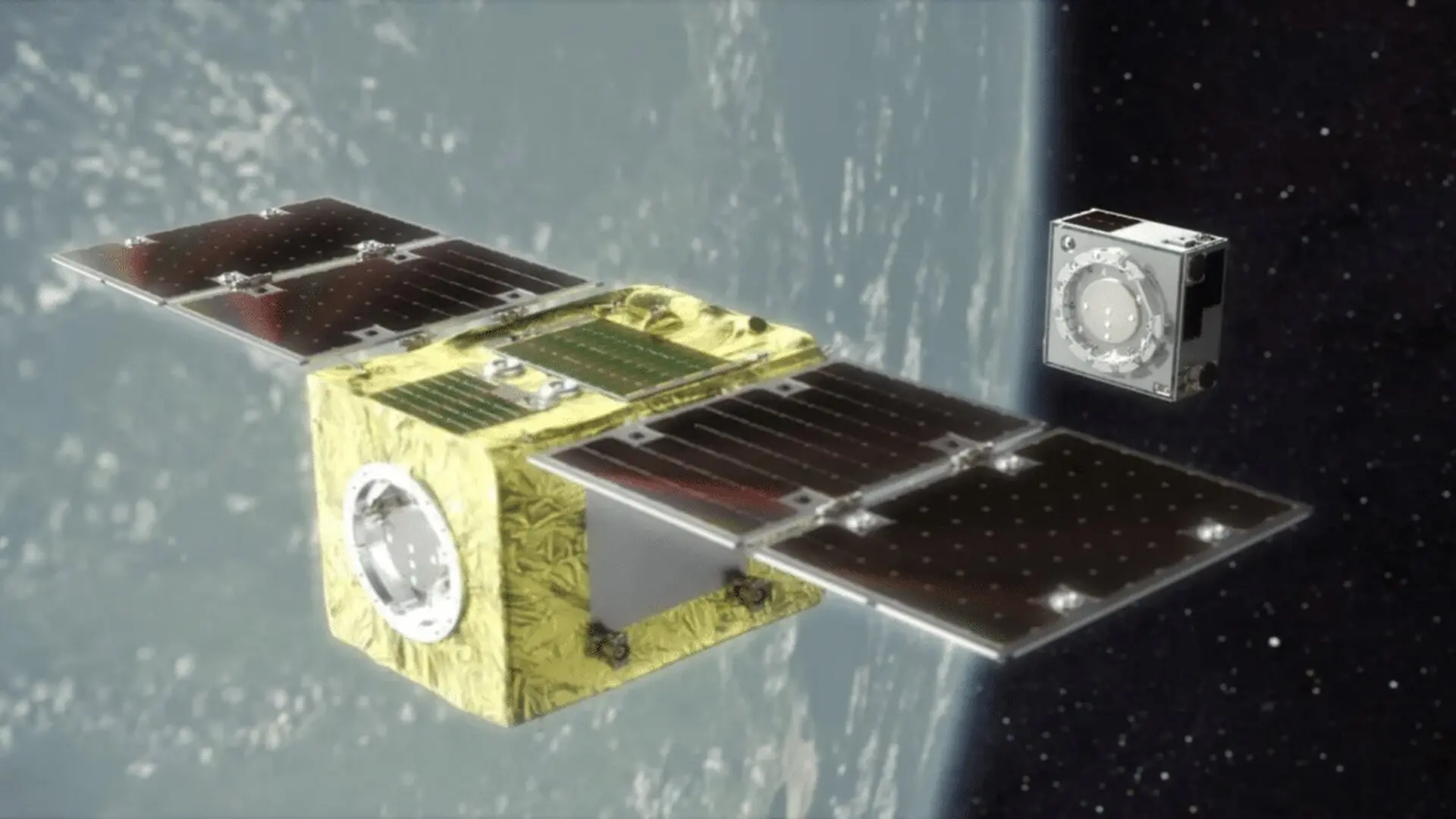
Astroscale’s ELSA-d spacecraft, designed to demonstrate technologies to approach and capture orbital debris.Credit: Astroscale
Growing Unease Over Orbital Stalking
This proposal emerges against a backdrop of increasing friction in space. Analysts have raised alarms over Russian satellites performing unconventional movements near Western-operated infrastructure. A notable incident occurred in October involving a Finnish ICEYE satellite, which was subjected to a close approach by a Russian vessel that industry observers labeled as highly irregular and potentially provocative.
The risk is not merely theoretical; such maneuvers threaten critical intelligence and imaging assets, including those providing data for the conflict in Ukraine. Washington has taken note, with officials describing the behavior of Russian platforms like the Luch-1 and Luch-2 satellites—which frequently operate in the vicinity of communications hubs 22,000 miles above Earth—as consistent with the development of orbital weapons.
ADRAS-J2 has its ride to orbit.
We’re excited to partner with @isaraerospace for the launch of ADRAS-J2, @astroscale_JP’s mission that aims to achieve the world’s first capture and removal of an existing large piece of orbital debris.
Together, we’re helping build a safer and more sustainable orbital environment.
https://t.co/2RKRyGsiNF
While the prospect of deploying a security detail in space sounds prohibitively expensive, Astroscale argues that the cost is fractional when compared to the multi-billion-pound assets they are intended to protect. Godfrey suggests that a bodyguard deployment could represent roughly 1% of the total budget for a major military communications constellation, such as the UK’s Skynet program.
The company draws a parallel to naval strategy: just as a massive aircraft carrier is accompanied by a protective flotilla of smaller, agile vessels, high-value satellites could be bolstered by a layer of defensive escorts tasked with patrolling their surroundings and discouraging unauthorized intrusions.
A Collaborative Approach to Patrols
Astroscale is also advocating for a multinational model for space security, particularly for European powers. By pooling resources, nations like the UK, France, and Germany could share the financial burden of a regional patrol network. Instead of every country attempting to guard every asset individually, a shared force could offer consistent coverage for clusters of allied satellites across the geostationary ring.
This collective security framework would allow for a more unified response to suspicious orbital activity, creating a deterrent that is harder to ignore or intimidate.
Looking Toward 2030
Though the technical architecture for these bodyguards is within reach, the company is still working to finalize contracts and secure the political backing necessary to move from concept to assembly. Nick Shave, managing director of Astroscale UK, emphasizes that the next few years are critical for setting the stage.
With the UK government signaling interest in funding space control initiatives beginning in 2030, the company is focused on building the necessary operational credibility. Ultimately, the industry is bracing for a new epoch where the safety of our orbital infrastructure depends less on the number of satellites we launch and more on our ability to defend the ones that are already there.
Fact Checked
This article has been fact checked for accuracy, with information verified against reputable sources. Learn more about us and our editorial process.