Archaeologists Discover Roman Fort That May Prove 1,700 Year Old Welsh Legend Is Real
An archaeologist’s quest to explain a remote Roman villa in Wales has led to the discovery of a previously unknown ancient fort hidden along a lost road.
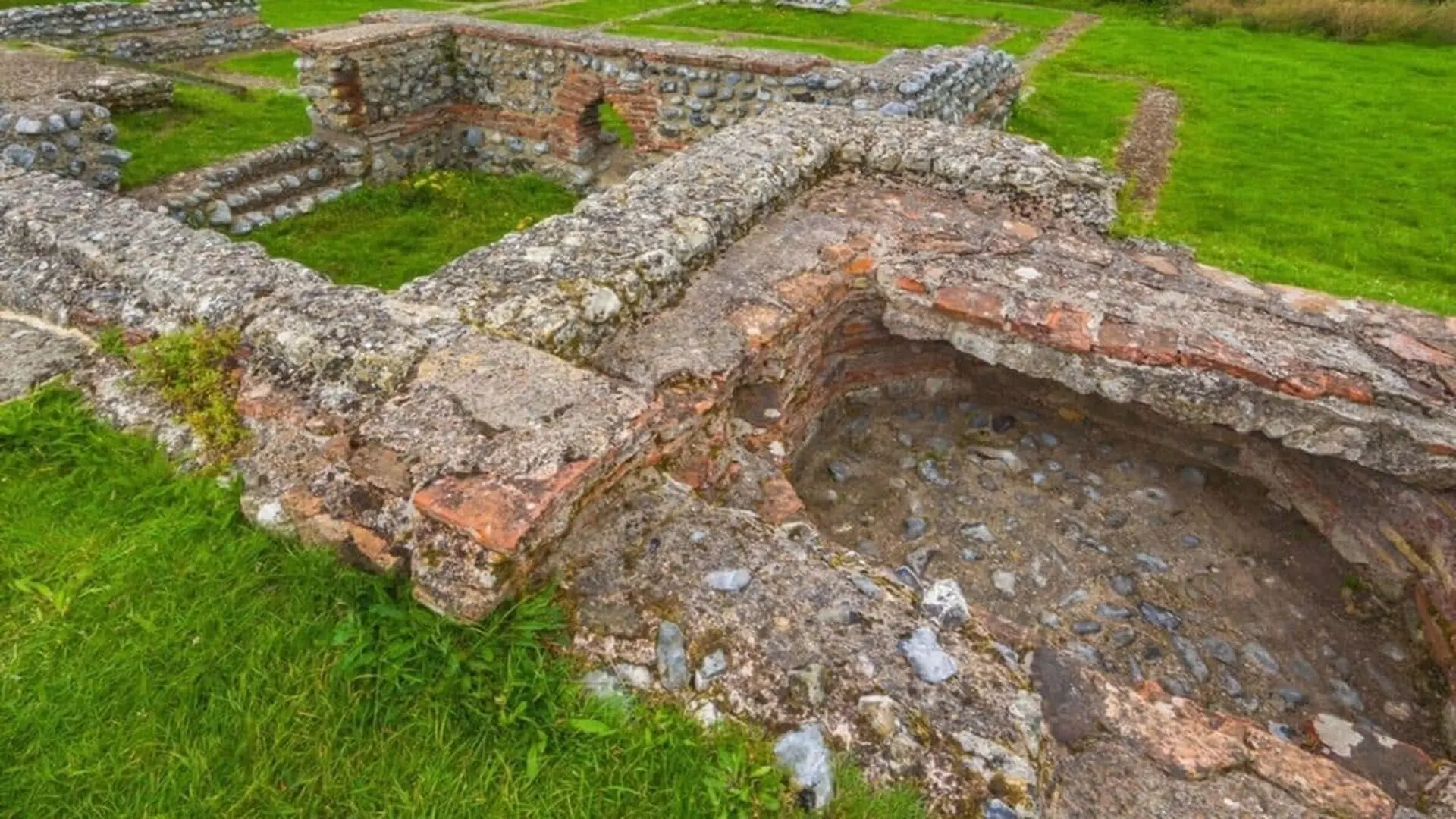
A series of archaeological excavations on a hillside in north Pembrokeshire may have bridged the divide between ancient Welsh folklore and documented history. Mark Merrony, an archaeologist at the University of Oxford, reports that five exploratory trenches have uncovered what appears to be a Roman auxiliary fort, potentially validating a nearly 1,700-year-old legend involving the Roman usurper Magnus Maximus.
Magnus Maximus, who governed territories spanning from Spain to Britain during the late fourth century, is a central figure in the medieval Welsh literary collection known as the Mabinogion. In the tale The Dream of Macsen Wledig, the emperor is described as establishing a camp on Frenni Fawr, the 1,300-foot summit of the Preseli Hills. While historians have long categorized this account as myth, Merrony’s findings suggest a tangible military presence in the region that aligns with the emperor’s historical timeline.
Tracing the Roman Road
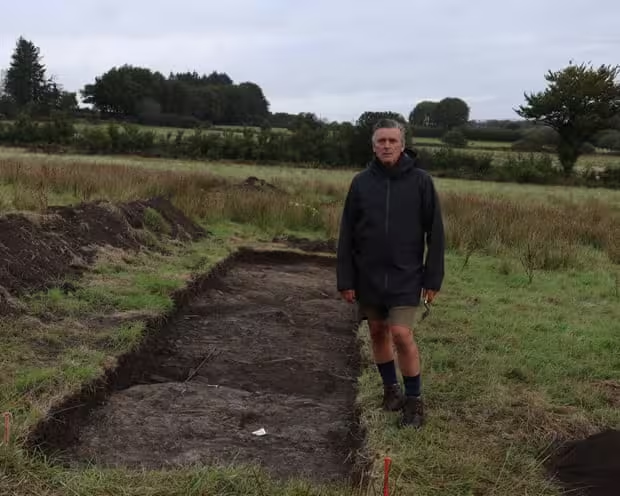
The path to this discovery began in 2002 with the investigation of a Roman villa roughly 18 miles from the current site. The anomaly of such a sophisticated structure in a remote area prompted Merrony to search for an associated road network. Despite facing academic skepticism, he successfully traced segments of a Roman road in 2022, leading him to identify potential villa sites and, eventually, a suspicious rectangular earthwork near Crymych via satellite imagery in 2024.
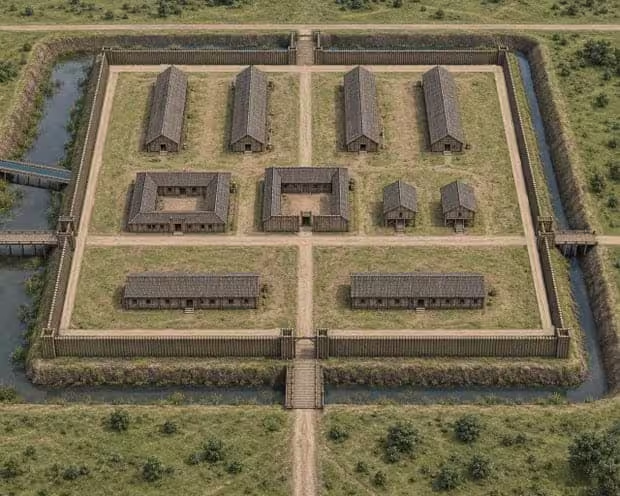
The site, spanning approximately three hectares, displayed the classic “playing-card” geometry characteristic of Roman auxiliary fortifications. Further ground-level surveys yielded pottery fragments, setting the stage for more invasive investigation.
Unearthing the Military Complex
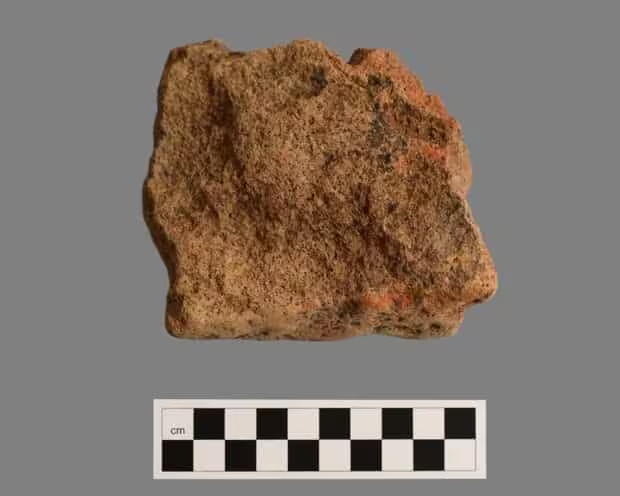
Excavations conducted in early September confirmed the site’s status as a Roman installation. The trenches exposed the foundations of critical infrastructure, including a commander’s house, a headquarters building, and granaries. Among the debris, the team recovered functional items such as a lead spindle whorl, an iron stylus, a woodworking axe, and a gaming counter, alongside roofing tiles from a kiln.
Chronological markers were also present: a third-century coin was discovered alongside two others from the late fourth century—the exact era of Magnus Maximus. Merrony posits that the original timber fort was likely established between 74 and 78 C.E. under the direction of Roman governor Sextus Julius Frontinus, suggesting that Maximus may have repurposed the pre-existing fortification during his military campaign.
“The discovery represents an extraordinary fusion between myth and reality, and demonstrates that folklore is often underpinned by fact,” Merrony remarked. He intends to publish the full findings in his magazine, Antiqvvs, as he prepares to detail the search for this lost site in a forthcoming book.
While the physical evidence of a significant Roman presence at the site is now substantial, researchers note that further study is required to definitively link the fort to the movements of Magnus Maximus himself.
This article has been fact checked for accuracy, with information verified against reputable sources. Learn more about us and our editorial process.
Last reviewed on .
Article history
- Latest version
Cite this page:
- Posted by Zara Tariq