Archaeologists Discover Mysterious Roman Bath Hidden Inside A Defensive Tower
Archaeologists in Serbia have uncovered a rare 4th-century private Roman bath belonging to Emperor Maximinus Daza, featuring advanced heating and plumbing.
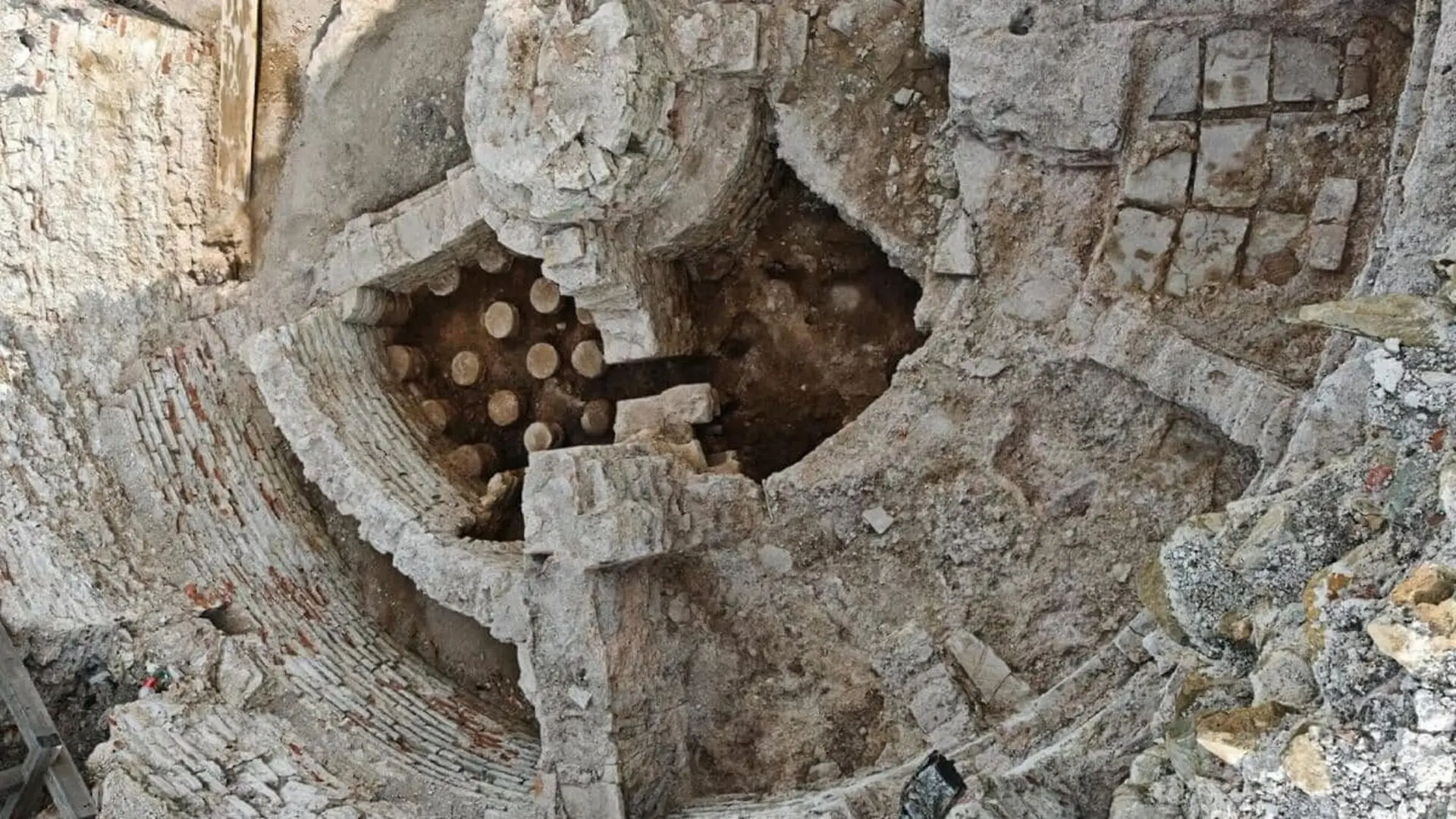
Archaeologists working at the Vrelo-Šarkamen site in eastern Serbia have uncovered an architectural anomaly: a private Roman bathhouse ingeniously integrated into the lower level of a defensive tower. The discovery, located near the city of Negotin, adds a sophisticated layer to a residential complex already famous for yielding a royal mausoleum and a cache of gold jewelry three decades ago.
Engineering an Imperial Retreat
The installation, known as a balneum, was unearthed in the southwest corner tower of a fortified fourth-century estate associated with the Emperor Maximinus Daza. A key figure of the Tetrarchy—the power-sharing arrangement that governed the Roman Empire during its final centuries—Maximinus Daza was a local son of the region who ascended to the imperial throne before his death in 313 AD following a civil war against his rival, Licinius.
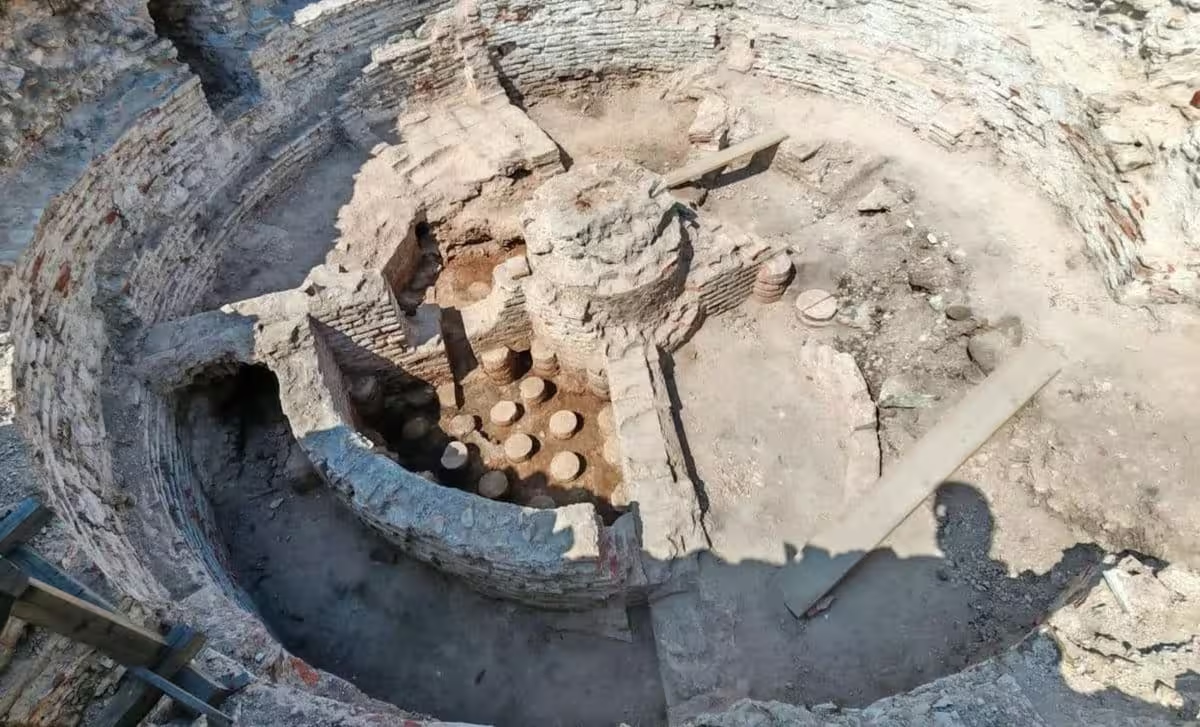
The excavation, led by Marija Jović of the Archaeological Institute and Gordan Janjić of the Krajina Museum under the guidance of the Serbian Ministry of Culture, highlights a level of structural ingenuity rarely seen elsewhere in the empire. Rather than following the standard Roman practice of linear room arrangements, the architects adapted the bath to the constraints of a circular tower interior. The central chamber was crowned by a dome featuring six distinct window openings, a technical feat requiring advanced masonry skills.
Sophisticated Heating and Service Logistics
The design clearly separated the functional needs of the facility from the comfort of the residents. A monumental entrance on the west side granted access to the service staff, who operated the praefurnium, or furnace, to drive the facility’s heat. This technical zone stood in direct contrast to the residential bathing and leisure rooms.
Among the most remarkable finds is the exceptionally well-preserved hypocaust, an underfloor heating system where circular pilae supports created channels for heated air to circulate beneath the floors. While the copper boiler that provided the water has long since vanished—a common occurrence due to the widespread practice of scavenging non-ferrous metals from abandoned Roman sites—the masonry base that once supported the vessel remains, providing a clear map of the original plumbing.
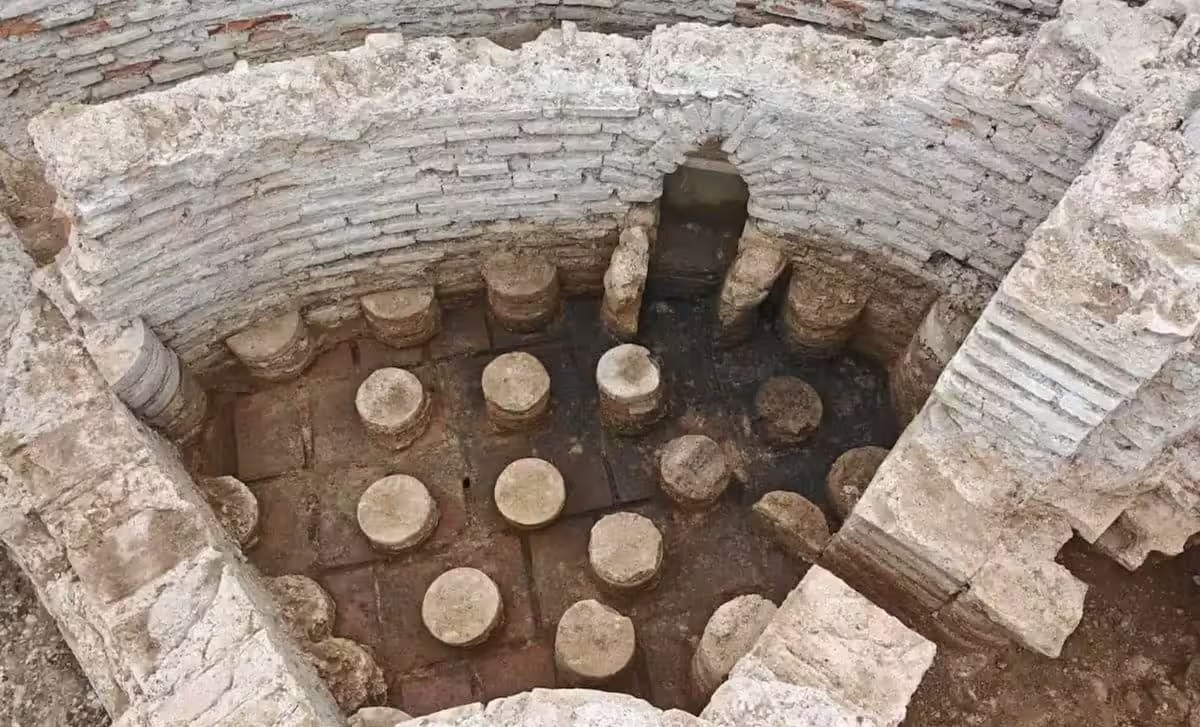
The interior layout included three bathing pools and a sudatorium, a specialized room designed for steam-based relaxation. As noted in academic studies of Roman architecture, such facilities were the cornerstone of social and private life in the empire. Unlike the grand, public thermae of major Roman cities, this facility was strictly private, tailored to the high-status inhabitants of the palace tower.
Despite the precision of the excavation, several mysteries remain. Archaeologists are still mapping the internal connections between the palace and the tower, including the logistics of how residents navigated the varying floor levels to reach the bath. Further research at the Vrelo-Šarkamen site is expected to address these architectural questions as teams continue to peel back the layers of this imperial residence.
This article has been fact checked for accuracy, with information verified against reputable sources. Learn more about us and our editorial process.
Last reviewed on .
Article history
- Latest version
Reference(s)
- <https://www.researchgate.net/profile/Marija-Jovic-10>.
- Yegül, Fikret K.. “Roman Imperial Baths and Thermae.” A Companion to Roman Architecture, October 11, 2013, pp. 299-323. Wiley, doi: 10.1002/9781118325117.ch16. <https://onlinelibrary.wiley.com/doi/10.1002/9781118325117.ch16>.
Cite this page:
- Posted by Zara Tariq