Archaeologists Discover Intact Medieval Ship Hull Hidden in Plain Sight Inside a German Cellar
A 13th-century ship’s hull has been unearthed during a cellar renovation in Germany, revealing an extraordinary and long-hidden medieval archaeological find.
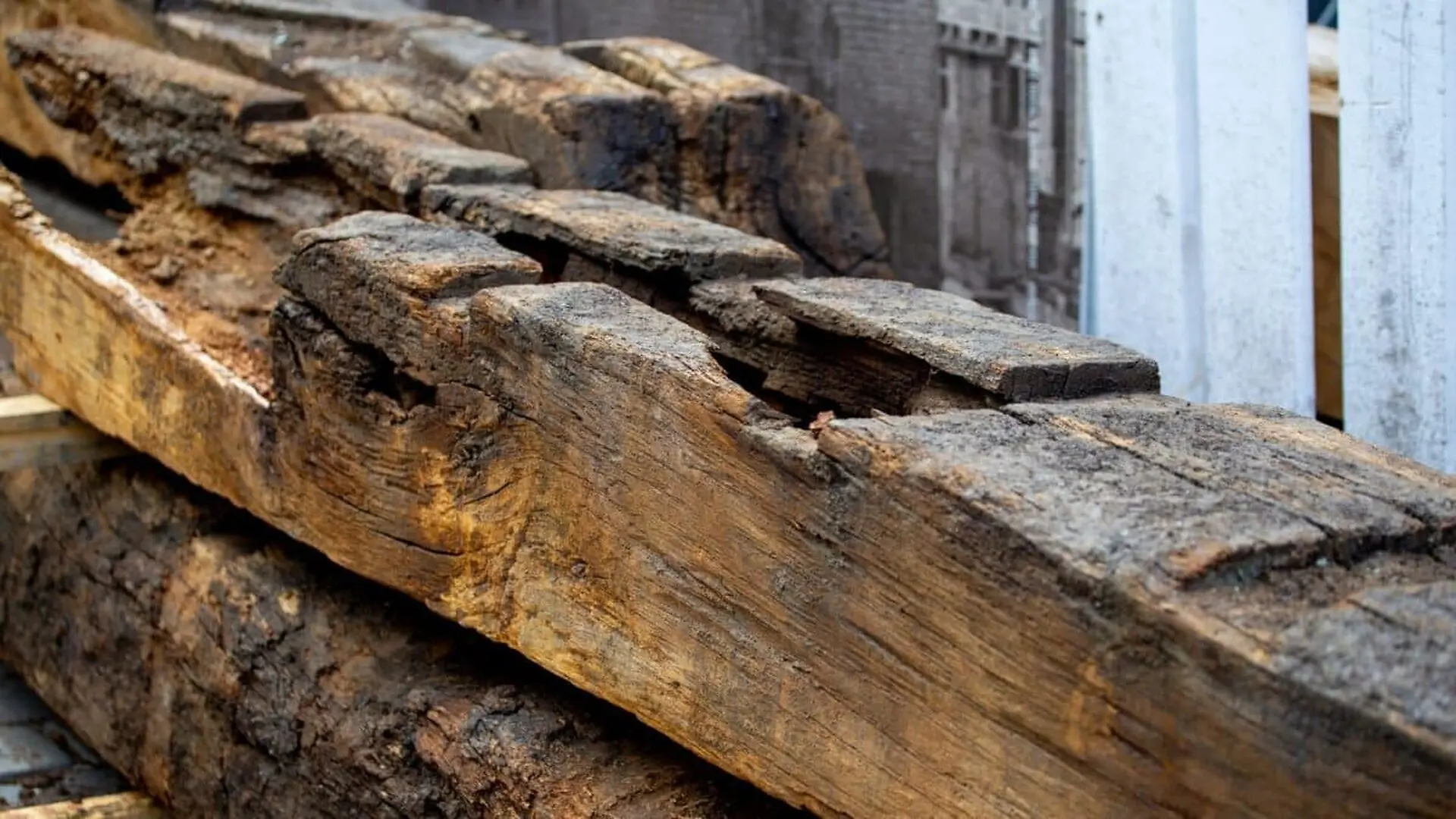
Archaeologists working in a cellar in Konstanz, Germany, have uncovered a discovery of unexpected proportions: a 270-square-foot ceiling that turns out to be the repurposed hull of a medieval ship. Dating back to 1244 C.E., the structure has quietly served its purpose in the building for nearly eight centuries without revealing its maritime origins.
While the reuse of salvaged ship timber was a common practice throughout the Middle Ages, the scale of this find is unusual. What researchers initially assumed to be standard building materials were, upon closer inspection, revealed to be sophisticated components of a vessel. Aline Kottmann, an archaeologist with the State Office for Monument Preservation, noted that the realization that the ceiling was actually a piece of nautical history came as a total surprise.
A Maritime Relic Hiding in Plain Sight
The significance of the find lies in the structural integrity of the components. The ceiling consists of 19 planks that still feature original wooden pegs and nail patterns inconsistent with land-based construction. Experts from the Baden-Württemberg Stuttgart Regional Council confirmed that rather than being scattered, mismatched fragments, the timbers represent a nearly complete hull, likely from a flat-bottomed cargo ship typical of the Lake Constance area during that period.
Alexandra Ulisch, a specialist with the state’s “Wrecks and Deep Sea” project, emphasized that the discovery is truly exceptional. Unlike underwater wrecks, which often suffer from decay, these timbers provide a rare opportunity to study original construction methods in a dry, accessible environment.
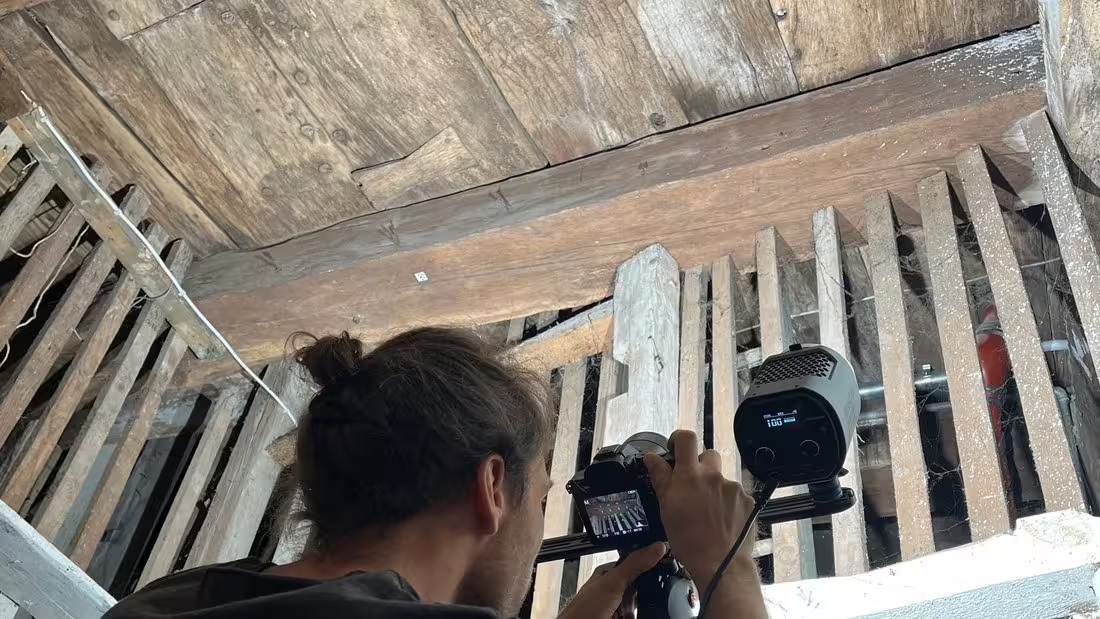
“If parts of the side planking have indeed been preserved, this could yield new insights into the construction of medieval ships and the design of the transition between the bottom and side planks,” Ulisch stated.
Engineering Insights and Ancient Repairs
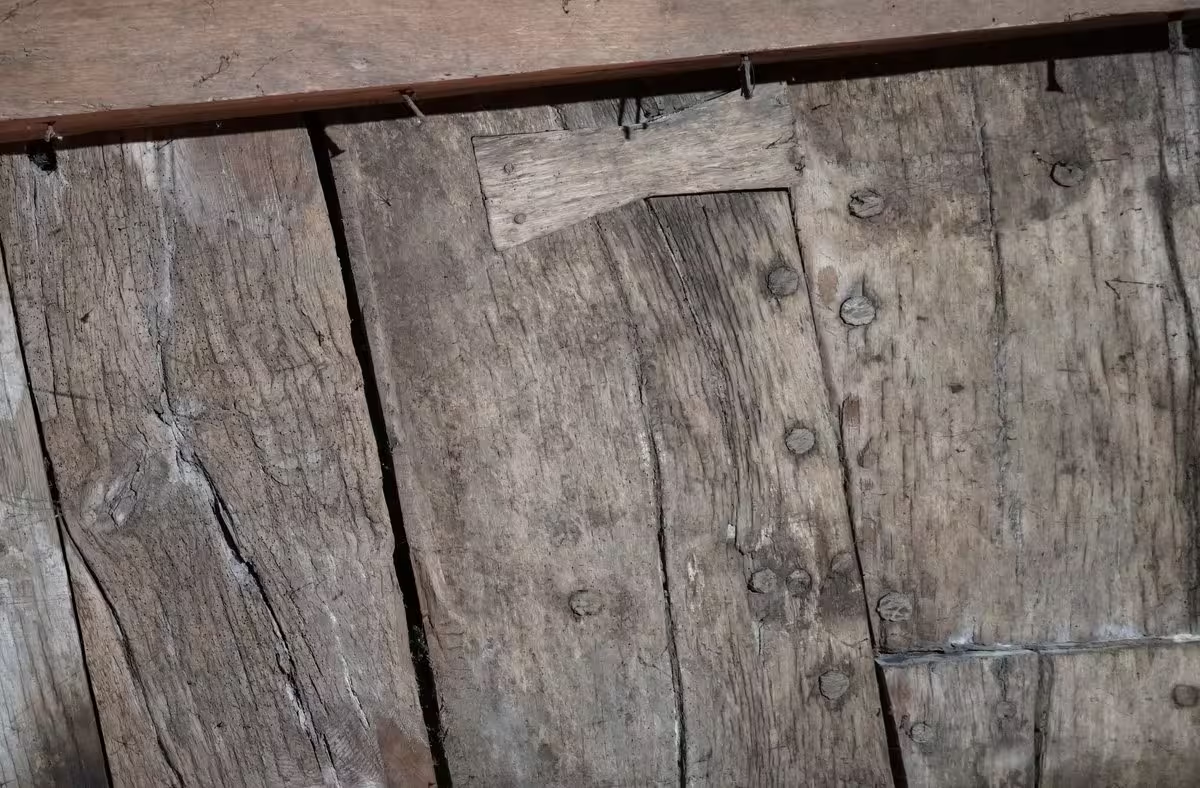
The planks were installed in the cellar in the exact configuration they held on the water, with edges cut to fit precisely. This meticulous assembly has allowed even the original caulking—the sealant used to waterproof the ship—to survive in several areas. Furthermore, the wood shows evidence of extensive maintenance. The team identified four specific repair patches, including one featuring a unique dovetail-shaped insert that has no known parallel in regional medieval shipbuilding records.
Future Analysis and Historical Significance
Researchers are now preparing to conduct dendrochronological dating on the wood to refine the timeline of the ship’s construction and service life. According to Kottmann, the accessibility of the Konstanz find provides a major advantage over traditional underwater shipwreck sites, offering a preserved, dry-land laboratory for studying medieval maritime technology.
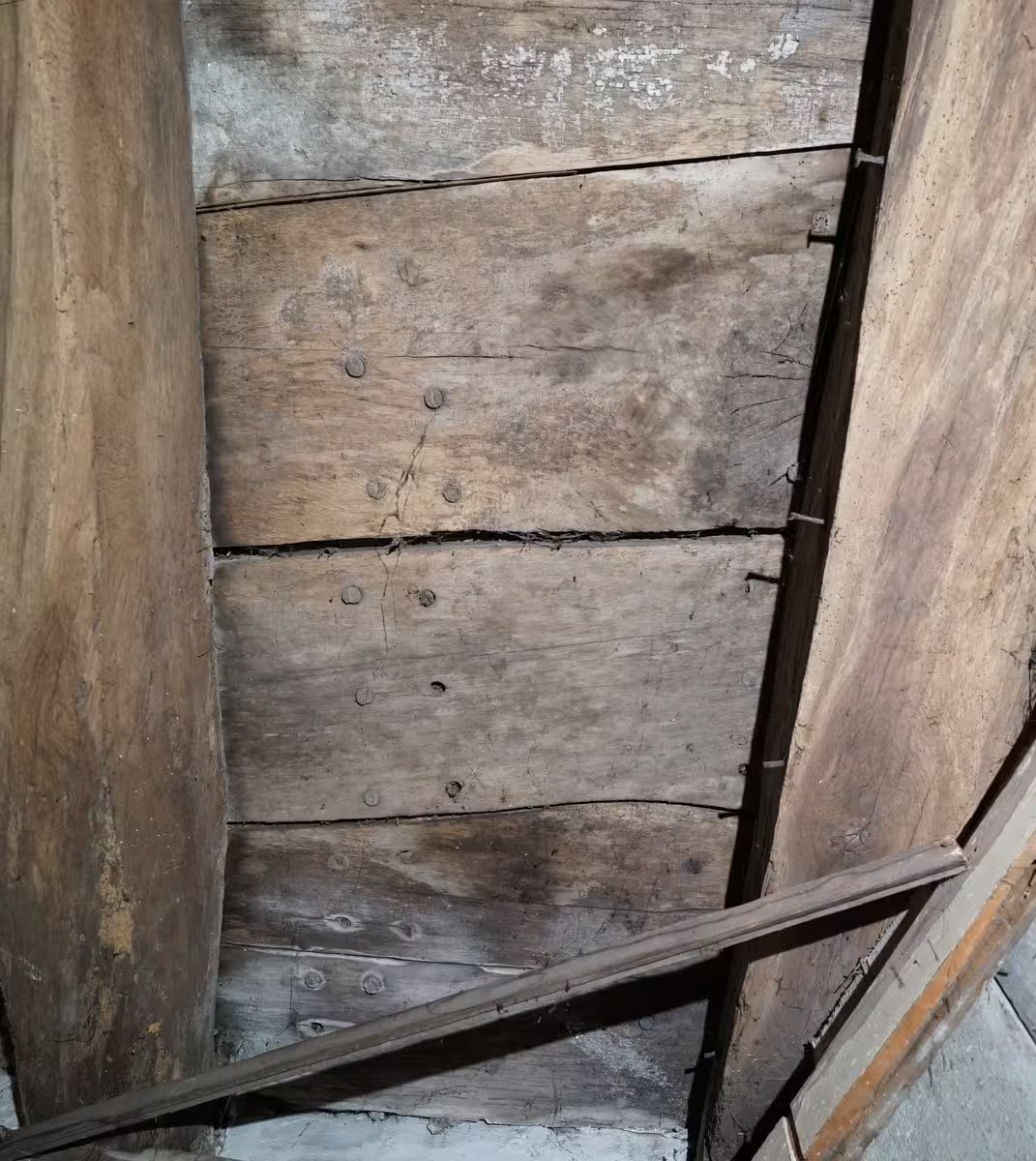
The ongoing study of the Konradigasse cellar ceiling continues, as investigators look to bridge the gaps in understanding how these vessels were built, operated, and eventually repurposed by medieval inhabitants.
This article has been fact checked for accuracy, with information verified against reputable sources. Learn more about us and our editorial process.
Last reviewed on .
Article history
- Latest version
Reference(s)
- “Landesamt für Denkmalpflege untersucht mittelalterliches Schiff in einer Konstanzer Kellerdecke.”, August 12, 2026 Regierungspräsidium Stuttgart <https://rps.baden-wuerttemberg.de/presse/artikel/landesamt-fuer-denkmalpflege-untersucht-mittelalterliches-schiff-in-einer-konstanzer-kellerdecke/>.
- <https://denkmalpflege-bw.academia.edu/AlineKottmann/Conference%20Presentations>.
Cite this page:
- Posted by Zara Tariq