Why Millions of People Are Replacing Toilet Paper With High Tech Washlet Systems
This innovative, high-tech toilet seat aims to revolutionize bathroom comfort while significantly reducing your reliance on toilet paper.
For most of the world, toilet paper remains the standard for bathroom hygiene, a practice that has persisted largely unchanged for generations. In Japan, however, a digital transformation has taken place behind closed doors. Millions of households have abandoned paper in favor of sophisticated, water-based sanitation systems that offer heated seating, precise water pressure control, and automated self-cleaning features.
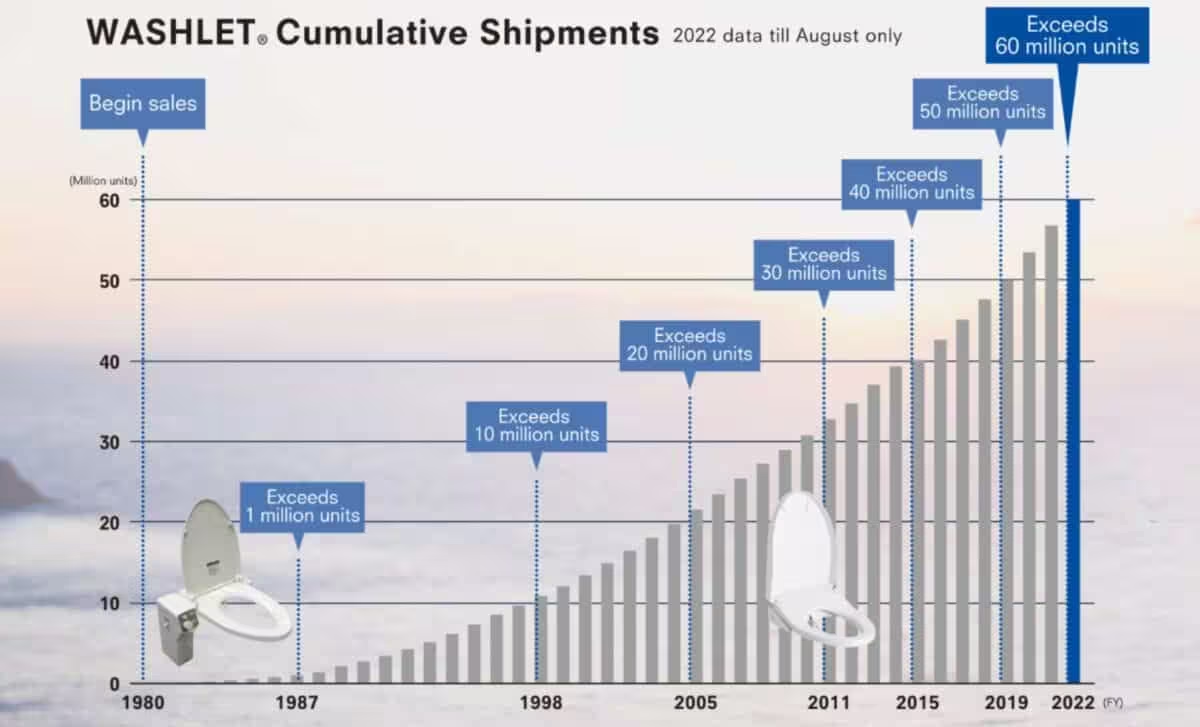
At the center of this evolution is the TOTO Washlet, an electronic bidet seat that first disrupted the market in 1980. Designed to replace dry paper with a retractable nozzle that delivers a targeted stream of warm water, the technology has transcended its niche origins to become a fixture in over 80 percent of Japanese homes as of 2018. According to the manufacturer, cumulative sales of these units are projected to surpass 70 million by 2025, cementing their status as the gold standard for personal hygiene in the region.
Engineering the Modern Bathroom
The journey to the modern Washlet began in the 1960s with the import of warm-water toilet seats, initially utilized by hospitals and clinical facilities. By 1969, TOTO began domestic production, though the early development phases were surprisingly analog. Without access to comprehensive biometric information, engineers relied on internal staff to determine the optimal positioning for the water jets.
Today’s models bear little resemblance to those early prototypes. Modern units function as comprehensive hygiene stations, offering customizable water pressure, temperature settings, deodorizing fans, and integrated air-drying. Because of their perceived benefits, these systems have become standard in nearly all new large-scale medical infrastructure projects across Japan.
The Sanitation Paradox
While the shift toward water is often marketed as inherently cleaner, the move introduces a new sanitary concern: the maintenance of the retractable nozzle itself. In clinical environments, equipment surfaces can easily become reservoirs for opportunistic bacteria, including drug-resistant pathogens. This prompted researchers Aiko Itami, Satoshi Hori, and Shigeki Misawa to investigate whether neutral electrolysed water could effectively sanitize these high-tech components.
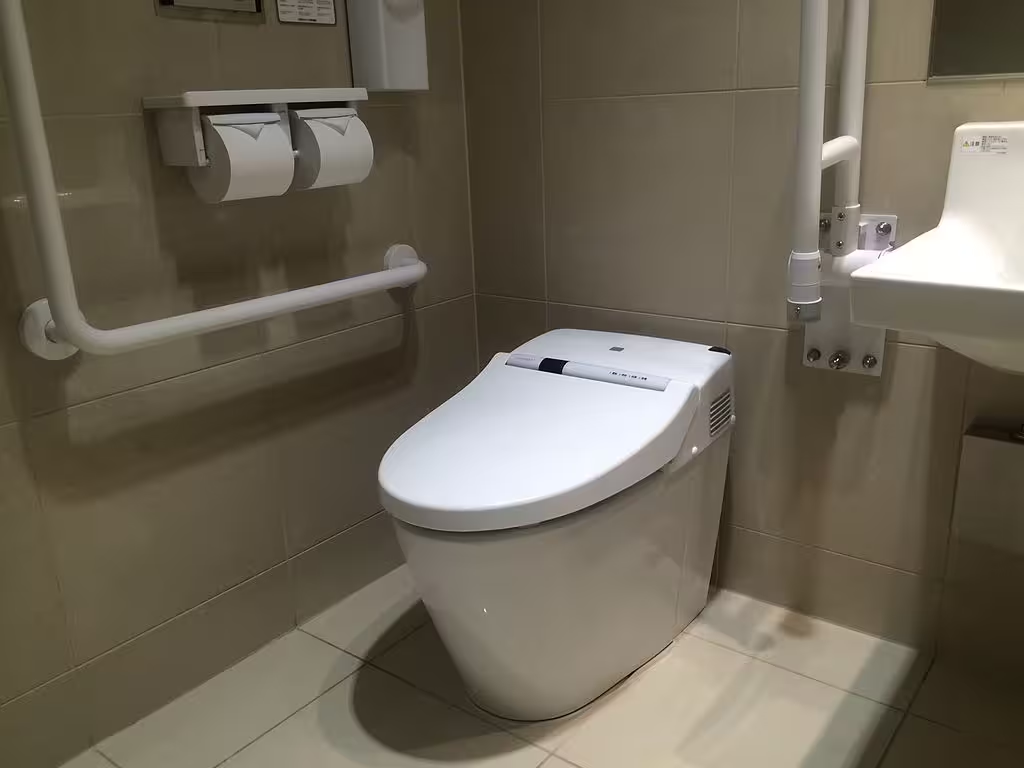
The team tested the efficacy of electrolysed water against seven strains of Pseudomonas aeruginosa in a controlled lab setting and evaluated ten units installed within the internal medicine ward at Juntendo University Hospital. Their findings, published in a 2021 study, suggest that frequency is a critical variable in maintaining safety.
The researchers observed that cleaning cycles every four hours were significantly less effective than those occurring every eight or sixteen hours, as the shorter intervals failed to achieve the same bacterial reduction rates. At Juntendo University Hospital, however, the results were encouraging: routine manual cleaning protocols successfully kept bacterial levels within safe limits, with no evidence of Pseudomonas aeruginosa or intestinal bacteria detected in the spray water.
While the study was limited in scope, the authors concluded that if bidet seats are subject to rigorous cleaning protocols and managed with appropriate chlorine concentrations, they can remain a hygienic asset rather than a transmission risk in healthcare settings.
This article has been fact checked for accuracy, with information verified against reputable sources. Learn more about us and our editorial process.
Last reviewed on .
Article history
- Latest version
Reference(s)
- Itami, Aiko., et al. “Decontamination effect of neutral electrolysed water for spray nozzles of electric warm-water bidet toilet seats in the healthcare setting.” Infection Prevention in Practice, vol. 3, no. 2, June 1, 2021, pp. 100143 Elsevier BV, doi: 10.1016/j.infpip.2021.100143. <https://www.sciencedirect.com/science/article/pii/S2590088921000329>.
Cite this page:
- Posted by Zara Tariq