Hundreds of Dinosaur Eggs Discovered in France Show Multi‑Species Nesting 70 Million Years Ago
Excavators at Mèze uncover a massive Cretaceous egg‑laden nesting layer, hinting that the most exciting find may still lie buried.
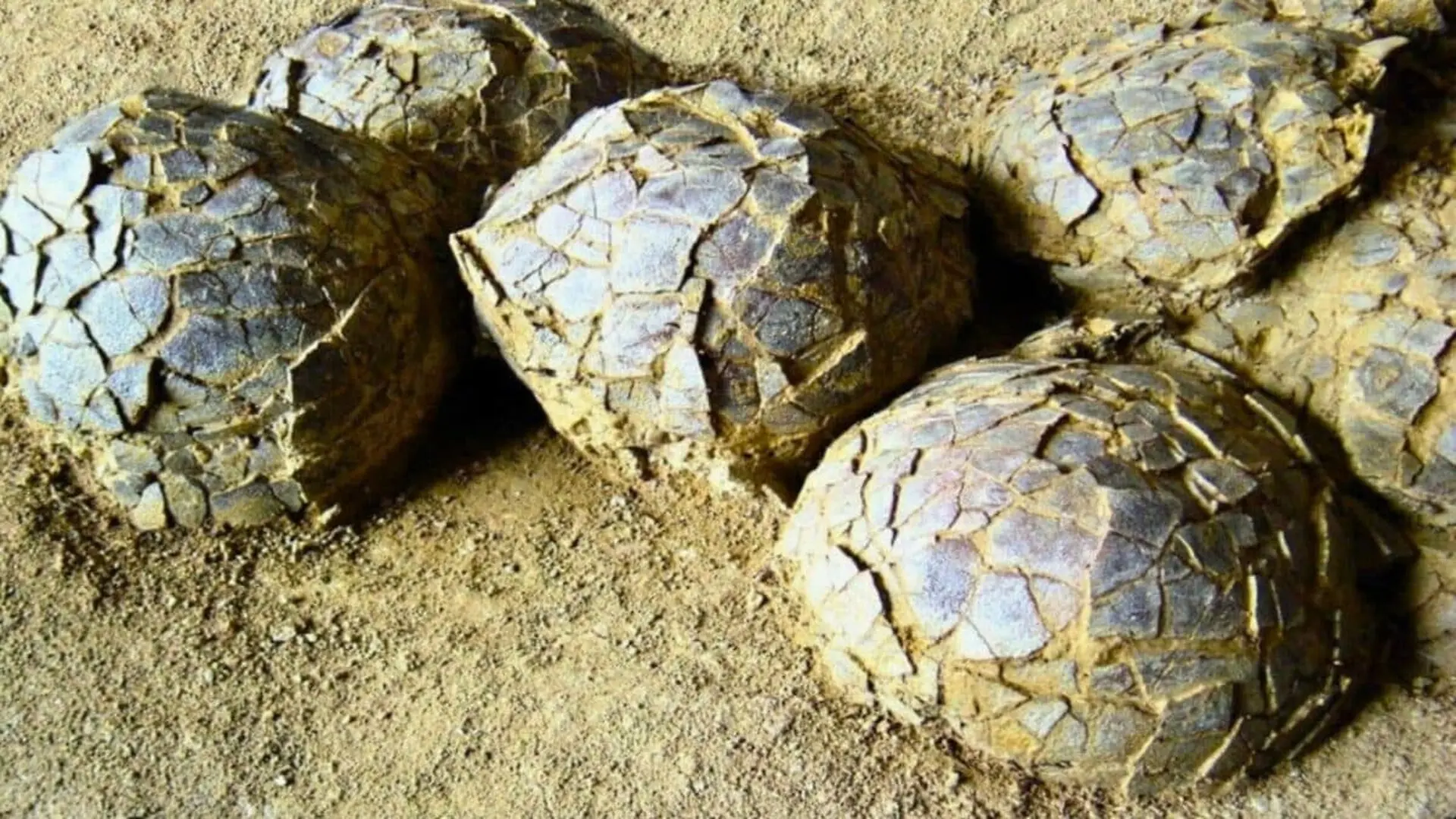
Archaeologists from the Musée‑Parc des Dinosaures have uncovered more than one hundred dinosaur eggs in a clay‑rich marl layer near Mèze, in France’s Hérault department. The eggs belong to the final stage of the Cretaceous, roughly 70–72 million years old.
A Trove of Eggs Revealed Amid Ongoing Excavation
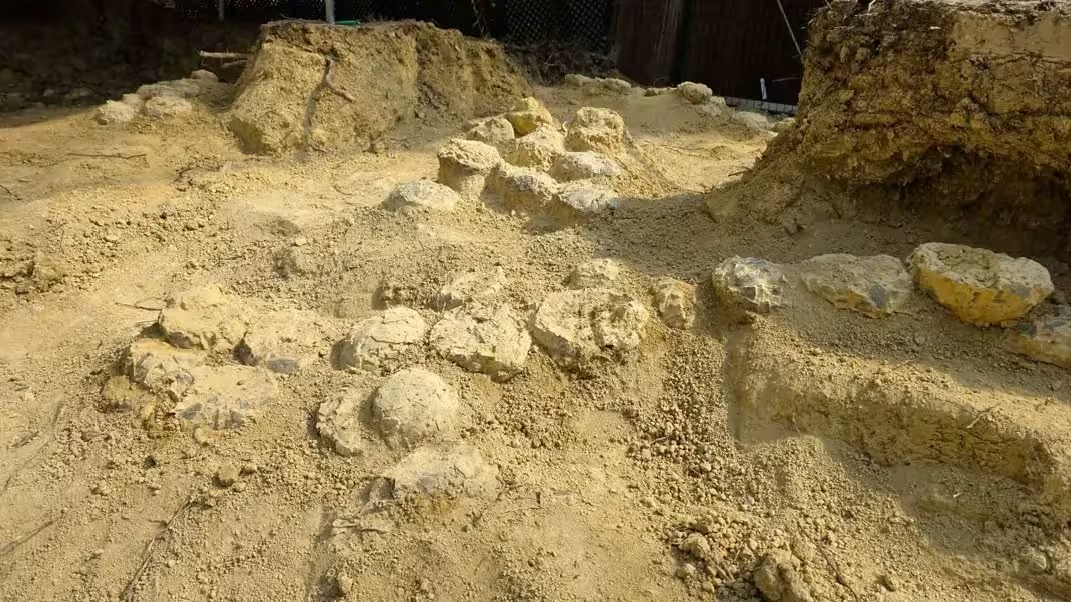
The current season of fieldwork began in October, but persistent rain has repeatedly forced the team to pause while the ground dries. Director‑conservator Alain Cabot told GEO that the visible count already exceeds one hundred and that the fossil‑bearing stratum continues well beyond the area presently exposed.
The exposed horizon consists of the characteristic grey clay marls of the site. Because the rainy season has limited progress, the eggs now in view represent only a fraction of the total deposit, which researchers expect to extend further underground.
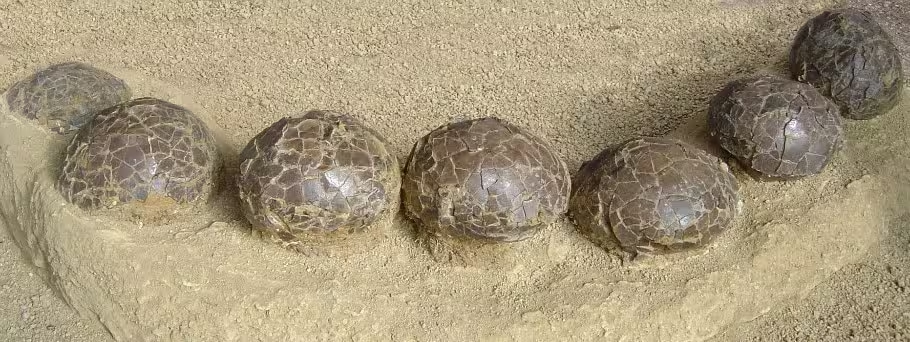
Mèze has been known as a nesting ground since the first finds in March 1996, when a series of eggs and nests were documented by the museum (source). Those early discoveries indicated that a variety of dinosaurs returned to the site for almost ten million years, spanning from about 71 million to 65 million years ago.
At the time of deposition, the region was a tropical plain threaded by rivers and wetlands, providing an ideal environment for egg‑laying dinosaurs, according to GEO’s reconstruction of the late Cretaceous landscape.
Egg Morphology Suggests Titanosaur and Smaller Dinosaur Contributors
Most of the newly exposed eggs are nearly spherical, a shape Cabot associates with titanosaurs—massive, long‑necked sauropods known from other French sites. Definitive attribution, however, would require exceptional evidence such as an embryo preserved within an egg.
A subset of the specimens are smaller and display distinct outlines. Researchers propose that these could belong to ankylosaurs or diminutive theropods, indicating that multiple dinosaur lineages may have shared the same nesting locale. Egg identification relies on shell microstructure and overall geometry, though assigning each specimen to a specific taxon remains tentative.
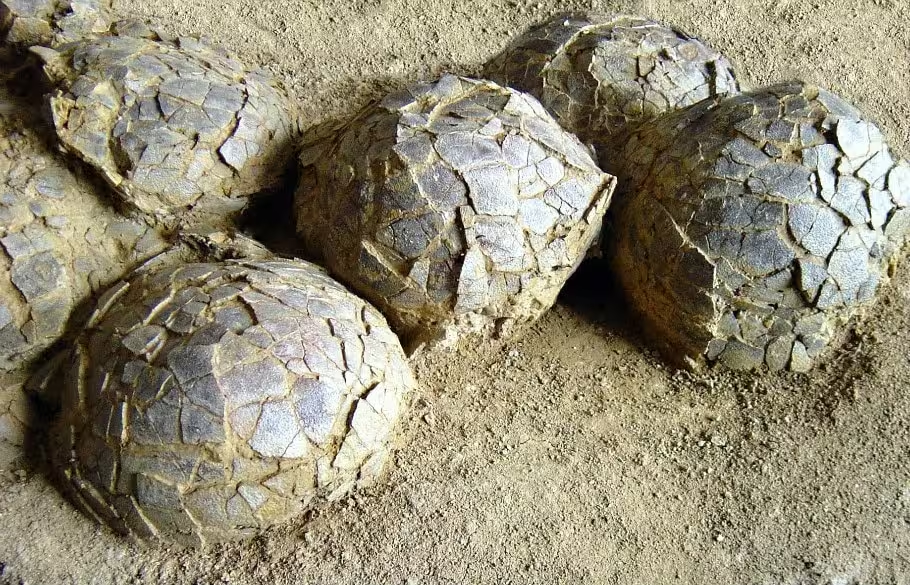
Cabot explained that the preservation of these nests likely involved dinosaurs depositing several eggs in shallow pits, covering them with vegetation, sand or mud, and then being rapidly buried by flood events. The heat generated by decaying plant material in the warm, subtropical climate would have aided fossilization.
Three Decades of Paleontological Insights at Mèze
Subsequent investigations have added to the site’s legacy. In February 1998, scientists reported extensive fossil‑bearing layers containing skeletal remains near the nests. Four months later, a 7‑cm‑long egg with a 4.5‑cm diameter was described as Prismatoolithus Caboti, hailed at the time as the smallest known egg of a carnivorous dinosaur.
Comparable eggs with similar shell textures have been found in Mongolia and the United States and were previously linked to the theropod Troodon. Researchers later entertained the possibility that Prismatoolithus Caboti might instead belong to a diminutive dromaeosaurid, roughly 1.5–2 metres in length.
In June 1999, the museum’s team, together with researchers from Montpellier II University, announced the discovery of a three‑metre‑long herbivorous dinosaur within grey marl that once formed a lakebed. The find was accompanied by fossils of turtles, crocodiles and fish, underscoring the ecological diversity of the ancient environment.
Cabot noted that the museum was created on the very ground where the original fossils were uncovered, aiming to keep the material local and to allow the public to witness ongoing scientific work.
This article has been fact checked for accuracy, with information verified against reputable sources. Learn more about us and our editorial process.
Last reviewed on .
Article history
- Latest version
Reference(s)
- Granier, Frédéric. “Hérault: un “champ de ponte” vieux de 70 millions d’années révèle des centaines d’œufs de dinosaures.”, May 15, 2026 Geo.fr <https://www.geo.fr/histoire/dans-l-herault-une-spectaculaire-decouverte-d-oeufs-de-dinosaures-231428>.
- “Excavations - Dinosaurs Museum-Park - Mèze in France.”, January 15, 2021 Musée Parc des Dinosaures <https://www.musee-parc-dinosaures.com/excavations/>.
Cite this page:
- Posted by Zara Tariq