Simulated Spaceflight Stressors Trigger Long-Term Heart Damage and Genetic Mutations in Rats
Groundbreaking rodent research shows that galactic cosmic rays and simulated weightlessness cause lingering cardiovascular remodeling and immune shifts months after exposure.
Venturing beyond low Earth orbit presents profound biological challenges that life on Earth never evolved to handle. Outside the protective buffer of our planet’s atmosphere and magnetosphere, space travelers encounter continuous galactic cosmic radiation alongside the unrelenting absence of gravitational loading. As space agencies actively design multi-year journeys to Mars, scientists are investigating how these twin hazards alter mammalian physiology over the course of an entire lifetime.
To examine these cumulative threats, an interdisciplinary research team subjected mature male rats to simultaneous spaceflight hazards and tracked their recovery across an unprecedented post-exposure window. The study, published in PLOS ONE, analyzed the long-term biological aftermath of weightlessness and cosmic radiation, focusing on cardiac tissue integrity, genomic variations, endocrine regulation, and systemic immune function.
Evaluating Deep Space Stressors in the Laboratory
The investigators utilized mature WAG/RijCmcr rats aged eight to nine months, mirroring the typical age bracket of career astronauts. To simulate weightlessness, the team implemented hindlimb unloading, suspending the animals’ hindquarters at a 30-degree angle to induce the cephalad fluid shifts and limb disuse experienced during spaceflight. This unloading lasted for thirty days total, spanning five days before radiation, the day of exposure, and twenty-five days afterward.
Radiation was administered at the NASA Space Radiation Laboratory at Brookhaven National Laboratory using a specialized simulator. The facility produced a five-ion, six-beam cocktail comprising protons, silicon, helium, oxygen, and iron ions designed to replicate the complex radiation environment found inside a shielded spacecraft. Cohorts received either a benchmarking dose of 1.5 Gray or an exploratory dose of 0.75 Gray, a level directly relevant to the cumulative exposure expected during a three-year Martian round trip.
Delayed Emergence of Perivascular Heart Damage
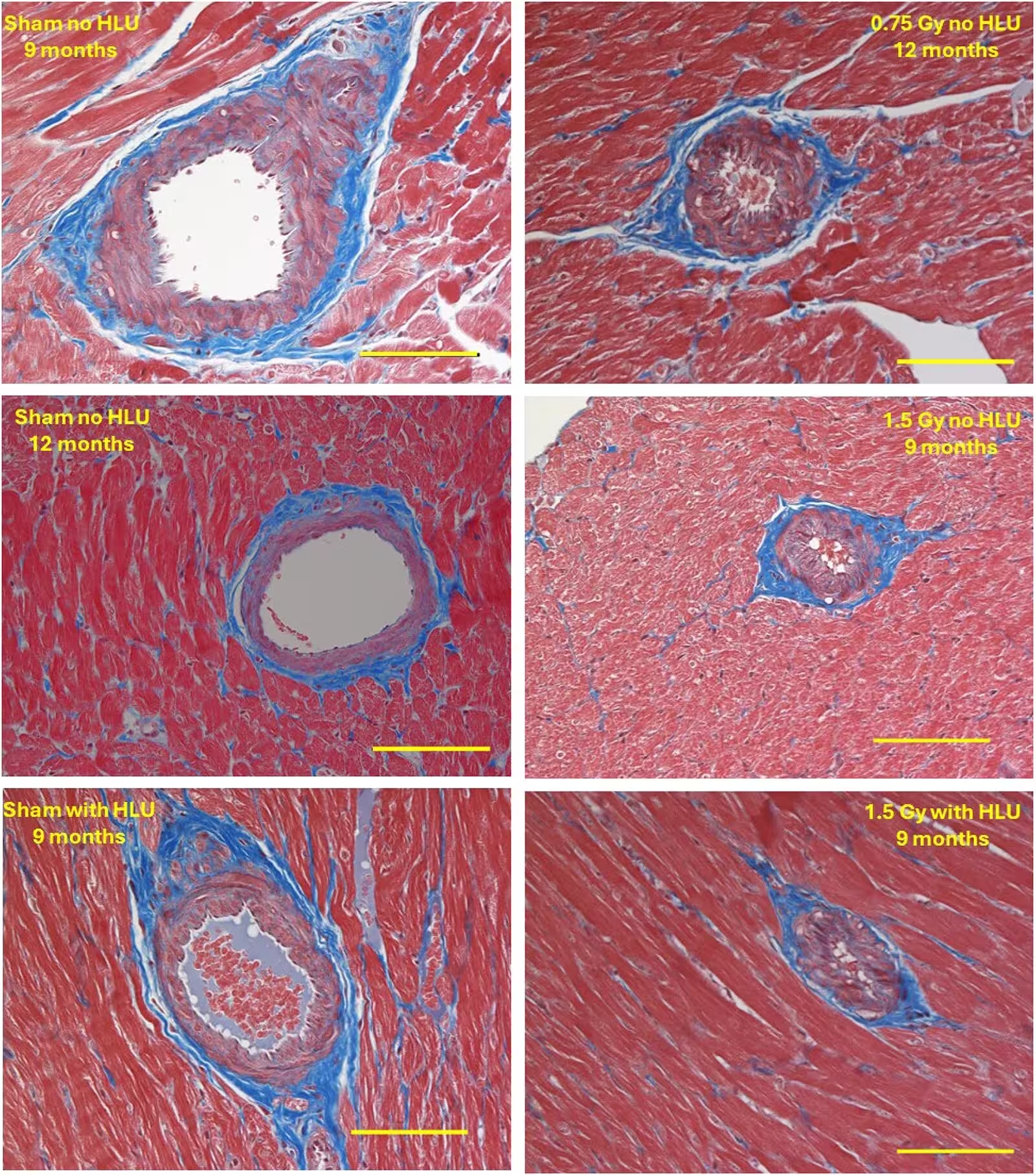
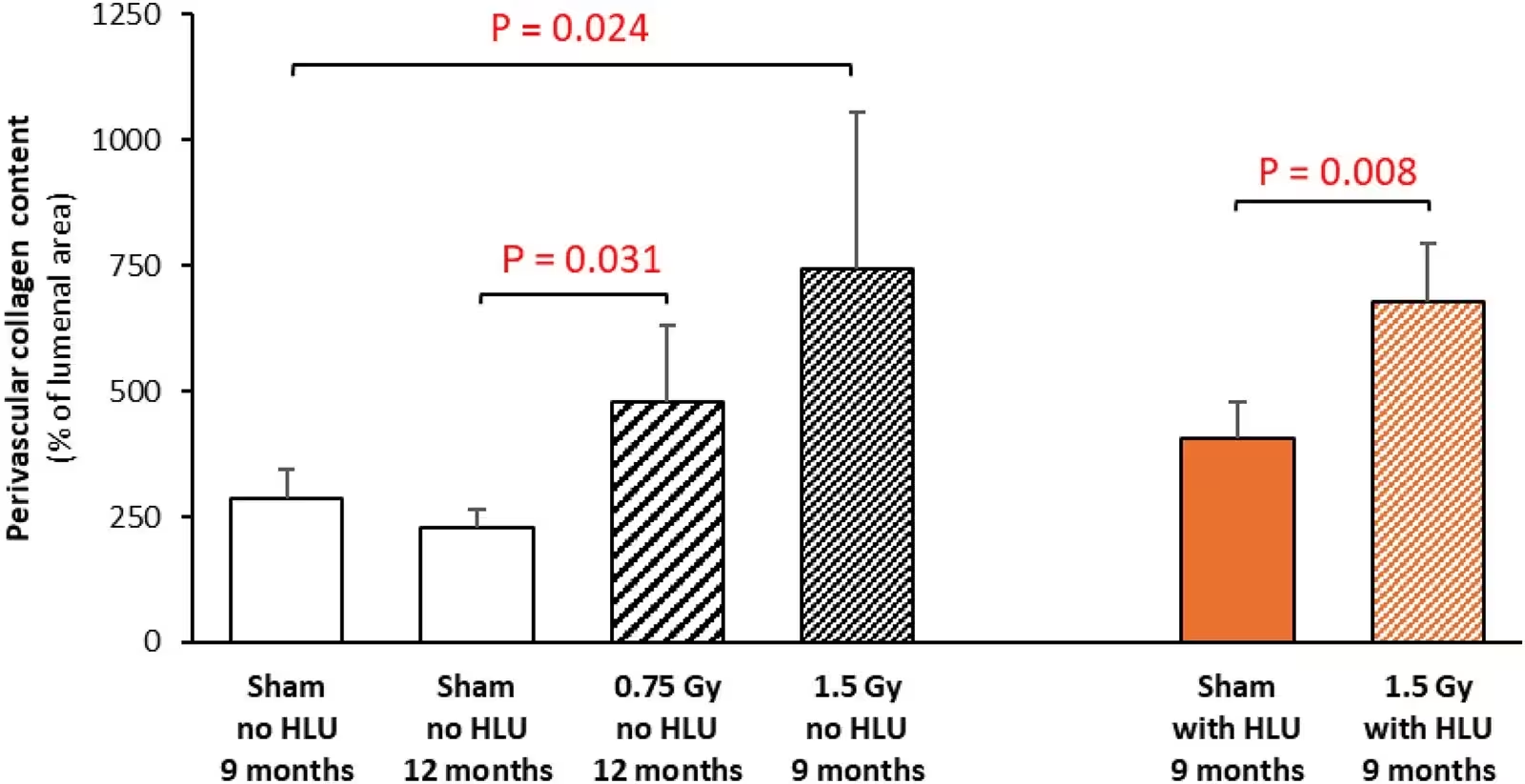
The study’s primary structural endpoint was cardiac perivascular fibrosis, characterized by the pathological buildup of collagen around coronary arteries. Following exposure to 1.5 Gray of cosmic radiation, rats exhibited an approximate two-fold expansion in perivascular collagen content 270 days later, irrespective of whether they underwent simulated weightlessness. While hindlimb unloading alone did not trigger fibrosis, radiation acted as a definitive driver of vascular remodeling.
Critically, the lower dose of 0.75 Gray also produced marked perivascular fibrosis when the observation window was extended to 360 days. The collagen deposition narrowed coronary vessel lumens due to myointimal proliferation. Because 270 rat days correspond biologically to more than two decades of human life, these results indicate that radiation damage can remain latent before progressively stiffening the heart’s microvasculature years after mission completion.
Immune Imbalance and Cytokine Suppression
Beyond cardiovascular remodeling, the researchers monitored immunological shifts across a 270-day reloading period. Hindlimb unloading alone altered circulating white blood cell distributions, boosting numbers of helper T cells, cytotoxic T cells, and B lymphocytes in peripheral blood. However, co-exposure to cosmic radiation abolished this lymphocyte surge, pointing to an antagonistic interaction between the two environmental stressors.
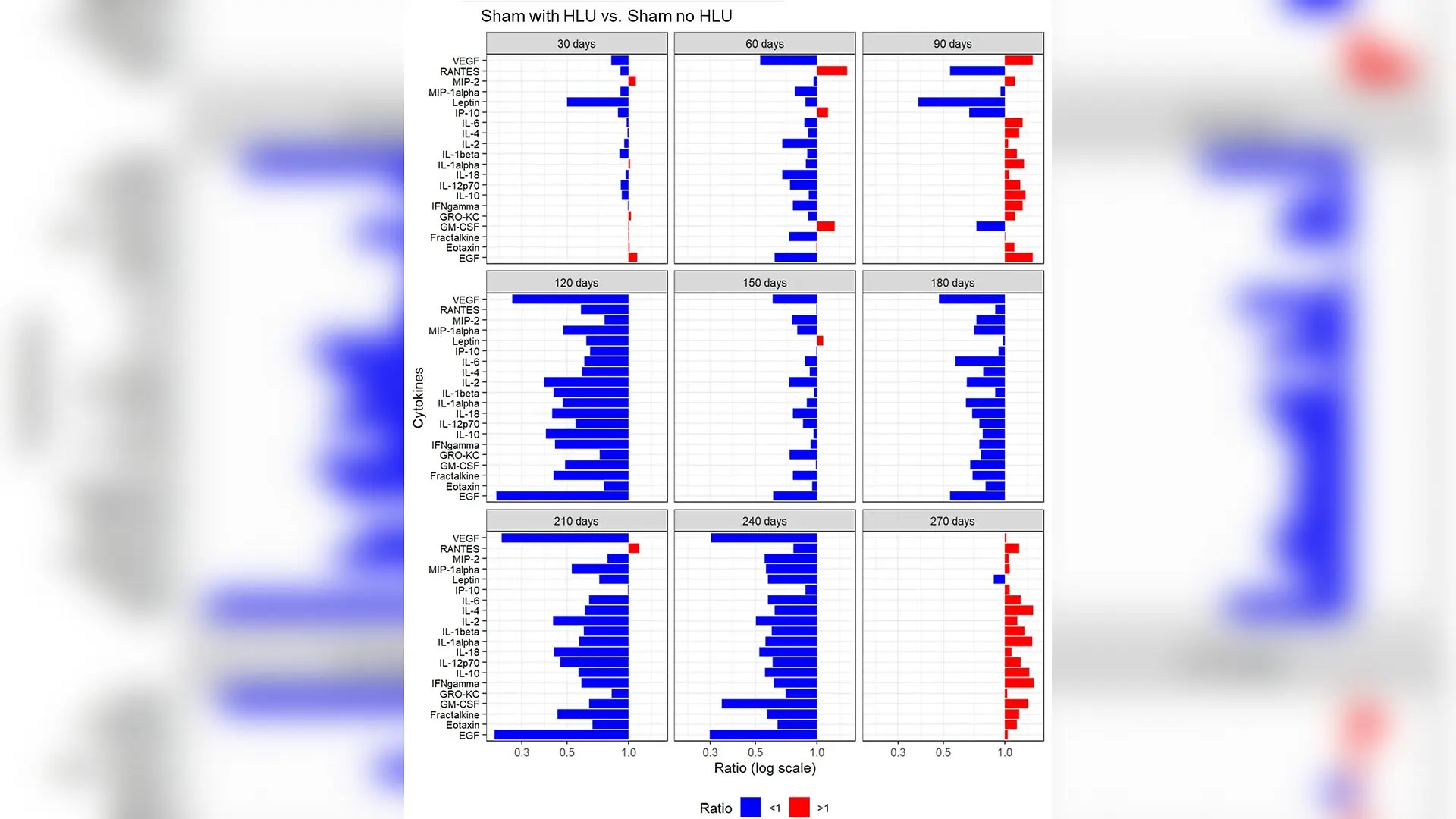
Within lymphoid tissue, both stressors severely impacted immune defenses. The researchers documented a 67 percent depletion of natural killer cells within the spleen 240 days after animals returned to normal weight-bearing. Concurrently, simulated microgravity induced sustained suppression across 20 of 27 circulating cytokines, including key signaling molecules such as interleukin-6, epidermal growth factor, and interferon-gamma. Interestingly, adding radiation exposure blocked this persistent cytokine suppression, demonstrating that combined spaceflight conditions can unpredictably rewrite immune signaling networks.
Somatic Mutations Linked to Cardiovascular Risk
Whole-genome sequencing of circulating nucleated blood cells at day 240 revealed persistent genomic alterations induced by cosmic radiation. When analyzing a targeted panel of 74 genes associated with clonal hematopoiesis of indeterminate potential (CHIP), the researchers identified distinct mutations unique to irradiated animals in genes such as Smc3, Suz12, Brcc3, Ep300, Cblb, Idh2, and Usaf2.
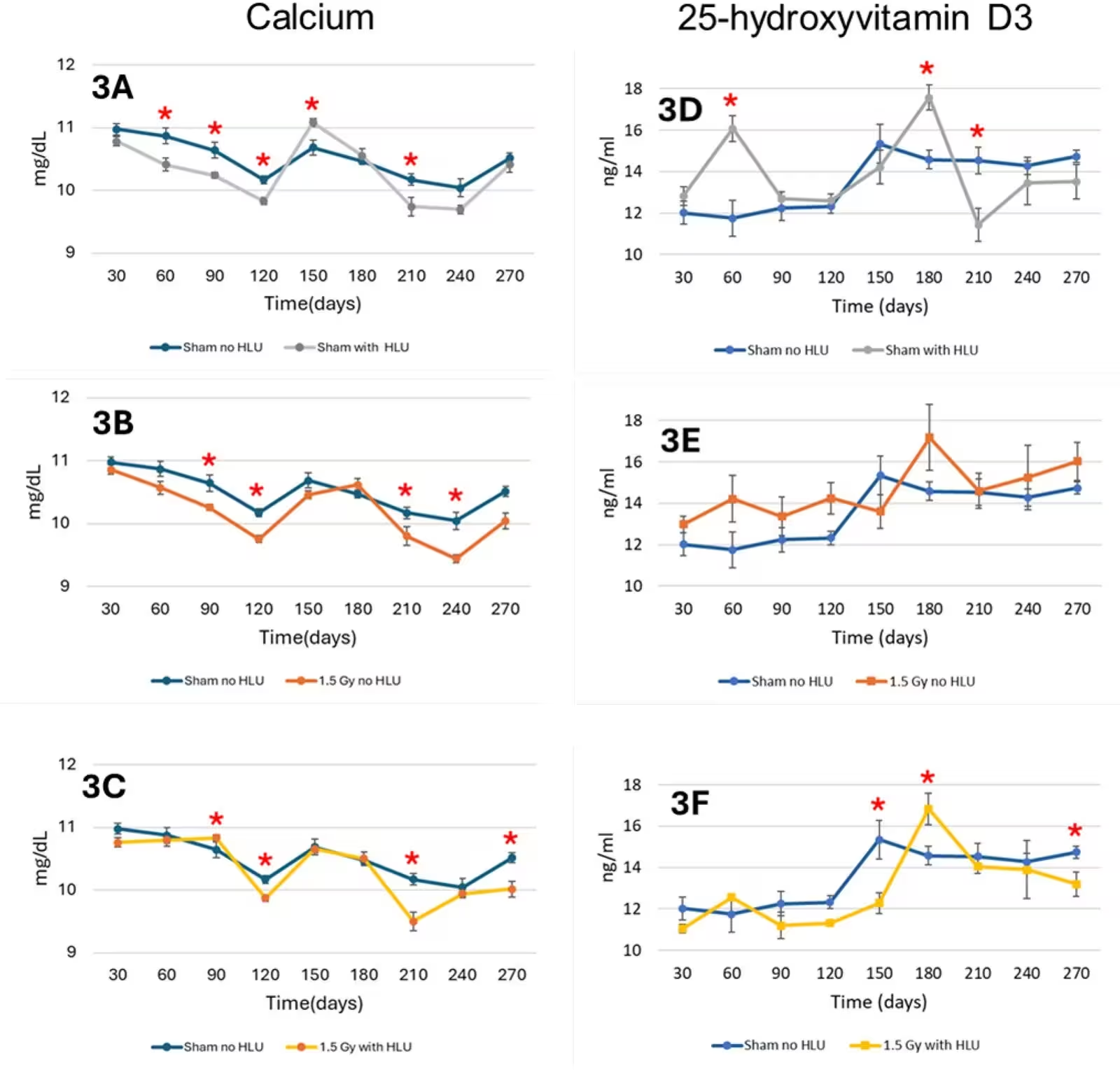
CHIP arises when mutated blood stem cells undergo clonal expansion, a phenomenon known in humans to double the risk of cardiovascular disease and quadruple the likelihood of early heart attacks. Although calcium homeostasis remained largely intact throughout the trials thanks to tight physiological feedback loops, the discovery of somatic mutations and latent vascular scarring indicates that cosmic radiation creates durable genetic and structural hazards that require targeted medical countermeasures before humanity sets foot on Mars.
The research was published in PloS one on January 1, 2026.
This article has been fact checked for accuracy, with information verified against reputable sources. Learn more about us and our editorial process.
Last reviewed on .
Article history
- Latest version
Reference(s)
- Lenarczyk, Marek., et al. “Multiple simulated spaceflight stressors impact cardiac fibrosis, calcium dynamics, immune function, cytokines and gene variants in rat, Rattus norvegicus.” PLOS One, vol. 21, no. 9, September 30, 2026, pp. e0357485 Public Library of Science (PLoS), doi: 10.1371/journal.pone.0357485. <https://doi.org/10.1371/journal.pone.0357485>.
Cite this page:
- Posted by Aisha Ahmed