ESA Is Testing New Tech to Make Moon Rovers Drive Ten Times Faster
ESA’s new FastNav technology could revolutionise lunar exploration, allowing rovers to traverse the Moon’s hazardous surface faster and more safely than ever.
Autonomous Navigation Breakthrough Could Boost Lunar Exploration Speeds
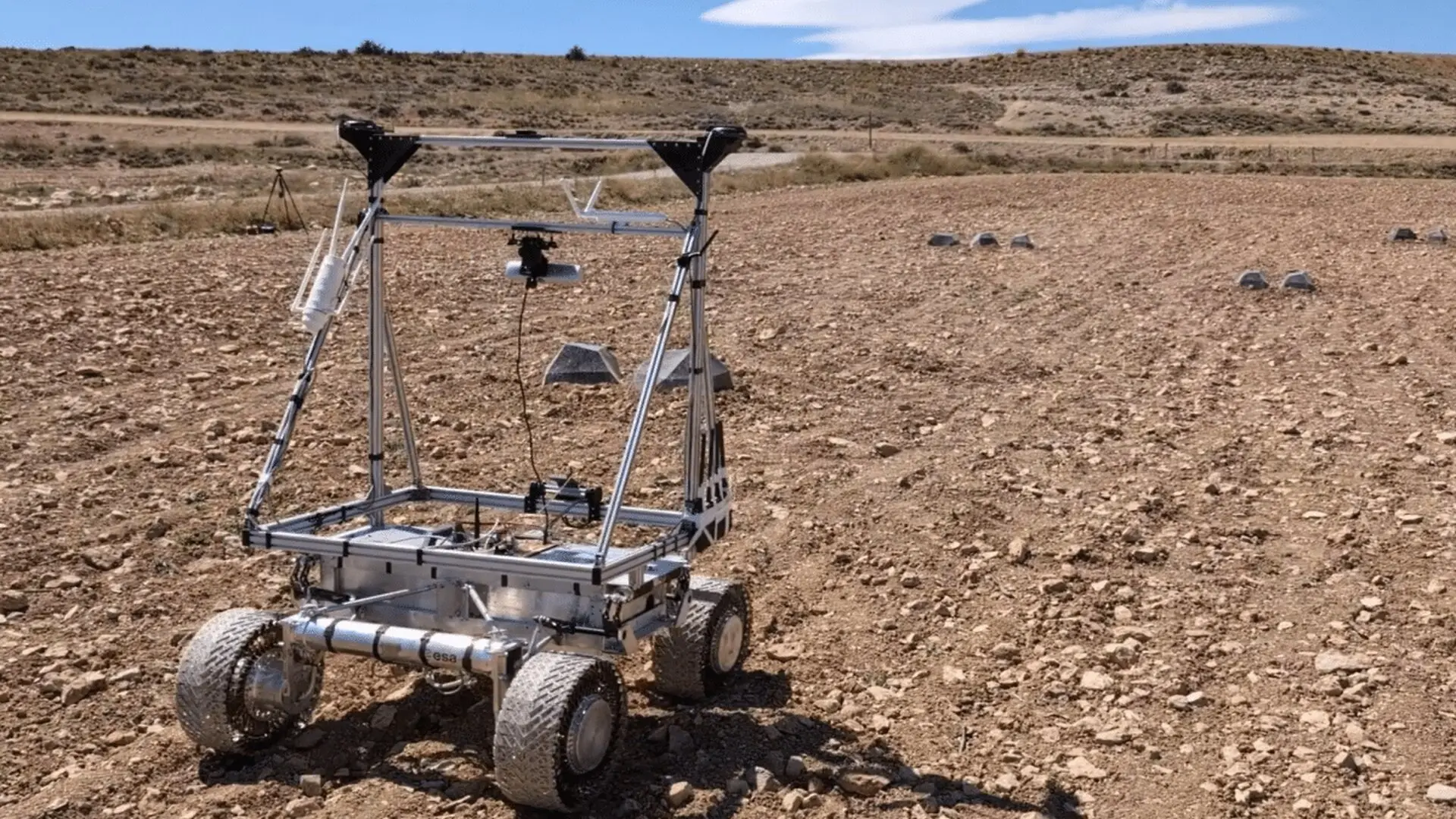
Future lunar exploration is set for a significant upgrade as the European Space Agency (ESA) advances a new navigation system designed to move robotic rovers across the Moon’s surface with unprecedented efficiency. Recent field trials have successfully demonstrated the capabilities of FASTNAV, an autonomous system engineered to increase rover travel speeds by up to ten times compared to current industry standards.
For decades, planetary rovers have operated under a cautious, stop-and-go paradigm. To minimize the risk of collisions or becoming stuck in treacherous terrain, these vehicles typically pause to meticulously evaluate their surroundings before advancing further. While this methodology prioritizes safety, it severely limits the total distance a mission can cover during its operational life. The ESA initiative seeks to break this cycle by enabling continuous, autonomous navigation that allows rovers to traverse complex environments without constant manual intervention.
“The idea behind FastNav is exactly what the name suggests, fast navigation for lunar rovers,” explains Lennart Puck, the technical officer overseeing the project. “We are targeting rover speeds of around one metre per second. Compared with previous planetary rovers, it’s a leap forward.”
By hitting a target speed of one meter per second, or approximately 3.6 kilometers per hour (2.2 mph), the system represents a massive upgrade over the typical 0.2 kilometers per hour observed in many historic missions. This speed boost is not merely about traversing distance; it is a tactical advantage for exploring high-priority areas, particularly the lunar poles.
Strategic Advantages in Harsh Environments
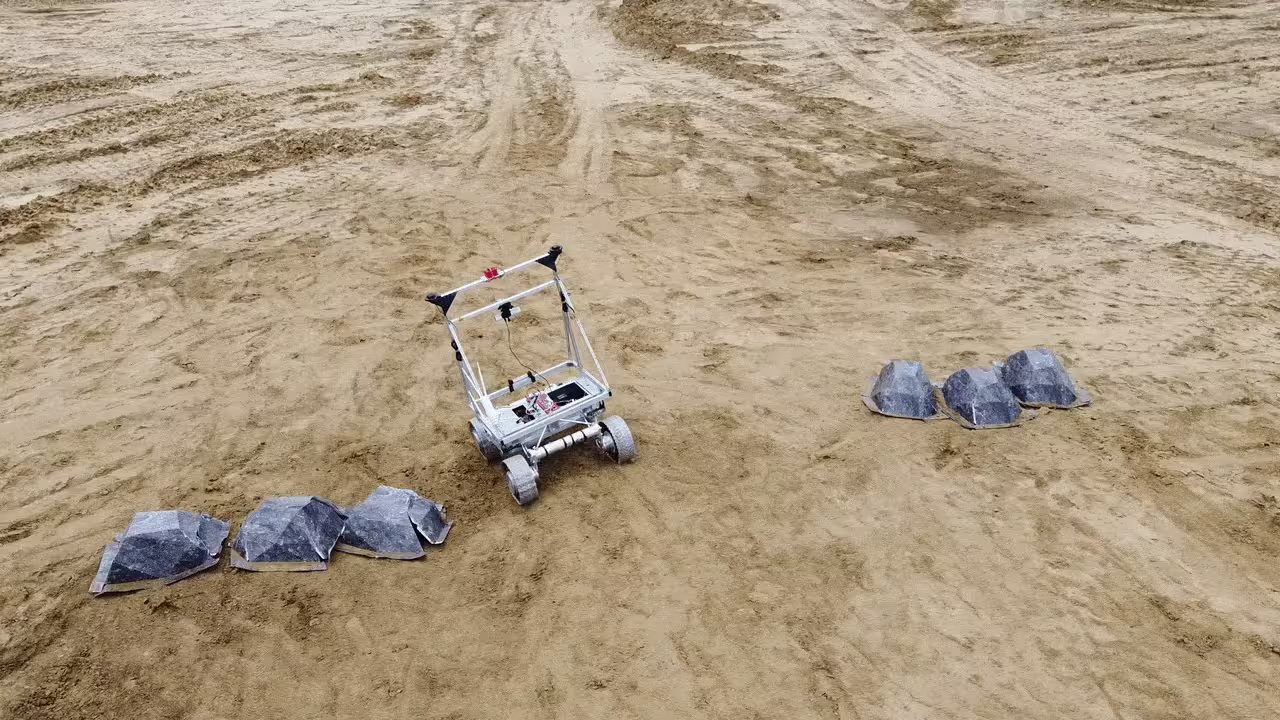
Lunar polar regions, which hold the key to understanding water ice and mineral distribution, present some of the most difficult operating conditions in the solar system. These areas are characterized by extreme temperature fluctuations and persistent, deep shadows that make navigation treacherous. Faster travel allows a rover to transition between these hostile zones more effectively, keeping the vehicle within thermally stable ranges for longer durations.
“If we can drive fast enough, we can remain within thermally viable regions, so not lunar day and not lunar night, for longer,” Puck notes. “That gives future missions more options and ultimately more possibilities for science.”
Testing in Volcanic Terrain
To validate the software, engineers spent eleven days in the rugged, volcanic landscape of Fuerteventura, Spain. The campaign, which concluded on October 8, 2026, forced the system to navigate around lava boulders and shifting dunes under a variety of lighting conditions, including overnight operations meant to simulate low-visibility challenges.
The FASTNAV software is a key component of the NOMAD architecture, a comprehensive navigation framework led by GMV UK and GMV Spain. It integrates advanced AI-driven hazard detection via the HAWKEYE system, alongside positioning and timing support from the ANIME/LUPIN suite. The project, supported by the ESA’s General Support Technology Programme (GSTP), builds on insights gained from previous development efforts like the RAPID initiative.
Maximizing Scientific Return
Ultimately, the objective of developing faster autonomous rovers is to maximize the time spent on active research. Every hour a rover spends navigating is an hour it is not collecting geological samples or performing measurements. By shrinking the transit time between scientific sites, mission planners can open up more expansive, ambitious exploration maps that were previously considered unreachable.
“Rovers are vehicles for scientists,” says Puck. “So faster traverses means we can safely get their instruments to interesting locations quicker, which means the more science we can perform. Instead of spending valuable mission time travelling between sites, we can spend more time exploring and making discoveries.”
This article has been fact checked for accuracy, with information verified against reputable sources. Learn more about us and our editorial process.
Last reviewed on .
Article history
- Latest version
Reference(s)
- “Moon Rovers in the Fast Lane.” <https://www.esa.int/Enabling_Support/Space_Engineering_Technology/Shaping_the_Future/Moon_Rovers_in_the_Fast_Lane>.
Cite this page:
- Posted by William Moore