Garden Wall Rock Turns Out To Be A Rare 240 Million Year Old Predator Fossil
A fossil hidden in a backyard wall for decades has revealed a long-lost chapter of life that existed well before the age of dinosaurs.
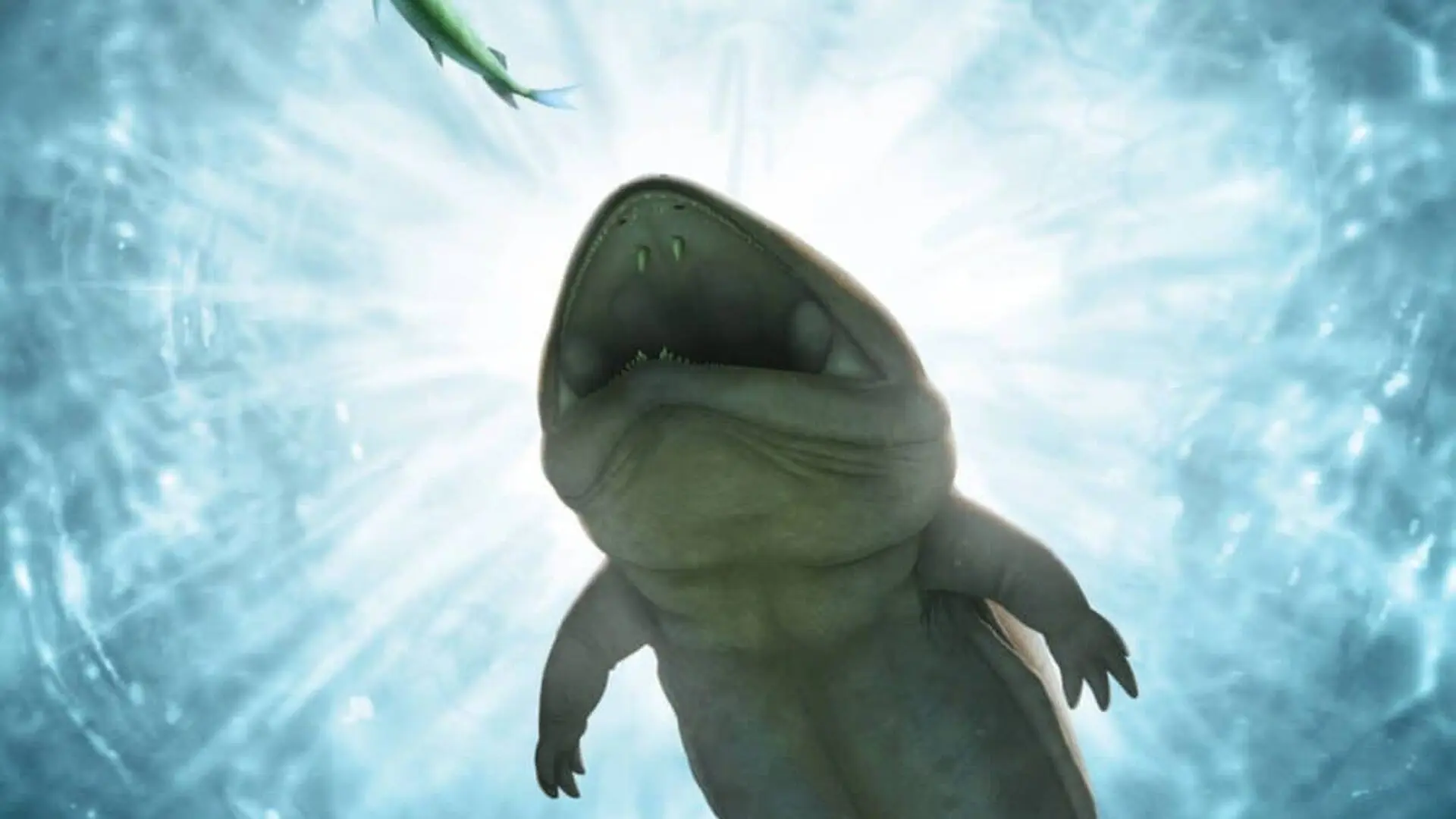
A remarkable fossil, accidentally unearthed decades ago within a suburban garden retaining wall, has unveiled a previously unknown apex predator from the Triassic period. Identified as Arenaerpeton supinatus, the specimen dates back approximately 240 million years and offers a rare, high-definition look at an ancient amphibian that once dominated freshwater ecosystems.
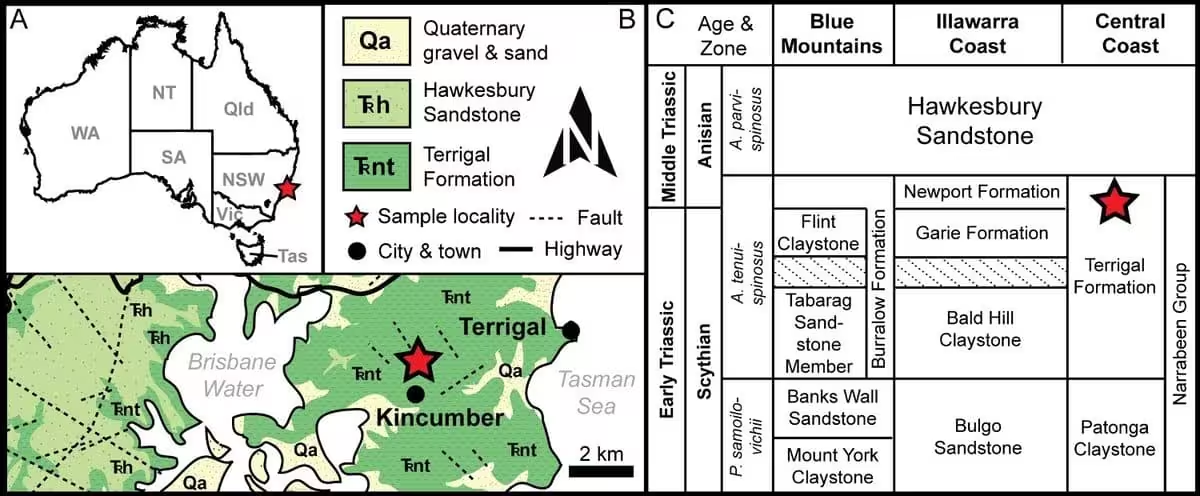
The discovery began in the 1990s when a retired chicken farmer gathered stones from a local quarry to build a wall. Unbeknownst to him, one of the rocks contained the near-complete remains of a creature that would eventually captivate the paleontological community. After being donated to the Australian Museum in Sydney, the fossil underwent rigorous analysis by researchers from UNSW Sydney and the museum, resulting in its formal classification.
Extraordinary Preservation Reveals Ancient Biology
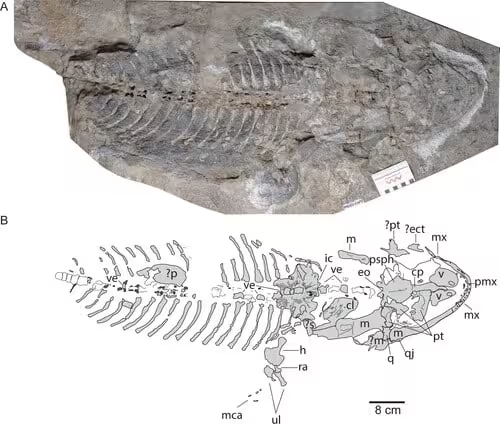
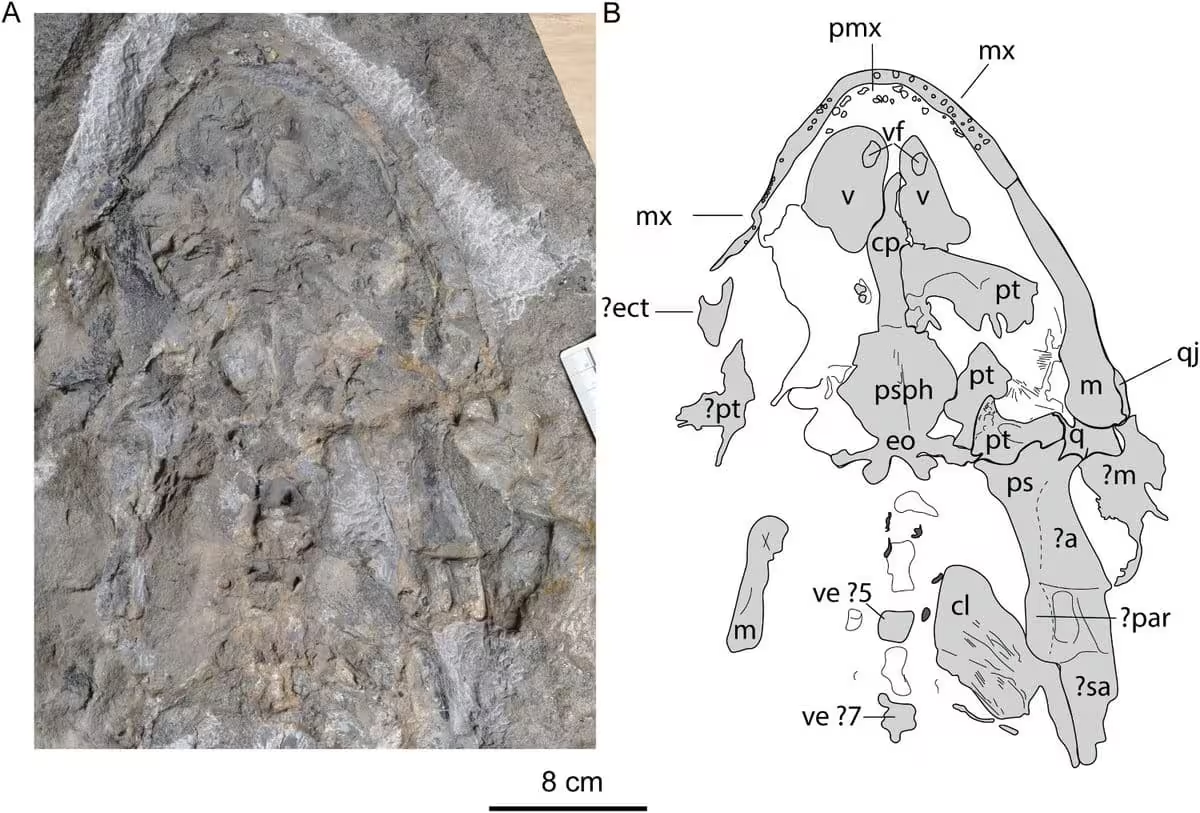
The paleontologist Lachlan Hart, who led the description of the species, noted that the specimen is exceptionally well-preserved. While the entire skeleton is largely intact, the fossil is particularly significant for its rare impressions of soft tissue and skin, details that are almost never captured in the geological record. Such preservation allows scientists to move beyond basic skeletal reconstruction to better understand the true appearance of these prehistoric amphibians.
The species is a member of the temnospondyls, an extinct lineage of amphibians that thrived for millions of years during the era before and throughout the rise of the dinosaurs. Named Arenaerpeton supinatus, which translates to “supine sand creeper,” the animal provides a critical data point for the evolution of freshwater predators in the Sydney Basin during the Triassic.
A Formidable Hunter of the Triassic
Measuring roughly 1.2 meters in length, Arenaerpeton was a substantial predator. While it bears a superficial resemblance to the modern Chinese Giant Salamander, the fossil evidence highlights significant physiological differences. According to the published study, its robust rib structure and soft tissue remnants indicate a much heavier, more muscular build than its modern counterparts. It was equipped with sharp, powerful teeth and a set of distinctive, fang-like tusks on the roof of its mouth, adaptations that likely made it an efficient hunter of fish like Cleithrolepis.
Expanding the Fossil Heritage of New South Wales
The discovery represents more than just a new species; it serves as a milestone in Australian paleontology. Dr. Matthew McCurry, a curator at the Australian Museum and senior lecturer at UNSW, emphasized the significance of the find. “This is one of the most important fossils found in New South Wales in the past 30 years,” McCurry stated, noting that the specimen is a cornerstone of the region’s ancient biological heritage.
While Arenaerpeton provides a snapshot of life 240 million years ago, its descendants—the later temnospondyls—continued to inhabit Australian waterways for another 120 million years, eventually evolving into even larger forms. This single discovery continues to bridge gaps in our understanding of how these resilient amphibians navigated the shifting environments of the Triassic period.
This article has been fact checked for accuracy, with information verified against reputable sources. Learn more about us and our editorial process.
Last reviewed on .
Article history
- Latest version
Reference(s)
- “Dr Lachlan Hart.”, November 29, 2021 Australian Museum <https://australian.museum/get-involved/staff-profiles/lachlan-hart/>.
- Hart, Lachlan J.., et al. “A new chigutisaurid (Brachyopoidea, Temnospondyli) with soft tissue preservation from the Triassic Sydney Basin, New South Wales, Australia.” Journal of Vertebrate Paleontology, vol. 42, no. 6, August 3, 2023 Informa UK Limited, doi: 10.1080/02724634.2023.2232829. <http://dx.doi.org/10.1080/02724634.2023.2232829>.
Cite this page:
- Posted by William Moore