Moonquakes Reveal Hidden Ice Beneath Lunar South Pole Paving Way For Artemis
Moonquakes may pinpoint hidden lunar ice, offering a breakthrough that could reshape Artemis mission planning.
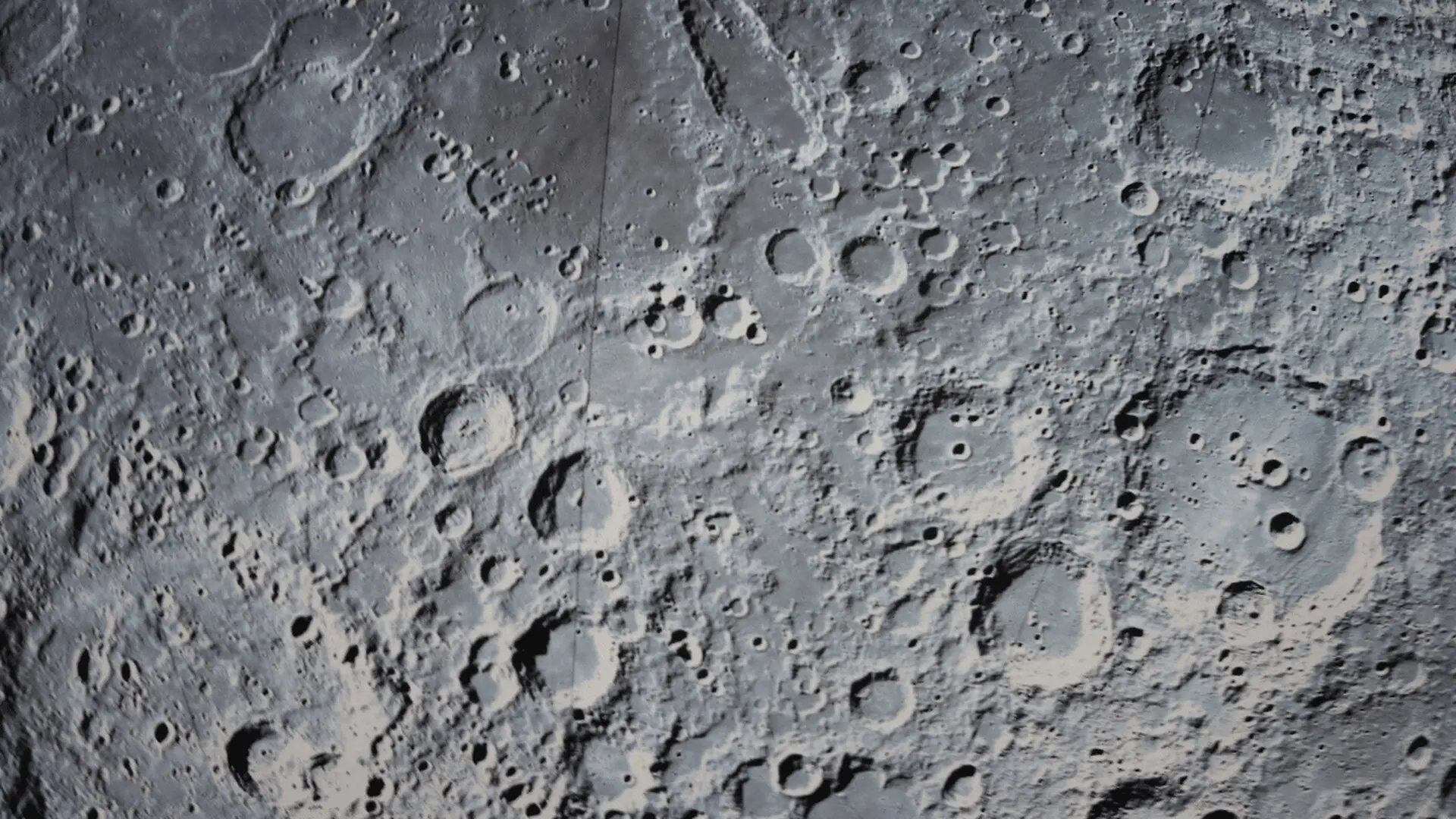
A novel approach that listens to the Moon’s own tremors could soon reveal hidden stores of water ice at the lunar south pole, offering a powerful tool for upcoming Artemis missions. The study, appearing in Science Advances, demonstrates that moonquake‑generated seismic waves can map frozen deposits that orbiting probes cannot detect.
Listening to Moonquakes to Uncover Subsurface Ice
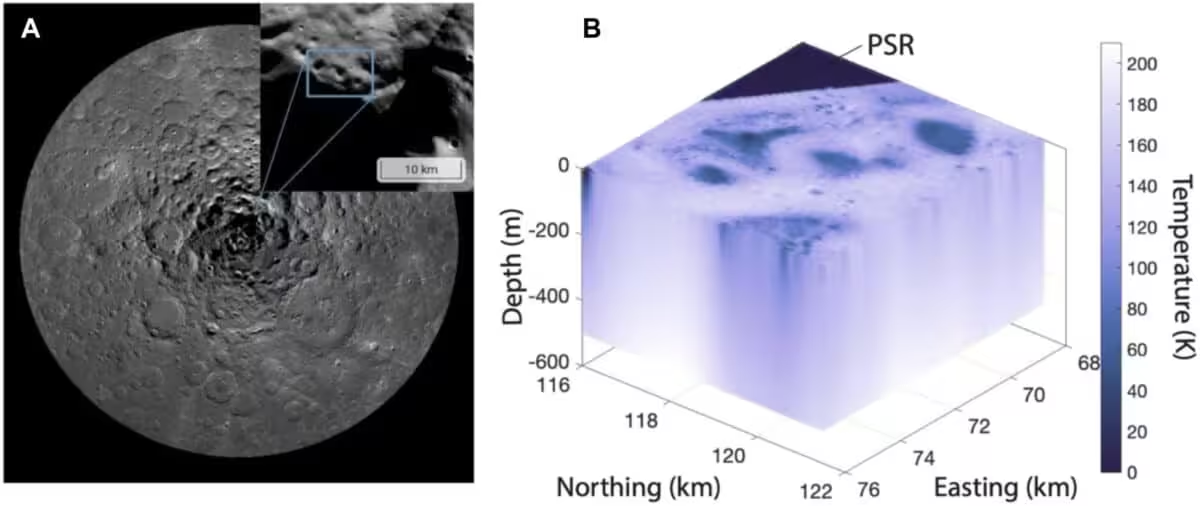
Long‑standing observations have indicated that permanently shadowed craters near the Moon’s poles harbor water ice, preserved by frigid temperatures over billions of years. However, orbital measurements only glimpse the surface, leaving the depth and distribution of the ice largely unknown. Researchers from the University of Maryland, Lawrence Berkeley National Laboratory, and the University of Hawaii propose that seismic probing can fill this gap.
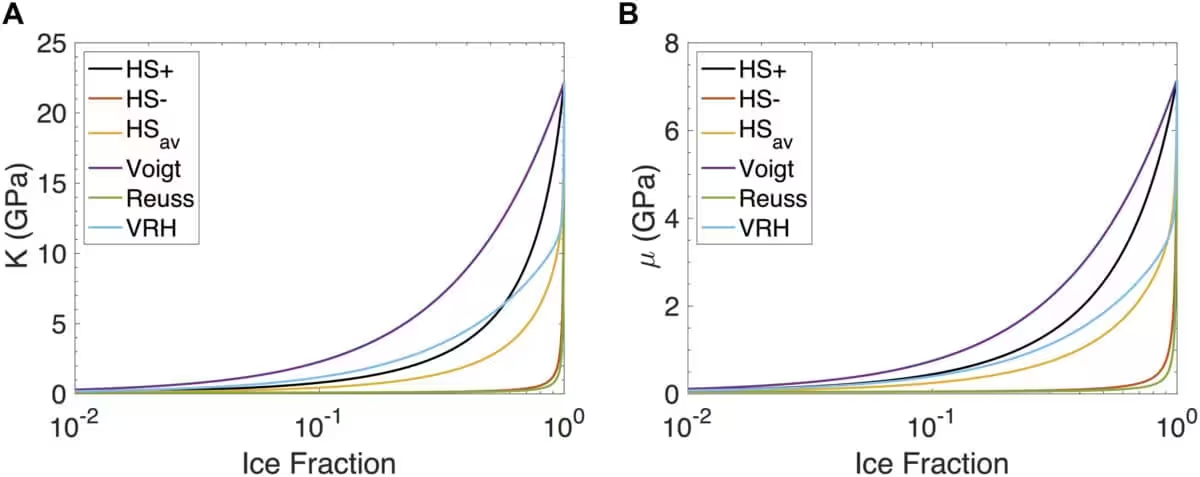
Their analysis, detailed in Science Advances, shows that seismic waves travel markedly faster—up to three times—in icy regolith compared with dry lunar soil, producing characteristic reflections detectable by sensitive seismometers. By interpreting these signatures, future landers could generate high‑resolution maps of buried ice, giving mission planners a clear picture of resource locations before any excavation begins.
Why Lunar Water Is a Game‑Changer for Human Exploration
Water supplies life‑support consumables, breathable oxygen, and rocket propellant when split into hydrogen and oxygen. Securing a local source on the Moon would drastically cut the mass of supplies that must be launched from Earth, making sustained outposts far more feasible. Nicholas Schmerr, an associate professor in the University of Maryland’s Department of Geological, Environmental, and Planetary Sciences and co‑author of the paper, stresses that identifying such in‑situ resources is essential before establishing a permanent foothold.
“It’s crucial to identify any materials on the moon that an astronaut can make use of while they’re up there,” Schmerr explained. “Since they will be limited by the few resources they brought from Earth, anything they find on the moon will help them basically live off the land, especially for longer‑term missions or outposts.”
The team also argues that seismic data could quantify ice abundance, not merely confirm its presence. “We can use seismic waves to not just see whether ice is present but also roughly how much of it there is,” Schmerr added, highlighting the potential of this technique as a planning instrument for future lunar operations.
Laboratory Simulations and Modeling Back the Seismic Idea
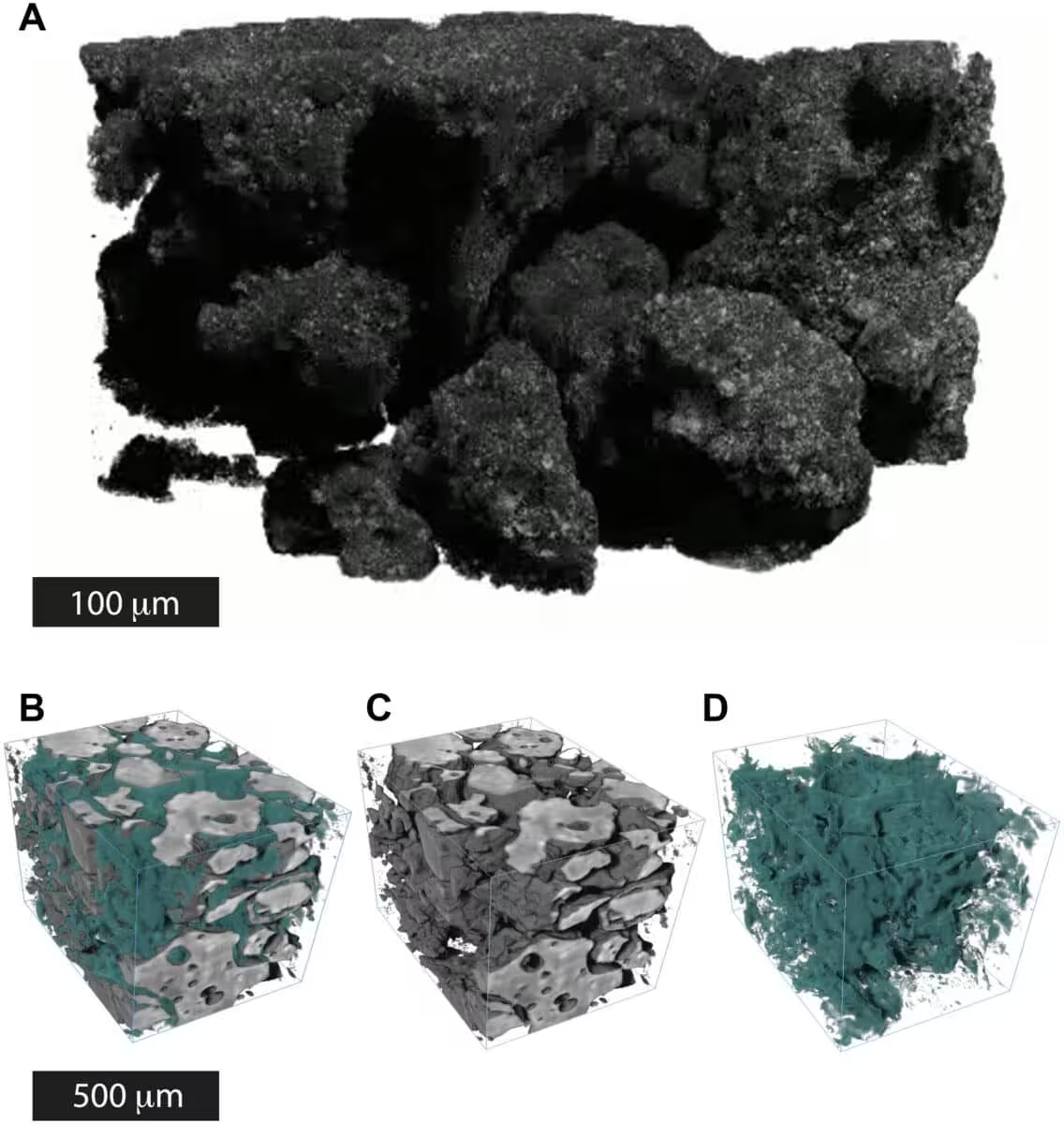
To ground their predictions, the investigators pursued three parallel lines of inquiry. Lead author Harrison Lisabeth, a rock‑physicist at Lawrence Berkeley National Laboratory, recreated lunar soil by grinding volcanic rock from Arizona and freezing it under controlled conditions. High‑resolution X‑ray tomography revealed how ice occupies the microscopic pores between mineral grains, shedding light on the mechanical behavior of frozen regolith.
Concurrently, Matthew Siegler at the University of Hawaii built detailed thermal models of the south‑polar terrain to pinpoint craters capable of retaining ice for geologic timescales. Schmerr then simulated how moonquakes would travel through these ice‑laden layers. Across all three approaches, the results converged on a clear seismic signature for buried ice, reinforcing confidence that upcoming seismometers can reliably differentiate icy from dry substrates.
Ancient Ice as a Record of Early Solar System History
Beyond its practical value, the frozen deposits in permanently shadowed craters act as time capsules, preserving volatiles that have remained untouched for billions of years. Since many lunar rocks date to the Moon’s formation era, analyzing this ice could illuminate how water‑bearing asteroids and comets delivered volatiles to the inner Solar System, including the nascent Earth.
“The moon witnessed some of the most critical parts of the early solar system, including how water was delivered.” Schmerr noted. “Studying the ice deposited there could reveal how water spread and ultimately how Earth’s oceans formed.”
If future missions retrieve samples from these icy reservoirs, the material could provide unprecedented insight into the origins of Earth’s water and the broader processes that shaped planetary bodies.
Imminent Missions Set to Test the Seismic Method
China’s Chang’e‑7 lander, slated for a late‑2026 touchdown near Shackleton Crater, will carry a seismometer designed to record lunar vibrations in a region identified as promising for buried ice. Shortly thereafter, NASA’s Artemis program plans to deploy the Lunar Environmental Monitoring Station—a device co‑developed by Schmerr’s team—to conduct similar seismic investigations.
These missions will offer the first direct validation of the seismic‑based ice‑detection concept. “Our findings are laying the groundwork for an observation we’ll get in the next couple of years,” Schmerr said. “No one has physically measured the ice on the moon yet, but we now have a prediction for what to look out for. That’s an important first step.” Confirmation of the models could elevate moonquakes to a central tool for charting resources as humanity prepares for a new era of lunar exploration.
This article has been fact checked for accuracy, with information verified against reputable sources. Learn more about us and our editorial process.
Last reviewed on .
Article history
- Latest version
Reference(s)
- Lisabeth, Harrison P.., et al. “The seismic signature of lunar ice.” Science Advances, vol. 12, no. 31, July 31, 2026 American Association for the Advancement of Science (AAAS), doi: 10.1126/sciadv.adz7220. <https://www.science.org/doi/10.1126/sciadv.adz7220>.
Cite this page:
- Posted by William Moore