Starlink Satellite Captures Rare Orbital View of SpaceX Starship in Flight
A next‑gen Starlink satellite snaps a rare view of SpaceX’s Starship in orbit, showcasing a new ability to monitor spacecraft directly from space.
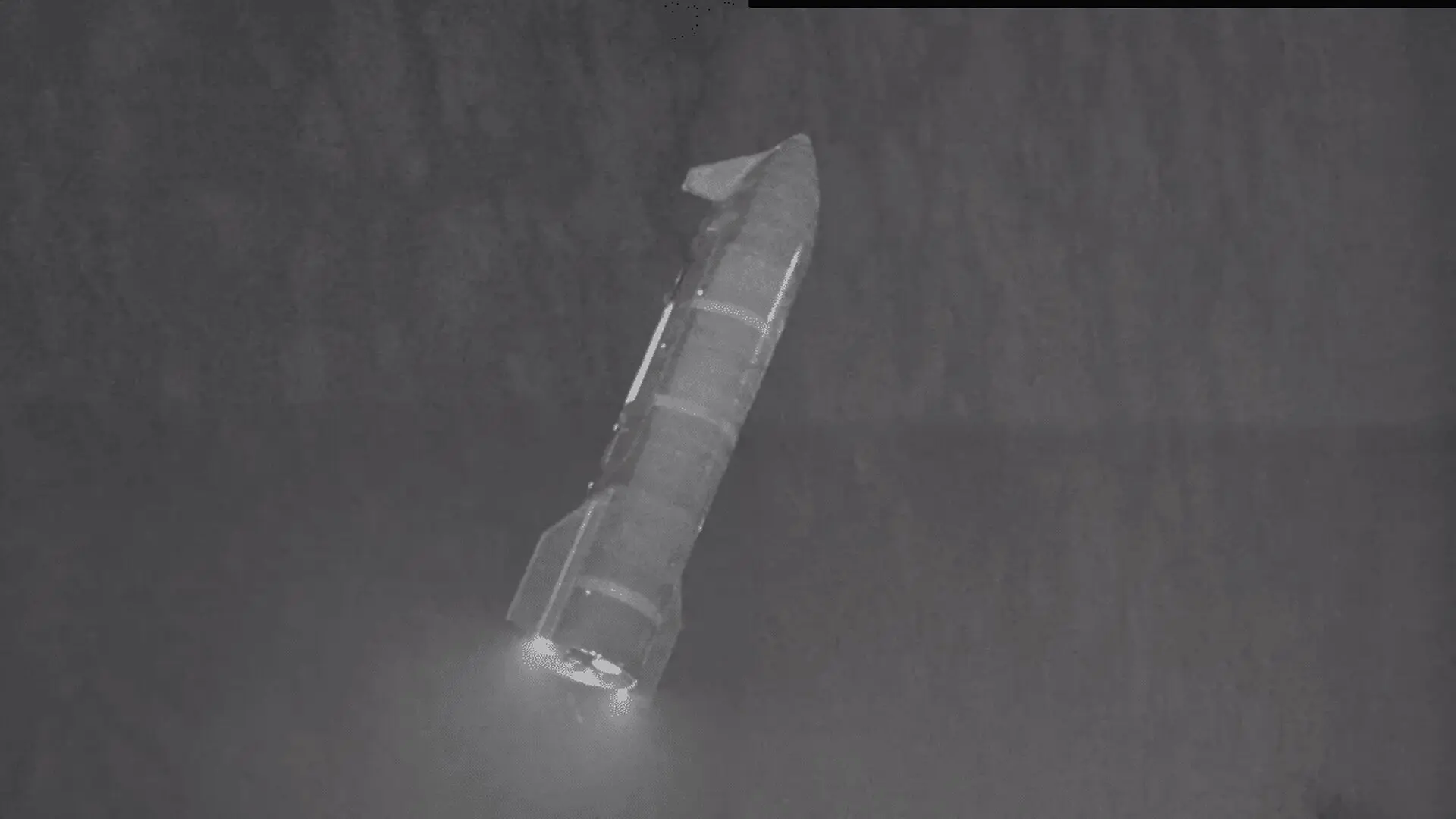
A recently released clip shows SpaceX’s Starship captured from an unexpected angle: a Starlink satellite cruising in low‑Earth orbit. Rather than ground‑based cameras or onboard lenses, the massive launch vehicle was filmed from space, offering a rare look at the world’s largest rocket and hinting at new uses for the company’s broadband constellation.
Orbit‑Based View Reveals Starship’s Scale
Historically, audiences have watched Starship lift‑offs through cameras mounted on launch pads, chase aircraft, or the vehicle itself. This new footage flips the script, positioning a next‑generation Starlink satellite as the observer. The resulting imagery places the rocket against Earth’s curvature, underscoring its sheer size while demonstrating how orbital platforms can deliver continuous visual data that ground stations cannot.
For engineers planning lunar, Martian, and deep‑space missions, an external, space‑borne perspective could become a valuable diagnostic tool. The video also showcases how commercial satellites, originally built for internet service, are evolving into multi‑purpose assets capable of supporting spacecraft inspections, traffic monitoring, and safety checks in an increasingly crowded low‑Earth orbit.
View of Starship in space from a Starlink V3 satellite on Flight 13.
— SpaceX (@SpaceX) July 31, 2026
This composite is made of imagery from four separate cameras on a single satellite. Six of the satellites were equipped with cameras to scan Starship’s heat shield and transmit imagery down to operators to… pic.twitter.com/sNTHHz5vLr
Why the Recording Matters Beyond the Aesthetics
Beyond its visual impact, the clip signals a maturation of Starlink’s latest satellite generation. Modern nodes now carry sophisticated sensors and imaging suites that can operate under harsh lighting and precise pointing constraints, all while maintaining their primary communications role. Capturing another vehicle in orbit demands exact timing and alignment, indicating that these systems are ready for operational deployment.
Future missions may rely on such orbital eyes to log launch events, watch spacecraft separate, or help engineers pinpoint anomalies from angles never before possible. As reusable launchers become routine and flight cadence rises, the ability to monitor vehicles throughout their ascent and descent phases could improve mission assurance and post‑flight analysis.
Space.com Reports on Starlink’s Expanding Toolkit
According to Space.com, the video originated from one of SpaceX’s newest Starlink platforms, underscoring that the constellation’s capabilities now extend beyond broadband delivery. The article notes that the footage provides an unprecedented orbital viewpoint of Starship while illustrating how commercial satellites are gaining multifunctional roles.
This shift mirrors a broader industry trend: satellites are being engineered for flexibility, enabling them to support scientific observation, navigation, environmental monitoring, and vehicle tracking alongside their core missions. As constellations proliferate, such versatility could reshape real‑time launch and orbital management.
Looking Ahead to Integrated Space Networks
The clip hints at a future where spacecraft operate as part of an interconnected web, each node contributing data, communications, and situational awareness throughout a mission’s lifecycle. For SpaceX, which envisions frequent Starship flights carrying cargo and crew beyond Earth, a satellite network that can augment mission visibility may become a strategic advantage.
External orbital observations promise to refine engineering assessments, boost safety margins, and yield novel scientific insights into vehicle behavior under space‑flight conditions. This pioneering video not only captures a landmark launch system but also marks the emergence of a new class of commercial satellites poised to play a broader role in humanity’s expanding presence beyond our planet.
This article has been fact checked for accuracy, with information verified against reputable sources. Learn more about us and our editorial process.
Last reviewed on .
Article history
- Latest version
Reference(s)
- “https://twitter.com/SpaceX/status/2083296921230164378/video/1.” <https://t.co/sNTHHz5vLr>.
- Wall, Mike. “SpaceX's Starship seen in space by next-gen Starlink satellite (video).”, July 31, 2026 Space <https://www.space.com/space-exploration/launches-spacecraft/spacexs-starship-seen-in-space-by-next-gen-starlink-satellite-video>.
Cite this page:
- Posted by William Moore