Sea Sponge Secrets Reveal Earth Crossed 1.5°C Threshold A Decade Early
New research suggests we may have already surpassed the 1.5°C warming limit years ago, though other scientists dispute the findings.
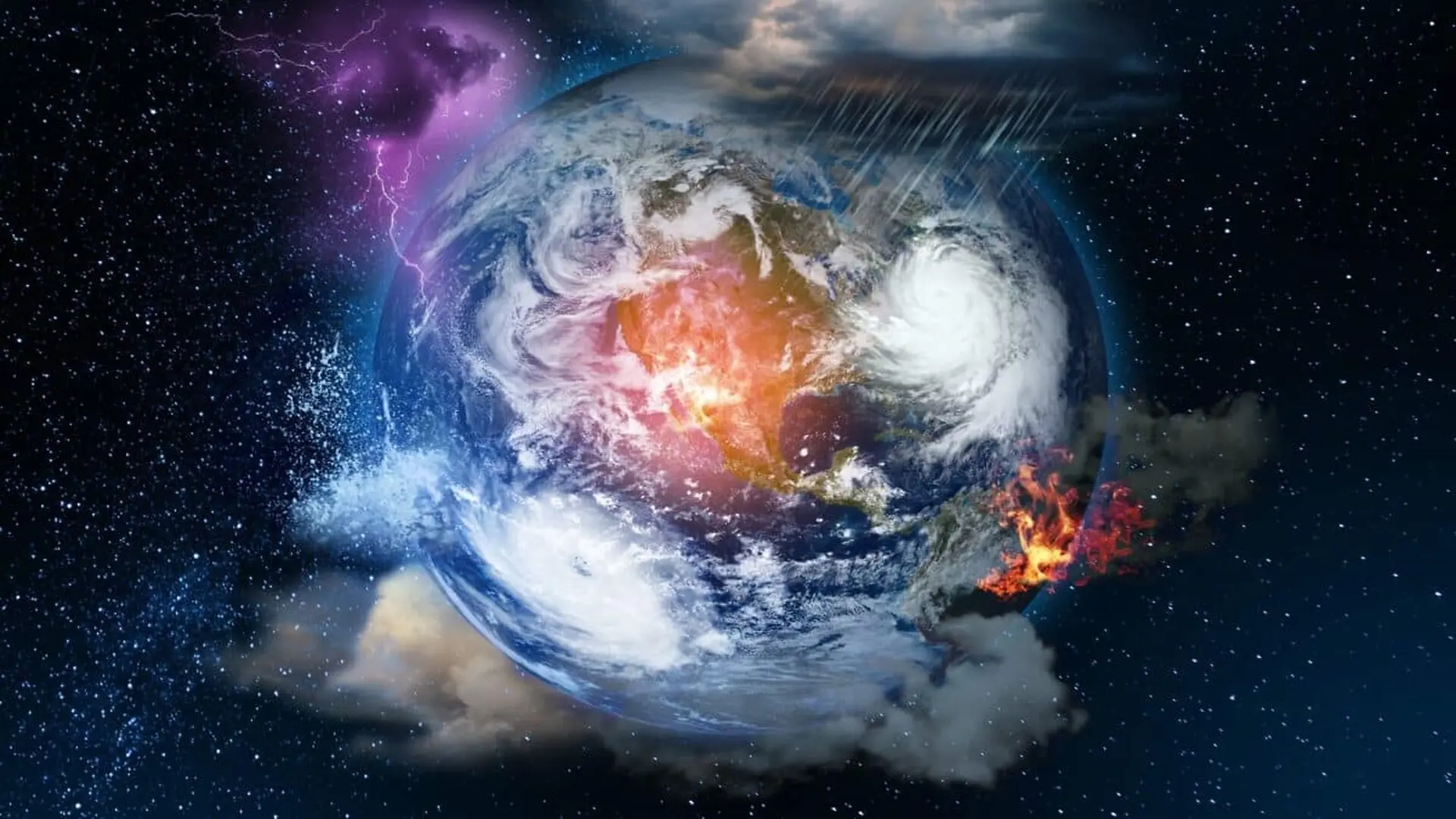
Since the Paris Agreement, the 1.5 °C target has become a rallying cry for activists, policymakers, and the media. The premise is straightforward: once the planet’s average temperature exceeds 1.5 °C above pre‑industrial levels and remains there, the danger to ecosystems and human societies rises sharply, making mitigation far more challenging.
Researchers from the University of Western Australia’s Oceans Institute have now challenged the timing of that threshold using an unlikely proxy. Rather than conventional thermometers or satellite data, the team examined sclerosponges—slow‑growing marine sponges that inhabit Caribbean underwater caves—to reconstruct a temperature record that predates modern measurements.
Marine Sponges Reveal Centuries‑Old Ocean Signals
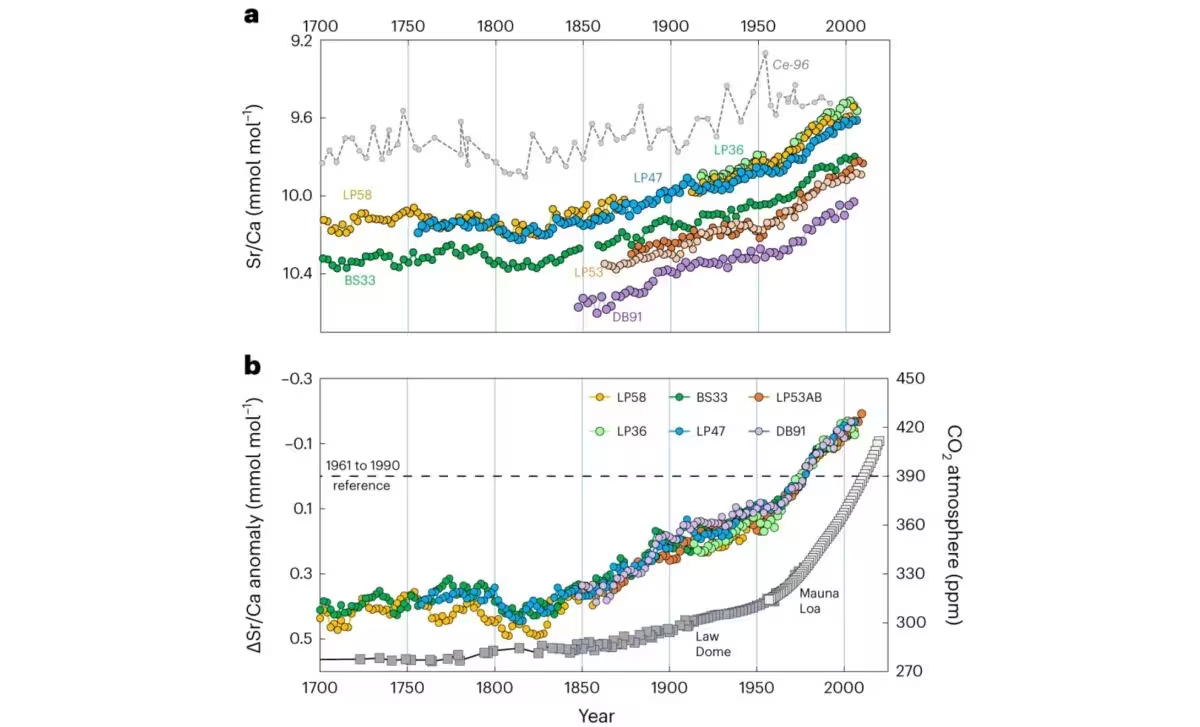
Because sclerosponges add only a few tenths of a millimeter to their limestone skeletons each year, they serve as natural climate archives, much like tree rings or ice cores. By measuring the strontium‑to‑calcium ratios in six specimens, the scientists inferred sea‑surface temperatures back to the early 1700s. The Caribbean setting proved advantageous, as the region is relatively isolated from the major ocean currents that can distort temperature signals elsewhere.
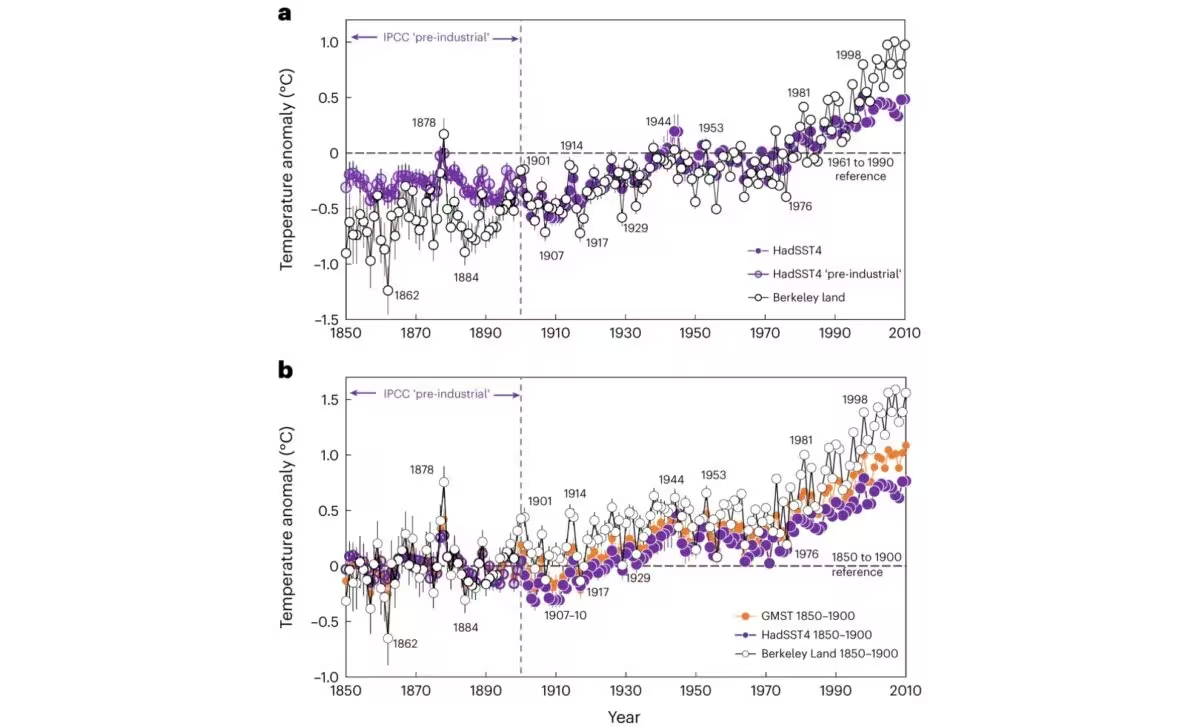
This extended baseline matters because instrumental ocean temperature records only begin around 1850, when sailors measured water by lowering buckets. The Intergovernmental Panel on Climate Change (IPCC) therefore uses the 1850‑1900 window as its pre‑industrial reference, as noted by Grist.
Study Suggests Warming Commenced Decades Earlier
Published in Nature Climate Change, the research argues that global warming may have begun roughly 80 years before the timeline currently used by the IPCC, and that the 1.7 °C threshold was already surpassed by 2020. Lead author Malcolm McCulloch told the Associated Press that the window for meaningful emissions cuts has effectively shifted forward by at least a decade.
“The big picture is that the global warming clock for emissions reductions to minimize the risk of dangerous climate change has been brought forward by at least a decade,” he said, adding, “Basically, time’s running out.”
If the sponge‑derived chronology proves robust, it would imply that the temperature benchmarks guiding international climate policy are already outdated, leaving less margin for corrective action than previously assumed.
Skepticism and Calls for Further Validation
The conclusions have sparked debate. A researcher quoted in LiveScience warned that “it begs credulity to claim that the instrumental record is wrong based on paleosponges from one region of the world,” labeling the argument as “honestly doesn’t make any sense.”
Other experts adopt a more cautious stance, emphasizing the need for replication with additional datasets before revising the IPCC framework, which currently estimates global warming at roughly 1.2 °C above pre‑industrial levels, as reported by Reuters.
Nonetheless, New Scientist notes that independent lines of evidence already suggest the planet may have breached the 1.5 °C barrier, underscoring that rapid emissions cuts remain essential regardless of the sponge study’s outcome.
This article has been fact checked for accuracy, with information verified against reputable sources. Learn more about us and our editorial process.
Last reviewed on .
Article history
- Latest version
Reference(s)
- Ng, Brian. “New study says the world blew past 1.5 degrees of warming 4 years ago.”, February 5, 2024 Grist <https://grist.org/science/sea-sponges-global-warming/>.
- McCulloch, Malcolm. “300 years of sclerosponge thermometry shows global warming has exceeded 1.5 °C - Nature Climate Change.”, vol. 14, no. 2, pp. 171-177. Nature, doi: 10.1038/s41558-023-01919-7. <https://www.nature.com/articles/s41558-023-01919-7>.
- Borenstein, Seth. “Could the planet be warmer than we thought? Ocean sponges might be telling us something.”, February 5, 2024 AP News <https://apnews.com/article/climate-change-warming-sponges-caribbean-391ee1bb3dabb0496f0f2848849418b6>.
- Turner, Ben. “Controversial climate change study claims we'll breach 2 C before 2030.”, February 5, 2024 Live Science <https://www.livescience.com/planet-earth/climate-change/weve-already-blown-past-critical-15-c-climate-threshold-sea-sponge-study-claims-should-we-believe-it>.
- <https://www.reuters.com/business/cop/how-close-are-we-passing-15-degrees-celsius-global-warming-2022-11-14/>.
- <https://www.newscientist.com/article/2416231-hottest-january-on-record-sees-the-world-reach-1-7c-warming-mark/?utm_term=Autofeed&utm_campaign=echobox&utm_medium=social&utm_source=Facebook>.
Cite this page:
- Posted by William Moore