Antarctica’s Strange Egypt-Like ‘Pyramid’ Is Fueling Theories About a Lost Ancient Civilization
Antarctica’s mysterious pyramid-like structure demystified scientists reveal a natural origin over alien myths
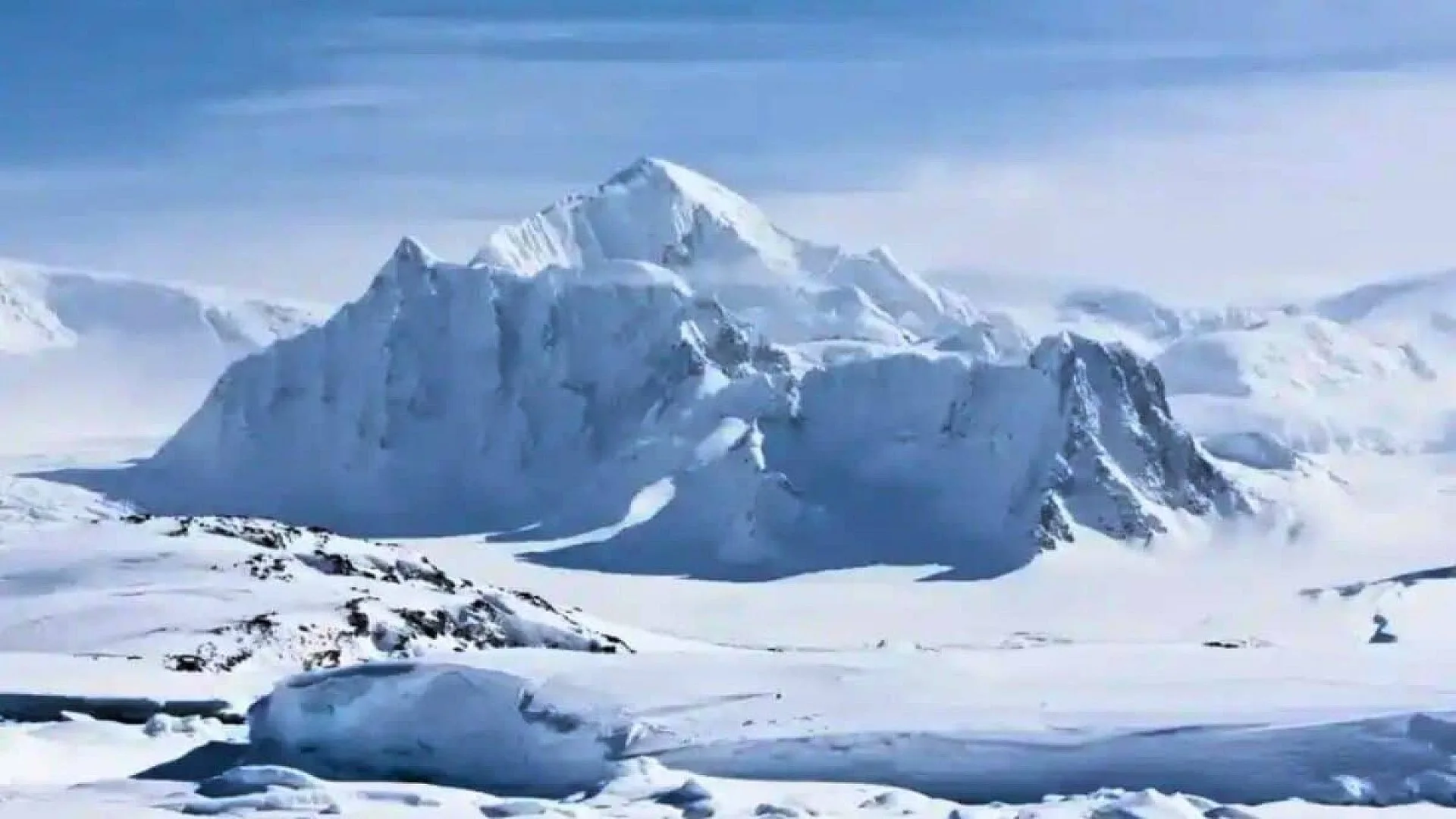
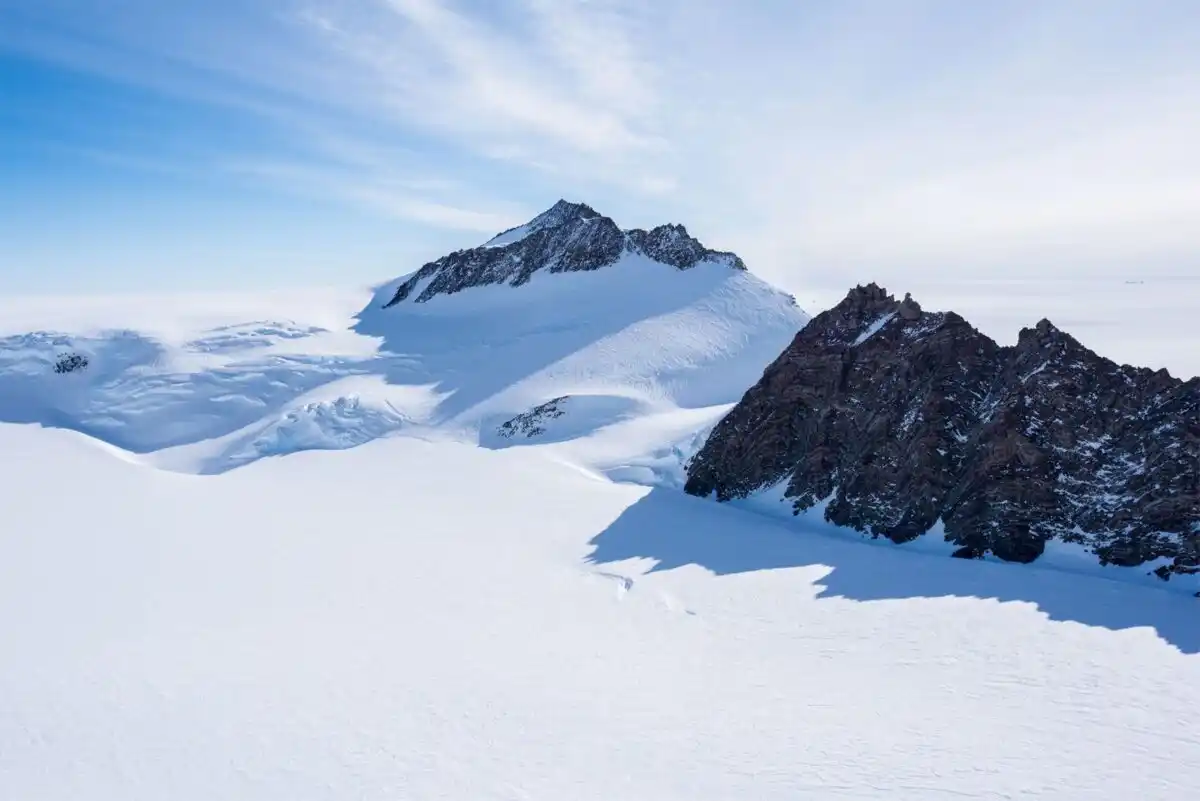
A striking photo taken from space in 2016 sparked an online mystery: a solitary peak in Antarctica’s southern Ellsworth Mountains appears to rise like a four‑sided monument, its summit soaring about 4,150 feet above the icy plain. The coordinates recorded by Live Science place the feature at –79.9774614356392, –81.95892707235716, deep within West Antarctica.
Why the Peak Looks Engineered
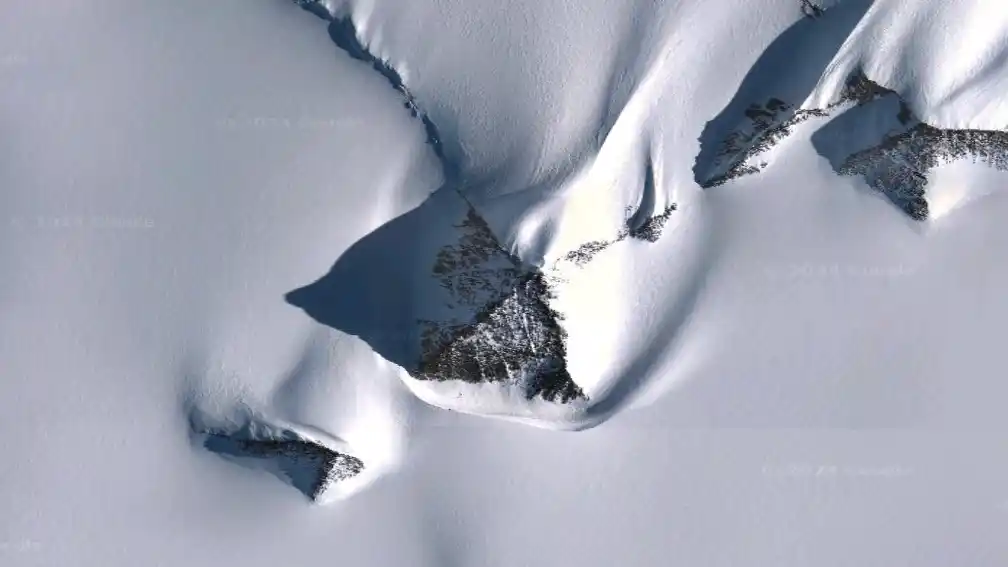
From a satellite perspective the mountain’s silhouette is unusually clean. While many Antarctic outcrops appear jagged or sprawling, this one shows a compact, sharply faceted form that can easily be mistaken for a human‑made structure. The visual impact, however, does not require any extraterrestrial or ancient‑civilization explanation.
Geologists point to long‑term freeze‑thaw erosion as the primary sculptor. Mauri Pelto, an environmental science professor at Nichols College, explains that repeated cycles of water seeping into rock cracks, freezing, expanding and eventually breaking the rock have, over hundreds of millions of years, produced the steep faces seen today. The eastern ridge of the peak evolved under slightly different conditions, which accounts for the overall symmetry without invoking any builder.
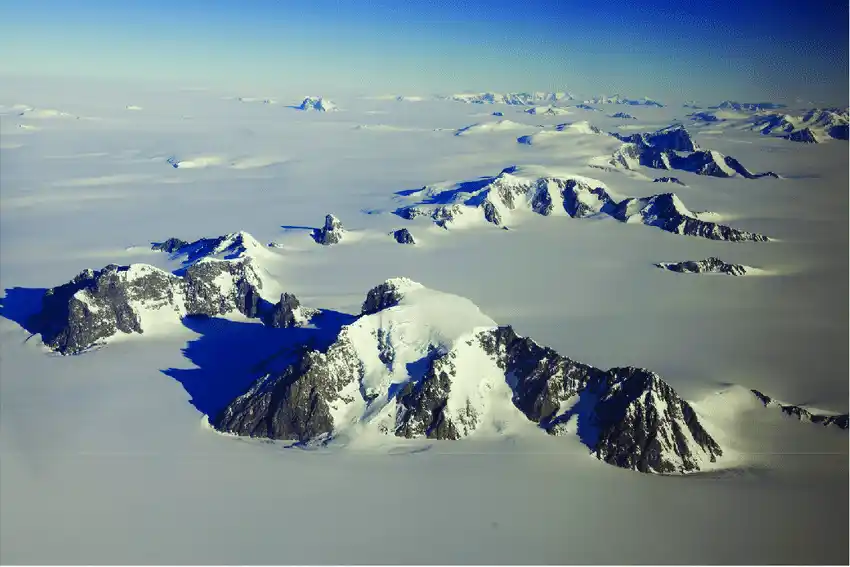
“It’s just a mountain that looks like a pyramid,” says Eric Rignot, a glaciologist quoted by Live Science. He notes that while pyramidal peaks do occur naturally, those with four distinct faces are uncommon—but rarity alone does not prove construction. The interplay of rock fractures, ice removal and gravity can produce a geometry that seems deliberately shaped.
A Well‑Documented Mountain Range
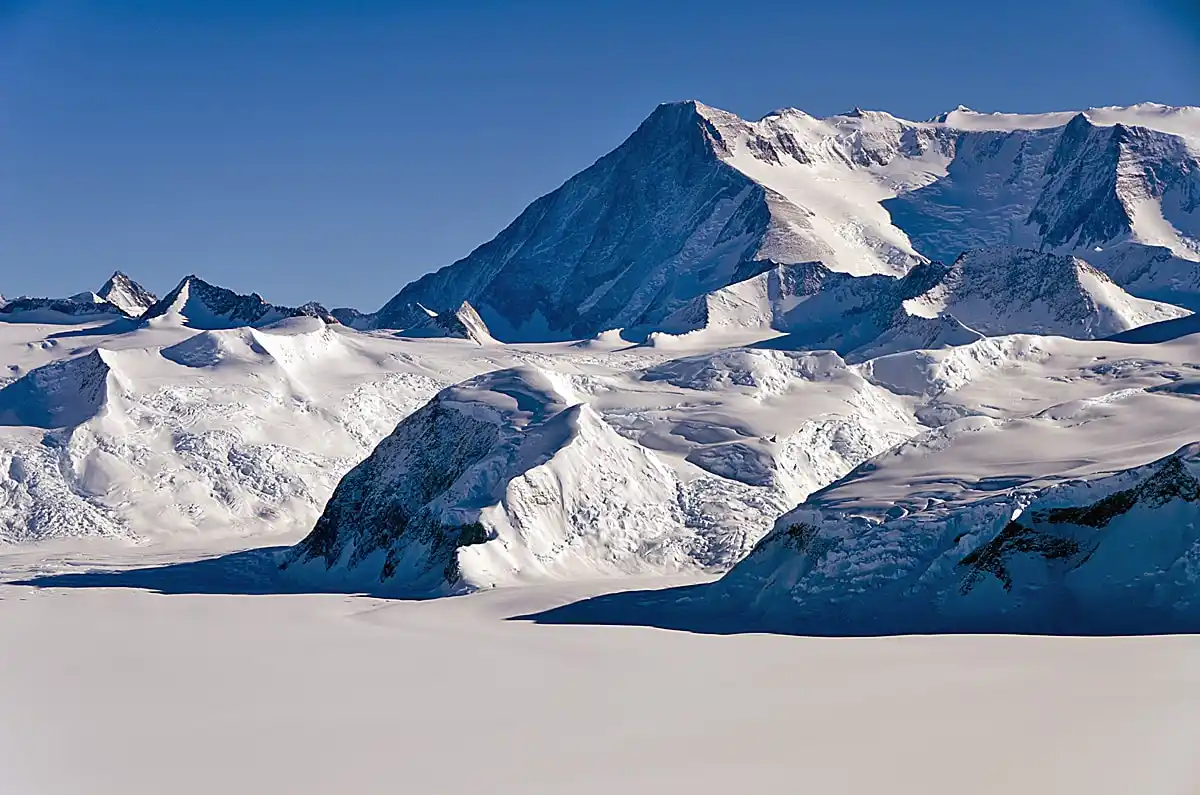
The peak sits within the Ellsworth Mountains, a thoroughly surveyed range in West Antarctica. A U.S. Geological Survey paper maps the range near 79° S, 85° W, dividing it into the northern Sentinel Range and the southern Heritage Range, with the Minnesota Glacier separating the two sectors.
American aviator Lincoln Ellsworth first sighted the range on 23 November 1935 during a trans‑Antarctic flight from Dundee Island toward the Ross Ice Shelf. Early observations identified the Sentinel Range, and subsequent expeditions named features such as Mount Lymburner, Polarstar Peak, Mount Ulmer, Mount Wyatt Earp and the Sentinel Range itself.
Aerial photography by U.S. Navy Squadron VX‑6 in December 1959 (Sentinel Range) and November 1962 (Heritage Range) provided trimetrogon images that, together with ground surveys, produced detailed USGS topographic maps of the area. Decades of mapping have turned what might appear as a blank expanse into a well‑characterized geological province.
Rugged Landforms Shaped by Ice and Rock
The USGS study of the Sentinel Range describes a terrain of sharp ridges, pointed horns, bowl‑shaped cirques and isolated tors—features that emerge where hard quartzite rock meets relentless glacial erosion. These landforms, common throughout the range, illustrate how ice can carve dramatic shapes without any human intervention.
Arêtes are narrow ridges that separate adjacent valleys, horns are pyramidal peaks formed where several glaciers converge, cirques are amphitheater‑like hollows gouged by glacial movement, and tors are solitary rock outcrops left behind after surrounding material erodes away. The presence of such features explains why the Antarctic peak can look so deliberately sculpted.
Fossil Record Adds Deep Time Perspective
Beyond its striking silhouette, the Ellsworth region preserves a rich Cambrian fossil heritage, including trilobites that lived over 500 million years ago. A USGS Professional Paper on Early and Middle Cambrian trilobites documents finds from Mount Spann in the northeastern Argentina Range and from the Neptune and Harold Byrd Mountains.
These discoveries, first reported in the Heritage Range during the 1963‑64 field season, underscore that Antarctica’s rock layers hold ancient marine life and environmental clues that predate any human activity by hundreds of millions of years.
This article has been fact checked for accuracy, with information verified against reputable sources. Learn more about us and our editorial process.
Last reviewed on .
Article history
- Latest version
Reference(s)
- Pare, Sascha. “Antarctica 'pyramid': The strangely symmetrical mountain that sparked a major alien conspiracy theory.”, January 10, 2025 Live Science <https://www.livescience.com/planet-earth/antarctica/pyramid-in-antarctica-the-icy-mountain-that-looks-remarkably-like-a-human-made-structure>.
- “Mauri Pelto | Nichols College.”, February 17, 2026 Nichols College <https://www.nichols.edu/faculty/mauri-pelto/>.
- “UC Irvine - Faculty Profile System.” <https://www.faculty.uci.edu/profile/?facultyId=5467>.
Cite this page:
- Posted by William Moore