Alabama Fishing Trip Uncovers 32‑Million‑Year‑Old Leatherback Turtle, New Species Named
Scientists identify a mysterious limestone boulder find in Alabama as a fossilized ancient turtle, revealing a hidden piece of Earth’s distant past.
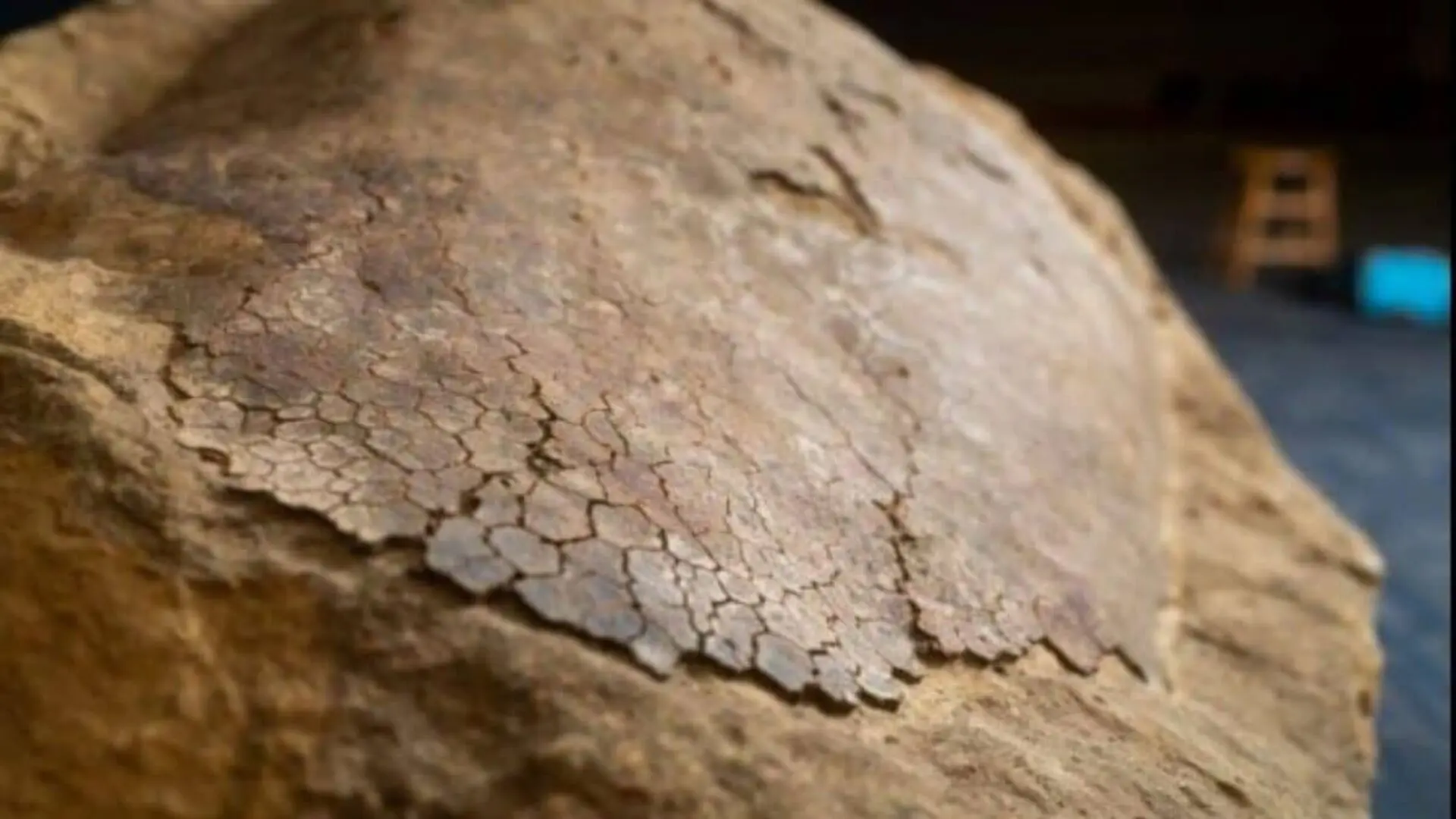
During a routine fishing outing on a southern Alabama riverbank in 2021, the Coleman family uncovered a remarkable fossil: a leatherback sea turtle shell that lived roughly 32 million years ago. The specimen represents a newly identified species, Ueloca colemanorum, and ranks among the most complete ancient leatherback shells ever recovered.
While casting lines, Adam and Adrienne Coleman noticed an odd formation inside a large limestone boulder. Their children, Talah and Corey, joined the search—a pastime the family had cultivated for years after Adam learned fossil‑hunting techniques from his own father. Intrigued, the group returned repeatedly to the site until Adam reached out to Dr. Andrew Gentry, a specialist in fossil turtles from Alabama.
Dr. Gentry’s on‑site inspection quickly revealed that the rock encased the remains of an ancient leatherback turtle, prompting a collaborative effort to extract and preserve the find.
Alabama Anglers Unearth 32‑Million‑Year‑Old Leatherback Shell
The fossil measures about four feet in length and three feet in width, placing it in the early Oligocene epoch. Preservation is exceptionally rare for leatherbacks because their modern shells consist of tiny ossicles arranged in a mosaic, a structure that typically disintegrates after death.
When a leatherback dies, the connective material that binds the ossicles degrades, causing the shell to fragment and disappear from the fossil record.
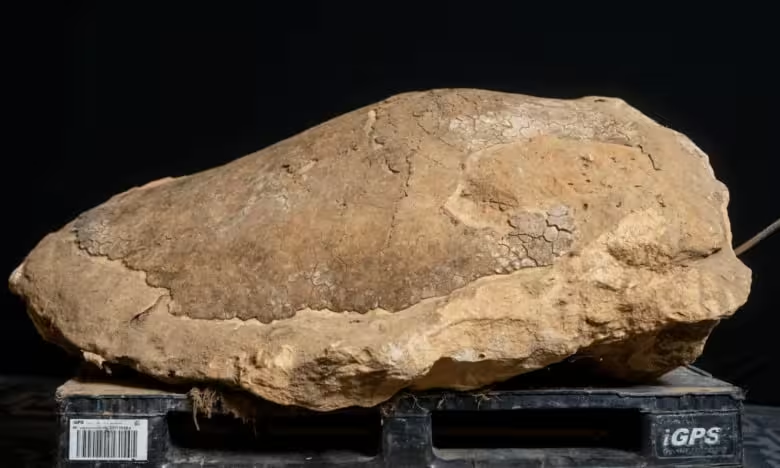
To secure the specimen, Dr. Gentry enlisted Jun Ebersole, Director of Collections at the McWane Science Center in Birmingham. Their combined team—drawing expertise from the Geological Survey of Alabama, Dauphin Island Sea Lab, the Alabama Aquarium, and the National Oceanic and Atmospheric Administration Corps—carefully extracted the fossil for laboratory analysis.
A New Species Named With Tribal Language and Family Tribute
The name Ueloca was crafted in collaboration with members of the Poarch Creek Indians, drawing from the Muscogee (Mvskoke) words Uewa (water) and Locv (turtle). Samantha Martin, Creek Language Coordinator, highlighted that this marks the first fossil to receive a Muscogee designation.
“This is the first fossil to carry a Muscogee name and it’s exciting to see our language recognized in this way. Opportunities like this weave our voice into history and ensure it’s never forgotten,” she explained, as quoted by Fox10.
The species epithet colemanorum honors the family whose curiosity sparked the discovery, linking scientific insight with local cultural heritage.
Implications for Leatherback Evolution Unveiled by Rare Fossil
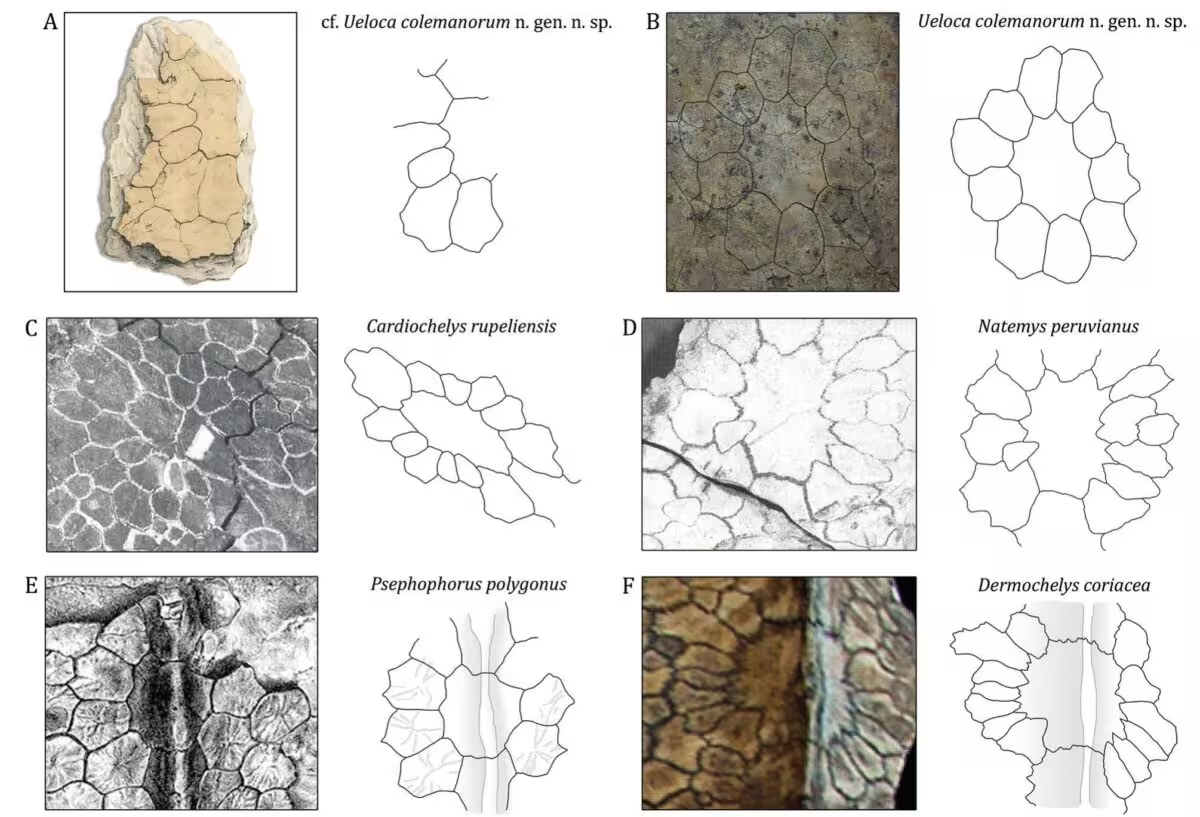
Because the specimen is exceptionally well preserved, researchers could compare its morphology with other fossilized leatherbacks worldwide. Their analysis, published in Palaeodiversity, indicates that at least two distinct leatherback lineages existed over the past 40 million years. One lineage persisted to give rise to modern leatherbacks, while the other vanished from the fossil record.
The disappearance of the extinct lineage remains an open question, but the discovery of Ueloca colemanorum adds a critical data point to the evolutionary puzzle.
“This is truly a one‑in‑a‑million fossil,” Jun Ebersole remarked. “Specimens like this one are why Alabama is quickly becoming a globally recognized hot‑spot for fossil diversity.”
This article has been fact checked for accuracy, with information verified against reputable sources. Learn more about us and our editorial process.
Last reviewed on .
Article history
- Latest version
Reference(s)
- Staff, WALA. “Family finds 32-million-year-old sea turtle fossil while fishing.”, September 13, 2025 Fox 10 News <https://www.fox10tv.com/2025/09/13/family-finds-32-million-year-old-sea-turtle-fossil-while-fishing/>.
- “Pale.v18.a6.”, doi: 10.18476/pale.v18.a6.full. <https://bioone.org/journals/Palaeodiversity/volume-18/issue-1/pale.v18.a6/A-new-leatherback-marine-turtle-from-the-lower-Oligocene-of/10.18476/pale.v18.a6.full>.
Cite this page:
- Posted by Zara Tariq