AI Turns English Sentences Into Ancient Akkadian Cuneiform on Digital Clay Tablets
AI tackles a centuries‑old writing system, offering scholars a fresh way to explore massive ancient archives and unlock hidden histories.
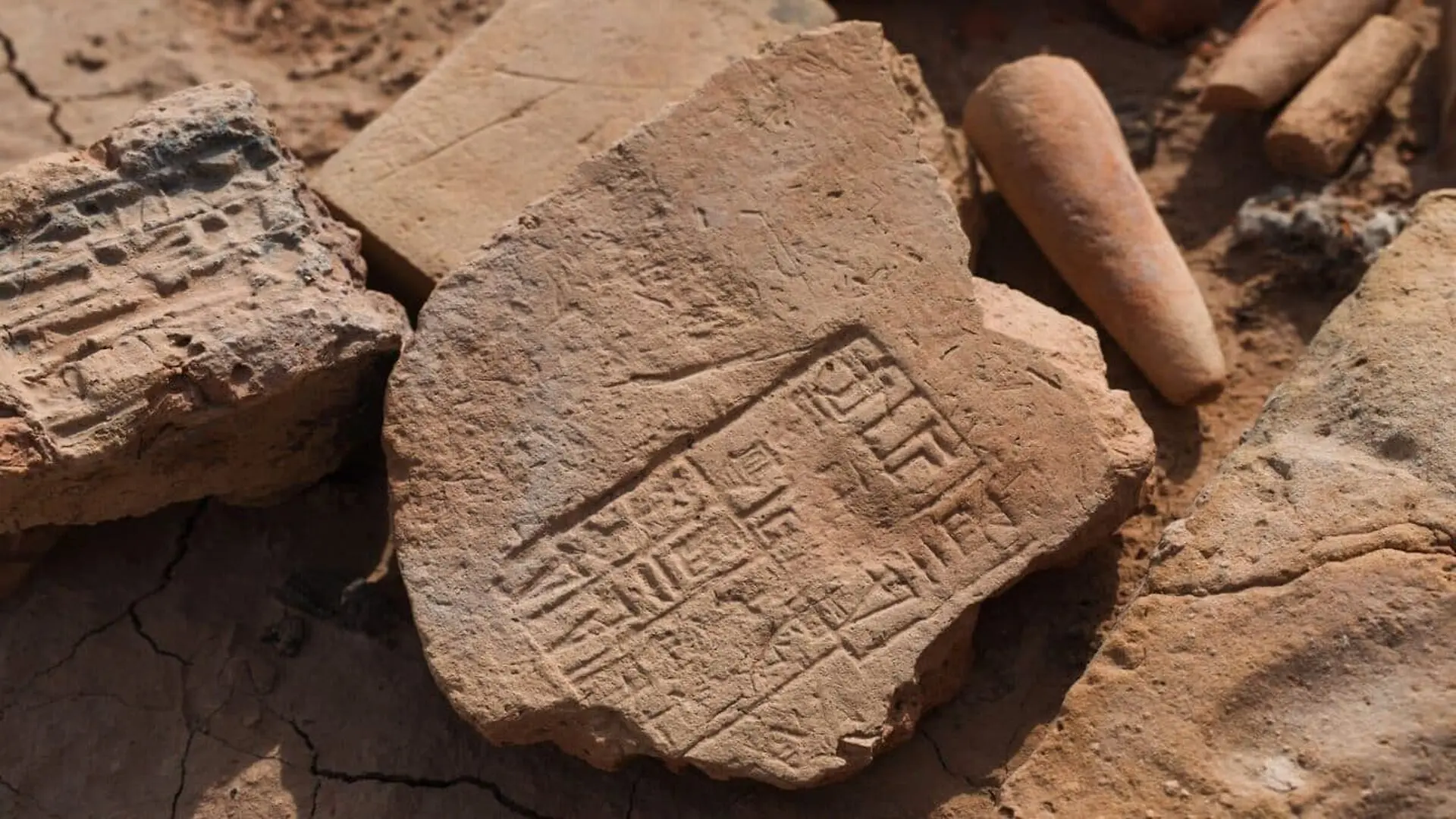
Researchers at the University of Southern California have released an open‑source system named TabletCraft that converts English sentences into Akkadian and renders the result as cuneiform signs on a simulated clay tablet. Unlike earlier applications that only decoded ancient texts, this platform works both ways, enabling bidirectional translation.
The tool tackles a pressing bottleneck in the study of Mesopotamian writing. Roughly 500,000 cuneiform tablets survive in museum collections worldwide, yet fewer than a few hundred experts can read the script fluently, leaving most of the material untranslated.
From English Input to a Virtual Clay Tablet
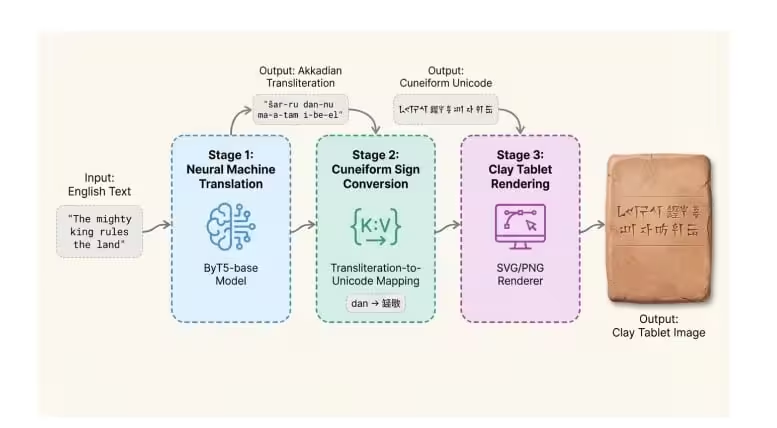
In the workflow described in the paper posted on arXiv, users type an English phrase, which the system first renders into an Akkadian transliteration, then maps each transliteration token to its corresponding Unicode cuneiform sign, and finally displays the symbols on a stylized clay tablet image. The pipeline can also run in reverse, converting Akkadian inscriptions back into English.
The translation core relies on a fine‑tuned ByT5‑base model, a byte‑level transformer capable of handling Akkadian diacritics and logograms. According to Wang, the model was trained on 116,000 paired sentences drawn from the Akkademia corpus, a recent shared‑task dataset, and other aligned resources.
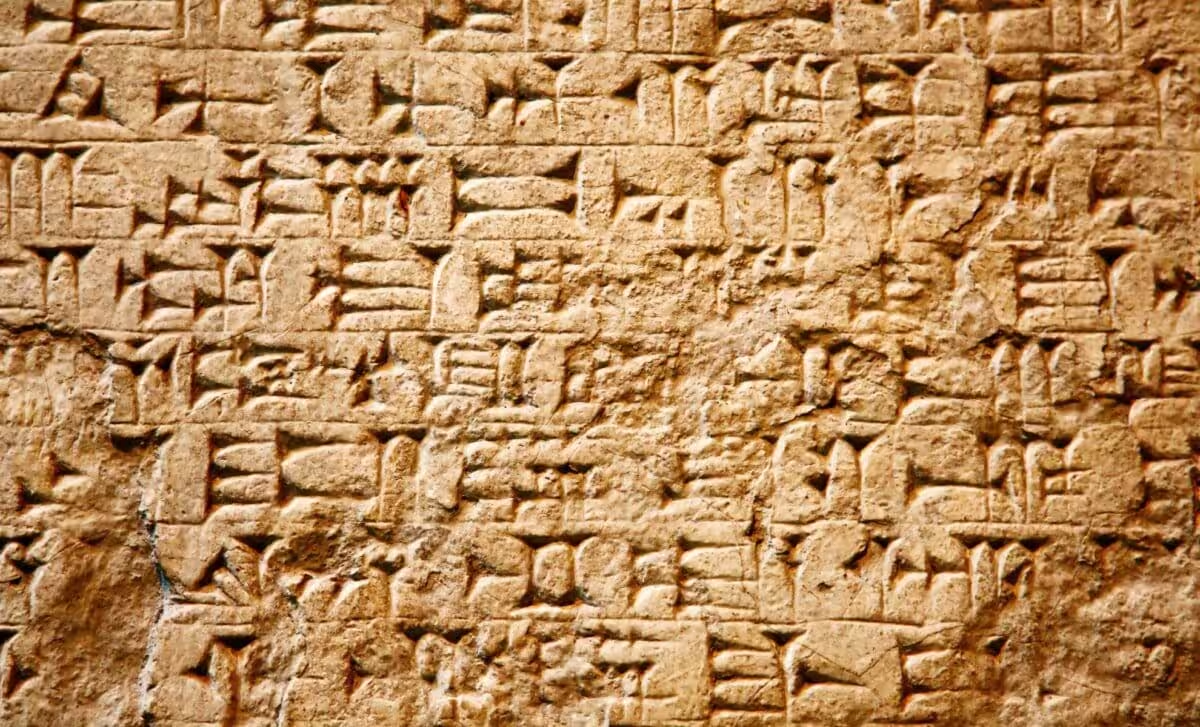
To turn transliteration into authentic cuneiform, TabletCraft consults a lookup table that contains more than 14,240 transliteration‑to‑Unicode mappings. The table was assembled from resources such as the Open Richly Annotated Cuneiform Corpus (ORACC) and the Cuneiform Digital Library Initiative (CDLI).
When evaluated on 1,000 transliterations from the Akkademia test set, the system achieved 95.3 % token coverage. Uncovered symbols—mostly rare logograms or determinatives—remain in transliteration form. Rendering the full sign set onto a tablet backdrop takes less than ten milliseconds on a standard CPU, without requiring a GPU.
Benchmark Results Highlight Strengths and Gaps
On a held‑out validation set of 2,812 Neo‑Assyrian excerpts, TabletCraft attained a BLEU score of 49.1 and a chrF++ of 63.1 for Akkadian‑to‑English translation. By comparison, the original Akkademia benchmark reported a BLEU of 37.5, though direct comparison is limited because the test splits differ.
The reverse direction (English‑to‑Akkadian) produced a BLEU of 48.5 and a chrF++ of 55.6, representing the first publicly reported quantitative metric for large‑scale English‑to‑Akkadian translation. Because Akkadian permits multiple orthographic variants for the same word, automated scores can penalize perfectly valid renderings that diverge from the single reference used for evaluation.
A concrete example from the study illustrates the evaluation challenge: TabletCraft generated the royal title “MAN KUR—aš‑šur,” while the reference used “LUGAL KUR AŠ.” Both renderings are linguistically acceptable, yet the metric would treat the difference as an error.
Performance also varies with the historical period of the source text. Because the training data emphasize Neo‑Assyrian royal inscriptions, the model is more reliable on that register than on older Old‑Assyrian commercial letters, which often contain abbreviations and shorter phrasing.
Educational Uses and Future Directions
The developers position TabletCraft as a “draft‑and‑revise” assistant rather than a substitute for expert scholars. Users can inspect each intermediate stage—English input, Akkadian transliteration, and cuneiform rendering—before finalizing a translation.
In practice, introductory cuneiform courses have employed the tool to let students create personal name tablets and brief dedications, which they then read aloud as part of literacy drills. Museum educators are experimenting with “write your name in cuneiform” kiosks for young visitors, while professional Assyriologists use the Akkadian‑to‑English function to expedite the first pass on newly photographed Neo‑Assyrian tablets, treating the output much like OCR text that requires human verification.
TabletCraft is distributed under an open‑source license and can be accessed via a command‑line interface, a Python API, and an interactive Gradio demo. The authors also outline planned extensions, including support for Sumerian, integration of cuneiform optical character recognition, and translation pipelines for modern languages beyond English.
This article has been fact checked for accuracy, with information verified against reputable sources. Learn more about us and our editorial process.
Last reviewed on .
Article history
- Latest version
Reference(s)
- Wang, Zhaohui. “TabletCraft: Bridging a 4,000-Year Cultural Gap with Bidirectional Akkadian NMT and Cuneiform Rendering.” arXiv.org <https://arxiv.org/abs/2608.02609?utm_source=chatgpt.com>.
- “Verifying your browser | OpenReview.” <https://openreview.net/profile?id=~Zhaohui_Geoffrey_Wang1>.
- <https://oracc.museum.upenn.edu/>.
- “Home.” CDLI <https://cdli.earth/>.
Cite this page:
- Posted by Zara Tariq