Century-Old Bridge Study Reveals How Hidden Corrosion Destroys Metal
Sensor measurements and statistical modeling show that localized pitting outpaces general metal thinning in degrading historical rail infrastructure.
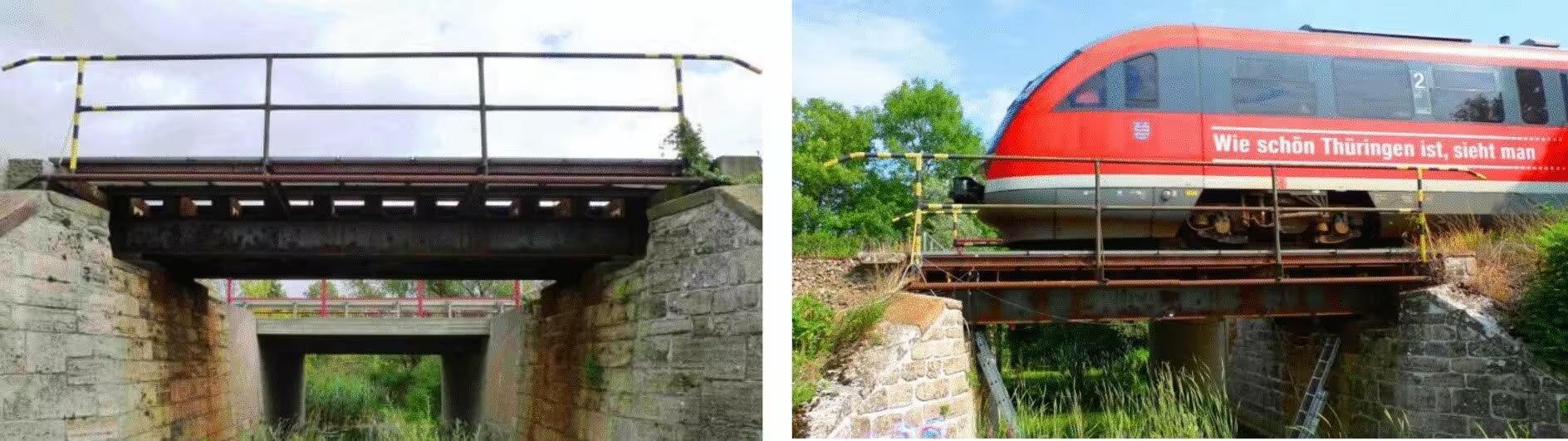
A century-old steel railway bridge that spent decades hauling heavy cargo loads of salt and timber has offered engineers a rare window into how hidden microscopic degradation destroys heavy infrastructure. Built in 1904 as part of the German Thüringen railway system connecting Wolkramshausen and Erfurt, the bridge was decommissioned in 2010 after cumulative environmental stress compromised its structural integrity.
Researchers investigating the decommissioned span have developed an advanced predictive framework that combines real-world sensor measurements with probabilistic modeling to accurately forecast remaining structural life. The findings were published in the Journal of Civil Structural Health Monitoring, detailing how structural health monitoring can drastically reduce uncertainty in assessing ageing metal structures.
How Salt and Heavy Freight Decimated a Century-Old Bridge
During its active service life, the 6.4-meter span bore the brunt of heavy freight trains transporting de-icing salts and timber logs. This environment effectively mirrored aggressive marine conditions, accelerating corrosion and cyclic fatigue. Repeated mechanical loading from passing wheels combined with chemical degradation to weaken the riveted steel girders over more than a hundred years.
To understand the extent of the damage, the research team subjected the decommissioned bridge to rigorous full-scale static, dynamic, and fatigue tests at the Bauhaus-University Weimar laboratory. They mounted linear variable differential transformers, which are specialized sensors that measure physical displacement, at critical locations including the midspan and the primary load application point known as position ‘a’.
Shrinking Uncertainty Through Bayesian Statistics
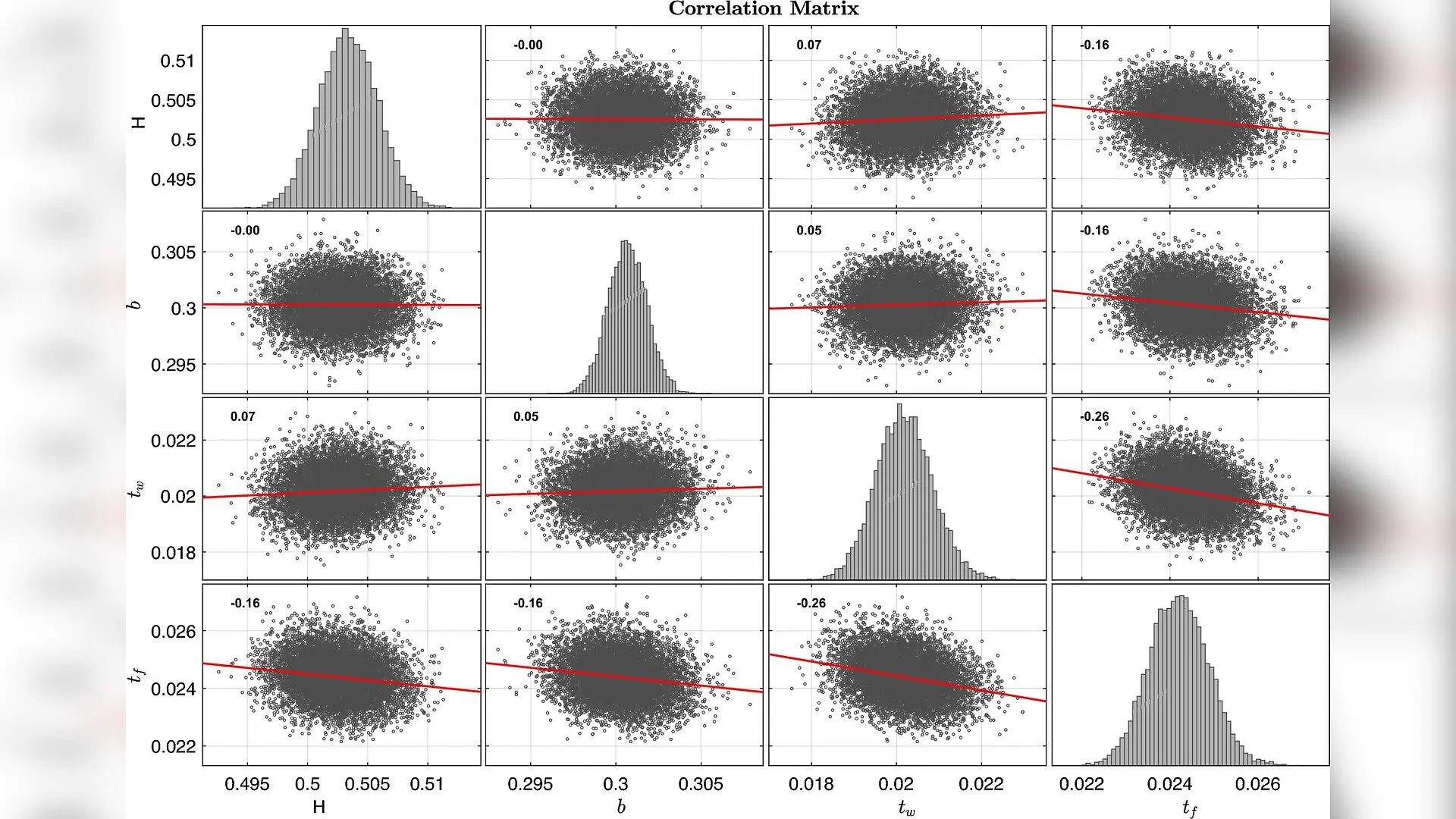
Traditional engineering assessments often rely on static theoretical models and deterministic safety factors that fail to capture the actual condition of ageing structures. To overcome this limitation, the study utilized Bayesian inference, a statistical method that updates prior assumptions using real-world observations.
By assimilating displacement data gathered by the sensors during the 2010 testing campaign, the authors successfully updated the model for bending stiffness. This sequential updating process narrowed the coefficient of variation, representing prediction uncertainty, from an initial 10.1% down to just 2.8% when utilizing measurements from multiple sensors. This significant reduction in epistemic uncertainty allows engineers to make far more reliable safety forecasts.
Why Localized Pitting Dangers Outweigh Global Steel Loss
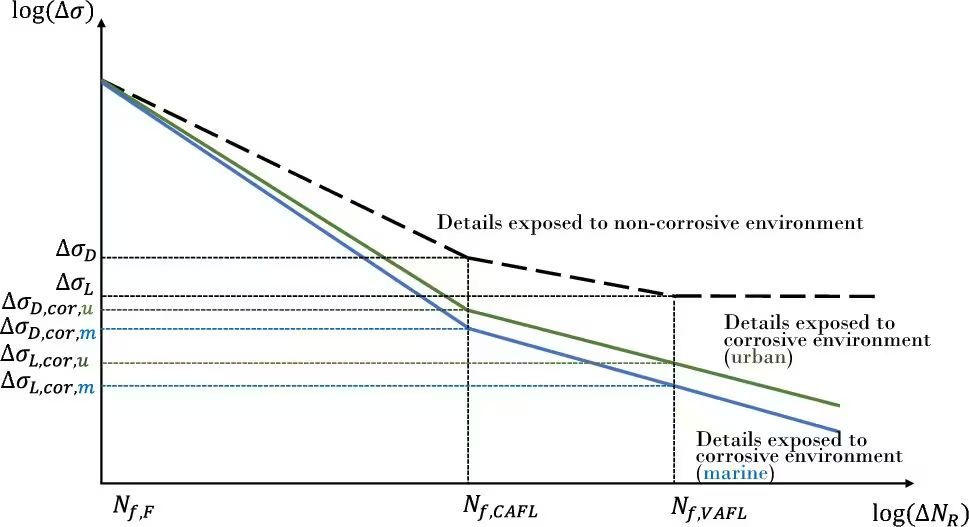
A central challenge in bridge engineering is separating general material thinning from localized stress concentrations. The study evaluated two distinct approaches, namely a geometry-based material loss model and a fatigue resistance approach using modified S-N curves, which plot stress range against cycles to failure.
The analysis revealed that global cross-section thinning due to uniform corrosion plays a relatively minor role in immediate structural failure. Instead, localized hot-spot phenomena such as pitting corrosion and notch effects around riveted connections dominate the reduction in fatigue resistance. While uniform metal loss accounted for minor structural changes, local stress magnification factors reached up to 2.53 under marine corrosion environments, proving that microscopic surface defects are the true drivers of structural degradation.
What This Means for the Future of Ageing Infrastructure
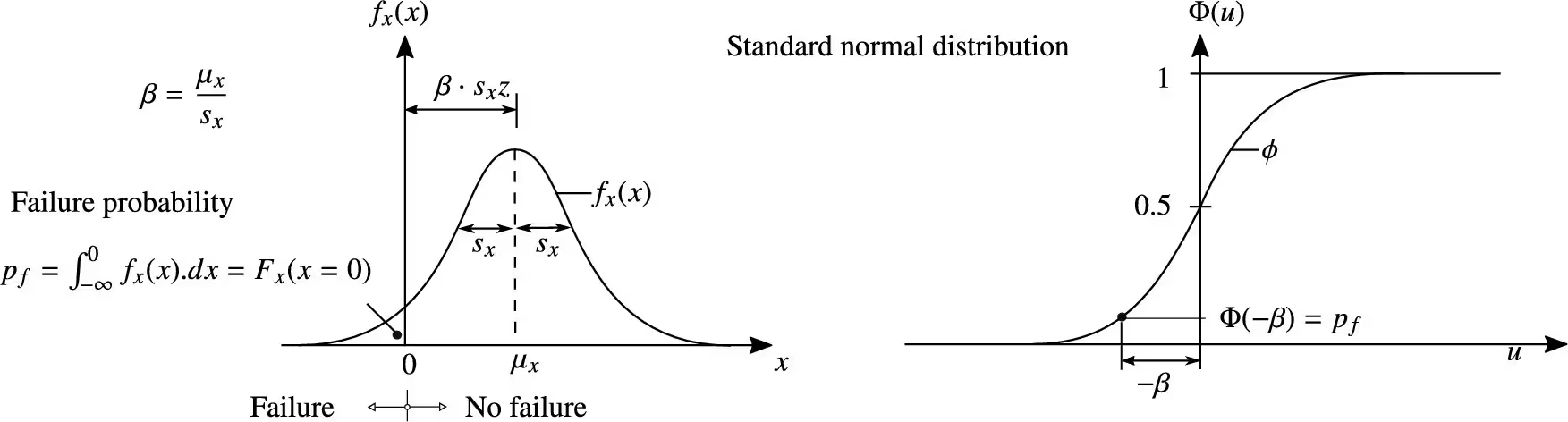
By coupling measurement-informed corrosion modeling with the First Order Reliability Method, the researchers calculated time-dependent failure probabilities and reliability indices up to the year 2020. The evaluation showed that incorporating sensor data prevents overly conservative estimates while ensuring that critical safety thresholds are not silently breached.
The authors emphasize that this integrated framework is broadly applicable to other bridges and structural systems worldwide. As thousands of rail and highway bridges worldwide approach or exceed their original design lifespans, combining continuous sensor monitoring with probabilistic reliability analysis offers a robust pathway to transition from rigid calendar-based inspections to dynamic, condition-based maintenance.
The research was published in Journal of Civil Structural Health Monitoring on November 6, 2026.
This article has been fact checked for accuracy, with information verified against reputable sources. Learn more about us and our editorial process.
Last reviewed on .
Article history
- Latest version
Reference(s)
- Chowdhury, S.., et al. “Measurement-informed fatigue-driven reliability analysis for century-old corroded steel rail-bridge integrating Bayesian inference and FORM.” Journal of Civil Structural Health Monitoring, vol. 17, no. 1, November 6, 2026 Springer Science and Business Media LLC, doi: 10.1007/s13349-026-01136-8. <https://doi.org/10.1007/s13349-026-01136-8>.
Cite this page:
- Posted by Karan Das