Ancient Ocean Fossils Reveal Hidden Driver of Extreme Eocene Heat
Nitrogen isotopes trapped in microfossil shells show that a failing biological pump in the ancient Southern Ocean amplified global warming.
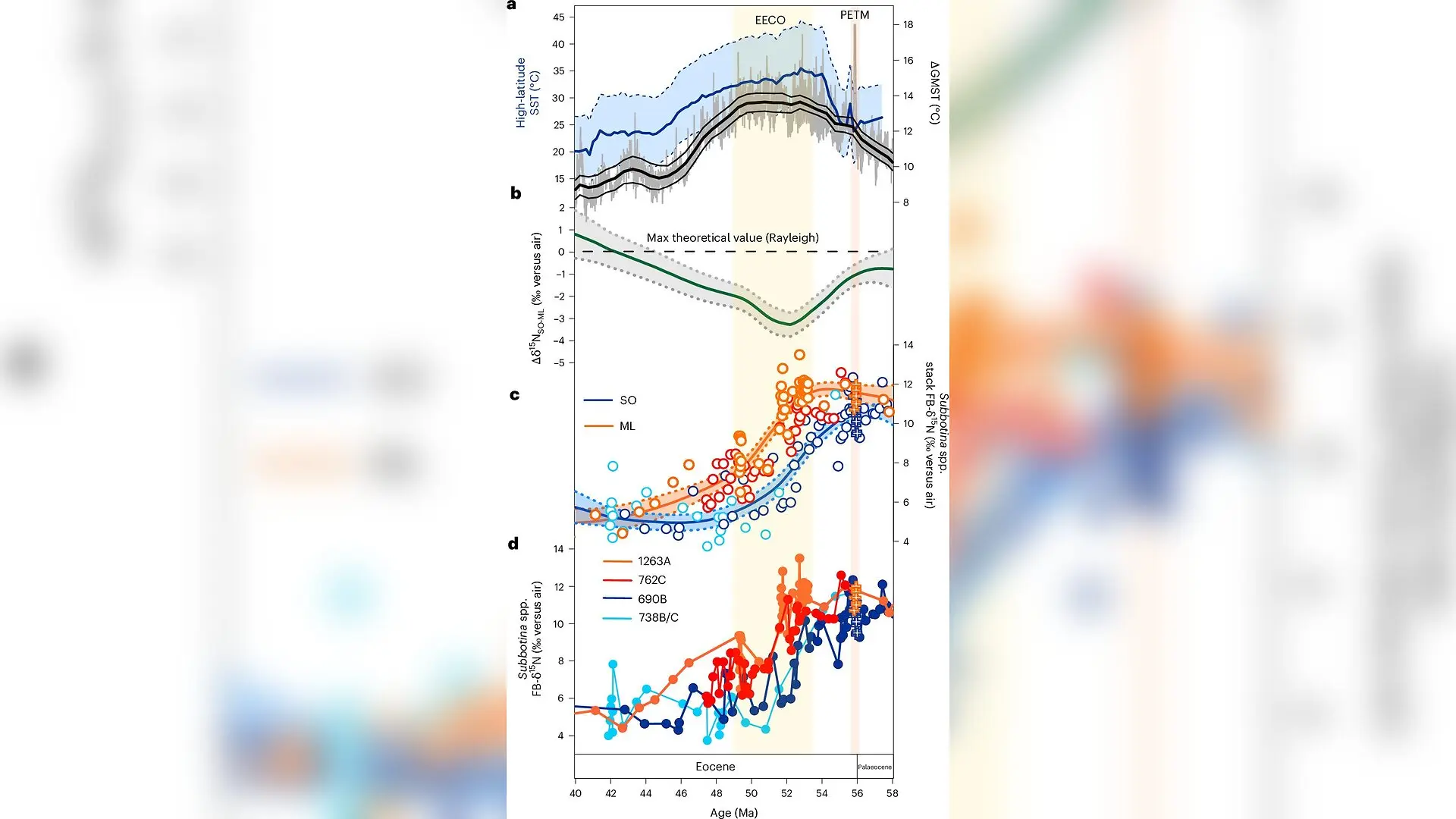
Deep-sea microfossils reveal that a breakdown in the Southern Ocean biological pump drove intense greenhouse warming 50 million years ago, suggesting that polar ocean dynamics can amplify global temperatures even under extreme atmospheric carbon dioxide levels. During an interval known as the Early Eocene Climatic Optimum, which unfolded between 53 and 49 million years ago, global temperatures soared and atmospheric carbon dioxide reached approximately 1,600 parts per million. While geologists have long debated the exact triggers for this ancient heat wave, a new study points to a surprising accomplice in the polar seas.
By analyzing nitrogen isotopes trapped inside microscopic shells preserved in ocean sediment cores, an international team of researchers reconstructed nutrient usage in the ancient oceans. The findings indicate that phytoplankton in the Southern Ocean left up to forty percent more nutrients unused during the peak of the warming period, weakening the natural engine that traps carbon in the deep sea. When these unused nutrients and their associated carbon escaped into the atmosphere, they triggered a powerful climate feedback loop that pushed planetary temperatures even higher.
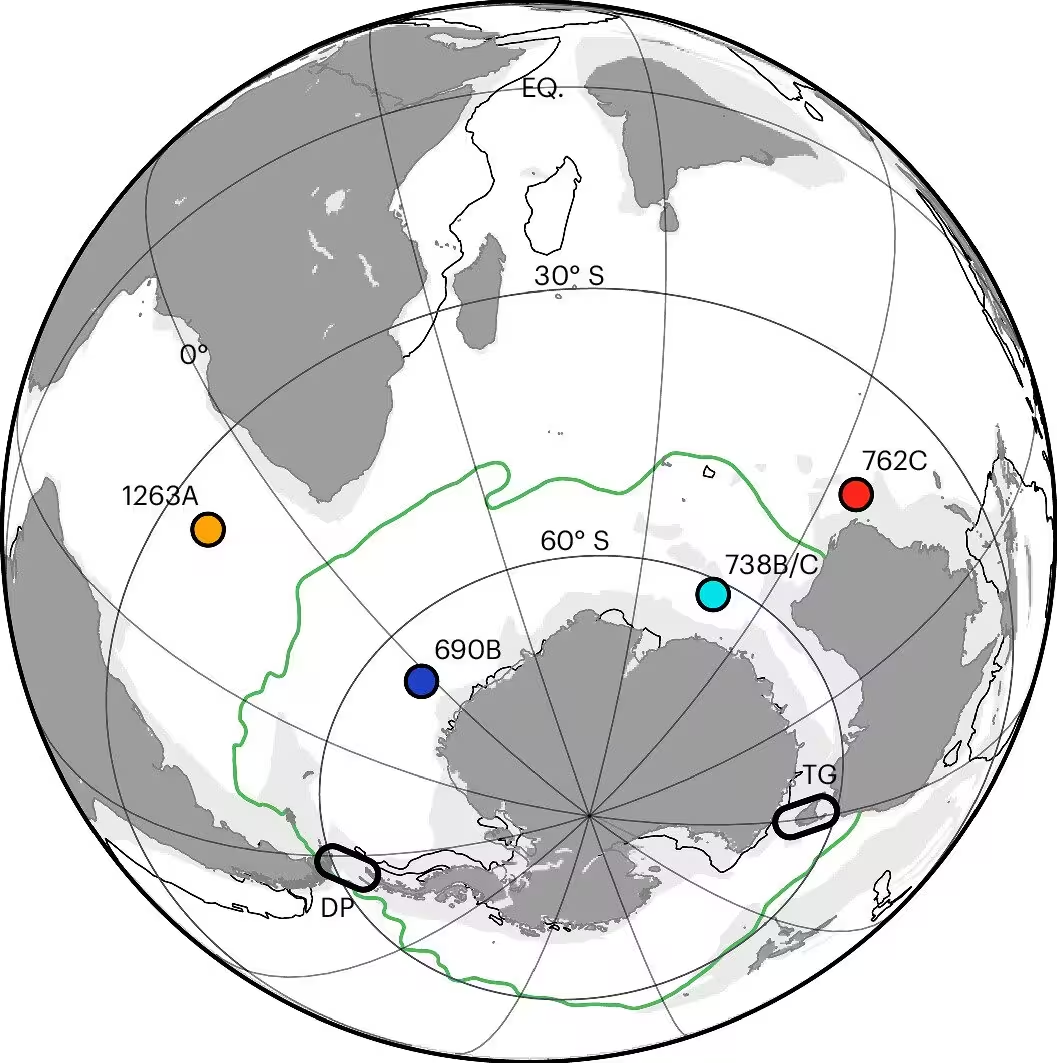
The research, published in Nature Geoscience, examined sediment samples from four key sites spanning the Atlantic and Indian oceans, including high-latitude Antarctic locations and mid-latitude oligotrophic gyres. The team focused on the fossilized shells of Subbotina, a genus of planktic foraminifera that lived in the water column millions of years ago. Because the organic matter sealed inside these calcium carbonate shells retains the isotopic signature of the diet consumed by the microorganisms, the researchers could track changes in surface nitrate consumption over millennia.
How Ancient Microscopic Shells Record Polar Carbon Storage
Microscopic algae known as phytoplankton form the foundation of the ocean biological pump, pulling carbon dioxide from the surface waters during photosynthesis and sinking to the seafloor when they die. In the modern world, this pump operates below maximum efficiency because deep waters welling up around Antarctica bring unconsumed nutrients and dissolved carbon back to the surface. To measure how efficiently this system worked during the Eocene, the scientists compared nitrogen isotope ratios from high-latitude Southern Ocean sites with those from mid-latitude sites where nutrients were completely exhausted.
This isotopic gradient acts as a reliable gauge for nutrient drawdown in the polar regions. The data revealed a pronounced divergence during the peak of the Early Eocene Climatic Optimum, demonstrating that Southern Ocean waters experienced a significant drop in nitrate consumption. According to a Rayleigh fractionation model applied by the authors, this shift reflects an approximate forty percent reduction in biological nutrient uptake. The weakened draw down meant fewer carbon atoms were successfully exported to the ocean interior, allowing excess carbon dioxide to outgas freely into the atmosphere.
Amplifying Feedbacks in a High-Carbon World
To test the climate consequences of this biological shift, the research team implemented an ocean-atmosphere box model. Their simulations demonstrate that the reduction in polar nutrient consumption had a disproportionately massive impact on atmospheric carbon dioxide because of the unique chemical state of the early Cenozoic ocean. High initial carbon dioxide levels and elevated calcium concentrations reduced the seawater buffer capacity, meaning that every unit of carbon released from the ocean caused a much larger rise in atmospheric greenhouse gas concentrations than it would under modern conditions.
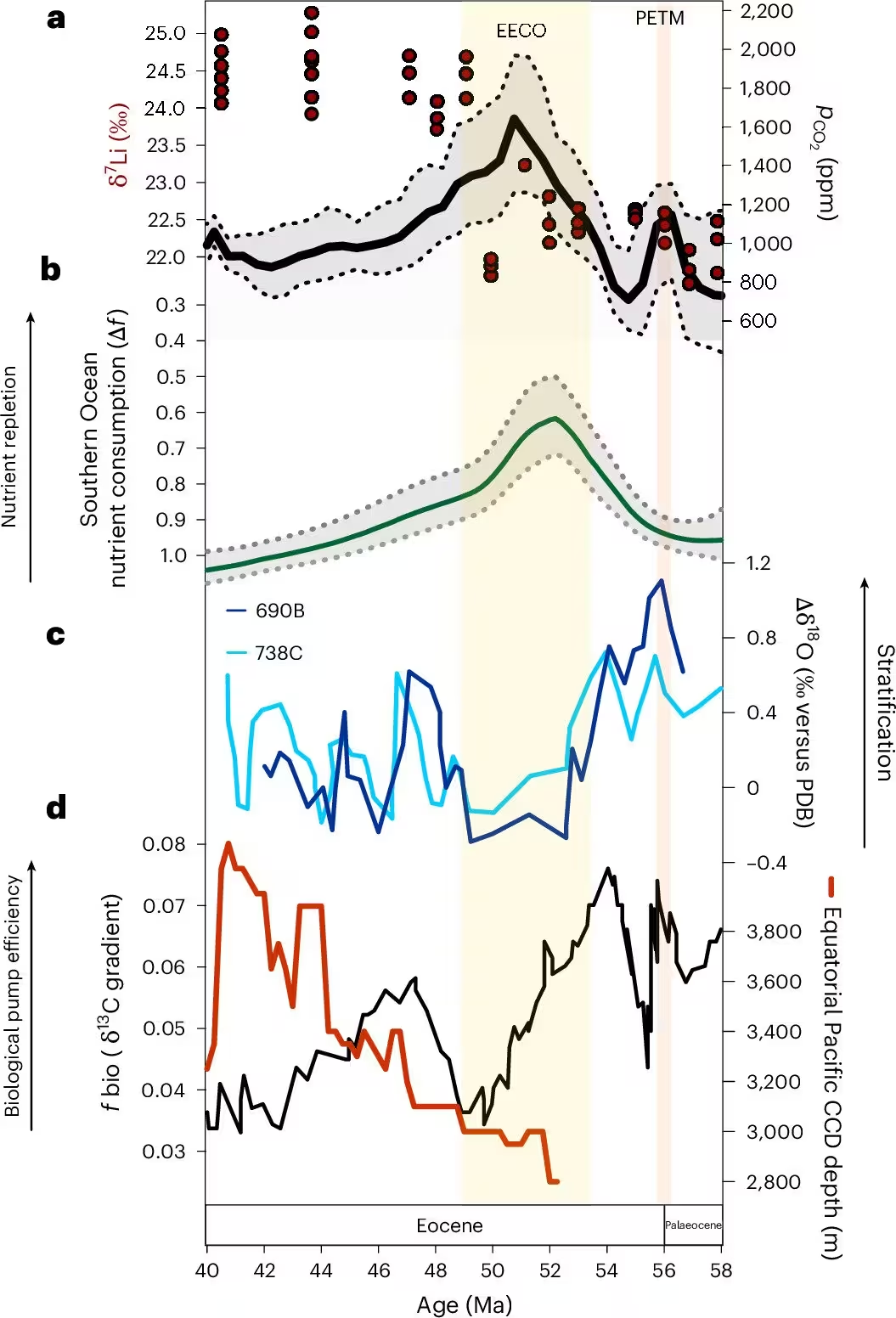
When the authors incorporated temperature and carbonate compensation feedbacks into their numerical model, the weakened biological pump drove atmospheric carbon dioxide up from an initial baseline of 700 parts per million to roughly 1,100 parts per million. This mechanism alone accounts for at least half of the total carbon dioxide increase reconstructed for the peak Eocene warmth. The results mirror the behavior of the global climate system during Pleistocene ice age interglacials, where Southern Ocean ventilation and nutrient repletion also acted to boost atmospheric carbon and global temperatures on shorter timescales.
Lasting Implications for Future Climate Projections
The study highlights a fundamental vulnerability in Earth systems, showing that warm climate states naturally induce a sluggish biological pump in the Southern Ocean. This creates a powerful positive feedback loop where warming oceans alter overturning circulation or productivity, releasing stored carbon and driving temperatures still higher. While the tectonic configuration of the Eocene featured closed continental gateways like the Drake Passage rather than today’s open circumpolar current, the underlying thermodynamic response of polar oceans to heat appears remarkably consistent across different geological eras.
Understanding how the biological pump behaved during past warm climates provides critical context for evaluating future climate trajectories. As modern oceans continue to absorb heat and face complex shifts in wind patterns and freshwater inputs, the long-term stability of Southern Ocean carbon sequestration remains one of the most vital questions in climate science. The ancient record serves as a stark reminder that polar ecosystems can actively accelerate global warming by letting trapped carbon escape back into the sky.
The research was published in Nature Geoscience on November 6, 2026.
This article has been fact checked for accuracy, with information verified against reputable sources. Learn more about us and our editorial process.
Last reviewed on .
Article history
- Latest version
Reference(s)
- Moretti, Simone., et al. “Elevated early Eocene atmospheric CO2 tied to reduced Southern Ocean biological pump efficiency.” Nature Geoscience, November 6, 2026 Springer Science and Business Media LLC, doi: 10.1038/s41561-026-02142-7. <https://doi.org/10.1038/s41561-026-02142-7>.
Cite this page:
- Posted by Karan Das