New Trajectory Design Proves Halley Comet Rendezvous Is Possible With Existing Rockets
A dual gravity assist maneuver at Jupiter and Saturn could match the retrograde orbit of Halley’s comet by 2060 using standard ion thrusters.
Catching up with Halley’s comet on its next inbound journey in 2061 could be achieved using a clever sequence of planetary flybys and electric propulsion, a new orbital study indicates. Because Halley travels in a retrograde orbit, moving in the opposite direction to most solar system bodies and tilted 162 degrees relative to Earth’s orbital plane, matching speeds with the famous comet has long challenged mission designers. Without a matching speed, a spacecraft can only perform a brief flyby lasting mere hours, offering limited views of just one hemisphere. Researchers calculated that a dedicated rendezvous mission, matching the comet’s exact orbital energy before it reaches high activity near Mars, is entirely possible using existing heavy rockets and ion thrusters. The findings were published in PLOS One by Roberto Flores and his colleagues.
How a Jupiter and Saturn Gravity Assist Changes the Game
To reverse a spacecraft’s heliocentric momentum and match Halley’s extreme orbit, the mission concept relies on a multi-stage gravitational slingshot combined with continuous low-thrust ion propulsion. The journey begins with a direct launch from Earth aimed at Jupiter, where the spacecraft continuously fires its ion engine in the direction of travel to increase its mechanical energy and reduce the required launch energy. Upon reaching Jupiter, a high-energy gravity assist slings the probe outward toward Saturn on a hyper-fast hyperbolic trajectory. A second gravity assist at Saturn then tilts the spacecraft’s trajectory into the correct retrograde plane to intercept the comet.
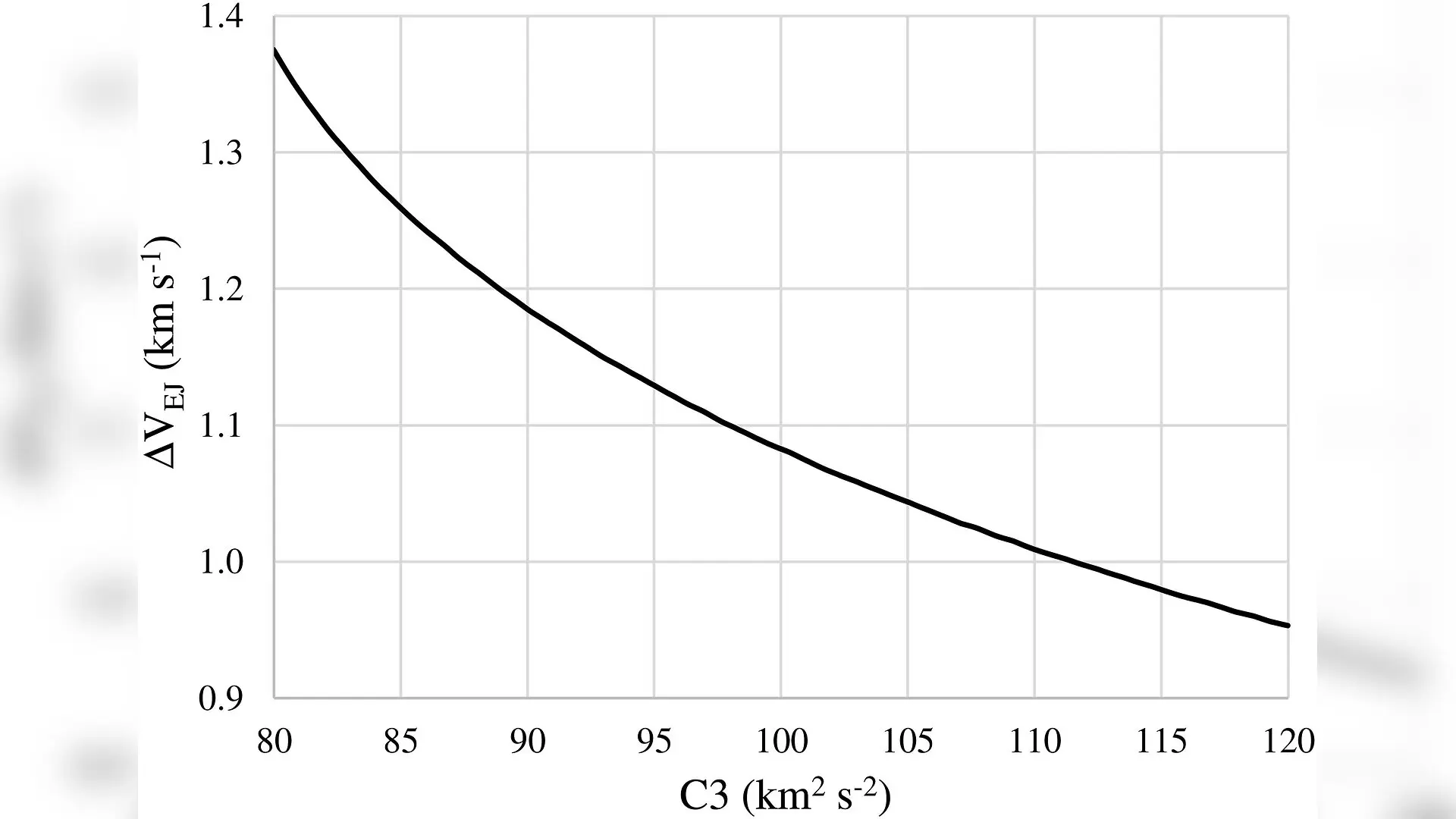
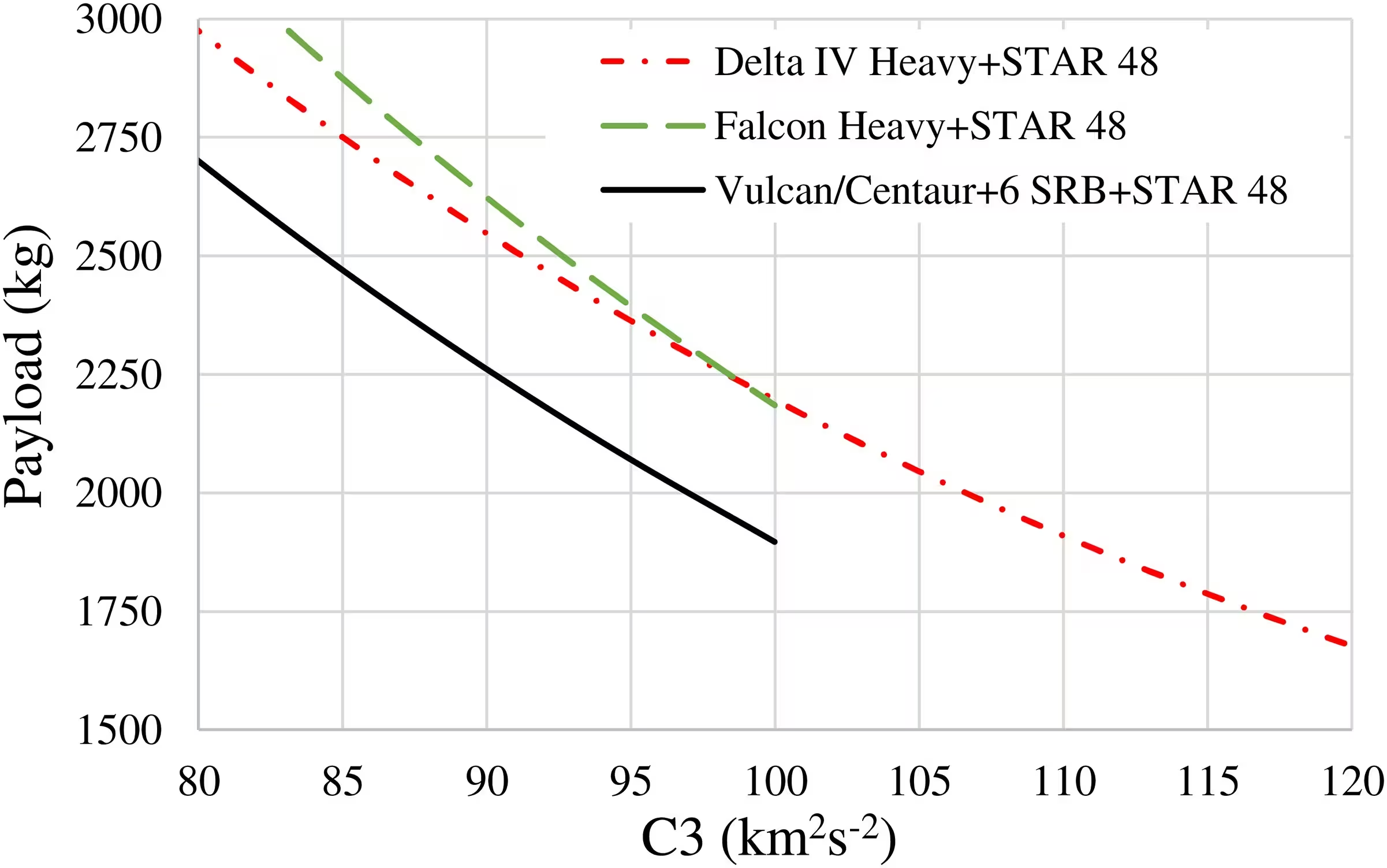
This double-planet strategy bypasses the need for massive nuclear reactors or unproven technologies, relying instead on standard radioisotope thermoelectric generators to power a flight-proven ion motor similar to the one flown on NASA’s DART mission. The trajectory analysis mapped out viable mission windows for departures in August 2036 and September 2037, utilizing heavy-lift launch vehicles equipped with kick stages. For the 2036 departure, a launch energy of roughly 100 square kilometers per second squared delivers a 1,500-kilogram spacecraft toward Jupiter, setting up a Saturn flyby that ultimately leads to a rendezvous with Halley in October 2060.
What the Timeline and Final Approach Look Like
Reaching the comet more than two decades after launch places the spacecraft roughly 4.4 astronomical units from the Sun, which is just beyond the orbit of Mars. This distance is crucial because it ensures the probe arrives before solar heating triggers intense outgassing and coma formation, allowing scientists to study the pristine nucleus and resolve whether it functions as a contact binary. The 2036 mission profile delivers a dry mass of 801 kilograms at rendezvous, while a heavier two-ton initial launch mass yields a remaining spacecraft mass of nearly 1,000 kilograms without exceeding the payload limits of modern heavy launchers.
The mission design also accommodates a backup launch window in 2037, providing mission planners with vital operational flexibility. While the Jupiter flyby brings the probe deep into the inner edge of Jupiter’s intense radiation belts at a distance of about 147,000 kilometers, the high relative speed of 43 kilometers per second limits total exposure time to just a few hours, suggesting that standard radiation shielding will suffice.
The research was published in PLOS One on November 4, 2026.
This article has been fact checked for accuracy, with information verified against reputable sources. Learn more about us and our editorial process.
Last reviewed on .
Article history
- Latest version
Reference(s)
- Flores, Roberto., et al. “Double gravity-assist rendezvous trajectory to Halley’s comet using deep-space low thrust.” PLOS One, vol. 21, no. 11, November 4, 2026, pp. e0361882 Public Library of Science (PLoS), doi: 10.1371/journal.pone.0361882. <https://doi.org/10.1371/journal.pone.0361882>.
Cite this page:
- Posted by Nida Rehman