NASA Reveals Major New Strategy to Put Astronauts Back on the Moon by 2028
NASA’s revised Artemis strategy tasks SpaceX and Blue Origin with parallel lunar lander development, targeting a crewed Moon landing by 2028.

NASA has recalibrated its roadmap for returning humans to the lunar surface, setting a firm target for a crewed landing in 2028. The updated strategy leans heavily on a dual-track approach involving SpaceX and Blue Origin, while introducing a critical orbital testing phase to minimize risk before astronauts attempt to descend to the Moon.
Shifting Strategy: From Direct Landing to Orbital Validation
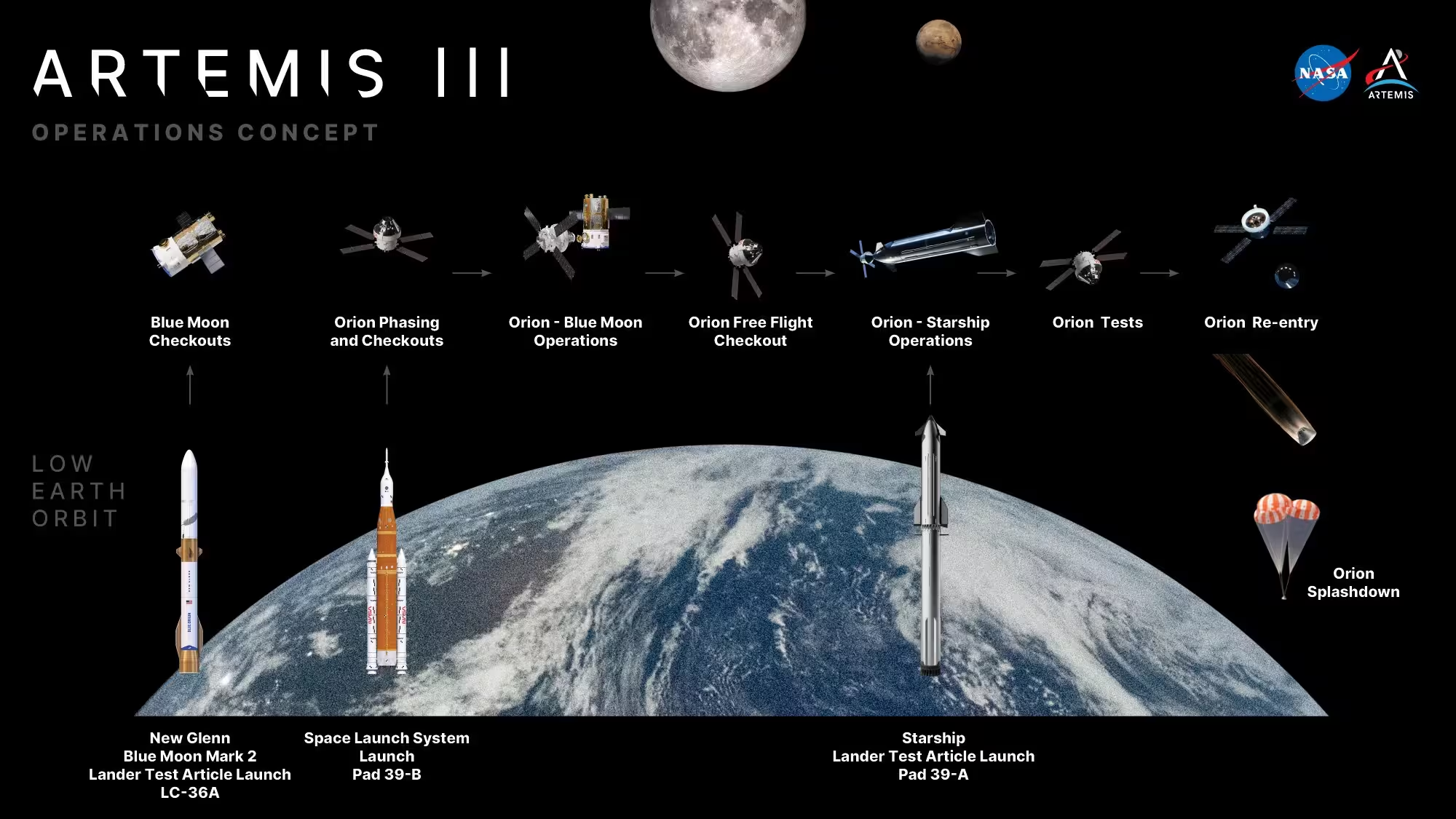
The revised Artemis program marks a departure from earlier mission architectures. Instead of proceeding directly to the lunar surface with the next mission, NASA will pivot Artemis III into a high-stakes, 14-day Earth-orbit flight scheduled for 2027. During this time, the four-person crew aboard the Orion spacecraft will conduct vital rendezvous and docking tests with both SpaceX and Blue Origin landing systems.
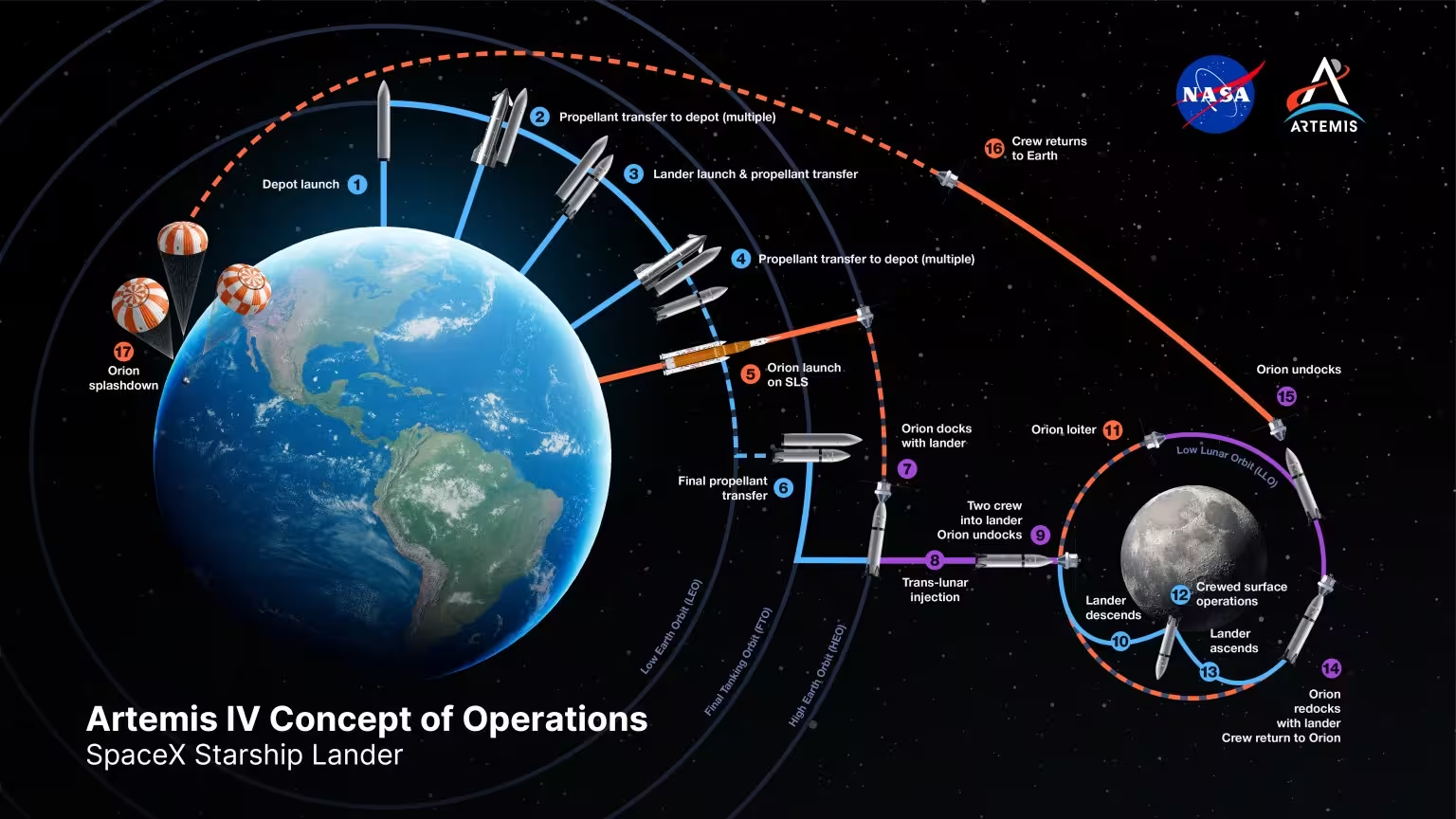
By conducting these evaluations close to home, NASA intends to iron out technical integration issues before committing lives to a lunar touchdown. This “test-first” approach is designed to ensure that the complex systems—including the Space Launch System (SLS)—are fully vetted for the subsequent Artemis IV mission, which is now slated to carry astronauts to the lunar surface in 2028.
“This is a very energized NASA, and these updates are only a small part of that story. We are bringing extreme focus to the mission to ensure delivery of world-changing outcomes as quickly, safely, affordably, and successfully as possible,” said NASA Administrator Jared Isaacman. “The campaign must move with urgency as strategic competitors pursue a permanent presence beyond Earth.”
A Dual-Company Approach to Lunar Transit
NASA is maintaining two distinct pathways to the Moon to safeguard the mission timeline. SpaceX continues to refine its Starship architecture, which relies on orbital refueling to push the spacecraft toward the Moon. Meanwhile, Blue Origin is developing its Blue Moon Mark 2 lander, which utilizes transfer stages in Earth orbit to reach the lunar vicinity. Both companies have updated their designs to enhance flexibility, and NASA is also evaluating two upper-stage configurations for the SLS rocket to further improve launch reliability.
In-House Innovation and Streamlined Hardware
Alongside commercial partnerships, NASA is refocusing on its internal technical capabilities. By insourcing the production of critical components—such as a specialized fuel-line assembly that cost one-tenth of the original outside-supplier estimate—the agency is shortening development cycles. Jeremy Parsons, the Artemis program manager, noted that the agency is prioritizing the rebuilding of core technical competencies to reduce reliance on external contractors.
“NASA should be expected to do this kind of work, and we have some of the best technical knowledge in the world on rocket hardware and operations to do it,” said Parsons. “It’s an example of how we are rebuilding our core competencies and developing centers of excellence in technical functions instead of continuing to outsource expertise.”
New Suit Technology for Rapid Surface Operations
To facilitate faster lunar exploration, NASA is collaborating with Axiom Space on a specialized Sortie suit. This new, lighter design weighs roughly half as much as the primary, more robust suit currently under development. The Sortie suit is intended specifically for early, shorter surface operations, allowing the agency to simplify initial moonwalks as it targets the scientifically rich lunar South Pole.
The success of the 2028 landing window will hinge on the performance of these integrated systems during the 2027 orbital test. If the Artemis III demonstration validates these complex maneuvers, the path will be cleared for the first human presence on the Moon since Apollo 17 in 1972, marking a new era of sustained lunar exploration.
This article has been fact checked for accuracy, with information verified against reputable sources. Learn more about us and our editorial process.
Last reviewed on .
Article history
- Latest version
Reference(s)
- Mohon, Lee. “NASA Shares Plans to Accelerate Artemis, Return to Moon - NASA.”, November 4, 2026 NASA <https://www.nasa.gov/missions/artemis/nasa-shares-plans-to-accelerate-artemis-return-to-moon/>.
Cite this page:
- Posted by Karan Das