Titan Emerges as Humanity’s Next Frontier: Scientists Map Out Future Crew Mission
Scientists suggest Titan could become humanity’s next frontier, eyeing the moon as a future destination for human exploration.
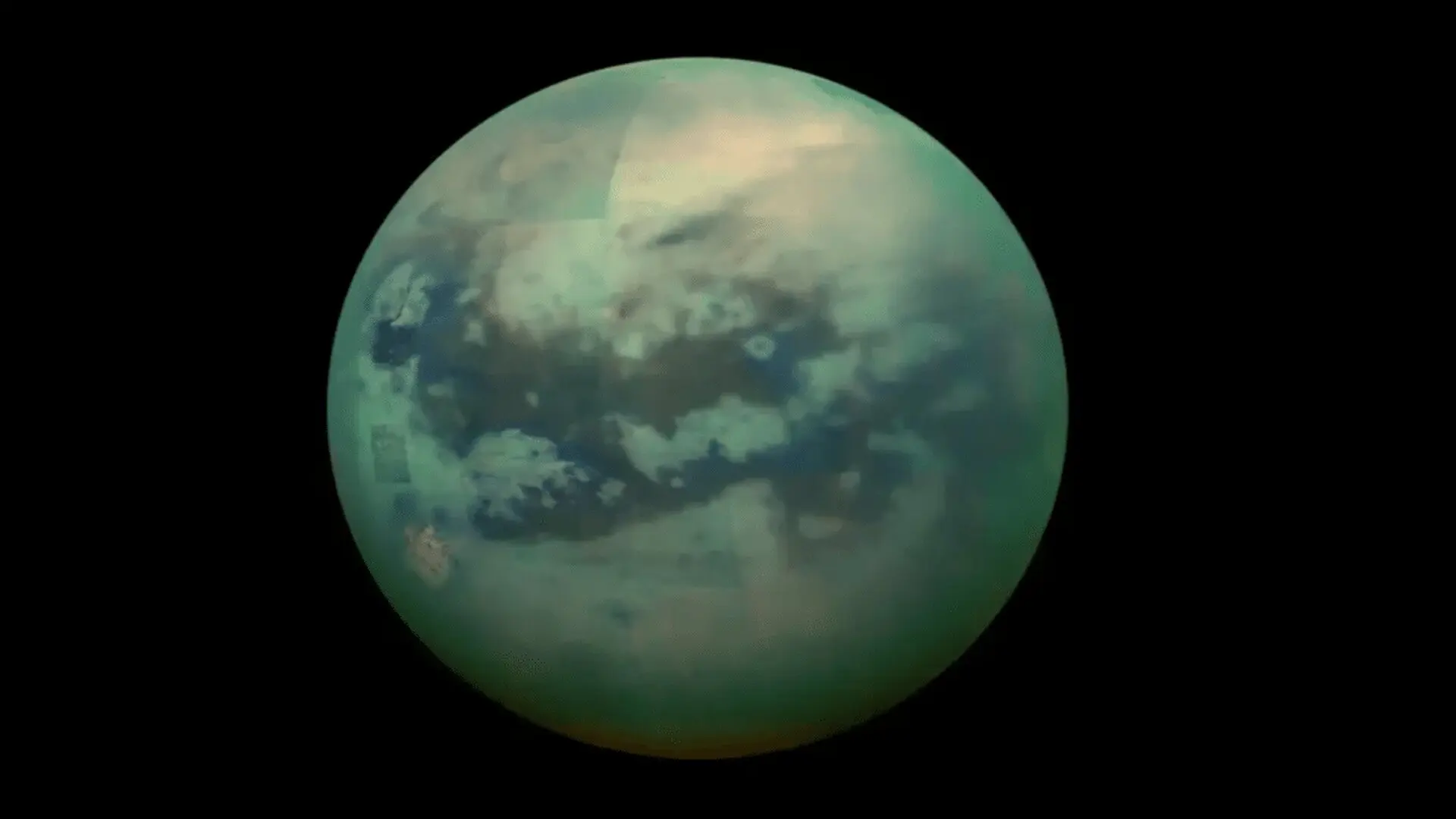
A growing chorus of scientists and engineers is turning the once‑far‑off notion of landing humans on Titan, Saturn’s largest moon, into a serious subject of study. At the inaugural Humans to Titan Summit 2026 in Boulder, Colorado, experts examined the practical steps required to support crewed missions to this exotic world, arguing that early planning could steer the next phase of deep‑space exploration beyond Mars.
Titan Moves From Fantasy to Feasibility
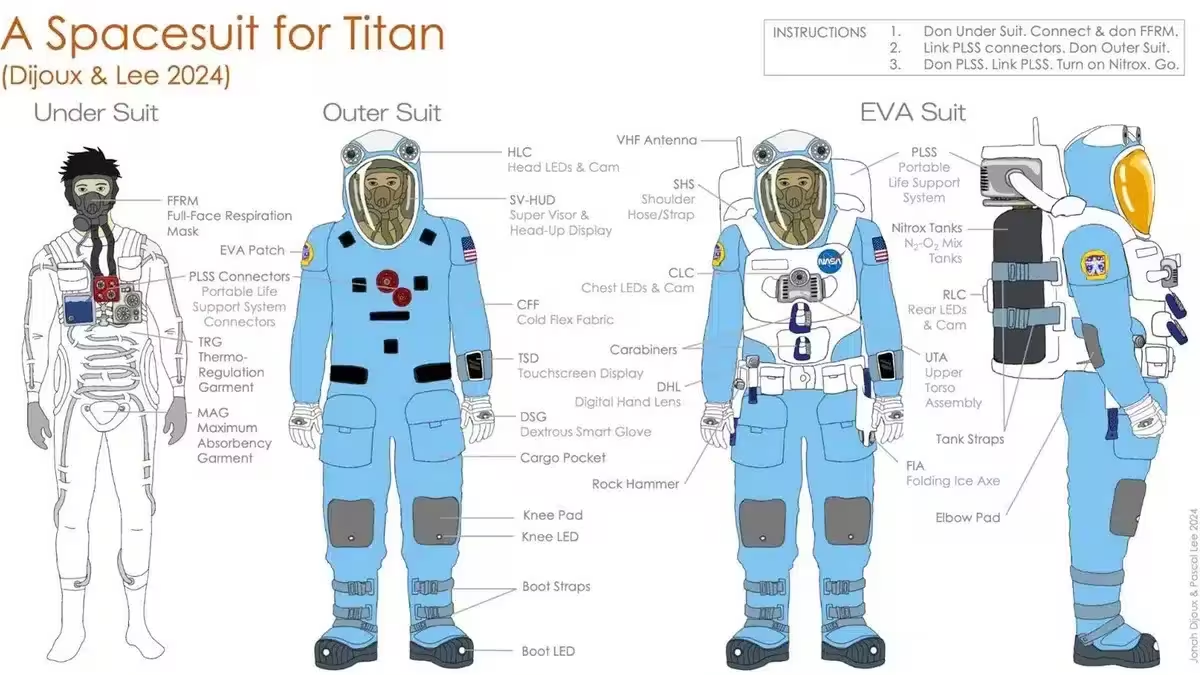
The two‑day gathering represented the first concerted effort to map out human activity on Titan. Participants moved past speculative storytelling to tackle concrete issues such as transport architecture, habitat concepts, protective suits, and the hazards posed by the moon’s environment. The shift reflects an emerging consensus that the era of Mars‑only ambition is ending, with Titan now seen as a viable long‑term target.
Amanda Hendrix, who leads the Planetary Science Institute and chairs the Explore Titan initiative, said reshaping public perception of the moon is a crucial first move. “Everyone recognizes that the reality of this is a long way off,” Hendrix told Space.com, “but normalizing the idea — that Titan is actually a very reasonable destination for humans — is important.” She added that looking beyond Mars gives the scientific community a generational goal that can sustain momentum, and that keeping Titan in mind as “the next destination” helps preserve that drive.
Why Titan Stands Apart in the Outer Solar System
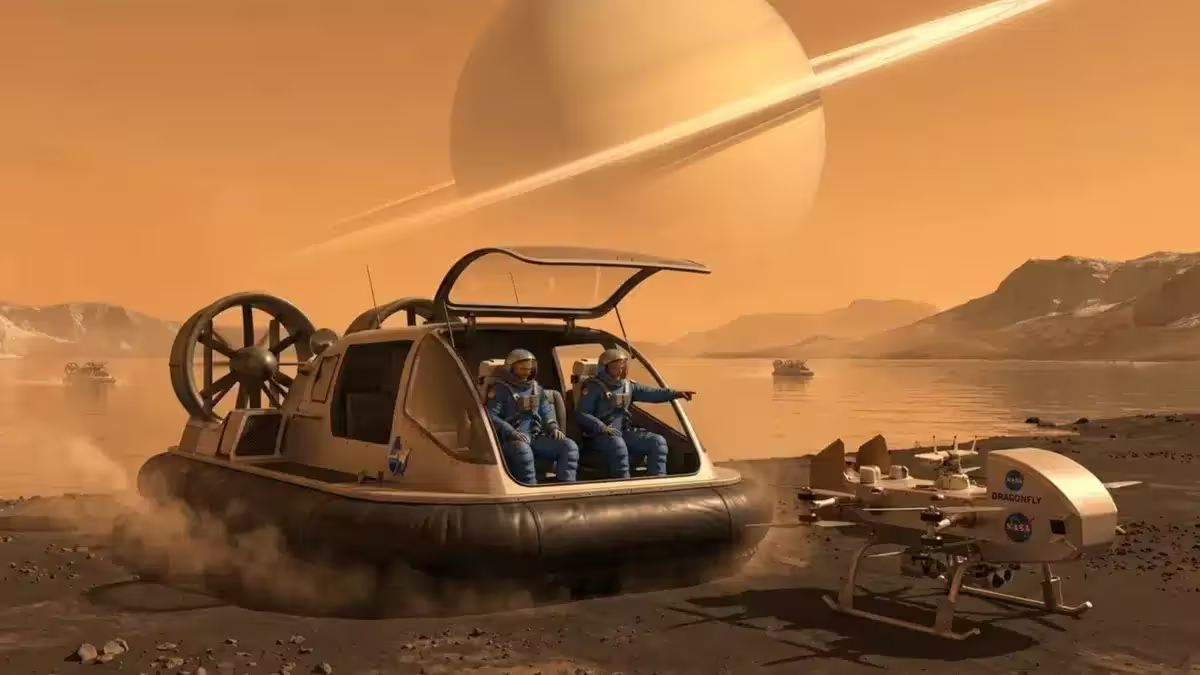
Among the icy bodies orbiting the giant planets, Titan offers a suite of attributes that set it apart. Its dense nitrogen‑rich atmosphere acts as a natural shield against much of the cosmic radiation that endangers astronauts on long‑duration missions. The same atmosphere is thick enough to support aircraft or hovercraft, potentially enabling rapid surface traversal over its frozen terrain.
Researchers also highlighted the moon’s hydrocarbon‑driven weather, which includes methane rain, rivers, lakes, and seasonal storms. While these conditions pose operational challenges, they also promise unique scientific returns. The abundance of methane and nitrogen could eventually be harnessed for in‑situ fuel production, extending human reach deeper into the Saturn system. Hendrix emphasized that “the top reason in my mind that Titan is such a good spot for humans is the dense atmosphere,” underscoring its protective and logistical benefits.
Robotic Missions Lay the Groundwork
The path to crewed exploration hinges on a series of robotic precursors. The European Space Agency’s Huygens probe, which descended onto Titan in 2005 as part of the Cassini‑Huygens mission, provided the first close‑up data. The next milestone will be NASA’s Dragonfly rotorcraft, a nuclear‑powered drone slated for launch no earlier than 2028. Once in orbit, Dragonfly will spend more than three years hopping between sites, gathering samples and analyzing surface chemistry.
Data from Dragonfly will directly inform designs for habitats, landing platforms, and mobility systems. Scientists also envision future orbiters that could produce high‑resolution maps of Titan’s surface, pinpointing safe and scientifically rich locations for eventual human landings. Each robotic step reduces uncertainty and builds the knowledge base needed for crewed missions.
Visionary Leaders Outline the Road Ahead
Scot Rafkin, who heads the Department of Space Studies at the Southwest Research Institute, described the summit as a catalyst for a long‑range vision that could spark decades of innovation. “Everyone recognized that sending humans to Titan is extraordinarily ambitious. But history shows that the greatest achievements in exploration begin when people are willing to pursue goals that seem beyond reach,” Rafkin told Space.com. He framed the meeting as “the beginning of a long‑term effort to imagine and ultimately achieve something transformative.”
Rafkin stressed that the obstacles are primarily engineering and logistical, not physical. “Human exploration of Titan is not a question of physics,” he said. “It is a question of time, technology, and commitment. We understand most of the major challenges. We know many of the critical science and engineering gaps that remain.”
According to Rafkin, immediate actions such as launching an orbiter to refine Titan’s system architecture are feasible, while more advanced capabilities will require sustained development over decades. He concluded that the initiative represents a broader investment in humanity’s capacity to innovate, noting that “the destination is Titan, but the investment is in ourselves.”
This article has been fact checked for accuracy, with information verified against reputable sources. Learn more about us and our editorial process.
Last reviewed on .
Article history
- Latest version
Reference(s)
- David, Leonard. “'Titan is actually a very reasonable destination for humans': Scientists start mapping out crewed mission to huge Saturn moon.”, June 30, 2026 Space <https://www.space.com/astronomy/saturn/titan-is-actually-a-very-reasonable-destination-for-humans-scientists-start-mapping-out-crewed-mission-to-huge-saturn-moon>.
Cite this page:
- Posted by Karan Das