NASA Considers Sending Spare Mars Rover to Moon’s South Pole with RTG
NASA eyes a surprise plan to repurpose a spare Mars rover for a lunar mission, giving it a second life on the Moon.
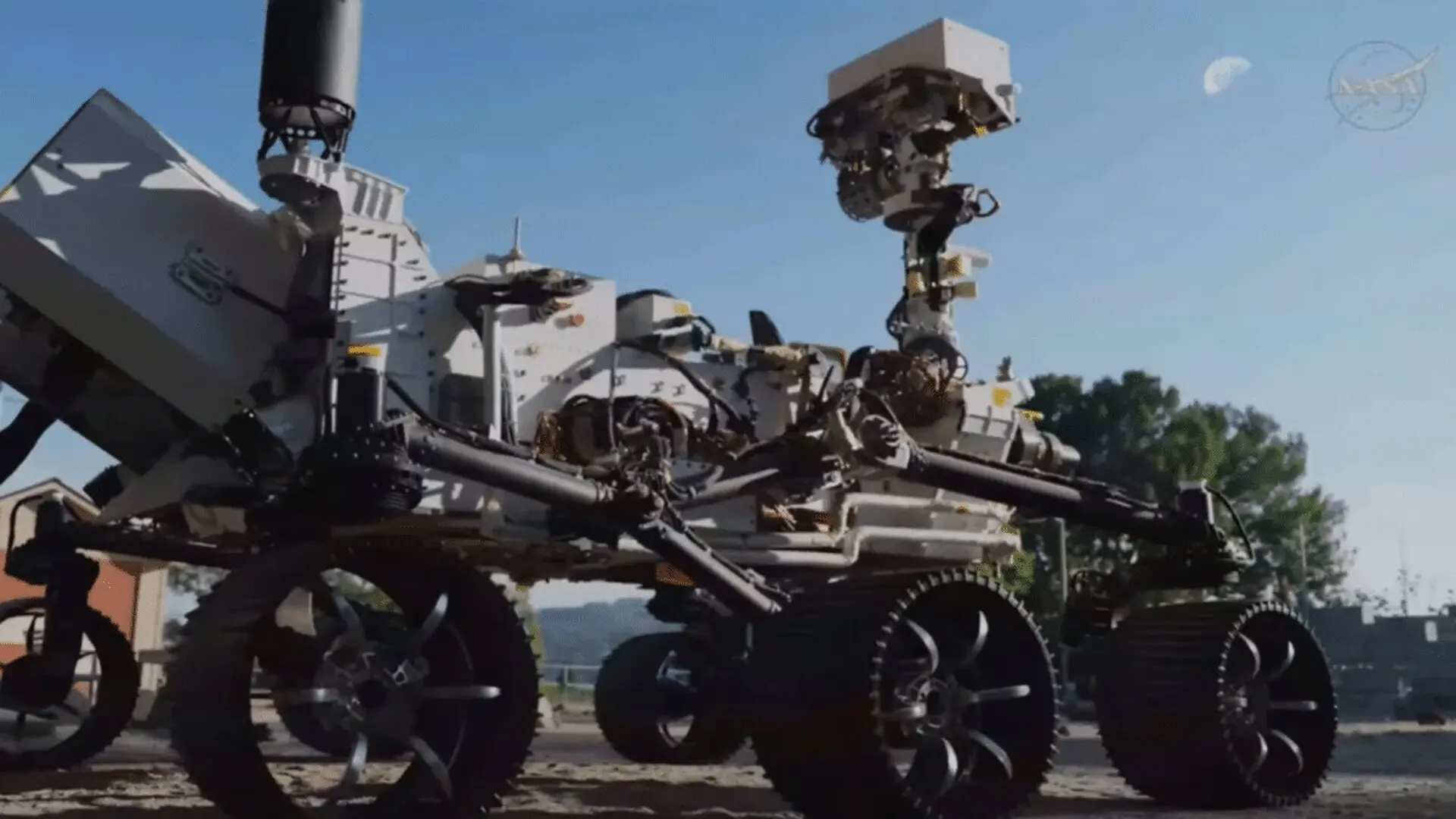
NASA is weighing a bold new use for one of its most familiar rover chassis. In the latest Artemis briefing the agency disclosed that engineers are assessing whether the spare engineering unit known as PROMISE—a platform derived from the Perseverance and Curiosity Mars rovers—could be repurposed for a science mission to the Moon’s south‑pole region. The plan would convert a terrestrial test vehicle into a lunar field robot, leveraging existing technology to support upcoming Artemis goals, with the study coordinated by NASA’s Jet Propulsion Laboratory (JPL).
Reimagining a Mars Test Bed for Lunar Exploration
PROMISE, an acronym for Polar Rover for Observation, Mapping, and In‑Situ Exploration, was originally constructed as a hardware testbed to validate software updates, driving commands, and engineering procedures before they were sent to Curiosity and Perseverance on the Red Planet. The rover has remained on Earth, providing a safe platform for engineers to run complex scenarios without risking the multi‑billion‑dollar missions that travel millions of miles away.
Because PROMISE shares many subsystems with its Mars‑roving cousins, NASA sees an opportunity to adapt the vehicle for genuine scientific work on the lunar surface. Unlike many upcoming lunar robots that rely on solar panels, PROMISE is equipped with a radioisotope thermoelectric generator (RTG). This power source would let the rover operate through the long periods of darkness that dominate the Moon’s southern latitudes, a key advantage for missions near permanently shadowed craters.
NASA Administrator Jared Isaacman outlined the rationale, stating, “We’ve had years now of experience operating the two rovers on the surface of Mars, and we’ve got this hardware that the taxpayers have invested a lot in. So the question was posed: ‘What if we send it to the moon?’” The comment underscores a growing agency trend to reuse proven assets rather than designing brand‑new hardware whenever feasible.
JPL’s Track Record Bolsters Confidence
According to NASA’s Jet Propulsion Laboratory (JPL), PROMISE has spent years helping mission teams safely validate commands before transmitting them across interplanetary distances. That legacy gives engineers assurance that the rover’s components have already demonstrated reliable performance in demanding environments.
JPL’s media liaison Jia‑Rui Cook emphasized the meticulous testing culture, telling Space.com, “They weren’t going to mess anything up out here.” Cook noted that the rigorous validation process for Mars missions translates well to lunar applications, where every subsystem must be vetted before flight.
“Landing on Mars is hard,” Cook added, pointing out that the challenges of delivering heavy robotic platforms to another world have driven decades of innovation. Those lessons are now feeding into concepts for a lunar rover that could operate independently of sunlight and provide high‑value science at the Moon’s pole.
Commercial Landers to Deliver Science to the South Pole
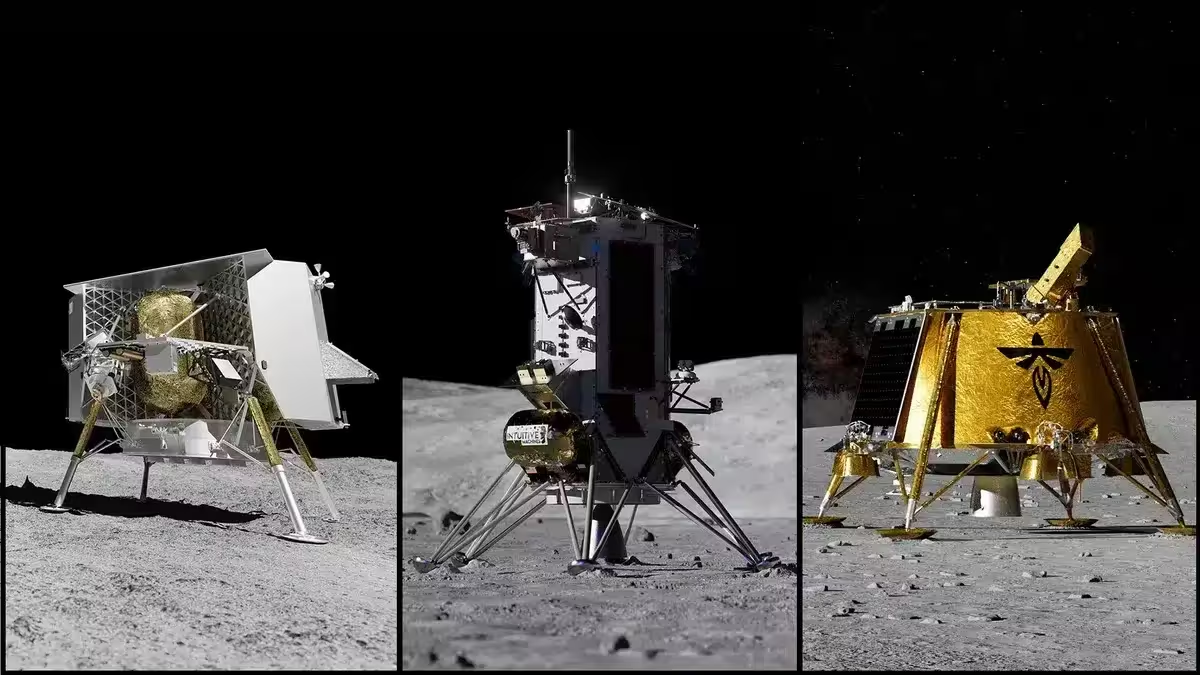
NASA’s announcement also highlighted new contracts under the Commercial Lunar Payload Services (CLPS) program with firms such as Astrobotic, Firefly Aerospace and Intuitive Machines. Each company is slated to land scientific payloads on the Moon, gathering data on terrain, radiation, and resource distribution to pave the way for crewed missions.
Future lander missions will examine how rocket exhaust interacts with lunar dust, refine navigation using laser retro‑reflectors, and map radiation levels across different regions. The lunar south pole is a priority because permanently shadowed craters are thought to hold substantial water‑ice deposits, which could be harvested for drinking water, breathable oxygen, and even propellant for return trips. The rugged terrain and rapidly shifting illumination patterns make a self‑powered rover like PROMISE especially attractive.
JPL’s Culture Fuels the “What‑If” Mindset
The PROMISE proposal exemplifies the innovative spirit that thrives at JPL, where engineers routinely tackle missions once deemed impossible. The laboratory’s willingness to explore unconventional concepts while upholding strict scientific standards has produced a track record of successful planetary explorers.
“We collect the data and we hand it over,” said Craig, a JPL scientist. “Everything we do is released to the world.” This approach reflects NASA’s broader commitment to open data, ensuring that discoveries benefit researchers and the public alike.
Team enthusiasm is palpable, as illustrated by McClure’s comment, “We fly our nerd flags extremely high here at JPL, so high we have had four marriage proposals at the center of the universe.” The light‑hearted remark underscores the camaraderie among the specialists who design and operate humanity’s most ambitious robotic explorers.
Although PROMISE has not yet received formal launch approval, the concept demonstrates NASA’s ongoing effort to stretch existing investments into new realms of exploration. If the study progresses, a rover that once served as a backup for Mars missions could soon head for the Moon, proving that even a spare vehicle can make a historic contribution.
This article has been fact checked for accuracy, with information verified against reputable sources. Learn more about us and our editorial process.
Last reviewed on .
Article history
- Latest version
Reference(s)
- Dinner, Josh. “'PROMISE' me the moon? NASA wants to send spare nuclear-powered Mars rover to the lunar surface.”, June 30, 2026 Space <https://www.space.com/astronomy/moon/promise-me-the-moon-nasa-wants-to-send-spare-nuclear-powered-mars-rover-to-the-lunar-surface>.
Cite this page:
- Posted by Karan Das