X-Class Solar Flare Reaches Earth In 8 Minutes, Threatening Communications
NASA detects a powerful X-class solar flare, underscoring the Sun’s unusually active phase after years of quiet.
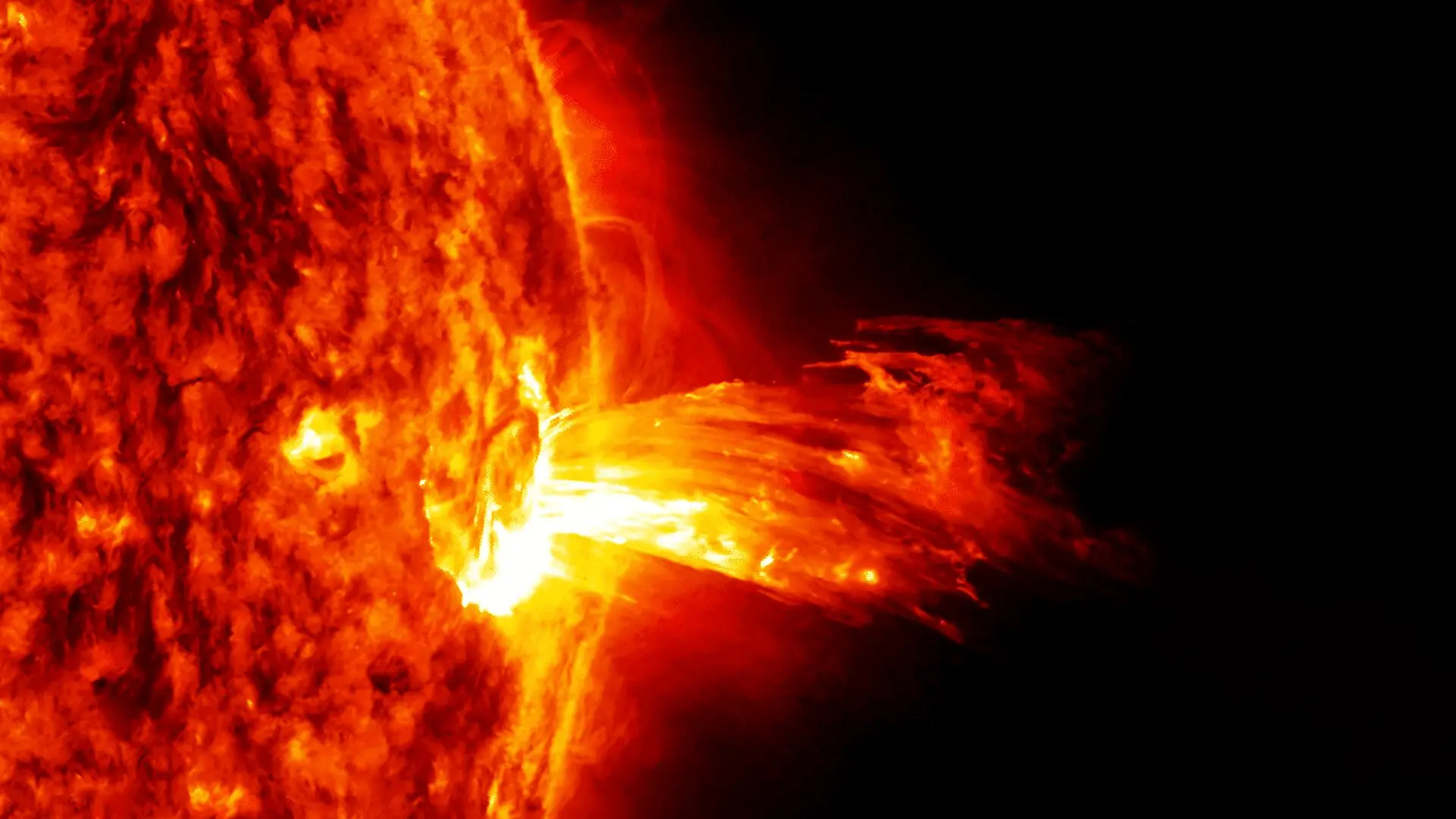
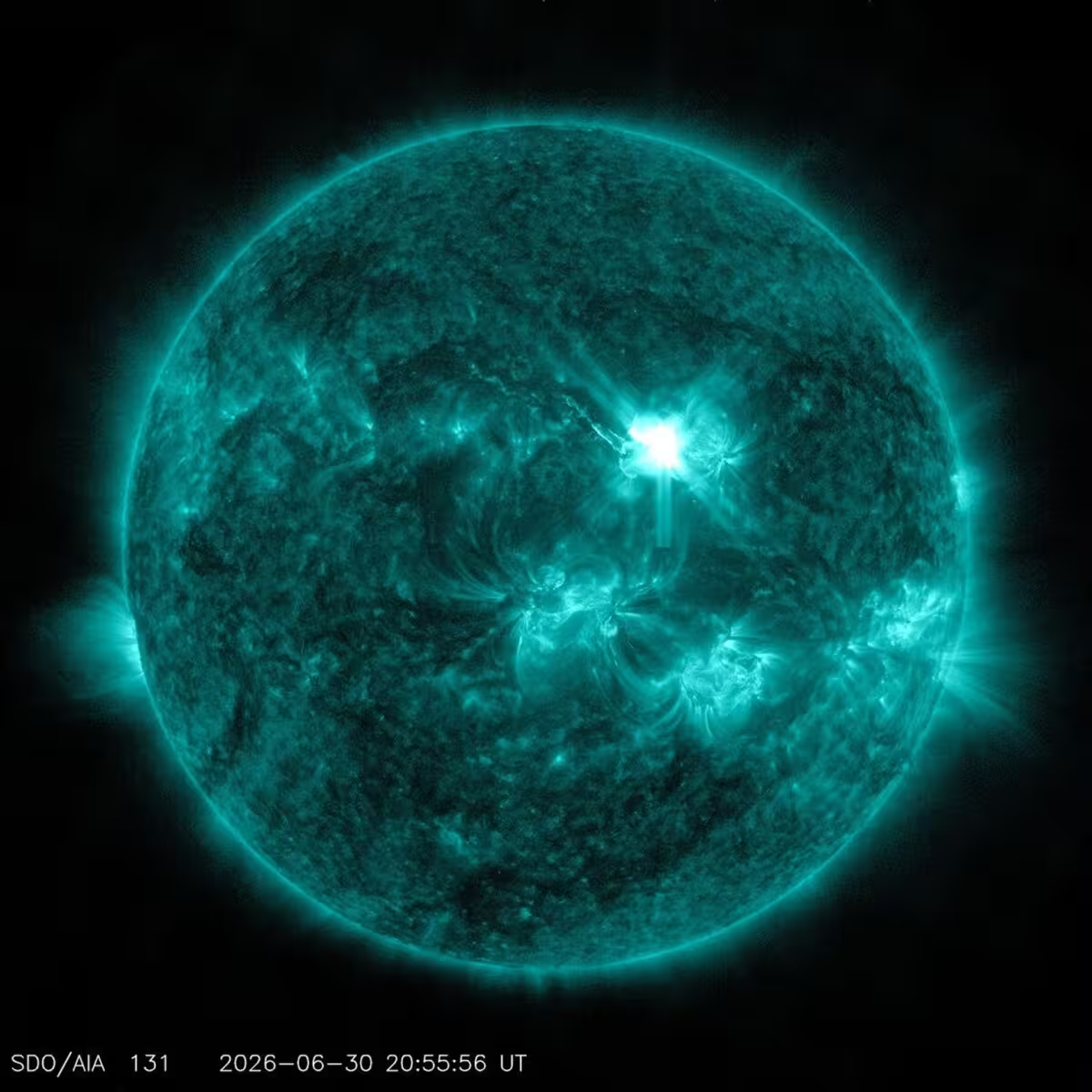
At 4:50 p.m. ET on June 30, the Sun emitted an X‑class flare rated X1.1, the highest level used for solar flares, highlighting the intensifying phase of Solar Cycle 25. NASA’s Solar Dynamics Observatory captured the burst, adding another data point to the agency’s continuous monitoring of solar activity that can affect conditions across the solar system.
X‑Class Flare Unleashes Intense Radiation
An X‑class designation marks the most energetic flares recorded by scientists, and even the modest X1.1 rating represents a substantial discharge of magnetic energy. When stored magnetic fields in the solar atmosphere suddenly reconnect, they accelerate charged particles and radiate across the electromagnetic spectrum. Unlike coronal mass ejections, which hurl billions of tons of plasma into space, flare‑generated radiation travels at light speed and can reach Earth in just over eight minutes, potentially disrupting high‑frequency radio communications almost instantly.
The rapid arrival of such radiation means that, during an event, radio operators may notice brief outages, especially on sunlit portions of the globe. Navigation signals can become less reliable, and satellite systems are monitored for increased radiation that could affect onboard electronics. Astronauts outside Earth’s protective magnetosphere also face heightened exposure, making real‑time monitoring a critical component of mission planning.
NASA’s Solar Dynamics Observatory Keeps a Constant Watch
The flare’s visual record comes from NASA’s Solar Dynamics Observatory, a spacecraft that surveys the Sun in multiple wavelengths around the clock. By delivering high‑resolution images of sunspots, magnetic fields, and eruptive events, the observatory feeds scientists with the data needed to refine models of solar behavior. NASA notes that these bursts of energy can influence both space‑based and ground‑based technologies.
The information gathered supports broader missions that study the solar atmosphere and the flow of energetic particles through interplanetary space. As Solar Cycle 25 progresses toward its peak, the influx of detailed observations helps researchers track the accelerating pace of solar activity and improve forecasts of future space‑weather events.
Implications for Earth’s Technological Infrastructure
While many flares pass without noticeable effects, powerful eruptions like the recent X1.1 event can temporarily interfere with systems that underpin modern life. High‑frequency radio links may suffer brief interruptions, and the reliability of GPS and other navigation services can degrade during periods of heightened solar radiation. Power grid operators also stay vigilant, especially when flares are accompanied by coronal mass ejections capable of stirring Earth’s magnetic field.
The link to a previous article explains how coronal mass ejections differ from flares, emphasizing that the latter’s radiation reaches Earth much faster. Continuous monitoring therefore remains essential for safeguarding satellites, astronauts, and terrestrial infrastructure against the Sun’s volatile output.
Solar Cycle 25 Brings More Frequent High‑Energy Events
The current rise in strong eruptions aligns with the natural ebb and flow of Solar Cycle 25, an approximately 11‑year cycle during which the Sun’s magnetic activity waxes and wanes. As the cycle moves toward its maximum, larger and more complex sunspot groups appear, creating conditions that favor the generation of powerful flares. Recent months have produced a steady string of notable solar events, reinforcing expectations that activity could remain elevated for some time.
Forecast agencies such as the NOAA Space Weather Prediction Center analyze each flare to assess potential impacts on Earth’s space environment and issue alerts as needed. Every new observation adds a piece to the puzzle of solar magnetism, helping humanity enhance its ability to anticipate and respond to the dynamic behavior of our star.
This article has been fact checked for accuracy, with information verified against reputable sources. Learn more about us and our editorial process.
Last reviewed on .
Article history
- Latest version
Reference(s)
- Thomas, Vanessa. “Sun Releases Strong Flare - NASA Science.”, June 30, 2026 NASA <https://science.nasa.gov/blogs/solar-cycle-25/2026/06/30/sun-releases-strong-flare-11/>.
Cite this page:
- Posted by Karan Das