Mars Fungi Could Turn Red Planet Dirt Into Crop-Producing Soil
Scientists investigate how beneficial fungi may turn Martian soil fertile for space farming and future Mars colonies

A new study argues that tiny fungal allies could be the key to cultivating crops on the Martian surface. The research, appearing in Frontiers in Astronomy and Space Sciences, proposes that certain beneficial fungi can transform the planet’s barren regolith into a substrate capable of supporting plant growth, offering a potentially game‑changing tool for future human habitats on Mars.
Fungal Networks May Convert Martian Regolith into Growable Soil
The surface of Mars is blanketed by regolith, a loose layer of rock and dust that lacks essential plant nutrients such as nitrogen, phosphorus and potassium. Importing these elements from Earth would impose a massive logistical and financial burden on any long‑duration mission. Researchers suggest that inoculating the regolith with symbiotic fungi—particularly arbuscular mycorrhizal fungi (AMF)—could mimic the functions of fertile Earth soils, enhancing nutrient cycling and improving water availability for plants.
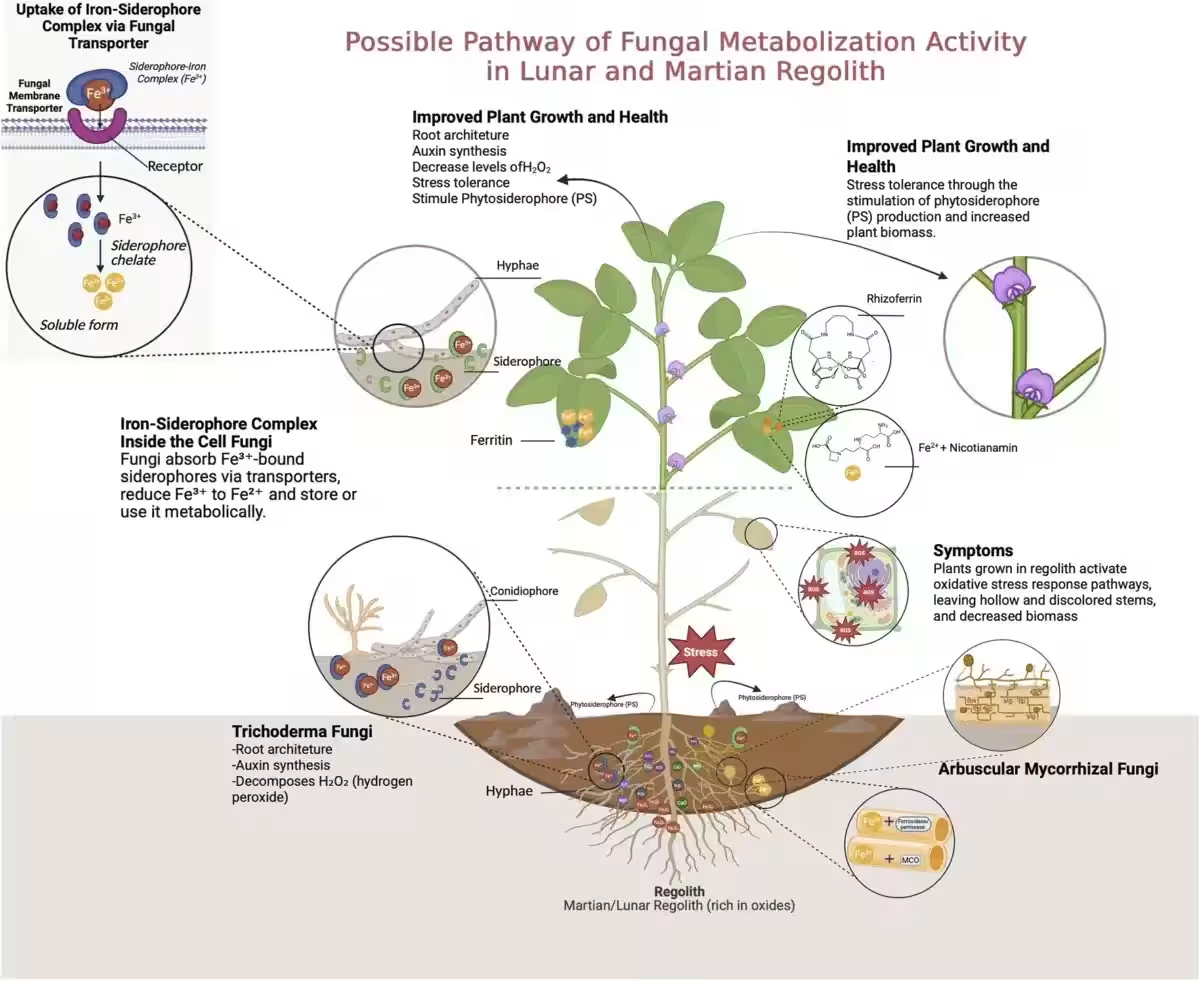
Credit: Frontiers in Astronomy and Space Sciences
Symbiotic Microbes Boost Plant Health and Stress Resistance
AMF have been studied for more than a century and are known to extend the effective surface area of plant roots, allowing hosts to draw in scarce nutrients more efficiently. In addition to AMF, genera such as Trichoderma can enhance growth, alleviate abiotic stresses, improve soil aggregation, and foster a balanced microbial community. By embedding these organisms in Martian material, the need to haul soil or fertilizer from Earth could be dramatically reduced—a critical consideration when every kilogram of cargo translates into millions of dollars.
Laboratory and Orbital Tests Hint at Viability
The Frontiers article synthesizes decades of work on fungal biology, space agriculture, and in situ resource utilization (ISRU). Experiments on Earth have demonstrated that fungal inoculation can raise crop yields in nutrient‑poor substrates, while trials aboard the International Space Station have confirmed fungal resilience under microgravity and radiation. A recent demonstration using a single gram of cyanobacteria mixed with a Martian regolith simulant generated 27 grams of duckweed, illustrating how microscopic life can amplify biomass production in extraterrestrial environments.
While the next step involves testing with authentic Martian soil—a challenge that remains on the horizon—the accumulated evidence suggests that fungal‑based strategies could become a cornerstone of sustainable agriculture on the Red Planet. By leveraging locally sourced regolith and the natural capabilities of beneficial microbes, future explorers may be able to grow food where they land, reducing dependence on Earth‑based supply chains and paving the way for permanent settlements.
This article has been fact checked for accuracy, with information verified against reputable sources. Learn more about us and our editorial process.
Last reviewed on .
Article history
- Latest version
Reference(s)
- MSc, Laurence. “Mars Fungi Could Make Red Planet Regolith Fertile for Crops.”, May 23, 2026 Universe Today <https://www.universetoday.com/articles/mars-fungi-could-make-red-planet-regolith-fertile-for-crops>.
Cite this page:
- Posted by Karan Das