Pristine New Jersey Meteorite Offers Rare Glimpse Into Life-Forming Chemistry
A rare meteorite that hit a New Jersey home provides scientists a pristine glimpse of life‑origin materials.
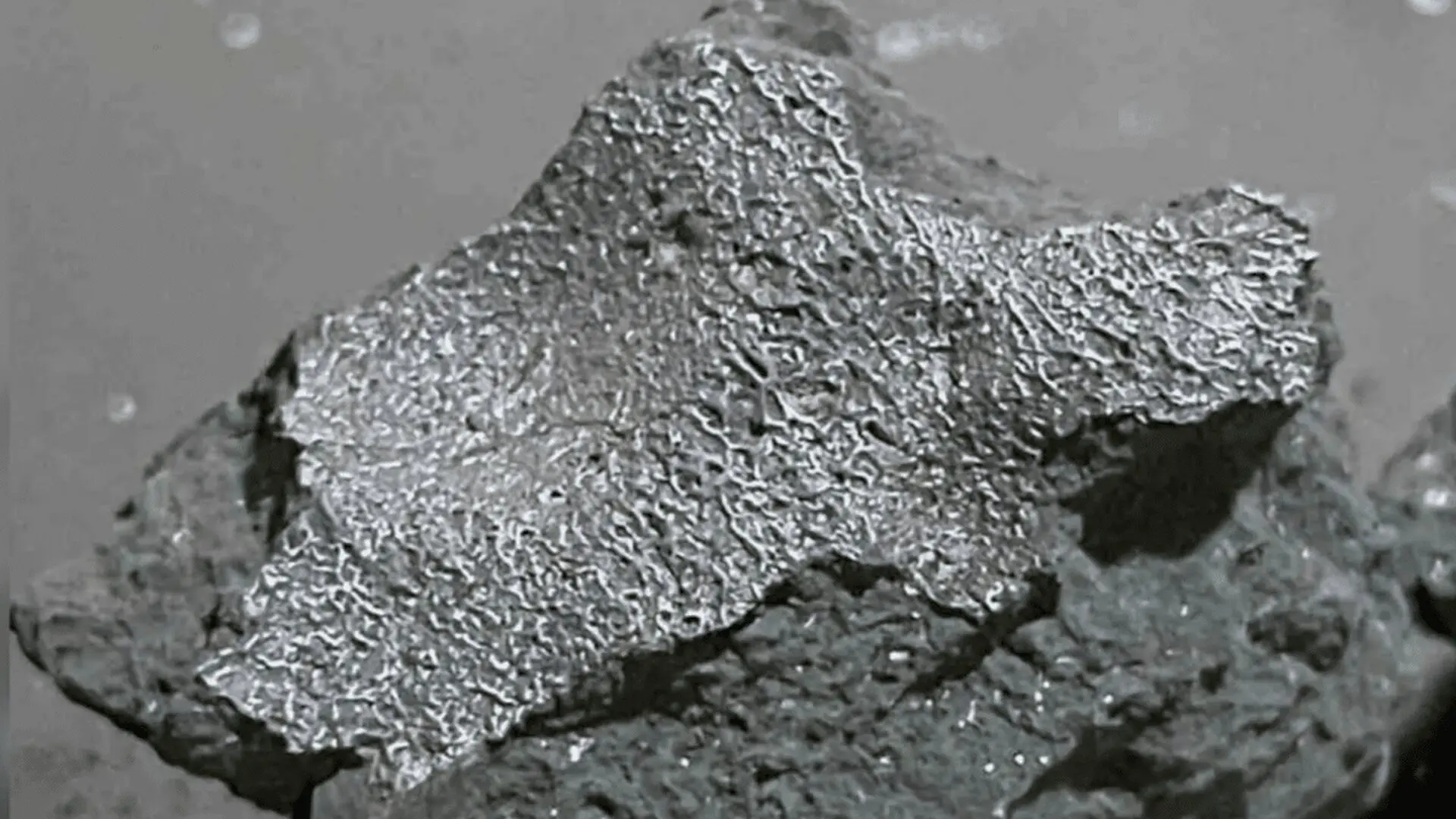
When a meteorite smashed through a residential roof in New Jersey, it delivered a remarkably pristine fragment of a rare carbonaceous chondrite, giving scientists a near‑intact window into the chemistry that existed when the solar system was forming, according to a study in Science Advances. The find offers a fresh chance to probe ancient organic compounds and water‑related minerals that have survived largely unaltered for billions of years.
New Jersey Home Becomes Unlikely Landing Site for Ancient Rock
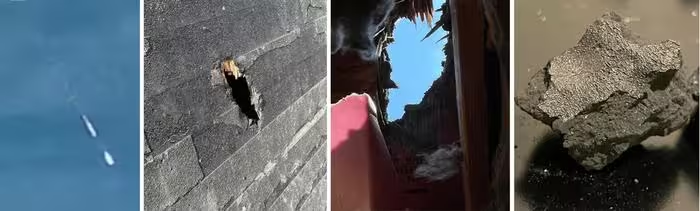
In May 2023, a fireball descended over Hopewell Township, New Jersey, and struck the roof of a house. The impact scattered fragments that were quickly gathered by the property owner. Laboratory analysis identified the material as a CM1/2 carbonaceous chondrite, a class of meteorites that formed more than 4.5 billion years ago, predating the assembly of planets.
These meteorites are prized for preserving the primordial chemistry of the early solar nebula. Their composition can reveal the conditions that prevailed before Earth took shape, making each well‑preserved sample a scientific treasure.
Rapid Recovery Preserves a Near‑Pristine Sample
Carbon‑rich meteorites readily absorb moisture and terrestrial chemicals, so the homeowner’s swift action—gloving up and placing the pieces into sealed jars—was crucial. Peter Jenniskens, a meteor astronomer with the SETI Institute and NASA’s Ames Research Center, emphasized that this prompt handling prevented the typical contamination that degrades most recovered specimens.
“He had the wherewithal to put on gloves and take out jars,” Jenniskens said. “And for this type of meteorite, carbonaceous chondrites, it’s very important because they just suck in every moisture you can think of.”
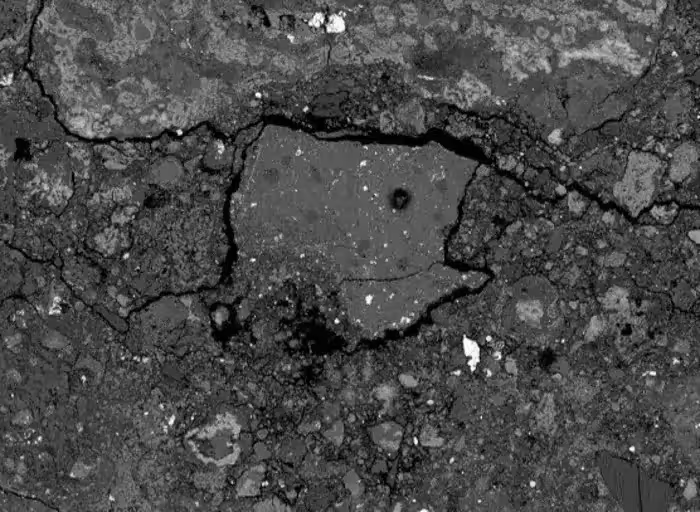
Analyses showed that the fragments contain a suite of organic molecules and water‑altered minerals, hallmarks of CM1/2 chondrites. Such material is a key target for researchers probing the distribution of life‑building chemicals across the nascent solar system.
“Thanks to the homeowner’s quick reaction, these are the most pristine CM1/2 meteorites we know of,” Jenniskens said in a statement.
Chemical Insights from an Untouched Asteroidal Relic
The team detailed their findings in Science Advances, describing how mineralogical and organic analyses trace processes that occurred billions of years ago. By preserving the meteorite’s original chemistry, researchers could apply high‑resolution laboratory techniques without the confounding effects of prolonged Earth‑based exposure.
Carbonaceous chondrites like this one harbor pre‑Earth compounds, including carbon‑based molecules that are central to studies of prebiotic chemistry. While they do not prove that life originated in space, they support the notion that early Earth may have been seeded with complex organics delivered by asteroid impacts.
Understanding the composition of such pristine samples helps reconstruct the environment in which the first biochemical pathways could have emerged, shedding light on the broader story of how life‑supporting chemistry spread through the early solar system.
This article has been fact checked for accuracy, with information verified against reputable sources. Learn more about us and our editorial process.
Last reviewed on .
Article history
- Latest version
Cite this page:
- Posted by Karan Das